
The Phantom Fleet’s Ghostly Relic
The whispers of history, often buried beneath the waves or lost to the sands of time, have a way of resurfacing, offering glimpses into moments that shaped the world. One such whisper, a colossal secret of the Second World War, is currently being examined by the United States Navy at Pearl Harbor: the I-400, a Japanese submarine of unparalleled design and ambition. This formidable vessel, a relic of a desperate war, represents a fascinating and chilling chapter in naval warfare, a testament to technological innovation driven by conflict, and a stark reminder of the ingenuity of adversaries. Its presence in American waters, now under meticulous scrutiny, allows for an unprecedented opportunity to understand its capabilities and the strategic mindset that birthed it.
The story of the I-400 class of submarines is one steeped in secrecy and audacious planning. Conceived by Imperial Japanese Navy strategists during the latter stages of World War II, these were not mere underwater vessels; they were intended to be “aircraft carriers of the sea,” designed to project power across vast oceanic distances. Their primary mission was as audacious as it was terrifying: to launch kamikaze-style attacks on the United States mainland, specifically targeting cities like San Francisco and the Panama Canal. This objective, while ultimately unfulfilled, speaks volumes about the desperation and resourcefulness of Japan as its war fortunes began to wane. The I-400s were the culmination of a feverish effort to create a weapon that could strike at the heart of the enemy, bypassing conventional naval defenses. Their sheer size, unparalleled among submarines of the era, was a direct consequence of this ambitious design. They were engineered to carry not one, but three special-attack seaplanes, capable of being launched and recovered from the submarine while submerged. This capability would have provided Japan with a long-range aerial bombardment option, a threat previously unimaginable from beneath the waves. The discovery and examination of an I-400 hull at Pearl Harbor, therefore, represents more than just the recovery of a historical artifact; it is the unlocking of a physical manifestation of a strategic gamble, a tangible link to a past conflict that, had it unfolded differently, could have dramatically altered the course of human events.
In a fascinating exploration of naval history, the US Navy’s examination of the I-400 submarine at Pearl Harbor sheds light on the technological advancements and strategic implications of World War II. This article delves into the significance of the I-400, which was the largest submarine of its time and featured innovative features such as the ability to launch aircraft. For more in-depth insights on this topic, you can read the related article at In the War Room.
Unveiling the Giant: The I-400’s Unique Design
The sheer scale of the I-400 class submarines immediately sets them apart from any other submarine developed during World War II. These were not the sleek, relatively nimble vessels commonly depicted in war films. Instead, the I-400s were gargantuan, their design dictated by the need to house and operate a squadron of formidable seaplanes. To comprehend their revolutionary nature, one must delve into the specifics of their engineering, a feat of Japanese naval architecture under immense pressure.
A Submarine Aircraft Carrier Hybrid
At the heart of the I-400’s design was its revolutionary concept: a submarine that could double as an aircraft carrier. This ambitious fusion aimed to combine the stealth and strategic surprise of a submarine with the offensive reach of carrier-based aircraft. The most striking feature, and the one that defined its purpose, was the massive, cylindrical hangar that occupied a significant portion of the submarine’s hull. This hangar, measuring approximately 115 feet long and 15 feet in diameter, was capable of housing three Aichi M6A “Seiran” (Mountain Storm) attack seaplanes. These specialized aircraft were designed for rapid deployment and attack, and crucially, could be launched from the submarine’s catapult while it was surfaced. The concept of recovering these aircraft, however, was a more complex affair, requiring the submarine to surface and for the pilots to ditch their aircraft in the sea after their mission, a testament to the single-use nature of the planes in their intended attacks.
Dimensions and Displacement: A True Leviathan
The sheer size of the I-400s was unprecedented for submarines of their time. Each vessel displaced an astonishing 6,500 tons when surfaced and over 8,000 tons when submerged, dwarfing even the largest American submarines of the era. Their length, stretching over 400 feet, made them longer than many cruisers and even some battleships. This immense size was a direct consequence of the hangar, the large fuel capacity required for extended patrols, and the substantial armament. The submarines were armed with ten torpedo tubes and carried a significant load of torpedoes, but their primary offensive punch was undeniably intended to come from the skies. The cavernous interior also accommodated powerful diesel engines for surface travel and electric motors for submerged operations, allowing for impressive range and endurance. The design prioritized survivability and operational flexibility, recognizing the immense distances they were expected to cover and the challenging missions they were tasked with. The engineering challenges in creating such a large submersible vessel were immense, and the Japanese Navy’s ability to bring these behemoths to fruition, even in limited numbers, underscores their technological prowess during the war.
The Seiran Aircraft: Wings of the Submarine
The success of the I-400’s mission was intrinsically linked to the performance of its carried aircraft, the Aichi M6A Seiran. These were not standard naval aircraft; they were specifically designed to be launched from a submarine. The Seiran was a two-seat, single-engine, retractable-landing-gear floatplane. Its landing gear was designed to be jettisoned after launch, allowing it to operate as a conventional landplane for its attack sortie. The aircraft was powered by a Mitsubishi Kinsei radial engine and was armed with two 20mm cannons and a 500kg bomb. The Seiran’s folding wings allowed it to be efficiently stowed within the I-400’s hangar, a critical design element. The operational plan was for the submarine to surface, the hangar doors to open, and the aircraft to be moved to the catapult. Once launched, the Seiran would fly its mission, and the pilots, having completed their attacks, would ditch their aircraft after landing in the water, as they were not designed for recovery by the submarine. This would have been a one-way mission for the pilots, a chilling aspect of their intended deployment. The sheer audacity of this concept – launching winged aircraft from a submerged platform – highlights the radical thinking that characterized the I-400 project.
Strategic Ambitions: The Pan-American Offensive
The genesis of the I-400 class was not rooted in defensive strategy or attrition warfare. Instead, it represented a bold and desperate gambit to inflict catastrophic damage on the United States mainland, a strategic pivot born from a perceived need to disrupt American industrial and logistical capabilities at their very core. The targeting of the Panama Canal and major West Coast cities was a deliberate attempt to cripple the American war effort in the Pacific and to sow widespread panic.
Operation “Sunrise” and the Panama Canal Objective
The most well-documented and alarming objective for the I-400 class submarines was Operation “Sunrise.” This ambitious plan envisioned a coordinated attack on the Panama Canal, a vital artery for Allied shipping. The idea was that launching a barrage of bombs from the Seiran aircraft would be sufficient to disable the canal’s lock systems, effectively blocking Allied naval and merchant ship traffic between the Atlantic and Pacific oceans. Such an obstruction would have had profound strategic implications, forcing a massive rerouting of supplies and potentially hindering the Allied offensive in the Pacific. The I-400 submarines, with their long range and ability to launch aircraft far from their operational bases, were ideally suited for such a clandestine and distant strike. The psychological impact of such an attack, on a symbol of American engineering prowess and global connectivity, would have been immense, serving to undermine morale on the home front and potentially influence public opinion regarding the protracted war.
The Threat to West Coast Cities
Beyond the strategic choke point of the Panama Canal, the I-400s were also intended to project their destructive power onto the civilian populations of major American West Coast cities. Targets such as San Francisco, Los Angeles, and Seattle were considered for aerial bombardment. The rationale behind this was twofold: to directly inflict damage on industrial centers and population hubs, and to create a climate of fear and uncertainty on the American mainland. The psychological warfare aspect of this plan cannot be overstated. The prospect of a submarine, a typically stealthy and elusive adversary, launching aircraft to bomb cities far from the traditional battlefront would have been a chilling and unprecedented threat. It represented a departure from conventional warfare, a move towards an asymmetrical strategy designed to exploit vulnerabilities and exploit the psychological impact of surprise attacks. The fact that these submarines, capable of launching such attacks, were actually constructed, even if their missions were never fully realized, serves as a stark reminder of the desperate measures considered by the Imperial Japanese Navy.
The Unfulfilled Promise of Japanese Naval Air Power
The I-400 project was, in many ways, the final, desperate act of a naval power facing overwhelming odds. As the war progressed and Japan’s industrial capacity dwindled, resources were diverted to projects deemed to have the highest potential impact. The I-400s, with their unique capabilities, represented a last-ditch effort to regain a strategic advantage. However, the war ended before these ambitious plans could be fully executed. Only three I-400 class submarines were completed, and only one, the I-401, was ever launched on a mission. This mission, however, was curtailed by the Japanese surrender. The limited number of submarines and the vastness of the Pacific theater meant that even if fully operational, their impact might have been strategic rather than decisive. Nevertheless, the very conception and partial construction of these vessels speak volumes about the strategic thinking and technological ambition that persisted within the Japanese Navy until the very end of the conflict. The I-400s stand as a testament to a different vision of naval warfare, one that ultimately remained a ghost of what might have been.
The Navy’s Examination: Unlocking Secrets
The presence of an I-400 hull at Pearl Harbor presents the US Navy with a rare and invaluable opportunity to study a piece of military history that was, for decades, shrouded in secrecy. The meticulous examination of this colossal relic promises to reveal not only the technical details of its construction but also the operational considerations and the strategic thinking that informed its design. This is more than just an archaeological endeavor; it is a forensic investigation into a unique chapter of naval warfare.
Cataloging and Preservation Efforts
Upon its recovery and transportation to Pearl Harbor, the I-400 hull has undergone extensive cataloging and preservation efforts. Teams of naval historians, marine archaeologists, and conservation specialists are meticulously documenting every inch of the vessel. This involves detailed photographic surveys, 3D scanning, and the collection of material samples. The primary goal is to preserve this significant artifact for future generations and to prevent further deterioration. The corrosive effects of saltwater and the passage of time have taken their toll, making the preservation process a race against decay. Specialized treatments are being applied to stabilize the metal and to protect it from the elements. The sheer size of the hull presents significant logistical challenges, requiring specialized equipment and careful planning for its handling and display. Every rivet, every weld, and every piece of equipment is being carefully examined to extract as much information as possible about its original state and function.
Technological Insights and Lessons Learned
The examination of the I-400 is not merely an academic exercise; it offers tangible insights into naval technology and strategic thinking of the World War II era. By dissecting the submarine’s construction, engineers and historians can glean a deeper understanding of Japanese shipbuilding techniques, materials science, and the innovative solutions employed to overcome significant engineering hurdles. The complex systems required to operate the hangar, launch the aircraft, and manage the submarine’s immense size provide valuable data points for comparative naval architecture. Furthermore, studying the I-400’s design and intended missions offers critical lessons for modern naval strategists. The concept of projecting long-range offensive power from a submerged platform, while vastly different in execution today, still resonates in discussions about submarine capabilities and the evolution of naval warfare. Understanding the strengths and weaknesses of such a radical design can inform future strategic planning and technological development, reminding contemporary naval forces of the persistent ingenuity of adversaries and the constant need for adaptation.
Historical Context and Public Education
The I-400’s presence at Pearl Harbor also serves as a powerful tool for public education and historical remembrance. For many, the Japanese submarine force is largely unknown, overshadowed by the more visible surface fleets and aerial campaigns. The I-400, as a tangible representation of Japan’s most ambitious submarine project, offers a unique opportunity to educate the public about the complexities and multi-faceted nature of World War II. Museums and educational programs can utilize the hull as a centerpiece, providing visitors with a firsthand encounter with this extraordinary war machine. This engagement can foster a deeper appreciation for the historical context of the war, the ingenuity of all belligerents, and the profound impact of technological innovation on the course of human conflict. The story of the I-400, once a closely guarded secret, is now being brought into the light, offering a compelling narrative that resonates with audiences of all ages and backgrounds, fostering a more comprehensive understanding of this pivotal period in global history.
The recent examination of the I-400 submarine by the US Navy at Pearl Harbor has sparked significant interest among historians and military enthusiasts alike. This remarkable vessel, known for its advanced capabilities during World War II, offers valuable insights into naval warfare of that era. For those looking to delve deeper into this fascinating topic, a related article can be found here, providing further context and analysis of the I-400’s impact on naval history.
The Legacy of the “Phantom Fleet”
| Metric | Details |
|---|---|
| Event | US Navy Examination of I-400 Submarine |
| Date | Post-Pearl Harbor, 1945 |
| Location | Pearl Harbor, Hawaii |
| Submarine Type | Type I-400 (Japanese Aircraft Carrier Submarine) |
| Length | 122 meters (400 feet) |
| Displacement | 5,900 tons (surfaced) |
| Aircraft Capacity | 3 Seaplanes (Aichi M6A “Seiran”) |
| Armament | 8 torpedo tubes, 1 deck gun |
| Purpose of Examination | Intelligence gathering and technology assessment |
| Outcome | Insights into Japanese submarine aircraft carrier capabilities |
The I-400 class submarines, often referred to as the “phantom fleet,” represent a unique and somewhat eerie footnote in the history of World War II. Their construction was a testament to Japan’s determination to continue the fight even as its fortunes waned, and their ultimate fate is as dramatic as their design. The examination of the I-400 at Pearl Harbor provides a physical anchor for a story that has largely existed in historical records and theoretical scenarios.
The Fate of the I-400s
The story of the I-400s is one of near-misses and anticlimactic endings. The war concluded before the full potential of this “phantom fleet” could be realized. Of the nine planned submarines, only three – the I-400, I-401, and I-402 – were completed. The I-401 was the only one to be deployed on a mission, but it was recalled by Admiral Soemu Toyoda before it could engage in combat operations due to the impending surrender. The remaining completed submarines, along with unfinished hulls, were scuttled by their crews or sunk by Allied forces shortly after the war’s end, a deliberate act to prevent their advanced technology from falling into enemy hands. This scuttling, however, meant that many of these technological marvels were lost to the depths, their secrets preserved in the ocean’s embrace. The fact that one of these hulking vessels now rests at Pearl Harbor is a remarkable twist of fate, a testament to the complex salvage and recovery operations that have occurred over the decades.
Rediscovery and Recovery
The rediscovery of I-400 class submarines is a relatively recent phenomenon. For decades, their exact fate and locations were largely unknown, contributing to their “phantom” moniker. However, through extensive underwater archaeological research and the examination of historical naval records, several of these colossal submarines have been located. The I-400, specifically, was discovered in 2013 off the coast of Japan by a research team. Its subsequent recovery and transportation to Pearl Harbor are the culmination of years of effort and international cooperation. This process itself is a feat of modern engineering and maritime logistics, involving specialized vessels and techniques to safely lift and transport such a massive and fragile artifact. The journey from the ocean floor to a dry dock for examination is a testament to the dedication of those who seek to uncover and preserve such significant historical treasures.
A Symbol of Technological Ingenuity and Strategic Desperation
The I-400 class submarines stand as a potent symbol of both technological ingenuity and strategic desperation. They represent the apex of Japanese submarine design and a radical departure from conventional naval warfare. The ability to launch a flight of aircraft from a submerged platform was a groundbreaking concept, showcasing the relentless drive for innovation even in the face of overwhelming adversity. However, their immense size and specialized nature also highlight the increasingly desperate measures the Imperial Japanese Navy was willing to consider as the war turned against them. The resources poured into building these few, massive submarines could arguably have been better allocated to other war efforts. Ultimately, the I-400s remain a fascinating paradox: instruments of potentially devastating warfare that never fully unleashed their intended fury, their legacy now solidified through their examination, offering a tangible connection to a pivotal and often misunderstood moment in global history.
The Future of the I-400 at Pearl Harbor
The presence of the I-400 at Pearl Harbor marks not an end, but a new beginning for this remarkable relic of World War II. Its examination is a crucial step, but the long-term plan for its preservation, study, and public display promises to ensure its historical significance continues to resonate for generations to come. This colossal submarine, once a feared weapon of a distant enemy, is now a silent sentinel, sharing its secrets and its story with a world eager to learn from the past.
Exhibition and Public Access
The ultimate goal for the I-400 hull at Pearl Harbor is its integration into a comprehensive museum exhibit that will allow for public access and a deeper understanding of its historical context. Discussions are ongoing regarding the best methods for displaying such a large artifact, ensuring its preservation while maximizing its educational impact. This could involve creating a dedicated exhibition space that not only showcases the hull but also incorporates multimedia presentations, artifacts from the period, and interactive displays to tell the complete story of the I-400 class. The aim is to create an immersive experience that transports visitors back in time, allowing them to grasp the scale of these submarines, the audacity of their mission, and the complex geopolitical landscape that birthed them. Public access will transform the I-400 from a salvaged piece of metal into a living testament to a crucial period in history, fostering a deeper appreciation for the sacrifices made and the lessons learned from the global conflict.
Ongoing Research and Scholarly Endeavors
The examination of the I-400 is far from a closed book. Scholars, historians, and naval architects will continue to pore over the data and samples collected from the hull for years to come. This ongoing research will undoubtedly uncover new details about Japanese shipbuilding techniques, material science, and the operational realities of such a complex vessel. Comparative studies with other submarine designs of the era will provide further insights into the evolution of naval technology and strategy. The I-400 at Pearl Harbor serves as a unique research platform, offering opportunities for both theoretical analysis and practical application of historical knowledge. The insights gleaned from this examination will contribute to a more nuanced and comprehensive understanding of World War II naval warfare, potentially revising existing historical narratives and opening new avenues for scholarly exploration. The presence of this tangible artifact ensures that the study of the I-400 class will remain a vibrant and evolving field of historical inquiry.
A Bridge Between Eras and Nations
The I-400’s journey from an instrument of war to an artifact of peace and historical study is a powerful narrative in itself. Its presence at Pearl Harbor, a site deeply significant to the United States’ entry into World War II, creates a poignant juxtaposition. It serves as a reminder of past conflicts and the devastating consequences of war, but also as a symbol of reconciliation and the shared human endeavor to understand history. The meticulous examination and eventual exhibition of this Japanese submarine by the United States Navy signifies a commitment to preserving the entirety of this complex historical period, acknowledging the achievements and the challenges faced by all nations involved. The I-400, once a harbinger of destruction, has become a bridge between eras and nations, a silent testament to the enduring power of history to inform, educate, and inspire future generations. Its continued presence at Pearl Harbor promises to be a focal point for reflection and a powerful educational tool for years to come.
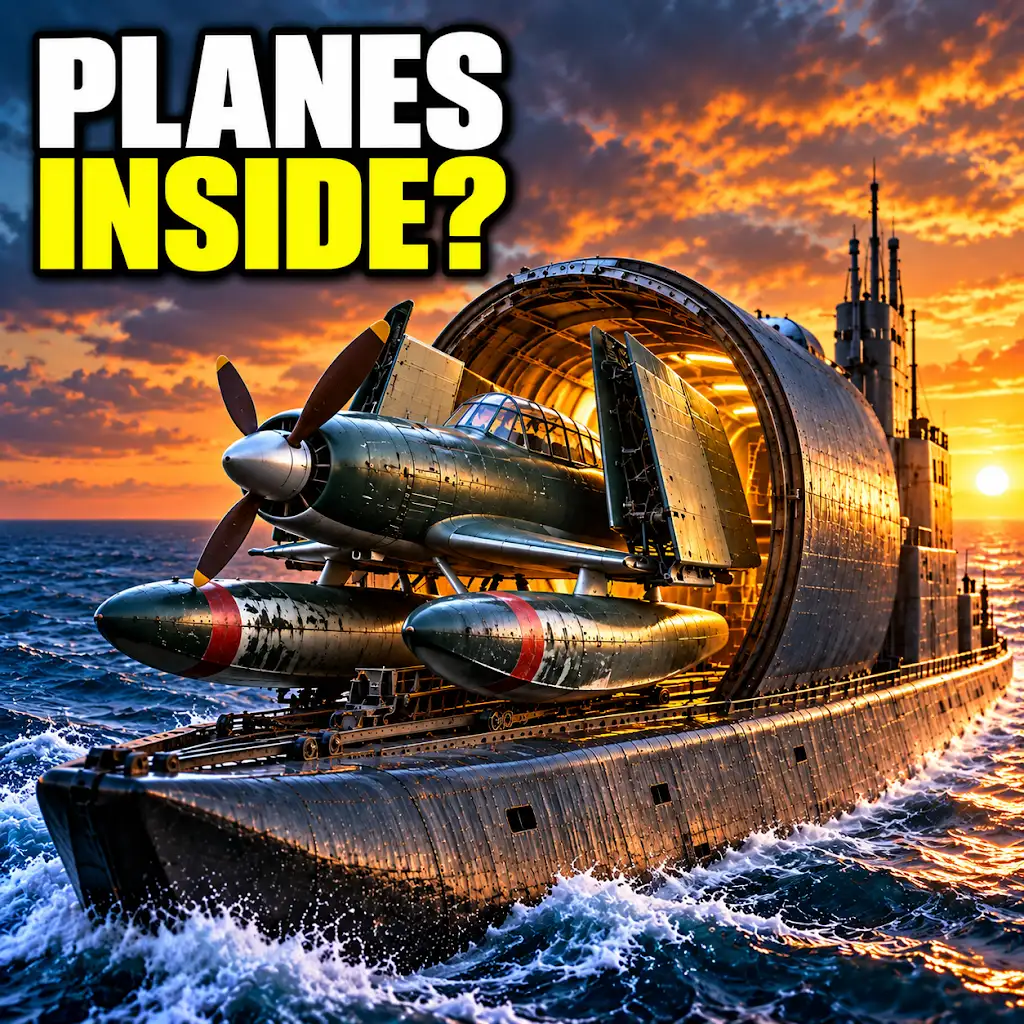
Japan Built a Submarine That Could Launch Three Planes
FAQs
What is the I-400 submarine?
The I-400 submarine was a large Japanese submarine built during World War II, designed to carry aircraft for long-range attacks.
Why was the US Navy examining the I-400 at Pearl Harbor?
The US Navy was examining the I-400 submarine at Pearl Harbor to gather intelligence on its advanced technology and capabilities after it was captured at the end of World War II.
What were some of the unique features of the I-400 submarine?
The I-400 submarine was known for its large size, ability to carry three aircraft in a watertight hangar, and long range capabilities that allowed it to travel long distances without refueling.
How did the US Navy come into possession of the I-400 submarine?
The I-400 submarine was captured by the US Navy in 1945 when Japan surrendered at the end of World War II. It was then taken to Pearl Harbor for examination and evaluation.
What was the significance of examining the I-400 submarine for the US Navy?
Examining the I-400 submarine provided the US Navy with valuable insights into Japanese naval technology and tactics, which helped inform future military strategies and developments.