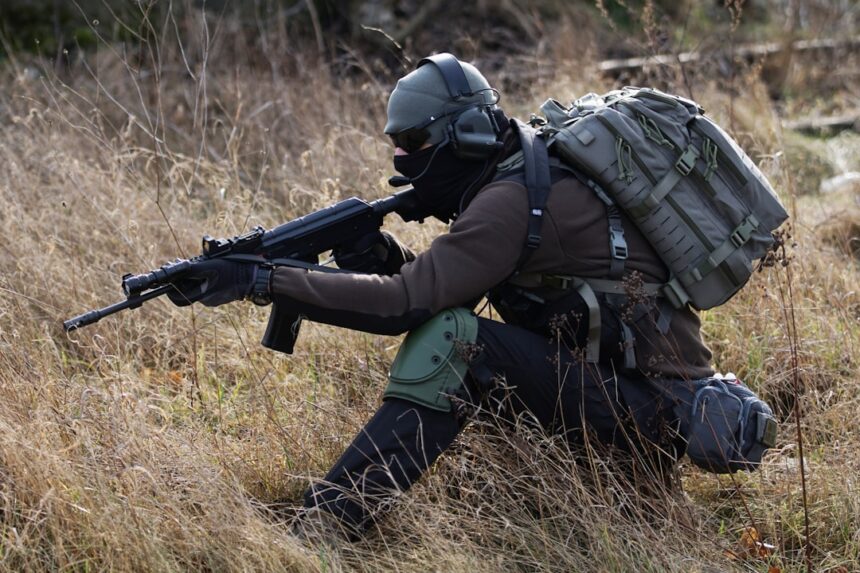
The evolution of warfare and the associated demands on modern militaries have brought about a significant and often debated shift in operational approaches. Among these shifts, the increasing reliance on Private Military Contractors (PMCs) by the United States has become a defining characteristic of contemporary security and defense strategies. These private entities, offering a spectrum of services ranging from logistical support and training to armed security and intelligence gathering, have injected a potent dose of efficiency and flexibility into the American military apparatus. This article will delve into the multifaceted use of PMCs in America, exploring the arguments for their efficiency and the undeniable benefits of their inherent flexibility.
The concept of private military involvement is not new; historically, mercenary forces have been a part of warfare for centuries. However, the modern iteration of PMCs, particularly in the post-Cold War era and amplified by the conflicts in Iraq and Afghanistan, represents a distinct evolution. The initial drivers for their increased adoption were often rooted in specific operational needs and perceived limitations of traditional military structures.
Post-Cold War Realities and the “New World Order”
Following the dissolution of the Soviet Union, the United States found itself as the sole superpower, engaging in a broader range of international interventions and peacekeeping operations. These deployments often stretched existing military resources thin. The Clinton administration, for example, utilized private sector expertise for functions such as intelligence analysis and logistical support in various peacekeeping missions. This era marked a subtle but significant shift, recognizing that certain tasks could be outsourced to civilian entities, thereby freeing up uniformed personnel for core combat roles.
The Strain of Prolonged Engagements: Iraq and Afghanistan
The prolonged and geographically dispersed conflicts in Iraq and Afghanistan acted as significant accelerators for PMC utilization. The sheer scale of operations, encompassing nation-building efforts, extensive reconstruction projects, and the need for pervasive security, created an overwhelming demand for personnel and specialized skills. The U.S. military, already dealing with recruitment challenges and the physical and mental toll of continuous deployment, found PMCs to be a viable solution to fill critical gaps.
Logistical Support and Base Operations
One of the most prevalent roles for PMCs has been in providing essential logistical support. This includes everything from food services, transportation, and maintenance of vehicles and equipment, to the operation and security of forward operating bases. By contracting out these often non-combat, but vital, functions, the military could significantly reduce its footprint and allow combat units to focus on their primary missions. This outsourced support was crucial for maintaining the operational readiness of troops in austere and challenging environments.
Security and Force Protection
Beyond logistics, PMCs have been extensively employed for security and force protection. This has ranged from guarding convoys and embassies to providing personal security details for high-ranking officials and key personnel. The ability of PMCs to deploy rapidly and operate with a degree of autonomy, without the same bureaucratic constraints as military units, made them an attractive option for ensuring the safety of personnel in high-risk zones.
The use of private military contractors (PMCs) in America has become a significant topic of discussion, particularly in light of their roles in various conflicts and military operations. An insightful article that delves into the reasons behind this trend can be found at In the War Room. This piece explores the advantages and challenges associated with employing PMCs, including cost-effectiveness, flexibility, and the implications for accountability and oversight in military engagements.
Efficiency Gains: The Economic and Operational Advantages of PMCs
The argument for the efficiency of PMCs rests on several pillars, including cost-effectiveness, speed of deployment, and the ability to access specialized skill sets that may be in short supply within the military. These perceived advantages have been a major driving force behind their continued integration into American defense strategies.
Cost-Effectiveness: A Complex Equation
The claim that PMCs are more cost-effective than uniformed military personnel is a complex one, often debated. Proponents argue that by avoiding the long-term costs associated with military personnel, such as pensions, healthcare for life, and extensive training pipelines, contracting out specific functions can be cheaper.
Reduced Overhead and Training Costs
When a PMC is contracted for a specific mission, the U.S. government effectively pays for the services rendered during the contract period. This avoids the perpetual financial commitment associated with active-duty personnel. Furthermore, PMCs often handle their own recruitment and specialized training, transferring those costs to the contracting company. For highly specialized roles, such as cybersecurity experts or experienced pilots for specific aircraft, it can be more efficient to contract with a firm that already possesses these individuals than to recruit, train, and retain them within the military.
Avoiding “Boots on the Ground” Perceptions
In certain political climates, reducing the visible presence of uniformed military personnel can be politically advantageous. While PMCs are still a visible presence, their civilian status can sometimes allow for a more palatable public perception compared to an expansion of active-duty deployments. This, in turn, can lead to less political friction and potentially lower overall mission costs by avoiding prolonged public and congressional scrutiny.
Speed of Deployment and Responsiveness
One of the most significant efficiency gains offered by PMCs is their inherent speed of deployment. In rapidly evolving security situations, the ability to deploy specialized personnel and equipment quickly can be paramount.
Agile Recruitment and Deployment Cycles
PMCs often have established recruitment networks and streamlined vetting processes that can allow them to assemble teams and deploy them far faster than the bureaucratic machinery of the military. This agility is particularly valuable in situations where a rapid response is critical, whether it’s to secure an area, provide immediate logistical support, or respond to emerging threats.
Bridging Gaps in Capability
When the military faces a sudden surge in demand or requires capabilities that are not readily available within its current force structure, PMCs can act as a rapid bridge. This allows military planners to address immediate needs without undertaking lengthy and resource-intensive efforts to build those capabilities internally.
Access to Specialized Skills and Expertise
The modern battlefield, both kinetic and cyber, demands a highly specialized set of skills. PMCs excel in providing access to these niche expertise areas.
Technical and Engineering Prowess
Many PMCs employ individuals with advanced technical and engineering skills, such as those needed for sophisticated equipment maintenance, communication systems operation, and even cyber defense. These skills might not be core competencies of every military branch and can be more efficiently sourced from specialized private sector firms.
Intelligence and Analytical Capabilities
In the realm of intelligence gathering and analysis, PMCs have played an increasingly important role. They can provide skilled analysts with linguistic capabilities, cultural expertise, and specialized knowledge of particular regions or threat actors. This can augment the intelligence capabilities of the military, providing crucial insights for operational planning and execution.
Flexibility Redefined: The Adaptability and Scalability of PMC Operations

Beyond efficiency, the flexibility offered by PMCs is a critical component of their appeal. This flexibility manifests in their adaptability to changing mission requirements, their scalability in terms of personnel and resources, and their ability to operate in environments where traditional military presence might be politically or strategically undesirable.
Mission Adaptability and Task Specialization
PMCs are, by nature, designed to be adaptable. Their business model often revolves around fulfilling specific contractual obligations, making them highly amenable to adapting their services as mission parameters shift.
Tailored Service Provision
Unlike the structured roles within a military hierarchy, PMCs can be contracted to perform highly specific tasks. This allows for a more tailored approach to meeting operational needs, where the client can essentially “buy” the exact services they require, without the overhead of maintaining a permanent, broader capability.
Responsiveness to Evolving Threats
As the nature of threats evolves, so too must the response. PMCs can be quickly retrained or reassigned to address new challenges, offering a more agile response mechanism than the often lengthy retraining cycles within the military.
Scalability and Resource Augmentation
The ability to rapidly scale operations up or down is a key benefit of employing PMCs. This allows for a flexible allocation of resources based on fluctuating demands.
Surge Capacity and Downsizing
During periods of intense operational activity, PMCs can provide a significant surge in personnel and resources, effectively augmenting the military’s capacity without the long-term commitment of increasing uniformed numbers. Conversely, as operations wind down, contracts can be reduced or terminated, allowing for a flexible downsizing of personnel without the complex process of military demobilization.
Managing Fluctuating Workloads
The irregular nature of military deployments and the often unpredictable timelines of international operations mean that workloads can fluctuate significantly. PMCs offer a mechanism to absorb these fluctuations, ensuring that essential functions are covered without overcommitting permanent military resources.
Operating in Sensitive or Restricted Environments
In certain situations, the presence of uniformed military personnel can be politically sensitive or strategically detrimental. PMCs can offer a discreet and often less politically charged alternative.
Discreet Operations and Deniability
While controversial, the use of PMCs can sometimes offer a degree of deniability in sensitive operations. This can be crucial in situations where direct military involvement might escalate tensions or violate international norms. The civilian status of PMC personnel can, in some instances, allow for a less overt and potentially more palatable presence.
Supporting Allies and Partners
PMCs can also be used to support allied nations or local security forces, providing training and operational assistance without a direct, visible military footprint from the U.S. This can strengthen partnerships and enhance regional stability while maintaining a lower profile for American direct involvement.
Challenges and Criticisms: The Shadow Side of PMC Integration

Despite the perceived efficiencies and flexibility, the use of PMCs in America is not without its significant challenges and criticisms. These issues range from accountability and oversight to ethical concerns and the potential for mission creep.
Accountability and Oversight Deficiencies
One of the most persistent criticisms leveled against PMCs is the difficulty in ensuring adequate accountability and oversight. The dual nature of their employment – contracted by the government but operated by private entities – can create complex chains of command and responsibility.
Legal and Ethical Dilemmas
When PMC personnel are accused of misconduct, ranging from criminal offenses to violations of humanitarian law, determining jurisdiction and enforcing accountability can be exceptionally challenging. The legal frameworks governing the actions of private individuals operating in conflict zones are often complex and can leave gaps where justice is difficult to secure.
The “Black Hole” of Oversight
Critics argue that the opaque nature of some PMC contracts and operations can create a “black hole” where misconduct can go undetected and unpunished. This lack of transparency erodes public trust and raises serious questions about the ethical implications of outsourcing security functions.
Erosion of Military Ethos and Professionalism
The extensive reliance on PMCs has also raised concerns about its potential impact on the military’s own ethos and professionalism.
Civilianization of Military Functions
As PMCs take on roles traditionally performed by soldiers, there is a concern that the military may become overly reliant on civilian contractors, potentially leading to a decline in organic military capabilities and a disconnect from core military values and traditions.
Impact on Troop Morale and Cohesion
The presence of well-paid PMC personnel working alongside uniformed soldiers in similar roles can sometimes create disparities in pay and working conditions, potentially impacting troop morale and unit cohesion.
The Risk of Mission Creep and Privatization of Force Projection
The very flexibility and efficiency that make PMCs attractive also carry the risk of “mission creep” and the subtle privatization of American force projection.
Undermining Democratic Control
When significant operational capabilities are outsourced to private entities, there is a concern that democratic oversight of military actions could be diminished. Decisions about the deployment and use of force could become more influenced by private sector interests than by public accountability.
The Profit Motive in Conflict
The inherent profit motive of private companies can, in some circumstances, create incentives that may not align with broader national security objectives or ethical considerations. The pursuit of profit could, in theory, prolong conflicts or encourage unnecessary interventions.
The increasing reliance on private military contractors in America has sparked significant debate regarding the implications for national security and military ethics. Many argue that these contractors provide essential support and flexibility in various operations, allowing the military to focus on strategic objectives. For a deeper understanding of this complex issue, you can explore a related article that discusses the motivations behind this trend and its impact on modern warfare. To read more, visit this insightful article.
The Future of PMCs in American Security Strategy
| Reasons for Using Private Military Contractors in America |
|---|
| Cost-effectiveness |
| Flexibility and scalability |
| Specialized expertise |
| Rapid deployment |
| Risk management |
The role of PMCs in American defense strategy is likely to remain a subject of ongoing debate and evolution. While the initial surge in their use during the height of the Iraq and Afghanistan wars may have stabilized, their integration into various aspects of security and defense is unlikely to disappear.
Refining Oversight and Accountability Mechanisms
Future approaches to PMC utilization will almost certainly focus on developing more robust oversight and accountability mechanisms. This may involve clearer contractual language, more stringent vetting processes, and improved legal frameworks for addressing misconduct.
International Norms and Regulations
Efforts to establish clearer international norms and regulations for the conduct of PMCs are also crucial. The development of global standards could help to address the accountability gaps and ensure a more consistent application of ethical principles.
Strategic Re-evaluation of Core Competencies
The military will likely continue to re-evaluate which functions are best suited for internal development and which can be effectively and ethically outsourced to the private sector. This will require a careful assessment of the long-term implications of relying on external providers for critical capabilities.
Balancing Cost, Efficiency, and Ethical Considerations
The ultimate success of PMC integration will depend on finding a sustainable balance between the perceived gains in cost and efficiency, and the critical ethical considerations surrounding the use of private actors in security and defense.
Conclusion: A Necessary Tool, Carefully Managed
The use of Private Military Contractors by the United States has undoubtedly offered significant advantages in terms of efficiency and flexibility. They have provided crucial logistical support, rapid deployment capabilities, and access to specialized skills, allowing the military to adapt to the complex demands of modern warfare. However, these benefits are inextricably linked to profound challenges concerning accountability, oversight, and the very nature of state power in conflict. The future of PMCs in American security strategy hinges on a continued, rigorous examination of their role, with a strong emphasis on developing robust mechanisms to ensure ethical conduct, transparent operations, and unwavering accountability. When employed judiciously and with appropriate safeguards, PMCs can serve as a valuable tool, but their integration must be guided by a clear understanding of their limitations and a steadfast commitment to upholding the principles of democratic control and human rights. The ongoing evolution of warfare demands continuous adaptation, and in this landscape, PMCs will likely remain a component, albeit one that requires constant vigilance and careful management.
Blackwater Disappeared. America’s Private Army Didn’t.
FAQs
What are private military contractors?
Private military contractors are private companies that provide military and security services to governments, international organizations, and other clients. These services can include combat operations, logistics, training, and security.
Why does America use private military contractors?
America uses private military contractors for a variety of reasons, including to supplement military forces, provide specialized skills and expertise, reduce costs, and to carry out certain operations that may not be suitable for regular military forces.
How are private military contractors regulated in the United States?
Private military contractors in the United States are regulated by various laws and regulations, including the Defense Federal Acquisition Regulation Supplement (DFARS) and the Uniform Code of Military Justice (UCMJ). Additionally, the U.S. government has implemented measures to increase oversight and accountability for private military contractors.
What are some criticisms of using private military contractors?
Critics of using private military contractors argue that they can operate with less accountability and oversight than regular military forces, leading to potential human rights abuses and misconduct. Additionally, there are concerns about the potential for conflicts of interest and the outsourcing of inherently governmental functions.
What role do private military contractors play in modern warfare?
Private military contractors play a significant role in modern warfare, providing a range of services that complement and support regular military forces. They are often utilized in conflict zones and areas where traditional military forces may face limitations or challenges.