The carefully orchestrated chaos that preceded the D-Day landings on June 6, 1944, was a testament to the power of deception in warfare. Operation Fortitude, the elaborate Allied strategy to mislead German intelligence about the true invasion target, was a masterpiece of psychological warfare, misinformation, and sheer audacity. Without it, the success of the Normandy landings, and arguably the swift end to World War II in Europe, would have been far less certain. The Allies understood that overwhelming force alone would not suffice; they needed to convince Hitler and his generals that the main thrust of the Allied invasion would come not in Normandy, but elsewhere.
The Art of Misdirection: Setting the Stage for Deception
The strategic imperative for deception was clear from the outset of planning for the invasion of Western Europe. German forces were formidable, particularly their panzer divisions, which were poised to counter-attack any Allied landing. If these reserves could be drawn away from Normandy, the invasion would face significantly less resistance. The Allies, aware of this vulnerability, decided to create not one, but two entirely fictitious armies, designed to draw German attention and resources away from the real invasion beaches. These phantom forces were the cornerstones of Operation Fortitude.
The Ghost Army: Convincing the Enemy of a Larger Force
The most visible element of Operation Fortitude was the creation of a massive, albeit entirely artificial, military presence. This involved a complex web of ruses designed to suggest the existence of the First U.S. Army Group (FUSAG), supposedly poised to invade the Pas-de-Calais region, a much closer and historically more logical landing site for the Allies from Britain. The choice of Pas-de-Calais was deliberate; it was the narrowest point of the English Channel, and thus the most expected invasion point. By focusing their deception efforts here, the Allies played directly into German preconceptions.
Fabricating a Force: The Tools of Illusion
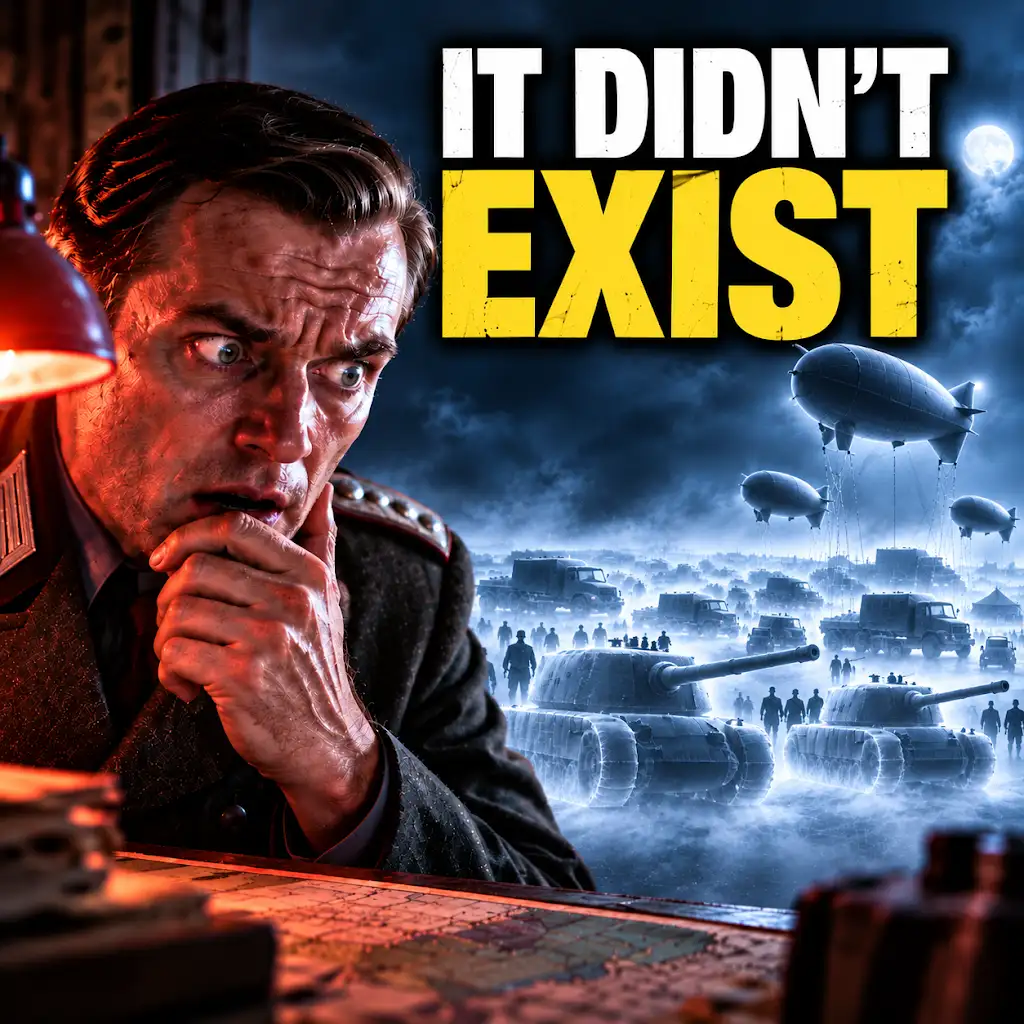
The construction of FUSAG was an elaborate undertaking that utilized every available tool of misdirection. Dummy tanks, made of inflatable rubber and canvas, were strategically placed in eastern England, often illuminated at night to simulate a large encampment. These were accompanied by dummy artillery pieces and even inflatable landing craft, all designed to be spotted by German reconnaissance aircraft or agents. Convoy routes were carefully managed to suggest troop and equipment movements towards the southeast coast. Radio traffic was amplified and broadcast, simulating the communications of a large army, with operators sending coded messages and engaging in seemingly authentic operational chatter that was, in reality, carefully crafted propaganda. Even the sounds of military activity were simulated, with engineers creating recordings of marching troops and vehicle engines to be played in areas where German agents might be present. The goal was to create a sensory overload of military presence, making the existence of a vast army undeniable to anyone observing from afar.
The Role of Double Agents: Feeding the Lie
Crucial to the success of Operation Fortitude was the manipulation of German intelligence through a network of double agents, known as “sleepers” and “moles.” These agents, working for the British intelligence organization MI6, were tasked with feeding carefully selected misinformation back to their German handlers. The most famous of these was Juan Pujol García, codenamed “Garbo.” Pujol was a Spanish national who, disillusioned with the Nazis, offered his services to the British. He proved to be an invaluable asset, constructing an elaborate network of sub-agents, all of whom were fictitious and controlled by Pujol himself. Through Garbo and his fictitious subordinates, the Germans received a steady stream of information that consistently pointed to the Pas-de-Calais as the primary invasion target. This included details about the supposed order of battle, troop strengths, and even fake attack plans. The Germans, eager to believe that their defenses were impregnable, readily accepted this fabricated intelligence, particularly as it corroborated their own strategic assessments.
One of the most fascinating aspects of World War II is the elaborate deception tactics employed by the Allies to mislead Germany before the D-Day invasion. A related article that delves into these strategies can be found on In The War Room, which explores how misinformation and clever ruses were pivotal in ensuring the success of the Normandy landings. To learn more about these fascinating tactics, you can read the article here: In The War Room.
Operation Bodyguard: The Overarching Deception Strategy

Operation Fortitude was not an isolated initiative; it was the most prominent component of a larger deception campaign known as Operation Bodyguard. This overarching strategy aimed to deceive the Axis powers about the timing, location, and scale of Allied operations in Europe throughout 1944. Operation Bodyguard encompassed a variety of deceptions, some directly related to D-Day, while others aimed to mislead the enemy about other potential Allied offensives, thereby stretching German defensive capabilities to their breaking point.
Diversionary Tactics: Broadening the Deception’s Reach
Operation Bodyguard employed a multi-pronged approach to confusion. While Fortitude focused on the invasion of France, other elements of Bodyguard aimed to mislead the Germans about potential invasions in other theaters or at different times. For example, Operation Glimmer aimed to suggest an invasion of Norway, a region that, while strategically less important, would still require significant German resources to defend. Operation Starkid, on the other hand, was designed to create the impression of an Allied landing in the Bordeaux region of southwestern France. These secondary deceptions, though less elaborate than Fortitude, served to further divide and bewilder German command. The sheer variety of perceived threats forced German High Command to maintain a dispersed defensive posture, preventing them from concentrating their reserves effectively against the true landing zones.
The Importance of Secrecy: Protecting the Real Plan
The success of Operation Bodyguard hinged on the absolute secrecy of the actual invasion plans. The Allies went to extraordinary lengths to ensure that no genuine information about the Normandy landings leaked to the Germans. Strict censorship was imposed on all communications, and any suspected leaks were investigated with extreme prejudice. The creation of FUSAG and the subsequent deception of German intelligence were designed to be so convincing that the Germans would actively dismiss any genuine intelligence that might suggest a Normandy invasion as misinformation or a diversion. This meant that even if the Germans had stumbled upon fragments of the real plan, they would likely have dismissed them as part of the elaborate ruse.
The Psychological Warfare Element: Exploiting German Beliefs

The Allies understood that deception was not merely about physical ruses; it was also about exploiting the psychological landscape of their enemy. German military doctrine, particularly after the successful Blitzkrieg campaigns, emphasized the importance of decisive thrusts and the use of concentrated armor. They also had a history of anticipating Allied invasions in the Pas-de-Calais. The Allies played directly into these predispositions, creating a scenario that perfectly aligned with German expectations.
The Illusion of Certainty: Reinforcing German Assumptions
The meticulous construction of FUSAG, with its seemingly vast resources and clear logistical preparations for an invasion of Pas-de-Calais, was designed to foster a sense of certainty within the German high command. This certainty, ironically, became a vulnerability. Instead of questioning the overwhelming evidence pointing to Pas-de-Calais, German commanders were lulled into a false sense of security. They believed they knew where the Allies were coming from and, by extension, where to commit their crucial reserves. This reliance on predictable patterns of warfare proved to be a critical miscalculation.
The Role of High-Ranking Defectors: Adding Credibility
In addition to double agents, the Allies also utilized the fabricated defection of a high-ranking, albeit fictitious, German officer. This fictional character, codenamed “Colonel Schmidt,” was presented as a disillusioned officer seeking to aid the Allied cause. Through Garbo, “Schmidt” provided detailed, but entirely fabricated, plans for the Pas-de-Calais invasion, complete with logistical details and strategic objectives. This manufactured testament from within the German military structure lent an unparalleled level of credibility to the entire deception. The Germans, receiving what appeared to be authentic internal information, further solidified their belief in the Pas-de-Calais invasion scenario.
The Aftermath of Deception: The Impact on D-Day
The success of Operation Fortitude and the broader Operation Bodyguard had a profound and direct impact on the unfolding of D-Day. When the Allied forces finally landed on the beaches of Normandy on June 6, 1944, the German response was significantly weaker than it would have been without the deception. Crucially, the powerful German panzer divisions that could have crushed the initial landings remained largely immobilized, either in the Pas-de-Calais region, waiting for an invasion that would never come, or held back by Hitler’s indecision, a direct consequence of the conflicting intelligence he received.
The Immobilization of German Reserves: A Critical Success
The primary objective of Operation Fortitude was achieved: the vast majority of German armored reserves were kept away from Normandy. Field Marshal Erwin Rommel, the commander responsible for defending the Atlantic Wall, believed that the Pas-de-Calais was the most likely invasion point and had positioned his strongest units accordingly. Even when reports of landings in Normandy began to filter in, German commanders were hesitant to commit their reserves, still believing that the main invasion was imminent elsewhere. Hitler himself was particularly hesitant to release the panzer divisions, famously stating that he would not believe an invasion had occurred in Normandy until he had personally seen it. This indecision, fueled by the deception, bought the Allies precious time to establish a secure foothold.
The Slow German Response: A Window of Opportunity
The delay in the German response allowed the Allied forces to land and consolidate their positions on the Normandy beaches. While the fighting was fierce, the absence of immediate, overwhelming counter-attacks by well-equipped panzer divisions proved to be a decisive factor. The Allies were able to land more troops and equipment than anticipated, and their beachhead grew with each passing hour. This delay, a direct consequence of Operation Fortitude, provided the critical window of opportunity that allowed the D-Day landings to succeed and the subsequent liberation of Europe to begin in earnest.
In the lead-up to D-Day, the Allies employed a series of elaborate deception tactics to mislead Germany about the true location of the invasion. One of the most notable operations was Operation Fortitude, which created a phantom army in Southeast England, complete with fake equipment and misleading radio traffic. This strategy successfully convinced the Germans that the main assault would occur at Pas de Calais rather than Normandy. For a deeper understanding of these tactics and their impact on the success of the invasion, you can read more in this insightful article on the subject here.
The Legacy of Operation Fortitude: A Masterclass in Deception
| Deception Method | Description | Impact on German Forces | Key Metrics |
|---|---|---|---|
| Operation Fortitude North | Fake buildup of forces in Scotland to suggest an invasion of Norway. | Diverted German troops to defend Norway. | Over 50,000 fake troops simulated via radio traffic and dummy equipment. |
| Operation Fortitude South | Created a fictitious First U.S. Army Group (FUSAG) under General Patton near Dover. | Convinced Germans that Pas de Calais was the main invasion target. | Deployed 10 dummy tanks, 20 dummy aircraft, and extensive fake radio communications. |
| Double Agents | Used double agents to feed false information to German intelligence. | Misled German command about timing and location of the invasion. | At least 5 key double agents actively transmitting false intel. |
| Fake Radio Traffic | Simulated communications of large armies preparing for invasion. | Maintained illusion of multiple invasion points. | Thousands of hours of fake radio transmissions recorded and broadcast. |
| Dummy Equipment | Used inflatable tanks, aircraft, and landing craft to simulate troop presence. | Deceived aerial reconnaissance and German spies. | Over 1,000 dummy vehicles deployed across southern England. |
Operation Fortitude remains one of the most successful and ambitious deception operations in military history. It stands as a testament to the ingenuity, meticulous planning, and sheer courage of the individuals involved. The Allies demonstrated that in modern warfare, overwhelming force must be complemented by cunning and psychological manipulation to achieve decisive victory. The deception not only saved countless lives on D-Day but also played a significant role in shortening the war and ultimately securing the Allied victory.
The Enduring Lessons of Deception: A Strategic Imperative
The principles of Operation Fortitude continue to be studied and applied in modern military strategy. The importance of creating convincing false objectives, employing double agents and misinformation, and understanding the psychological tendencies of the enemy remain critical elements of successful deception operations. The legacy of Fortitude serves as a potent reminder that in the complex theater of war, the ability to control the narrative and manipulate the perceptions of the adversary can be as potent a weapon as any tank or bomber. The ghost army of Operation Fortitude, though never firing a shot, played a pivotal role in the liberation of Europe, proving that sometimes, the greatest victories are won not on the battlefield, but in the minds of the enemy.
How the Allies Built an Army for Germany to Discover
FAQs
1. How did the Allies deceive Germany before D-Day?
The Allies used a variety of tactics to deceive Germany before D-Day, including creating fake army units, spreading false information, and conducting military exercises to mislead the Germans about the actual location of the invasion.
2. What was Operation Fortitude?
Operation Fortitude was a major deception campaign conducted by the Allies before D-Day. It involved creating fake army units and using double agents to mislead the Germans about the location and timing of the invasion.
3. How did the Allies use fake radio traffic to deceive Germany?
The Allies used fake radio traffic to deceive Germany by broadcasting false information about troop movements, military plans, and the location of key military assets. This misinformation was intended to confuse German intelligence and divert their attention away from the actual invasion plans.
4. What role did the Double Cross System play in deceiving Germany before D-Day?
The Double Cross System was a counterintelligence operation run by the British that used double agents to feed false information to the Germans. These double agents played a crucial role in deceiving Germany about the Allies’ invasion plans and helped to ensure the success of D-Day.
5. How did the Allies’ deception efforts impact the success of D-Day?
The Allies’ deception efforts played a significant role in the success of D-Day by confusing and misleading the German forces. By keeping the Germans in the dark about the true location and timing of the invasion, the Allies were able to gain a strategic advantage and achieve a successful landing on the beaches of Normandy.