The Prussian General Staff, a legendary institution forged in the crucible of war and honed by intellectual rigor, stands as a testament to strategic mastery. At its heart, and inextricably linked to its ascendance, was Helmuth von Moltke, often referred to as Moltke the Elder. His tenure and the foundational principles he instilled within the General Staff irrevocably shaped military thought and practice, not only for Prussia but for the world. This exploration delves into the genesis of the Prussian General Staff, its evolution under Moltke’s visionary leadership, and the enduring legacy of his strategic brilliance.
The concept of a dedicated, professional military staff was not an invention of the 19th century. However, the Prussian General Staff, as it emerged, represented a significant departure from its predecessors in terms of its systematic organization, intellectual depth, and influence.
The Legacy of Frederick the Great
Frederick the Great, the 18th-century Prussian monarch, was a formidable military commander who understood the importance of effective command and control. While he did not have a formal “General Staff” in the modern sense, his operations relied on a core group of trusted officers who assisted in planning, reconnaissance, and logistical support.
The King’s Personal Staff
Frederick’s personal military cabinet and adjutants served as his primary advisors and executors of his will on the battlefield. These individuals were often chosen for their intelligence, loyalty, and battlefield experience.
Emphasis on Detail and Execution
Frederick’s campaigns, particularly his victories in the Seven Years’ War, demonstrated a meticulous attention to detail in planning and a relentless drive for execution. This ingrained a culture of precision that would later be amplified by the General Staff.
The Napoleonic Wars: A Harsh Lesson
The devastating defeats suffered by Prussia at the hands of Napoleon Bonaparte in 1806 served as a stark and painful awakening. The Prussian army, once a formidable force, proved inadequate against Napoleon’s innovative tactics and the efficiency of his military machine. This humiliation became a powerful catalyst for reform.
The Collapse of the Old Order
The Battle of Jena-Auerstedt exposed the fundamental weaknesses in the Prussian military system, including a rigid command structure, a lack of initiative among subordinate officers, and a deficiency in staff training.
The Reform Movement
Following these catastrophic losses, a wave of reform swept through Prussia. Visionaries like Gerhard von Scharnhorst recognized the urgent need to modernize the military, moving away from a system based on aristocratic privilege and towards one driven by merit, professionalism, and intellectual capacity.
The Prussian General Staff, particularly under the leadership of General Helmuth von Moltke, played a crucial role in shaping modern military strategy and organization. For a deeper understanding of Moltke’s influence and the evolution of military tactics during his time, you can explore the article on the subject at this link: The Impact of Moltke on Modern Warfare. This article delves into the strategic innovations introduced by Moltke and how they set the foundation for future military operations.
The Birth of the General Staff: Scharnhorst’s Vision and Core Principles
Gerhard von Scharnhorst is widely credited as the principal architect of the modern Prussian General Staff. His reforms, initiated in the aftermath of the Napoleonic Wars, laid the intellectual and organizational foundations upon which Moltke would later build.
The Need for Professionalization
Scharnhorst understood that Prussia could not compete militarily without a highly skilled and professional officer corps. This meant moving beyond simply training men in the drill and tactics of the time.
Education and Training
A key element of Scharnhorst’s reforms was the establishment of the War Academy (Kriegsakademie). This institution was designed to provide officers with advanced theoretical knowledge in strategy, tactics, history, and other relevant subjects, fostering critical thinking and analytical skills.
Meritocracy over Aristocracy
Scharnhorst actively promoted the idea that promotion and advancement within the military should be based on merit and competence, rather than birthright or social standing. This opened the door for talented individuals from various backgrounds to rise within the ranks.
The General Staff as an Independent Body
Crucially, Scharnhorst envisioned the General Staff not as mere appendages to individual commanders, but as an independent body of highly trained officers responsible for strategic planning, operational analysis, and the development of military doctrine.
The “Great General Staff”
This concept of a “Great General Staff” evolved over time, but its essence was to create a continuous and institutionalized source of strategic expertise, detached from the immediate pressures of active command. This allowed for long-term planning and the development of innovative military ideas.
The Role of Staff Officers
The officers of the General Staff were expected to possess a broad range of knowledge, including history, geography, politics, economics, and law, in addition to military science. They were the intellectual backbone of the army.
Moltke’s Ascendancy: The Master Strategist and the Refinement of the General Staff
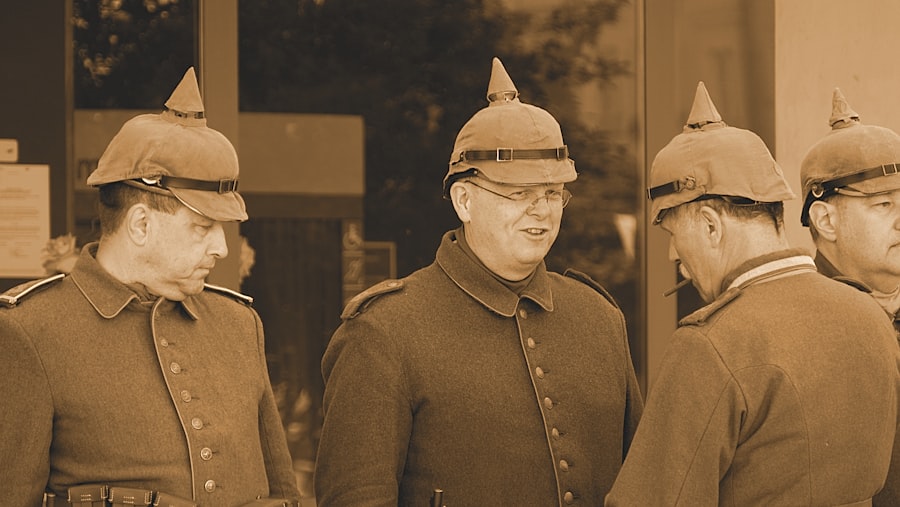
Helmuth von Moltke’s appointment as Chief of the General Staff in 1857 marked a pivotal moment. Building upon Scharnhorst’s foundations, Moltke transformed the General Staff into an unparalleled instrument of war, characterized by its scientific approach to strategy and its remarkable operational efficiency.
The Art of “Kriegsführung” (Waging War)
Moltke viewed warfare not as a chaotic melee, but as a complex science and an art form that could be understood and mastered through rigorous study and disciplined application.
Historical Precedent and Analysis
Moltke was a voracious reader and a keen student of military history. He believed that by studying past campaigns, successes, and failures, one could derive timeless principles of strategy and avoid repeating costly mistakes. The General Staff meticulously analyzed historical conflicts, extracting lessons applicable to modern warfare.
The Importance of Information
Moltke understood that sound strategic decisions were predicated on accurate and comprehensive information. He emphasized the need for robust intelligence gathering, reconnaissance, and analysis.
Reconnaissance and Intelligence Gathering
The General Staff developed sophisticated methods for gathering intelligence, including the use of scouts, spies, and detailed map-making. This information was crucial for understanding enemy dispositions, terrain, and potential vulnerabilities.
Analysis and Synthesis
The gathered intelligence was not merely collected; it was meticulously analyzed and synthesized by General Staff officers. They were trained to identify patterns, assess threats, and formulate actionable insights.
Mission Command (Auftragstaktik): Empowering Subordinates
Perhaps Moltke’s most profound innovation was the development and implementation of “Auftragstaktik,” often translated as “mission command” or “directive tactics.” This philosophy fundamentally altered the nature of command and control.
Decentralization of Decision-Making
Under Moltke’s system, higher headquarters would issue broad objectives and the intent of the commander, but subordinate commanders were given significant latitude to adapt their actions to the evolving battlefield situation.
Fostering Initiative and Adaptability
This decentralization empowered junior officers to exercise initiative and make decisions on the spot, without waiting for explicit orders from above. This was crucial in the rapidly changing and often chaotic environment of the battlefield.
The Role of the Subordinate Commander
Subordinate commanders were expected to understand the overall mission, the commander’s intent, and to act accordingly, even if the specific circumstances differed from the initial plan. This required a high degree of professional competence and trust.
The “Fog of War” and Prudence
Moltke acknowledged the inherent uncertainty and unpredictability of war – the “fog of war.” Mission command was designed to allow the army to navigate this fog more effectively by enabling decentralized responses to unexpected developments.
The Prussian General Staff’s Operational Successes: The Wars of Unification
The strategic brilliance of Moltke and the efficiency of the General Staff were put to the test in a series of decisive wars that reshaped the European balance of power.
The Second Schleswig War (1864)
While a joint operation with Austria, this war provided valuable experience for the Prussian General Staff and demonstrated their growing organizational capabilities.
Planning and Coordination
The General Staff meticulously planned the logistics, troop movements, and tactical objectives, showcasing an improved capacity for inter-service coordination.
The Austro-Prussian War (1866)
This conflict, often referred to as the “Seven Weeks’ War,” was a resounding triumph for Prussia and a clear demonstration of the superiority of its military system.
The Battle of Königgrätz (Sadowa)
This decisive battle was a masterpiece of operational art. Moltke’s deployment of Prussian forces, utilizing their superior speed of mobilization and concentration, encircled and defeated the Austrian army.
Strategic Encirclement
Moltke’s plan involved a pincer movement that brought two Prussian armies together, overwhelming the Austrians through superior coordination and rapid maneuver.
Railway Mobilization
The efficient use of Prussia’s expanding railway network was critical to the rapid mobilization and deployment of troops, giving them a significant advantage in speed and concentration of force.
The Franco-Prussian War (1870-1871)
This war, which led to the unification of Germany under Prussian leadership, further solidified the reputation of the Prussian General Staff as the most effective military organization in the world.
Mobilization and Logistics
The Prussian mobilization was a marvel of efficiency, achieving its objectives with astonishing speed and precision, largely due to the meticulous planning of the General Staff.
The Battle of Sedan
This battle resulted in the capture of Emperor Napoleon III and a significant portion of the French army, effectively ending French resistance.
Tactical and Operational Superiority
The Prussian forces, under the guidance of the General Staff, consistently outmaneuvered and outfought the French, demonstrating a clear superiority in planning, execution, and adaptation.
The Methodologies of Moltke: A Scientific Approach to Warfare
Moltke’s genius lay not in grand pronouncements or audacious gambles, but in a systematic, almost scientific, approach to the art of war. His methodologies were deeply ingrained within the General Staff’s operations.
The Principle of Concentration
A cornerstone of Moltke’s strategy was the principle of concentrating superior force at the decisive point. This was not merely about having more troops, but about achieving a decisive advantage through precise timing and maneuver.
Decisive Battle as the Goal
Moltke believed that the ultimate objective of a campaign was to achieve a decisive battle that would break the enemy’s will and capacity to resist.
Speed and Maneuver
Achieving concentration required speed and skillful maneuver to outflank or envelop enemy forces before they could react effectively.
The Importance of Logistics and Infrastructure
Moltke was acutely aware that military success was impossible without a robust logistical system. He understood the critical role of infrastructure, particularly railways, in supporting large-scale military operations.
Railway Development and Utilization
The Prussian General Staff actively engaged with the development and utilization of railways. They understood that railways were not just for troop transport but also for the rapid movement of supplies, equipment, and artillery.
Pre-War Planning
The General Staff conducted extensive pre-war planning regarding railway lines, timetables, and logistical hubs to ensure seamless mobilization and sustainment.
Strategic Reserves and Supply Lines
Maintaining secure supply lines and strategically placed reserves was paramount. Moltke’s plans always accounted for the logistical needs of his armies.
Continuous Planning and Adaptation
The General Staff did not engage in static, one-off planning. Their approach was dynamic, characterized by continuous planning, re-evaluation, and adaptation to changing circumstances.
War Games and Exercises
Regular war games and large-scale exercises were conducted to test plans, identify potential weaknesses, and train officers in decision-making under pressure.
Realistic Simulations
These exercises aimed to simulate battlefield conditions as realistically as possible, forcing officers to confront unexpected challenges and make difficult choices.
The Iterative Nature of Planning
The planning process was iterative, with plans being constantly refined based on new intelligence, the outcome of skirmishes, and the evolving strategic landscape.
The effectiveness of the Prussian General Staff under Helmuth von Moltke has been a subject of extensive analysis, particularly in how it shaped modern military strategy. For those interested in exploring this topic further, a related article provides insights into the organizational innovations that Moltke implemented, which transformed the Prussian army into a formidable force. You can read more about these significant developments in military history by visiting this detailed article.
The Enduring Legacy: Influence and Evolution of the General Staff
| Metrics | Data |
|---|---|
| Name | Prussian General Staff Moltke |
| Role | Chief of the Prussian General Staff |
| Years of Service | 1857-1888 |
| Notable Achievements | Reformed the Prussian military system, instrumental in the victories of the Austro-Prussian War and Franco-Prussian War |
The Prussian General Staff, under Moltke’s leadership, established a model of military organization and strategic thought that had a profound and lasting impact on military history. Its influence extended far beyond Prussia and Germany, shaping the development of general staffs in numerous other nations.
A Model for Other Nations
The successes of the Prussian military in the latter half of the 19th century led many other countries to study and emulate the Prussian model. Nations like France, Russia, and even the United States sought to establish their own general staffs based on Prussian principles.
The French General Staff’s Attempts at Reform
Despite the devastating defeat in 1870-71, France, after the war, recognized the need for a more professional general staff and attempted to reform its own organization, albeit with less success in the initial stages.
The United States and the Army War College
The establishment of the Army War College in the United States, and the eventual development of a more robust general staff system, can be traced back to the influence of the Prussian model.
The General Staff in World War I
While the Prussian General Staff as it existed under Moltke did not directly participate in World War I, its descendants and the principles it espoused played a significant role in the German military effort.
The Schlieffen Plan
Alfred von Schlieffen, Moltke’s successor, developed the famous Schlieffen Plan, a testament to the enduring influence of offensive planning and rapid maneuver, though its rigid execution ultimately contributed to German defeat.
The Question of Adaptability
The question of whether the German General Staff in WWI had lost some of the adaptability and mission command ethos that characterized Moltke’s era became a subject of much historical debate.
The General Staff in the 20th and 21st Centuries
The concept of a professional general staff, dedicated to strategic planning, operational analysis, and the development of military doctrine, remains a fundamental component of modern militaries worldwide. While the specific organizational structures and methodologies have evolved, the core principles of professionalism, intellectual rigor, and a commitment to excellence continue to resonate. The Prussian General Staff, and the strategic brilliance of Helmuth von Moltke, laid the indelible groundwork for this vital institution, forever changing the landscape of warfare and military thought.
The Military Machine That Didn’t Need a Napoleon
FAQs
What was the Prussian General Staff Moltke?
The Prussian General Staff Moltke was a military organization established in the 19th century in Prussia, which later became part of the German Empire. It was named after its chief, Helmuth von Moltke, who was a prominent military strategist.
What was the role of the Prussian General Staff Moltke?
The Prussian General Staff Moltke played a crucial role in the modernization and professionalization of the Prussian and later German military. It was responsible for strategic planning, intelligence gathering, and operational coordination of the armed forces.
What were some of the key achievements of the Prussian General Staff Moltke?
Under the leadership of Helmuth von Moltke, the Prussian General Staff played a pivotal role in the victories of the Prussian and German armies in the wars against Denmark, Austria, and France. It also contributed to the development of modern military tactics and operational methods.
How did the Prussian General Staff Moltke influence military strategy?
The Prussian General Staff Moltke emphasized the importance of thorough planning, intelligence gathering, and flexibility in military operations. Its approach to warfare, known as “Auftragstaktik” or mission-type tactics, had a significant impact on military strategy worldwide.
What was the legacy of the Prussian General Staff Moltke?
The Prussian General Staff Moltke left a lasting legacy in the field of military organization and strategy. Its methods and principles influenced military thinking and practice well into the 20th century, and its legacy can still be seen in modern military institutions and doctrines.