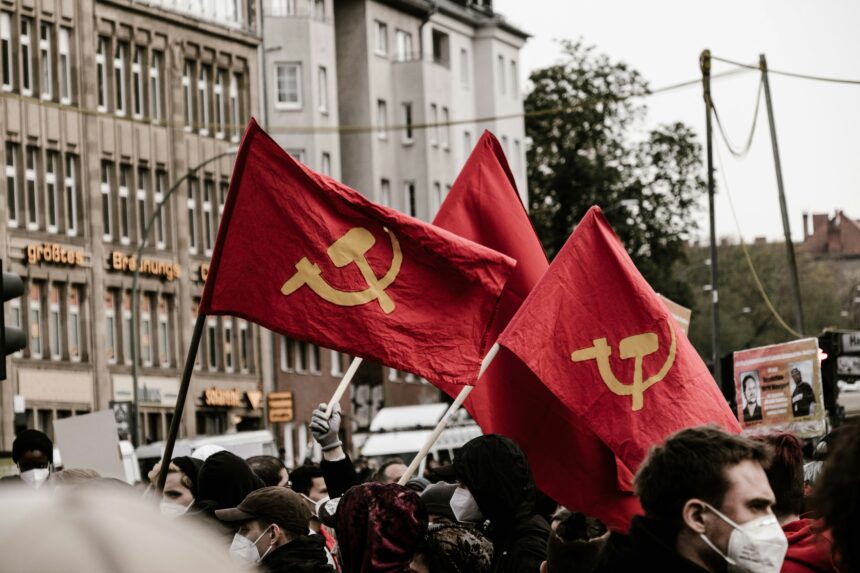
The mid-to-late 20th century witnessed a seismic shift in the global political landscape as the seemingly unshakeable edifice of communism began to crumble. While the Soviet Union’s dissolution in 1991 is often cited as the definitive end, the rot had set in much earlier, with a cascade of events leading to the fall of communist governments across Eastern Europe and beyond. Understanding this historical phenomenon requires an in-depth analysis of the internal contradictions within the communist system, the evolving geopolitical context, and the persistent human yearning for freedom and self-determination. The seeds of discontent were sown not in a single catastrophic event, but in a gradual erosion of ideological appeal and a growing disconnect between the promises of communism and the lived realities of its citizens.
The Ideological Blueprint and its Flaws
Communist ideology, born from the writings of Karl Marx and Friedrich Engels, promised a utopian future characterized by classless societies, the abolition of private property, and the liberation of the proletariat from capitalist exploitation. In theory, it offered a radical departure from the inequalities and injustices perceived in capitalist systems, envisioning a world where resources were distributed according to need. However, the practical implementation of this ideology proved to be a far cry from its idealistic origins.
The Myth of the Dictatorship of the Proletariat
- Centralized Power and the Suppression of Dissent: The Marxist concept of the “dictatorship of the proletariat,” intended as a temporary transitional phase, was perverted into the permanent rule of a single vanguard party. This concentration of power in the hands of a few, ostensibly representing the working class, inevitably led to authoritarianism. Dissent, regardless of its merit, was systematically crushed through state-controlled media, secret police, and the pervasive threat of imprisonment or worse. The voice of the people, the very subject of the revolution, was silenced.
- The Iron Grip of the Party: The Communist Party became an all-encompassing entity, dictating every facet of public and often private life. From economic planning to cultural expression, the party’s directives were paramount. This stifled individual initiative, creativity, and the natural evolution of societal norms. Innovation was often met with suspicion, as it deviated from established party dogma.
The Economic Reality: Central Planning’s Shortcomings
- Inefficiency and Lack of Innovation: The core economic tenet of communism was central planning, where state bureaucrats, rather than market forces, determined production quotas, resource allocation, and pricing. This system, while capable of rapid industrialization in its nascent stages, proved inherently inefficient in the long run. Planners, lacking real-time market information and incentives for efficiency, often produced goods that were not in demand or suffered from chronic shortages of essential items. Innovation was stifled by the lack of competition and the absence of profit motives.
- The Black Market and Growing Dissatisfaction: The inefficiencies of the planned economy fostered a thriving black market. Citizens, unable to acquire desired goods through official channels, turned to illegal trade, highlighting the disconnect between official pronouncements of prosperity and the everyday struggles of acquiring basic necessities. This informal economy, while a survival mechanism, also underscored the systemic failures of the official economic model and bred cynicism.
- The Standard of Living Lag: Compared to their Western counterparts, citizens of communist states generally experienced a significantly lower standard of living. While basic needs might have been met, access to consumer goods, modern technology, and a diverse range of choices remained limited. This stark contrast, increasingly visible through accessible foreign media and limited travel, fueled a deep-seated sense of grievance.
The fall of communist governments around the world has been a significant topic of discussion in political history, illustrating the complex interplay of economic, social, and ideological factors. A related article that delves into this subject is available at In the War Room, which examines the various strategies and movements that contributed to the decline of these regimes. By analyzing case studies and historical events, the article provides valuable insights into the reasons behind the collapse of communist governments and the subsequent transition to different political systems.
The Geopolitical Chessboard: The Cold War’s Enduring Shadow
The fall of communist governments cannot be understood in isolation from the broader geopolitical context of the Cold War. The ideological and military standoff between the Soviet bloc and the Western powers created a unique environment that both sustained and ultimately contributed to the unraveling of communism.
The Soviet Hegemony and its Limits
- The Brezhnev Doctrine: Enforcing Compliance: The Soviet Union, as the dominant power in the Eastern Bloc, actively maintained its influence through a policy of enforced conformity. The Brezhnev Doctrine, articulated after the 1968 invasion of Czechoslovakia, asserted the right of the Soviet Union to intervene in the affairs of any socialist country where the foundations of socialism were deemed to be under threat. This doctrine, while intended to preserve the communist order, instilled fear and resentment among satellite states, fueling a latent desire for independence.
- Economic Burden of Empire: Maintaining this vast empire placed an immense economic strain on the Soviet Union. Resources were diverted to military spending, supporting client states, and suppressing internal dissent. This economic drain, coupled with the inherent inefficiencies of its own planned economy, weakened the Soviet Union from within, diminishing its capacity to prop up struggling communist regimes.
The West’s Gradual Influence
- Economic and Cultural Infiltration: Despite the Iron Curtain, Western economic and cultural influence gradually seeped into the Eastern Bloc. Western consumer goods, music, and ideas, though often contraband, offered a tantalizing glimpse of an alternative lifestyle. This cultural penetration, amplified by the advent of technologies like television and radio, chipped away at the ideological insulation provided by communist regimes.
- The Helsinki Accords and Human Rights: The Helsinki Accords of 1975, a landmark agreement that sought to improve East-West relations, included provisions on human rights. While initially viewed by the Soviets as a way to legitimize their post-war borders, it inadvertently provided a framework for dissidents to advocate for greater freedoms and for Western governments to pressure communist regimes on human rights issues.
The Rise of Dissent: Voices of Change
The internal contradictions of communism, coupled with the external pressures of the Cold War, created fertile ground for dissent to blossom. While overt opposition was often met with severe repression, various forms of resistance, both organized and individual, played a crucial role in undermining the legitimacy of communist rule.
The Power of the Written Word and the Spoken Truth
- Samizdat Literature: In the absence of free press, clandestine publications known as “samizdat” (self-published) became a vital conduit for uncensored information and critical thought. These mimeographed or typewritten documents, circulated secretly, exposed the lies and hypocrisy of the regimes, offering alternative narratives and fostering a sense of shared grievance among intellectuals and ordinary citizens alike.
- Independent Intellectuals and Dissident Movements: Throughout the Eastern Bloc, courageous intellectuals and activists formed independent movements, often focusing on specific issues like environmental protection, civil liberties, or national rights. While small in number, these groups provided leadership, organizational structures, and a moral compass for burgeoning discontent. Figures like Václav Havel in Czechoslovakia and Lech Wałęsa in Poland became international symbols of resistance.
The Unseen Resistance: Everyday Acts of Defiance
- Passive Resistance and Cynicism: Beyond organized dissent, a pervasive undercurrent of passive resistance and cynicism permeated communist societies. This manifested in small acts of defiance, such as openly mocking official propaganda, deliberately misunderstanding directives, or engaging in minor forms of corruption to navigate the system. While seemingly trivial, these acts collectively eroded the authority and legitimacy of the regimes.
- The Erosion of Belief: Over time, the gap between the grand pronouncements of communist ideology and the everyday realities of scarcity, repression, and corruption led to a profound erosion of genuine belief. The initial revolutionary fervor had long since faded, replaced by a pragmatic acceptance of the status quo, punctuated by a simmering resentment.
Gorbachev’s Reforms: Unintended Consequences
The emergence of Mikhail Gorbachev as the leader of the Soviet Union in 1985 marked a turning point. Recognizing the deep-seated economic and social problems plaguing the USSR, Gorbachev initiated a series of ambitious reforms aimed at revitalizing the system. However, these reforms, intended to strengthen communism, ultimately unleashed forces that led to its collapse.
Glasnost and Perestroika: Opening the Floodgates
- Glasnost (Openness): Gorbachev’s policy of glasnost aimed to increase transparency and reduce censorship. The intention was to foster a more open dialogue about societal problems and encourage constructive criticism. However, glasnost inadvertently opened the floodgates to decades of pent-up grievances, historical revelations, and demands for radical change. Citizens were suddenly exposed to the full extent of the system’s failures and the atrocities committed in the past.
- Perestroika (Restructuring): Perestroika was an attempt to reform the Soviet economy by introducing elements of market mechanisms and decentralization. While intended to boost efficiency, the transition was often chaotic and disruptive. It exposed the fundamental weaknesses of the planned economy without providing a viable alternative, leading to economic instability and further public dissatisfaction.
The Domino Effect: The Loss of Soviet Control
- The Signal from Moscow: Gorbachev’s signal that the Soviet Union would no longer militarily intervene to prop up Eastern European communist regimes was a pivotal moment. This effectively ended the Brezhnev Doctrine and emboldened citizens in satellite states to demand change, knowing they would not face Soviet tanks.
- The Revolutions of 1989: The year 1989 witnessed a wave of largely peaceful revolutions across Eastern Europe. Inspired by events in neighboring countries and emboldened by the new Soviet stance, citizens took to the streets. The fall of the Berlin Wall in November 1989 became a potent symbol of the collapse of the Iron Curtain and the imminent end of communist rule in the region.
The collapse of communist governments around the world has been a subject of extensive analysis, shedding light on the various factors that contributed to their downfall. A particularly insightful article discusses the economic challenges and social unrest that played pivotal roles in these transitions. For those interested in exploring this topic further, you can read more about it in this related article, which examines the historical context and key events that led to the end of communist regimes. The insights provided can help us understand the complex dynamics that shaped the political landscape during that era.
The Aftermath and Legacy: Navigating the New Landscape
The fall of communist governments left a profound and complex legacy. The transition to democracy and market economies was often fraught with challenges, but it also opened up new possibilities for individual freedom and economic development.
The Transition to Democracy and Market Economies
- Economic Shock Therapy and its Discontents: Many former communist states adopted “shock therapy” approaches to economic transition, rapidly liberalizing prices and privatizing state-owned enterprises. While this led to some long-term economic growth, it also resulted in widespread unemployment, increased inequality, and social dislocation in the short to medium term.
- Political Instability and the Rise of Nationalism: The collapse of central authority in some regions led to periods of political instability, ethnic tensions, and the rise of nationalist sentiments. The artificially drawn borders of the Soviet era, for instance, contributed to conflicts in the Balkans and the Caucasus.
- Rebuilding Institutions and Civil Society: The process of rebuilding democratic institutions, establishing the rule of law, and fostering a vibrant civil society proved to be a long and arduous journey. Many countries struggled with corruption, organized crime, and the lingering influence of former elites.
The Enduring Debate and the Lessons Learned
- The Successes of Liberation: Despite the challenges, the fall of communism brought about undeniable successes. Millions were liberated from authoritarian rule, gaining the right to vote, to express themselves freely, and to pursue their own destinies. Economic opportunities, though unevenly distributed, expanded significantly.
- The Perils of Unchecked Power: The collapse of communist regimes served as a stark reminder of the inherent dangers of unchecked state power and the suppression of individual liberties. It underscored the importance of democratic accountability, human rights, and the free exchange of ideas.
- The Nuances of History: The historical analysis of the fall of communism reveals that there was no single cause, but rather a confluence of internal systemic weaknesses, external geopolitical pressures, and the persistent agency of individuals and movements demanding change. It serves as a powerful testament to the resilience of the human spirit and the enduring appeal of freedom. The legacy of this era continues to shape the geopolitical landscape and inform ongoing debates about governance, economics, and human rights.

The $17 Million That Helped Destroy an Empire
FAQs

1. What are some reasons for the fall of communist governments?
Some reasons for the fall of communist governments include economic inefficiency, lack of political freedom, corruption, and resistance from citizens.
2. Which countries have experienced the fall of communist governments?
Some countries that have experienced the fall of communist governments include the Soviet Union, Eastern European countries such as Poland, Hungary, and Czechoslovakia, as well as countries in Asia such as China and Vietnam.
3. How did the fall of communist governments impact the global political landscape?
The fall of communist governments led to the end of the Cold War, a shift towards democracy and capitalism in many countries, and the reconfiguration of global alliances and power dynamics.
4. What role did popular uprisings and protests play in the fall of communist governments?
Popular uprisings and protests played a significant role in the fall of communist governments, with movements such as Solidarity in Poland and the Velvet Revolution in Czechoslovakia leading to the overthrow of communist regimes.
5. What are some long-term effects of the fall of communist governments?
Some long-term effects of the fall of communist governments include the transition to market economies, the establishment of democratic institutions, and the reintegration of former communist countries into the global economy and political system.