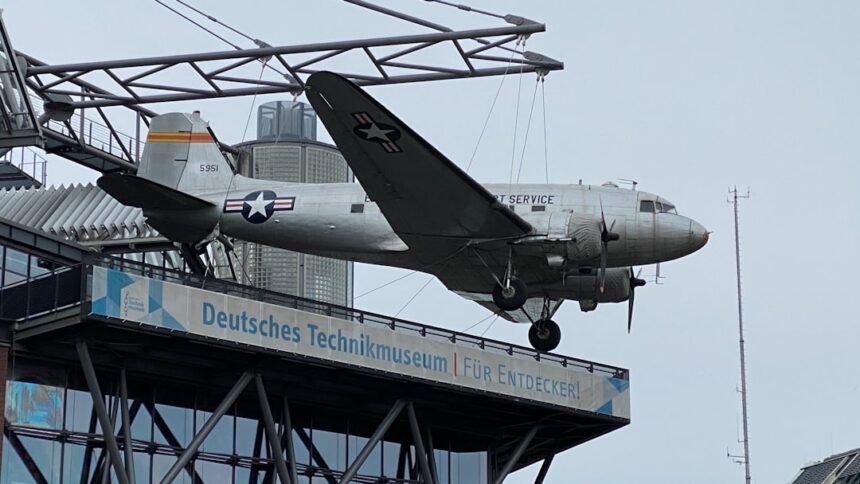
The hum of its engines, a persistent heartbeat against the scarred skies of post-war Europe, was the sound of salvation. The Douglas C-47 Skytrain, a workhorse of the Second World War, found its most poignant and vital purpose not in the thunder of combat, but in the quiet, determined rhythm of feeding a starving city. Its role in the Berlin Airlift, a monumental undertaking born out of Cold War tension and human compassion, cemented its legacy as a symbol of resilience and hope.
The end of the Second World War did not bring immediate peace to Berlin. Instead, it ushered in a new kind of conflict, a geopolitical standoff between the victorious Allied powers. Germany, and Berlin specifically, was divided into four occupation zones: American, British, French, and Soviet. Berlin, situated deep within the Soviet zone, became an island of Western influence in a sea of communist control. This precarious arrangement, intended to be temporary, quickly solidified into a tangible division.
The Iron Curtain Descends
The ideological chasm between the Soviet Union and the Western Allies widened with alarming speed. Moscow, seeking to consolidate its power and prevent the re-emergence of a strong, unified Germany, began to exert increasing pressure on the Western sectors of Berlin. The city, a vital artery of communication and a stark reminder of the Allied presence, became a focal point of this escalating tension.
The Blockade: A Soviet Gamble
In June 1948, the Soviet Union made its move. Citing currency reforms in the Western zones of Germany and West Berlin as justification, they abruptly cut off all land and water routes into the city. Trains stopped, barges were halted, and trucks were turned back at Soviet checkpoints. The aim was clear: to force the Western Allies to abandon West Berlin and absorb it entirely into the Soviet sphere of influence. The city’s inhabitants, numbering over two million, were suddenly isolated, their lifeline to the outside world severed.
The C-47 played a crucial role during the Berlin Airlift, showcasing its capabilities in transporting essential supplies to West Berlin amidst the Soviet blockade. For a deeper understanding of the strategic significance and operational challenges faced during this pivotal moment in history, you can read a related article on the topic at In the War Room. This resource provides valuable insights into the logistics and heroism involved in one of the largest airlift operations ever conducted.
The C-47: An Unlikely Hero Emerges
Amidst the growing despair and the chilling pronouncements of a city doomed to capitulate, an unlikely hero was about to take flight. The Douglas C-47 Skytrain, affectionately nicknamed “Dakota” by the British, had already proven its mettle in countless wartime operations. Its rugged construction, its ability to operate from rudimentary airfields, and its impressive payload capacity made it an indispensable asset in delivering troops, supplies, and equipment across vast distances. Now, it was called upon for its most extraordinary mission.
From War Front to Humanitarian Lifeline
The C-47 was a descendant of the DC-3 airliner, a civilian marvel of its time. During the war, its civilian heritage was largely stripped away, replaced by a focus on military utility. Its distinctive silhouette, with its twin radial engines and robust fuselage, became a familiar sight over battlefields and behind enemy lines. But its inherent reliability and adaptability meant that when the Berlin Blockade began, the C-47 was a readily available and proven platform for aerial transport. Its cargo hold, though not as capacious as some later aircraft, was substantial enough to carry vital foodstuffs, coal, medicines, and other essential supplies.
Engineering for Endurance
The C-47 was designed for durability. Its metal construction, robust landing gear, and powerful engines allowed it to withstand the rigors of military operations, including rough landings and challenging weather conditions. For the Berlin Airlift, these qualities were paramount. The aircraft would be flying around the clock, often in less-than-ideal weather, needing to land on relatively short runways with demanding approaches. The C-47’s proven track record in such environments provided a crucial foundation of confidence for the planners of the airlift.
Operation Vittles: The Sky’s the Limit

The Allied response to the Soviet blockade was swift and decisive. Rather than engage in direct military confrontation, which carried the risk of escalating into a third world war, they opted for a bold and unprecedented solution: an airlift. The aim was to supply the beleaguered city entirely by air, demonstrating to the Soviets that West Berlin would not fall without a fight. This monumental undertaking, codenamed “Operation Vittles” by the Americans and “Operation Plainfare” by the British, became one of the largest humanitarian aid efforts in history.
The Scale of the Challenge
The logistical nightmare of supplying a city of over two million people solely by air was immense. Berlin required thousands of tons of food, fuel, and essential materials every single day. The existing airfields around the city – Tempelhof, Gatow, and later Tegel – were quickly overwhelmed. The C-47s, along with other Allied aircraft, would need to fly in a constant stream, navigating narrow air corridors under strict Soviet oversight, and landing at intervals of mere minutes. The mental and physical endurance required of the aircrews and ground crews was staggering.
The Allied Commitment: A United Front
The Berlin Airlift was a testament to the unity and resolve of the Western Allies. The United States, Great Britain, and France pooled their resources and personnel to make the airlift a success. American C-47s flew alongside British Dakotas, and French forces also contributed to the effort. The shared objective of defending freedom and democratic values in the heart of Europe forged a powerful bond between these nations.
The C-47 in Action: A Symphony of Engines and Determination
The C-47 became the backbone of the Berlin Airlift, particularly in the early stages. Its relative abundance, proven reliability, and capacity for carrying significant loads made it the workhorse of the operation. Day in and day out, the familiar drone of its twin engines filled the skies over Berlin, a constant reminder that the city was not forgotten.
The “Rosinenbomber” and the Candy Drops
The C-47s were not just delivering essential supplies; they were also delivering hope and a sense of normalcy to the children of Berlin. One of the most enduring images of the airlift is that of C-47 pilots dropping small parcels of candy attached to handkerchief parachutes for the children gathered below. This act of kindness, initiated by American pilot Gail Halvorsen, earned the C-47 pilots the affectionate nickname “Rosinenbomber” (Raisin Bombers) or “Candy Bombers.” This gesture, seemingly small, had a profound impact, fostering goodwill and demonstrating the human face of the airlift.
The Rhythm of the Runways
The operation demanded an almost unbelievable rhythm. C-47s would land at Tempelhof, Gatow, or Tegel every few minutes, unload their precious cargo, and then take off again for their next mission. Ground crews worked tirelessly, often in harsh weather, to load and unload the aircraft with astonishing speed. The C-47s were refueled, rearmed (with supplies, not weapons), and dispatched back into the sky, a continuous cycle of delivery and return.
Navigating the Corridors of Fear
The air corridors into Berlin were strictly defined by the Soviets, and navigating them required precision and adherence to strict flight plans. The C-47 pilots, often flying in challenging visibility conditions, had to maintain their course and altitude with unwavering accuracy. The constant threat of Soviet interference, while never escalating to outright aggression during the airlift itself, hung in the air, adding another layer of tension to an already demanding mission.
The C-47 played a crucial role during the Berlin Airlift, showcasing its versatility and reliability in transporting essential supplies to the beleaguered city. For those interested in learning more about the broader implications of this historic operation, you can explore a related article that delves into the strategic significance of the airlift and its impact on Cold War dynamics. This insightful piece can be found here.
The Legacy of the Airlift: A Victory for Humanity
| Metrics | Data |
|---|---|
| Duration of Airlift | June 24, 1948 – May 12, 1949 |
| Total Flights | over 277,000 |
| Total Tonnage of Supplies | over 2.3 million tons |
| Total Distance Flown | over 92 million miles |
After nearly a year of relentless flying, the Soviet Union, realizing the futility of their blockade and facing international condemnation, finally relented. On May 12, 1949, the blockade was lifted. The Berlin Airlift had been a resounding success, not only in saving the city from starvation but also in demonstrating the power of collective action and the unwavering commitment to democratic ideals.
More Than Just Supplies: A Symbol of Freedom
The Berlin Airlift transcended its practical purpose. It became a potent symbol of Western resolve against Soviet expansionism and a powerful testament to the resilience of the human spirit. The C-47, the humble workhorse that carried the burden of this monumental effort, became inextricably linked with this victory. Its engines, once associated with the grim realities of war, now sang a song of freedom and liberation.
The Enduring Impact on the C-47
The Berlin Airlift marked a defining chapter in the history of the C-47. While it had served valiantly in war, this humanitarian mission showcased its true potential as a force for good. The aircraft’s legacy was forever enhanced, embodying courage, dedication, and the extraordinary lengths to which ordinary people would go to help others in need. Even today, the sight of a C-47 evokes memories of this remarkable chapter in history, a reminder that even in the darkest of times, hope can take flight.

How 90 Seconds Kept 2 Million People Alive
FAQs
What was the C-47 Berlin Airlift?
The C-47 Berlin Airlift refers to the massive effort to supply West Berlin with food, fuel, and other necessities using C-47 transport aircraft during the Soviet blockade of the city from 1948 to 1949.
How did the C-47 Berlin Airlift come about?
The airlift was a response to the Soviet Union’s blockade of West Berlin, which aimed to cut off the city from the rest of the world in an attempt to force the Western Allies to abandon their presence in the city.
What role did the C-47 aircraft play in the Berlin Airlift?
The C-47 transport aircraft, along with other types of planes, were used to airlift supplies into West Berlin. They played a crucial role in delivering food, coal, and other essential goods to the city’s residents.
How long did the C-47 Berlin Airlift last?
The C-47 Berlin Airlift lasted for 11 months, from June 1948 to May 1949. During this time, over 200,000 flights were made, delivering around 2.3 million tons of supplies to West Berlin.
What was the outcome of the C-47 Berlin Airlift?
The C-47 Berlin Airlift was a success for the Western Allies, as it demonstrated their commitment to West Berlin and thwarted the Soviet Union’s attempt to force them out of the city. It also led to the eventual lifting of the blockade in May 1949.