Poland’s journey through the mid-20th century and beyond was indelibly marked by the imposition of Communist rule. This era, stretching from the immediate aftermath of World War II until the pivotal events of 1989, was characterized by a complex interplay of Soviet influence, internal political maneuvering, and the persistent struggle of the Polish people for freedom. While the Communist regime promised a new, equitable society, its implementation was often accompanied by widespread repression, a systematic curtailment of liberties, and a heavy hand that sought to control every facet of public and private life. This period, therefore, represents a significant chapter in Polish history, one that continues to shape the nation’s identity and its relationship with the past.
Following the devastation of World War II, Poland found itself in a precarious geopolitical position. The Soviet Union, having played a crucial role in the liberation of Poland from Nazi Germany, asserted its dominance over the country’s future. Despite initial hopes for a democratic government, the seeds of Communist control were sown through a series of maneuvers orchestrated by Moscow.
The Yalta Conference and its Aftermath
The Yalta Conference of February 1945, where the Allied powers (including the Soviet Union, the United States, and the United Kingdom) discussed the post-war order, had profound implications for Poland. While the agreement called for a provisional government of national unity to be formed and free elections to be held, the Soviet interpretation of these stipulations differed significantly from that of the Western Allies. Stalin’s primary objective was to secure a friendly buffer state on his western border, and this meant ensuring a Poland aligned with Soviet interests.
- The Provisional Government of National Unity: Initially, a Moscow-backed Provisional Government of National Unity was established in June 1945, incorporating some members of the London-based Polish government-in-exile and the Polish Committee of National Liberation (PKWN), the Soviet-sponsored administration. However, this was a fragile coalition, with real power concentrated in the hands of the Polish Workers’ Party (PPR), the nascent Communist organization.
- Suppression of Opposition: The period leading up to and following the 1947 elections was marked by intense pressure on non-Communist parties. The Polish Peasant Party (PSL), led by Stanisław Mikołajczyk, was a significant opposition force. It faced harassment, intimidation, and ultimately, its leaders were forced into exile or silenced. The rigged elections of January 1947, officially sanctioned by the “Tricycle Referendum,” solidified the Communist Party’s grip on power, with the PPR, now merged with the socialist party to form the Polish United Workers’ Party (PZPR), declared the victor.
The Establishment of the People’s Republic of Poland
The formal establishment of the Polish People’s Republic (PRL) in 1947 marked the beginning of an era of Soviet-style socialist governance. This new state was characterized by a one-party system, a centrally planned economy, and a close ideological and political alignment with the Soviet Union.
- The Role of the Soviet Union: Soviet influence was pervasive. Soviet advisors were embedded within key government ministries and security forces. The Polish military was reorganized along Soviet lines, and the country became a member of the Warsaw Pact in 1955, further cementing its strategic alignment.
- Ideological Indoctrination: The regime embarked on a comprehensive program of ideological indoctrination. Education, media, and cultural institutions were all used to promote Marxist-Leninist ideology and the virtues of the socialist system. Historical narratives were rewritten to fit the Communist agenda, and the contributions of non-Communist figures and movements were often downplayed or erased.
During the period of communist rule in Poland, the country experienced significant social and political changes that shaped its history. A related article that delves into the complexities of life under this regime can be found at In the War Room, where it explores the struggles and resilience of the Polish people during this tumultuous time. The article provides insights into the impact of communism on Polish society and the eventual path to democracy.
The Stalinist Era and Pervasive Repression
The late 1940s and early 1950s, often referred to as the Stalinist period in Poland, witnessed some of the most brutal and systematic repression under Communist rule. This era was defined by purges within the party, the silencing of dissent, and the creation of a climate of fear.
Political Purges and the “Enemies of the People”
The Polish United Workers’ Party, like its Soviet counterpart, engaged in extensive internal purges to consolidate power and eliminate perceived threats. Accusations of “deviationism,” “bourgeois nationalism,” or “enemies of the people” were common, leading to the arrest, imprisonment, and sometimes execution of party members and individuals deemed undesirable.
- The Béla-Király Trial: A notable example of this period was the show trial of László Rajk in Hungary, which had a chilling effect across Eastern Europe, including Poland. Similar trials and accusations of treason and espionage were used to legitimize the removal of political rivals.
- Targeting of Intellectuals and the Church: Intellectuals, artists, and members of the clergy were frequently targeted by the regime. Their independent thought and potential for critical analysis made them a threat to the monolithic control sought by the Communist Party. The Catholic Church, a deeply ingrained institution in Polish society, faced particular pressure, with attempts to curtail its influence and co-opt its leadership.
The Security Apparatus and the Secret Police
The backbone of repression was the formidable security apparatus, most notably the Ministry of Public Security (MBP), later reorganized into the Security Service (SB) within the Ministry of Internal Affairs. This organization was responsible for surveillance, intelligence gathering, interrogation, and the suppression of any form of opposition.
- Ubiquitous Surveillance: Citizens lived under the constant threat of surveillance. Informants were recruited throughout society, and the secret police maintained extensive files on individuals. Ordinary conversations could be overheard, and correspondence was routinely intercepted.
- Interrogation and Torture: Interrogation techniques employed by the secret police were often brutal. Reports of physical and psychological torture were widespread, designed to extract confessions, sow fear, and break the will of those deemed adversaries of the state. Many individuals were subjected to prolonged periods of detention without trial.
The Imprisonment of Political Opponents and Forced Labor
Prisons and labor camps became repositories for those who dared to speak out against the regime. Conditions in these institutions were often dire, characterized by overcrowding, lack of adequate food and medical care, and harsh labor.
- The “Wooden Spoon” System: While not as extensive as the Gulag system in the Soviet Union, Poland did have its share of labor camps and prisons where political opponents were sent. The focus was often on breaking their spirit and forcing them into re-education through hard labor.
- The Legacy of Political Prisoners: The experiences of those who were imprisoned and persecuted left deep scars on Polish society. Many lived out their lives bearing the physical and psychological burdens of their incarceration.
The Thaw and the Persistent Seeds of Dissent

The death of Joseph Stalin in 1953 brought about a period of “de-Stalinization” across the Soviet bloc. This had a ripple effect in Poland, leading to a slight relaxation of controls, a phenomenon known as the “thaw.” However, this thaw was never complete, and the underlying structure of repression remained.
The Poznań Uprising of 1956
The thaw found its most dramatic expression in the Poznań Uprising of June 1956. Workers in the Poznań factories, protesting economic hardship and demanding better working conditions, took to the streets. The uprising quickly escalated, with protestors clashing with security forces.
- Calls for Freedom and Justice: The protestors’ demands extended beyond economic grievances, encompassing calls for political freedom, an end to Soviet influence, and the release of political prisoners. The slogan “Bread and Freedom” became a rallying cry.
- Brutal Suppression: The authorities responded with force. Tanks and troops were deployed, and the uprising was brutally suppressed, resulting in numerous casualties. The government blamed “provocateurs” and “foreign agents” for the unrest.
Władysław Gomułka and the Illusion of Reform
The events of 1956 created a political crisis that allowed Władysław Gomułka, a former party leader purged during the Stalinist era, to return to power. Gomułka presented himself as a reformer, promising a more national and less subservient form of Communism.
- A Limited Liberalization: Gomułka’s initial period saw a degree of liberalization. Some political prisoners were released, and there was a slight loosening of censorship. The Catholic Church was also allowed a somewhat more visible role.
- The Return of Authoritarianism: However, Gomułka’s “Polish road to Socialism” proved to be largely an illusion. By the 1960s, the regime became increasingly authoritarian, reasserting tight control over public life. The events of 1968, particularly the student protests and the subsequent anti-Semitic campaign, demonstrated the limitations of any genuine reform.
The Gomułka and Gierek Eras: Economic Woes and Social Unrest
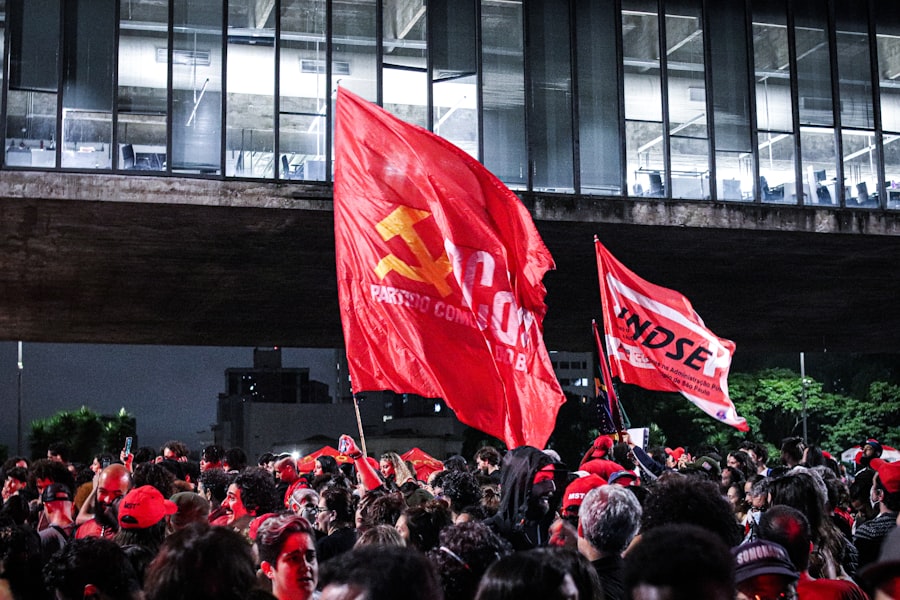
The decades under Władysław Gomułka (1956-1970) and later Edward Gierek (1970-1980) were characterized by a struggle to balance economic development with the maintenance of political control. While both leaders attempted to improve living standards, their policies ultimately failed to alleviate widespread discontent.
The Student Protests of 1968
The year 1968 was a turbulent one across the globe, and Poland was no exception. Student protests erupted, fueled by a combination of factors including restrictions on academic freedom, dissatisfaction with the political system, and a broader rejection of authoritarianism.
- Censorship and Intellectual Freedom: The protests were sparked by the banning of a controversial play, “Dziady” (Forefathers’ Eve) by Adam Mickiewicz, which was deemed anti-Russian by the authorities. This ignited wider demands for greater freedom of expression.
- The Anti-Semitic Campaign: The government’s response to the protests was particularly sinister. It launched an anti-Semitic campaign, falsely blaming Jewish intellectuals and students for the unrest. This led to the emigration of thousands of Polish Jews.
The Rise of the Solidarity Movement
The economic stagnation and increasing social discontent in the 1970s under Edward Gierek culminated in the dramatic emergence of the Solidarity (Solidarność) movement in 1980. This independent trade union, born out of strikes in the Gdańsk shipyard, rapidly grew into a powerful mass movement that challenged the Communist Party’s monopoly on power.
- The Gdańsk Agreement: The strikes led to the signing of the Gdańsk Agreement between the government and the striking workers, a landmark event that recognized the right to form independent trade unions and allowed for greater freedom of speech and assembly.
- A Threat to the Party’s Authority: Solidarity, with its millions of members, represented an unprecedented challenge to the Communist regime. Its success in organizing and mobilizing the population exposed the fragility of the party’s control and the deep-seated desire for democratic change.
Poland under communist rule was a complex period marked by political repression and social unrest, which ultimately led to significant changes in the country’s governance. For a deeper understanding of the challenges faced by the Polish people during this time, you can explore this insightful article that delves into the historical context and the impact of communism on Polish society. The article provides a comprehensive overview of the events that shaped the nation, highlighting the resilience of its citizens. To read more about this fascinating topic, visit this article.
The Imposition of Martial Law and the Underground Resistance
| Metrics | Data |
|---|---|
| Duration of Communist Rule | 1947-1989 |
| Political Party in Power | Polish United Workers’ Party (PZPR) |
| Economic System | Command economy |
| Human Rights Record | Suppression of political opposition and censorship |
| International Relations | Close ties with the Soviet Union |
The rise of Solidarity posed a direct threat to the Communist Party’s legitimacy and authority. In response, the regime, under General Wojciech Jaruzelski, imposed martial law in December 1981, a move that plunged Poland back into an era of overt repression.
The Declaration of Martial Law
On the night of December 12-13, 1981, General Jaruzelski declared martial law across Poland. This was a drastic measure designed to crush the Solidarity movement and reassert the Communist Party’s control.
- Interment Camps and Mass Arrests: Thousands of Solidarity activists, intellectuals, and ordinary citizens were arrested and interned in special camps. Military patrols became a common sight on the streets, and civil liberties were severely curtailed.
- Censorship and Propaganda: The media was brought under strict government control, and a relentless propaganda campaign was launched to demonize Solidarity and justify the imposition of martial law.
The Underground Solidarity and the Persistence of Dissent
Despite the crackdown, the spirit of Solidarity was not extinguished. The movement went underground, continuing its activities in clandestine networks and operating a vast underground press and broadcasting system.
- The Underground Press and Publishing: The underground press became a vital tool for disseminating information and maintaining morale. Numerous clandestine newspapers, magazines, and books were published, providing a counter-narrative to the official propaganda.
- Support from the Catholic Church: The Catholic Church, once again, played a crucial role in supporting the resistance, offering sanctuary and moral guidance to activists. Clergy often spoke out against the regime’s actions, providing a moral compass for the nation.
International Condemnation and Support for Solidarity
The imposition of martial law drew widespread international condemnation. Western governments imposed sanctions on Poland, and international human rights organizations documented the abuses.
- Western Sanctions and Diplomatic Pressure: The United States and other Western nations imposed economic sanctions and exerted diplomatic pressure on the Polish government to release political prisoners and restore civil liberties.
- Pope John Paul II’s Influence: The election of Karol Wojtyła as Pope John Paul II in 1978 had a profound impact on Poland. His visits to his homeland in 1979 and subsequent appeals for human rights and freedom further bolstered the aspirations of the Polish people and added significant international weight to the anti-Communist cause.
The Erosion of Communist Power and the Road to 1989
The years of martial law and continued repression began to take their toll on the legitimacy and effectiveness of the Communist regime. Economic problems persisted, and the unwavering determination of the Polish people to resist proved impossible to overcome.
Economic Stagnation and Social Discontent
Despite attempts at reform, the centrally planned economy of Poland remained inefficient and unproductive. Shortages of basic goods were common, and living standards lagged behind those in Western Europe. This economic hardship fueled widespread social discontent.
- The Failure of Central Planning: The rigidities of central planning stifled innovation and entrepreneurship. The system struggled to adapt to changing global economic realities, leading to a chronic lack of investment and technological backwardness.
- Widespread Strikes and Protests: Throughout the 1980s, sporadic strikes and protests continued, demonstrating the persistent dissatisfaction of the population and the inability of the regime to address their grievances effectively.
The Round Table Talks and the Collapse of Communism
By the late 1980s, the Communist government was under immense pressure. The economic crisis, coupled with the growing influence of the Solidarity movement and the changing geopolitical landscape following Mikhail Gorbachev’s reforms in the Soviet Union, made the continuation of the existing system unsustainable.
- The Round Table Negotiations: In February 1989, the Communist government agreed to enter into “Round Table Talks” with representatives of Solidarity and other opposition groups. These negotiations were a pivotal moment, marking a de facto recognition of the opposition’s legitimacy.
- Semi-Free Elections and the Rise of Solidarity: The outcome of the Round Table Talks included provisions for semi-free elections in June 1989. Solidarity candidates swept the vast majority of the seats they were allowed to contest, signaling a decisive rejection of Communist rule.
The First Non-Communist Government
The results of the 1989 elections led to the formation of the first non-Communist government in Poland since the end of World War II, headed by Tadeusz Mazowiecki, a prominent Solidarity advisor. This event marked the symbolic end of Communist rule in Poland and paved the way for the country’s transition to democracy and a market economy. The history of repression under Communist rule left a lasting legacy, prompting a national reckoning with the past and a commitment to safeguarding democratic freedoms.

The $17 Million That Helped Destroy an Empire
FAQs
What was the period of communist rule in Poland?
The communist rule in Poland lasted from the end of World War II in 1945 until the fall of the communist government in 1989.
Who were the leaders of communist Poland?
The most notable leaders of communist Poland were Władysław Gomułka, Edward Gierek, and Wojciech Jaruzelski.
What were the key features of communist rule in Poland?
Communist rule in Poland was characterized by a centrally planned economy, state ownership of industry and agriculture, censorship, and suppression of political opposition.
How did the communist rule impact the economy of Poland?
Under communist rule, Poland experienced economic stagnation, shortages of consumer goods, and a lack of technological advancement. The centrally planned economy led to inefficiency and low productivity.
What were the major events that led to the fall of communist rule in Poland?
The rise of the Solidarity movement, led by Lech Wałęsa, and the economic crisis in the 1980s were major factors that contributed to the fall of communist rule in Poland. The Round Table Talks in 1989 between the government and Solidarity led to the first partially free elections and the eventual transition to democracy.