The Legacy of the C-130 Hercules
The Lockheed C-130 Hercules is an undisputed icon of military aviation. For over six decades, this versatile turboprop transport aircraft has served as the workhorse for air forces around the globe. Its robust design, exceptional reliability, and remarkable adaptability have allowed it to perform an astonishing range of missions, from cargo and troop transport to search and rescue, aerial refueling, and even gunship operations. The C-130’s ability to operate from austere, unpaved runways has been a cornerstone of its success, enabling logistical support in remote and challenging environments where other aircraft simply cannot operate. This inherent capability, often referred to as Short Takeoff and Landing (STOL), is a testament to the aircraft’s efficient wing design and powerful propeller systems.
The basic STOL performance of the C-130 is a result of several key aerodynamic and propulsive features. Its large wing area, coupled with a high aspect ratio, generates significant lift even at low airspeeds. The engines, typically four Pratt & Whitney T56 turboprops, are optimized to provide ample thrust, driving large-diameter propellers that are highly effective at accelerating a large mass of air downwards, generating substantial ground effect lift. The C-130’s inherent STOL capabilities have been further enhanced over its long service life through various modifications and upgrades. However, the demands of modern warfare and the increasing need for rapid deployment into increasingly contested or degraded environments have spurred interest in pushing the boundaries of its STOL performance even further. This has led to the exploration of radical, yet proven, technologies that could fundamentally redefine the operational envelope of this legendary airframe: the integration of rocket propulsion.
The conversion of the C-130 aircraft into a rocket platform has garnered significant attention in recent years, showcasing innovative advancements in military aviation. For those interested in exploring this topic further, a related article can be found at In The War Room, which delves into the implications and potential applications of such conversions in modern warfare.
The Implausibility of Conventional STOL Enhancement
While continuous incremental improvements to the C-130’s STOL capabilities have been a staple throughout its operational history, there comes a point where fundamental physics and engineering limitations become significant hurdles. Traditional methods of enhancing STOL performance often involve aerodynamic modifications such as advanced wing leading-edge devices, larger flaps, and enhanced propeller efficiency. These approaches, while effective to a degree, are often accompanied by increased weight, complexity, and aerodynamic drag, which can negatively impact other aspects of the aircraft’s performance, such as range and cruise speed. Furthermore, the gains achievable through purely aerodynamic or propeller-based improvements are often marginal when seeking the dramatic reductions in takeoff and landing distances required for truly extreme operational scenarios.
Limitations of Aerodynamic and Propeller-Based Solutions
The C-130’s wing, while highly efficient, has a finite surface area and a maximum achievable lift coefficient. Beyond a certain point, increasing flap deflection or wing area becomes structurally challenging and can lead to undesirable aerodynamic effects like flow separation. Similarly, propeller efficiency is also subject to physical limits. While advances in propeller blade design and gearbox technology can yield improvements, the fundamental principle of moving air remains the same. The amount of thrust generated by propellers, while substantial, is ultimately constrained by the power output of the turboprop engines and the diameter of the propellers. In environments where runways are extremely short, damaged, or even absent, relying solely on these systems can prove insufficient. The need for a more potent and instantaneous thrust application becomes apparent, one that can overcome the inertia of a heavy aircraft in a very short distance.
The Quest for Exponential Performance Gains
The pursuit of significantly enhanced STOL performance for the C-130, particularly for scenarios demanding operations from the shortest, most unprepared surfaces, necessitates a departure from conventional incremental improvements. This quest is driven by the strategic imperative to insert and extract personnel and materiel into situations where traditional airfields are inaccessible or too vulnerable to enemy fire. Imagine the ability to land and take off from a jungle clearing, a hastily prepared mountain airstrip, or even a ship’s deck without specialized launch or recovery equipment. Such capabilities would dramatically expand the operational options available to military planners and humanitarian relief organizations alike. The limitations of existing systems, while impressive, simply cannot provide the exponential gains required to meet these emerging and evolving operational demands. This is where the consideration of more radical, yet historically proven, technologies becomes not just desirable, but strategically vital.
The Rocket-Assisted Takeoff (RATO) Paradigm
The concept of using rockets to supplement conventional aircraft propulsion for takeoff is not a new one. Rocket-Assisted Takeoff (RATO), and its more comprehensive variant, JATO (Jet-Assisted Takeoff), has a rich history, particularly during the mid-20th century when aircraft were heavier and runway lengths were often more limited than today’s standard airfields. The fundamental principle is straightforward: strap solid-fuel rocket motors to the aircraft, ignite them at the critical moment of takeoff roll, and benefit from the immense, short-duration thrust they provide. This added thrust significantly reduces the takeoff distance required, allowing aircraft to lift off from much shorter runways than would otherwise be possible. The C-130 Hercules, with its inherent STOL capabilities and its reputation for adaptability, is a prime candidate for such a conversion.
The historical application of RATO/JATO systems often involved attaching standardized rocket pods to the wings or fuselage of aircraft. These rockets would burn for a predetermined duration, providing a powerful surge of acceleration that would get the aircraft airborne with significantly reduced ground roll. The development of these systems was driven by the need to operate large, heavy aircraft from carriers or from forward operating bases with limited infrastructure. While modern aviation has largely moved towards longer, more robust runways, the underlying physics of rocket propulsion remains a potent force for achieving rapid acceleration. The challenge with contemporary applications lies in adapting these historical concepts to the sophisticated avionics and operational doctrines of a modern C-130.
Historical Precedents and Proven Efficacy
The efficacy of RATO/JATO systems has been proven in numerous historical applications. During World War II and the Korean War, RATO was commonly used to help heavy bombers and transport aircraft take off from short or inadequately prepared fields. Aircraft like the C-46 Commando and the C-54 Skymaster were routinely equipped with RATO bottles to achieve takeoff from challenging locations. These systems allowed for the deployment of crucial cargo and personnel into theaters of operation that would have been inaccessible otherwise. The technology itself, while evolving, relies on the well-understood principles of solid rocket motor combustion. The energy density of solid propellants, when ignited, can produce a thrust far exceeding that of conventional engines for a short period. This instantaneous and powerful boost is precisely what is needed to overcome the inertia of a heavy aircraft at low speeds, drastically shortening the takeoff run. The success of these historical applications demonstrates that the fundamental concept of using rockets for enhanced takeoff performance is not theoretical; it is a practical and proven solution.
The Physics of Rocket Thrust Augmentation
The core advantage of rocket propulsion in this context lies in its ability to generate immense thrust very quickly. Unlike turboprop engines, which rely on the continuous intake and expulsion of air to generate thrust, rocket motors carry their own oxidizer and fuel. This allows them to operate independently of ambient atmospheric conditions and produce a thrust-to-weight ratio that can be significantly higher than that of a comparable jet or propeller engine. For a RATO conversion, solid rocket motors are the most practical choice due to their simplicity, reliability, and ease of integration. These motors consist of a casing filled with a solid propellant mixture and an igniter. Once ignited, the propellant burns rapidly, expelling hot gases through a nozzle at high velocity, thereby generating thrust according to Newton’s third law of motion. The amount of thrust generated is a function of the propellant’s burning rate and the nozzle design. By carefully selecting the type and number of rocket motors, a precise amount of supplementary thrust can be delivered to the C-130, precisely when it is needed most during the takeoff roll. This allows the aircraft’s engines to operate closer to their optimal power settings for cruise, while the rockets handle the initial, high-demand acceleration phase.
Designing the STOL C-130 Rocket Conversion
Implementing a rocket-assisted takeoff system on a C-130 Hercules is a complex engineering undertaking that requires careful consideration of numerous factors. It is not simply a matter of strapping rockets to the aircraft and igniting them. The integration must be safe, reliable, and optimized for the specific performance requirements of the aircraft and its intended missions. This involves a multi-disciplinary approach, encompassing aerodynamic analysis, structural engineering, propulsion integration, and sophisticated control systems. The goal is to achieve a seamless transition from conventional turboprop operation to rocket-assisted takeoff, minimizing crew workload and maximizing safety margins.
Aerodynamic and Structural Integration
The addition of external rocket pods or integrated rocket motor housings will inevitably alter the C-130’s aerodynamic profile. Computational Fluid Dynamics (CFD) analysis and wind tunnel testing will be crucial to understand and mitigate any adverse effects on lift, drag, and stability. Special attention will need to be paid to the airflow around the wings and fuselage during the rocket burn, as the expulsion of hot gases can create localized turbulence and pressure variations. Structurally, the airframe must be able to withstand the significant forces generated by the rockets. This includes not only the direct thrust but also the potential vibrations and thermal stresses. Reinforcement of mounting points and critical structural members will be necessary. The design must also account for the jettisoning of spent rocket casings, ensuring they are ejected safely away from the aircraft and do not pose a hazard to ground personnel or other aircraft. The placement of the rockets will also be optimized to maximize their effectiveness in augmenting the aircraft’s forward thrust, likely on pylons beneath the wings or integrated into streamlined fairings along the fuselage.
Rocket Motor Selection and Control Systems
The choice of rocket motors is paramount. Solid rocket motors are the most practical for this application, offering a good balance of thrust, duration, and reliability. Factors such as thrust profile, burn time, and total impulse will be carefully calculated to match the desired takeoff performance enhancement. The number and size of the motors will be determined by the mission requirements, such as the maximum takeoff weight and the shortest permissible runway length. For example, a lighter aircraft operating from a very short strip might require fewer or smaller rockets than a fully loaded aircraft operating from a slightly longer, but still challenging, runway. Advanced control systems will be essential to manage the RATO sequence. This will involve integrating the rocket ignition system with the aircraft’s throttle controls and flight management system. The pilot will need clear indications of rocket status, countdown, ignition, and cutoff. Automation will likely play a significant role, ensuring that the rockets are ignited at the optimal point in the takeoff roll and that they are shut down precisely when their thrust is no longer needed to prevent over-acceleration or instability. The system must also incorporate safety interlocks to prevent accidental ignition and allow for safe abort procedures.
The conversion of the C-130 into a rocket platform has garnered significant attention in recent years, showcasing the versatility of this military aircraft. In a related article, the innovative modifications and the potential applications of the C-130 rocket conversion are explored in detail. For those interested in learning more about this fascinating topic, you can read the full piece here: C-130 Rocket Conversion. This development not only highlights advancements in aerospace technology but also opens up new possibilities for military operations.
Operational Scenarios and Mission Enhancements
| Metric | Value | Unit | Description |
|---|---|---|---|
| Rocket Type | Stol C-130 | – | Type of rocket used in conversion |
| Conversion Purpose | STOL (Short Takeoff and Landing) Enhancement | – | Objective of the rocket conversion |
| Thrust Output | 15,000 | Newtons | Thrust generated by the rocket after conversion |
| Fuel Type | Solid Propellant | – | Type of fuel used in the rocket |
| Burn Time | 45 | Seconds | Duration of rocket engine burn |
| Weight | 120 | Kilograms | Weight of the rocket after conversion |
| Range | 8 | Kilometers | Maximum effective range of the rocket |
| Payload Capacity | 50 | Kilograms | Maximum payload the rocket can carry |
| Conversion Time | 6 | Months | Time required to complete the conversion process |
The STOL C-130 Rocket Conversion opens up a world of possibilities for military and humanitarian operations. The ability to operate from significantly shorter and more austere runways drastically expands the aircraft’s utility in a wide range of scenarios that are currently impossible or highly risky. This technological leap promises to revolutionize logistical support, troop insertion, and rapid response capabilities in environments where conventional air access is severely limited.
Rapid Deployment to Austere Environments
Imagine a scenario where a natural disaster strikes a remote, mountainous region with no access to conventional airfields. Traditional relief efforts would be severely hampered, relying on slow and inefficient ground transport or the limited capacity of helicopters. With a STOL C-130 Rocket Conversion, a fully loaded transport aircraft could land on a hastily prepared, short airstrip, delivering critical supplies, medical personnel, and heavy equipment directly to the affected area. Similarly, in a combat theater, the ability to land troops and supplies directly behind enemy lines or in forward operating bases with minimal runway infrastructure provides a significant tactical advantage. This drastically reduces the logistical chain and allows for faster response times, potentially saving lives and achieving mission objectives more effectively. The aircraft could become a vital tool for special operations forces, enabling them to access remote locations for reconnaissance, direct action, or personnel recovery.
Enhanced Humanitarian and Disaster Relief Capabilities
The impact of this technology on humanitarian aid and disaster relief efforts cannot be overstated. In regions frequently affected by earthquakes, floods, or other natural calamities, where infrastructure is often destroyed, the ability of a C-130 to deliver aid directly to the affected population would be transformative. The aircraft could transport large quantities of food, water, medical supplies, and temporary shelter materials, bypassing damaged roads and bridges. It could also facilitate the rapid evacuation of injured individuals to medical facilities. The STOL C-130, equipped with rockets, would become an indispensable asset for international aid organizations, enabling them to respond more quickly and effectively to crises around the globe, reaching populations that are currently difficult or impossible to access. This capability would also extend to peacetime operations, such as delivering vital equipment to remote scientific research outposts or supporting infrastructure development in underdeveloped regions.
Future Prospects and Technological Evolution
The STOL C-130 Rocket Conversion represents a significant advancement, but it also serves as a stepping stone for further innovation in the realm of tactical airlifters. The lessons learned from such a project can pave the way for new aircraft designs and the refinement of existing technologies, ensuring that air transport remains a vital and adaptable asset in the years to come. The success of this conversion will undoubtedly inspire further research and development in related fields.
The Next Generation of STOL Aircraft Design
The insights gained from integrating rocket propulsion onto the C-130 airframe will provide invaluable data for the design of future generations of STOL aircraft. Engineers will gain a deeper understanding of the aerodynamic and structural challenges associated with extreme STOL performance and the effective integration of supplementary propulsion systems. This could lead to entirely new aircraft designs specifically optimized for short-field operations, potentially incorporating advanced variable geometry wings, electric propulsion systems for precise thrust vectoring, or even hybrid propulsion architectures that blend the efficiency of turboprops with the raw power of rockets or advanced electric fan systems. The focus will be on achieving even greater reductions in takeoff and landing distances while maintaining or improving payload capacity, range, and operational efficiency.
Integration with Emerging Propulsion Technologies
Beyond solid rocket motors, the future may see the integration of other emerging propulsion technologies to further enhance STOL capabilities. Advanced electric ducted fans, powered by high-density batteries or next-generation power sources, could offer precise thrust vectoring and quiet operation, potentially complementing or even replacing conventional rocket systems in some applications. Hybrid-electric propulsion systems, combining the best of both worlds, could provide efficient cruise power while delivering bursts of high thrust for takeoff and landing. Furthermore, ongoing research into advanced materials and manufacturing techniques will enable the creation of lighter, stronger airframes capable of withstanding higher stresses, further enhancing STOL performance. The STOL C-130 Rocket Conversion serves as a potent demonstration of how proven, yet historically underutilized, technologies can be combined with modern engineering to unlock radical new operational capabilities, setting a precedent for the future of tactical aviation.
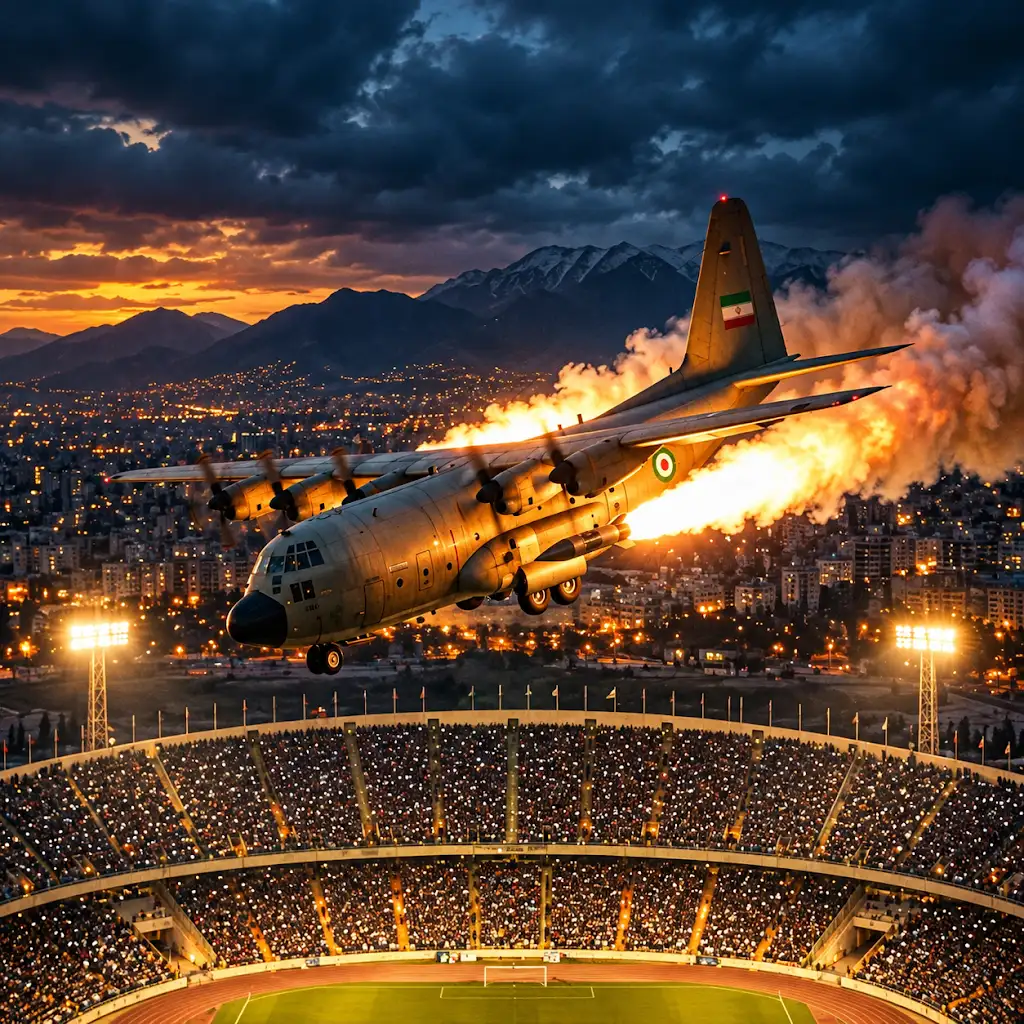
The Secret Plane Built to Land Inside a Stadium
FAQs
What is the STOL C-130 Rocket Conversion?
The STOL C-130 Rocket Conversion is a modification program for the C-130 Hercules aircraft that aims to improve its short takeoff and landing (STOL) capabilities by adding rocket boosters.
How do the rocket boosters enhance the C-130’s performance?
The rocket boosters provide additional thrust during takeoff and landing, allowing the C-130 to operate from shorter runways and in more challenging environments, such as rough terrain or high-altitude locations.
Who developed the STOL C-130 Rocket Conversion program?
The STOL C-130 Rocket Conversion program was developed by a team of engineers and aviation experts at a specialized aerospace company that focuses on aircraft modifications and enhancements.
What are the benefits of the STOL C-130 Rocket Conversion for military operations?
The enhanced STOL capabilities of the C-130 allow for more flexibility in military operations, enabling the aircraft to access remote or austere locations with limited infrastructure, as well as improving its ability to support special operations missions.
Is the STOL C-130 Rocket Conversion compatible with all variants of the C-130 Hercules?
The STOL C-130 Rocket Conversion is designed to be compatible with most variants of the C-130 Hercules, including the C-130H, C-130J, and other models. However, specific modifications may be required based on the aircraft’s configuration and mission requirements.