The world teeters on the precipice. In the deep, cold waters of the Atlantic, a Soviet submarine, B-59, carries a payload of immense destructive power: nuclear torpedoes. Its crew is on edge, desperate, and operating under orders that, in the heat of the moment, could trigger a cataclysm. Yet, in this crucible of fear and misinformation, one man’s calm resolve and unwavering adherence to procedure would rewrite history, averting a nuclear apocalypse that might have plunged humanity into an inferno. This is the story of Vasili Arkhipov, the unsung hero of the Cuban Missile Crisis.
The year is 1962. The Cold War is at its zenith, a tense standoff between the United States and the Soviet Union, characterized by ideological animosity and a relentless arms race. The world breathes under the omnipresent threat of nuclear annihilation, a doctrine of Mutually Assured Destruction (MAD) that hangs like a Damocles sword.
The Discovery and the Brink
In October of that year, U.S. reconnaissance flights captured irrefutable evidence of Soviet missile bases being constructed in Cuba, just 90 miles off the coast of Florida. This revelation sent shockwaves through the American government and the public. President John F. Kennedy, faced with an unprecedented direct threat to national security, convened his advisors in a series of high-stakes meetings, known as ExComm. The options were stark and terrifying: a full-scale invasion of Cuba, an airstrike to destroy the missile sites, or a naval blockade to prevent further Soviet military buildup. Each path carried the immense risk of Soviet retaliation, potentially leading to a nuclear exchange.
The Naval Blockade and Soviet Response
Kennedy opted for a naval blockade, termed a “quarantine” to avoid the connotations of an act of war. The U.S. Navy was ordered to intercept any Soviet vessels heading towards Cuba and prevent them from delivering military supplies. This move was met with defiance by Nikita Khrushchev, the Soviet Premier, who viewed it as an act of aggression. Soviet ships, including submarines, continued their course towards Cuba, creating a highly volatile situation at sea.
Vasili Arkhipov is often credited with preventing a potential nuclear war during the Cuban Missile Crisis by refusing to authorize the launch of a nuclear torpedo. His decision is a powerful reminder of the importance of individual judgment in moments of crisis. For a deeper exploration of this pivotal moment in history and its implications, you can read the related article at this link.
Aboard B-59: The Crucible of Fear
Deep beneath the Atlantic waves, the crew of the Soviet submarine B-59 found themselves in a perilous and increasingly desperate situation. Unaware of the full diplomatic negotiations unfolding above, they were caught in a tense game of cat and mouse with American naval forces, their communication with Moscow severed, and their nerves frayed by prolonged submersion and the constant threat of detection and attack.
Extended Submergence and Isolation
For days, B-59 had been operating in complete radio silence, a standard procedure during covert missions. However, the escalating tensions of the Cuban Missile Crisis meant that this silence was not just about stealth, but also about isolation. The submarine’s communication equipment had been damaged, further cutting them off from any reliable contact with their superiors. This isolation bred uncertainty and fear among the crew. They were effectively operating in a vacuum, their understanding of the global situation limited to what they could infer from their immediate surroundings and the increasingly aggressive actions of the U.S. Navy.
The “Depth Charges” and Misinformation
The crew of B-59 mistakenly believed they were under direct attack by American ships. The U.S. Navy, in an attempt to force Soviet submarines to surface, had been dropping non-nuclear practice depth charges near them. These were not intended as weapons of destruction, but as signals to surface. However, for a submarine already operating under immense stress and with limited information, these explosions sounded like live ordnance. The percussive blasts, vibrating through the hull, were interpreted by some on board as direct attacks, fueling a sense of imminent danger and the belief that war had already begun.
The Question of Nuclear Launch
Under these terrifying conditions, with the submarine taking repeated blows from the “depth charges” and with no communication from Moscow, the commanding officers of B-59 were faced with a decision of unimaginable consequence. Their orders, in the event of attack and isolation, allowed for the launch of their nuclear-armed torpedoes. The captain, Valentin Savitsky, along with the flotilla commander, Ivan Maslennikov, felt they were under direct assault and that their only recourse was to retaliate with the ultimate weapon.
Vasili Arkhipov: The Voice of Reason

Amidst the rising panic and the overwhelming pressure to retaliate, one man stood firm. Vasili Arkhipov, the flotilla’s second-in-command and the political officer, possessed a crucial veto power over the launch of the nuclear torpedoes. His calm demeanor, adherence to protocol, and unwavering judgment proved to be the linchpin that prevented a global catastrophe.
The Chain of Command and Veto Power
Soviet submarines operating with nuclear weapons had a unique command structure. While the captain had operational authority, the decision to launch a nuclear weapon required the agreement of at least two officers. In the case of B-59, this meant the captain, the flotilla commander, and Vasili Arkhipov. Arkhipov’s role as a political officer was to ensure the crew remained loyal and adhered to communist principles, but it also granted him a critical oversight role in matters of such grave importance. His presence on board, and his designated authority, was not merely procedural; it was a safeguard against rash decisions born from fear and desperation.
The Diplomatic Nuance Versus the Battlefield Reality
While the U.S. Navy was dropping practice charges, and the Soviet leadership was engaged in tense diplomatic maneuvers with the U.S., the crew of B-59 experienced this as a direct and potentially fatal assault. Arkhipov, however, had a slightly broader perspective, or at least the mental fortitude to question the immediate interpretation of events. He understood that the “depth charges” might not be live attacks. He also understood the broader context of the crisis, and the catastrophic implications of initiating a nuclear war. He reasoned that if the U.S. Navy intended to destroy them, they would have done so already with their superior firepower.
The Argument for Restraint
Arkhipov argued vehemently against launching the nuclear torpedoes. He appealed to the limited information they had, the possibility of misinterpreting the American actions, and the catastrophic consequences of initiating a nuclear exchange. He reminded his fellow officers of the rules of engagement and the importance of verification. His calm, rational arguments, delivered under immense duress, began to chip away at the fear-driven momentum towards retaliation.
The Collective Decision
It was a tense, heated exchange within the cramped confines of the submarine. Captain Savitsky was furious, convinced of their imminent demise and the necessity of immediate retaliation. However, Arkhipov’s persistent logic and his undeniable authority gradually swayed the other officers. The commander of the flotilla, Ivan Maslennikov, ultimately deferred to Arkhipov’s judgment. The decision was made, by a slim margin and under immense pressure, not to launch the nuclear torpedoes. This collective decision, heavily influenced by Arkhipov’s reasoned opposition, was the turning point.
The Aftermath and the World Unaware

The world never knew how close it came to the brink. The tense standoff continued for a few more days, but the averted disaster aboard B-59 had removed one of the most immediate and terrifying possibilities of nuclear escalation. The crisis was eventually resolved through diplomatic channels, with the Soviet Union agreeing to remove the missiles from Cuba in exchange for a U.S. promise not to invade the island and the secret removal of American Jupiter missiles from Turkey.
The Silent Return of B-59
After the tense days at sea, B-59, having not launched its nuclear payload, eventually surfaced and made its way back to Soviet waters. The crew, though relieved to be alive, carried the heavy burden of their near-catastrophic encounter. They were debriefed, and the incident was largely kept under wraps by the Soviet government, which was keen to avoid admitting its near-miss with initiating a nuclear war. The extraordinary actions of Vasili Arkhipov remained largely unknown to the outside world for decades.
The Power of a Single Individual
The Cuban Missile Crisis is often remembered for the high-level negotiations between Kennedy and Khrushchev. However, the story of Vasili Arkhipov highlights the profound impact that a single individual, acting with courage and integrity, can have on the course of history. His refusal to succumb to panic and his commitment to reason in the face of extreme adversity saved millions, if not billions, of lives.
The Legacy of Restraint
Arkhipov’s actions serve as a powerful reminder of the human element in even the most technologically driven and high-stakes confrontations. It underscores the importance of critical thinking, emotional regulation, and the courage to dissent, even when surrounded by overwhelming pressure. His legacy is not one of grand pronouncements or public accolades, but of quiet, decisive action that averted an unimaginable tragedy.
Vasili Arkhipov is often credited with preventing a potential nuclear war during the Cuban Missile Crisis by refusing to authorize the launch of a nuclear torpedo. His decision to stand firm in the face of immense pressure has been the subject of much discussion and analysis. For those interested in exploring this pivotal moment in history further, a related article can be found at In the War Room, which delves into the implications of Arkhipov’s actions and the broader context of nuclear deterrence.
The Unsung Hero’s Quiet Existence
| Event | Details |
|---|---|
| Date | October 27, 1962 |
| Location | Onboard Soviet submarine B-59 near Cuba |
| Decision | Vasili Arkhipov’s refusal to launch nuclear torpedo |
| Impact | Prevented nuclear war between US and Soviet Union |
| Consequence | Contributed to the peaceful resolution of the Cuban Missile Crisis |
Vasili Arkhipov never sought fame or recognition for his role in preventing nuclear war. He continued his career in the Soviet Navy, retiring with the rank of Rear Admiral. His story only began to emerge publicly in the decades after his death, largely through the work of historians and journalists who pieced together the events aboard B-59.
A Life Dedicated to Service
Arkhipov’s life was one of dedication to his country and to the Soviet naval service. He was a man of duty, and his actions during the Cuban Missile Crisis were a testament to his deep sense of responsibility. The fact that he was a political officer, tasked with ideological guidance, adds another layer to his heroism. He chose reason and the preservation of humanity over adherence to a potentially catastrophic interpretation of orders.
The Gradual Revelation of Truth
The full story of Vasili Arkhipov’s heroism was not immediately apparent. For many years, the details of the incident aboard B-59 remained classified, known only to a select few within the Soviet military and government. As declassified documents and oral histories began to surface, the critical role of Arkhipov in preventing the launch of the nuclear torpedoes became clearer.
Recognition Decades Later
It wasn’t until the late 1990s and early 2000s that Vasili Arkhipov’s story gained wider public attention. Books like “Cube Missile Crisis: The Soviet Submarine That Nearly Started World War III” by Sergei Plokhy brought his heroism to the forefront. While he did not live to see the full extent of his recognition, his name is now etched in the annals of history as a man who stood against the tide of war and saved the world.
The Enduring Relevance of Arkhipov’s Story
The events of 1962, and the crucial role of Vasili Arkhipov, remain profoundly relevant in today’s world. The specter of nuclear weapons, while perhaps less overt than during the Cold War, still looms large. The lessons learned from the Cuban Missile Crisis, and from Arkhipov’s actions, are vital for navigating contemporary geopolitical tensions.
Lessons in De-escalation and Diplomacy
The crisis underscores the critical importance of de-escalation and robust diplomatic channels, even when faced with extreme provocation. It highlights the dangers of miscalculation and the need for clear communication and verification. Arkhipov’s actions demonstrate that even in the midst of perceived existential threat, the pursuit of a peaceful resolution, even at great personal risk, is the only responsible path.
The Moral Imperative of Restraint
Arkhipov’s story is a powerful testament to the moral imperative of restraint, particularly when dealing with weapons of mass destruction. It serves as a stark reminder that the ultimate authority in such matters must lie with individuals who possess the wisdom and courage to question immediate, often fear-driven, impulses.
A Call to Vigilance
In an era where geopolitical fault lines continue to exist, the tale of Vasili Arkhipov is not just a historical footnote; it is a cautionary tale and a beacon of hope. It calls for vigilance, for a constant awareness of the potential for catastrophic escalation, and for a profound appreciation of the individuals who, through their quiet courage and unwavering commitment to reason, have kept the world safe from its darkest impulses. Vasili Arkhipov, the man who refused to push the button, stands as a silent guardian, a testament to the enduring power of human judgment in the face of ultimate peril.
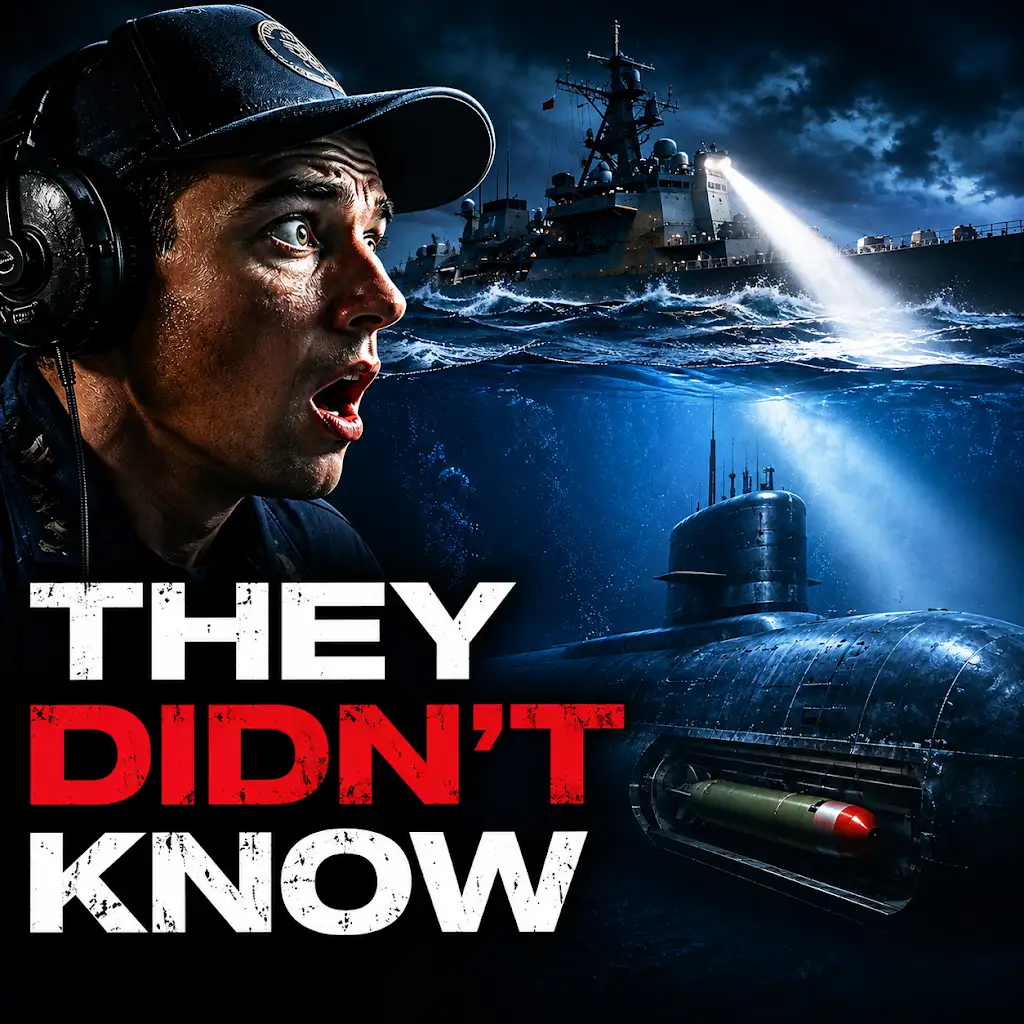
The U.S. Navy Didn’t Know This Submarine Had a Nuclear Torpedo
FAQs
1. Who is Vasili Arkhipov and what did he do?
Vasili Arkhipov was a Soviet naval officer who played a critical role in preventing a nuclear war during the Cuban Missile Crisis in 1962. He was the second-in-command on a Soviet submarine and refused to authorize the use of nuclear torpedoes, averting a potential nuclear conflict.
2. What was the Cuban Missile Crisis?
The Cuban Missile Crisis was a 13-day confrontation in October 1962 between the United States and the Soviet Union over Soviet ballistic missiles deployed in Cuba. It is widely regarded as the closest the world has come to nuclear war.
3. How did Vasili Arkhipov prevent nuclear war?
During the Cuban Missile Crisis, a Soviet submarine, B-59, was located by US Navy forces and was subjected to depth charges. The submarine’s crew, who had been out of communication with Moscow for days, believed that war may have already broken out. Arkhipov’s refusal to authorize the use of nuclear torpedoes prevented a potential nuclear conflict.
4. What impact did Vasili Arkhipov’s actions have?
Vasili Arkhipov’s decision to prevent the use of nuclear torpedoes on the Soviet submarine helped to de-escalate the situation during the Cuban Missile Crisis. His actions are widely credited with preventing a potential nuclear war between the United States and the Soviet Union.
5. How is Vasili Arkhipov remembered today?
Vasili Arkhipov is remembered as a hero for his role in preventing a nuclear war. His actions have been recognized and celebrated by historians, military experts, and the general public as a crucial moment in the history of the Cold War.