The Silent Ballet Beneath the Waves
The Mediterranean Sea, a historical crossroads of civilizations and a vital artery of global trade, also served as a crucial stage for the Cold War’s intricate and often terrifying ballet of espionage and military maneuvering. Beneath its azure surface, a silent, high-stakes game unfolded, pitting the technological prowess and strategic imperative of the Soviet Union against the equally determined efforts of NATO navies, particularly the United States Sixth Fleet. This clandestine conflict, characterized by constant surveillance, cat-and-mouse pursuits, and the ever-present threat of escalation, defined a significant chapter in the Cold War’s naval dimension. The operational theatre, with its strategic chokepoints like the Strait of Gibraltar and the Suez Canal, and its proximity to the Soviet Union’s southern flank, made it an area of paramount importance for both superpowers. The Soviet Navy, driven by a desire to project power, counter Western naval dominance, and secure its southern approaches, increasingly deployed its submarines into the Mediterranean. These were not merely vessels of war; they were instruments of intelligence gathering, silent watchers of Western fleet movements, and potential carriers of devastating nuclear payloads. Consequently, the need for NATO, and specifically the Sixth Fleet, to track these submarines became a non-negotiable operational priority. This article delves into the complex tactics, technological advancements, and strategic considerations that underpinned Soviet submarine tracking operations in the Mediterranean during the Cold War, painting a picture of a constant, unseen struggle for naval supremacy.
The Soviet submarine tracking operations in the Mediterranean during the Cold War were a critical aspect of naval strategy, as highlighted in the article “Silent Shadows: The Soviet Submarine Threat in the Mediterranean” found on In The War Room. This piece delves into the intricate methods employed by both the Soviet Union and NATO forces to monitor submarine movements, showcasing the technological advancements and intelligence strategies that defined this tense period. For more insights, you can read the full article here: Silent Shadows: The Soviet Submarine Threat in the Mediterranean.
The Shadowy Invaders: Soviet Submarine Presence
The Soviet Union’s naval expansion during the Cold War was a strategic imperative aimed at challenging the United States’ global reach and securing its own interests. The Mediterranean, with its critical sea lanes and proximity to Europe, became a natural theater for this expansion. Soviet submarine deployments in the region were multifaceted, serving a range of strategic objectives that kept NATO navies on high alert. Understanding the nature and intent of these Soviet submarine operations is crucial to appreciating the efforts undertaken for their tracking.
Motivations Behind Mediterranean Deployment
The decision to deploy submarines to the Mediterranean was not a casual one; it was driven by a confluence of strategic, political, and technological factors. Firstly, the Soviet Union sought to neutralize the threat posed by NATO’s carrier battle groups. These powerful formations represented a significant projection of American air power and could be used to threaten Soviet territory or influence events in the Mediterranean and beyond. By having submarines present, the Soviets aimed to deter or, if necessary, counter these carriers. Secondly, the Mediterranean offered a platform for projecting Soviet influence into a region traditionally dominated by Western powers. A visible and capable Soviet naval presence served as a political statement, demonstrating the USSR’s growing global stature and its willingness to contest Western hegemony. Thirdly, the strategic location of the Mediterranean meant that Soviet submarines deployed there could intercept vital shipping lanes and threaten key NATO naval bases, thereby disrupting Western supply lines and potentially limiting their freedom of maneuver in a conflict scenario. The ability to operate in close proximity to the Soviet homeland also offered a logistical advantage, reducing transit times and allowing for more frequent and sustained deployments compared to operating from more distant bases.
Types of Soviet Submarines in the Med
The Soviet submarine force was diverse, and the types deployed in the Mediterranean reflected a spectrum of capabilities and intended roles. These ranged from agile diesel-electric submarines (SSKs) to sophisticated nuclear-powered attack submarines (SSNs) and missile-carrying submarines (SSBNs and SSGNs). The SSKs, while slower, were quieter and harder to detect, making them effective for intelligence gathering and harassing Western shipping in littoral waters. Their diesel engines allowed for extended periods of submerged operation using snorkeling, but required periodic surfacing or near-surface operation to recharge batteries, presenting opportunities for detection.
The SSNs were the workhorses of the Soviet Mediterranean fleet. These submarines were designed for hunting other submarines and surface ships, and they possessed formidable sonar capabilities and a range of torpedoes and anti-ship missiles. Examples included the Victor-class and Alfa-class submarines, which were characterized by their speed, depth capabilities, and advanced acoustic systems. The Victor-class, in particular, was a significant threat, known for its relatively quiet operation for its time.
Perhaps the most concerning for NATO were the nuclear-powered ballistic missile submarines (SSBNs) and nuclear-powered cruise missile submarines (SSGNs). The presence of SSBNs in the Mediterranean, carrying nuclear-armed ballistic missiles, represented a direct strategic threat to NATO nations. These submarines were designed for stealth and survivability, making their detection a top priority. SSGNs, armed with anti-ship and land-attack cruise missiles, offered a versatile offensive capability, capable of striking targets from relative safety within the Mediterranean. The presence of these various classes of submarines, each with its own strengths and weaknesses, presented a complex tracking challenge for the ASW (Anti-Submarine Warfare) forces of the Sixth Fleet.
The Hunter’s Toolkit: NATO’s Tracking Methodologies
The challenge of tracking an increasingly sophisticated and numerous Soviet submarine force in the vast expanse of the Mediterranean demanded a comprehensive and multi-layered approach from NATO, primarily spearheaded by the U.S. Sixth Fleet. This involved a combination of passive and active detection methods, drawing on a vast array of technological assets and human intelligence. The continuous evolution of Soviet submarine technology necessitated a parallel evolution in NATO’s ASW capabilities, creating a dynamic and ever-present technological arms race.
Acoustic Surveillance: The Ears of the Fleet
Sonar, both passive and active, formed the bedrock of submarine detection for decades. Passive sonar allows a vessel or aircraft to ‘listen’ for the sounds emitted by a submarine, such as engine noise, propeller cavitation, and hull creaks. Soviet submarines, particularly the quieter diesel-electric models, could be challenging to detect acoustically, especially when operating at slow speeds or in noisy oceanic environments. However, the internal acoustics of a submarine, its propulsion system, and the cavitation generated by its propeller are unique identifiers, much like a fingerprint. NATO ASW forces meticulously cataloged these acoustic signatures, building extensive libraries of known Soviet submarine sounds.
Active sonar, on the other hand, involves emitting a ‘ping’ of sound and listening for the echo bouncing off a submerged object. While effective for pinpointing a target, active sonar also gives away the position of the sonar-emitting platform, making it a less discreet method. For submarines operating in a stealth-focused role, avoiding active sonar detection was paramount. Therefore, NATO forces relied heavily on passive sonar, particularly from fixed seabed arrays and deployed sonobuoys, to gain initial detection and track targets without revealing their own presence. The Mediterranean’s varied bathymetry, with its deep basins and shallower continental shelves, presented unique acoustic challenges and opportunities. Deep water could mask sound, while shallow water could create complex reverberation patterns that made accurate identification difficult.
Non-Acoustic Detection: Beyond the Soundscape
While sonar remained indispensable, NATO ASW forces recognized the need to diversify their detection methods to overcome the limitations of acoustics, especially against the quieter Soviet submarines. This led to the development and deployment of a range of non-acoustic sensors and techniques, each contributing to a more comprehensive understanding of the underwater environment and potential threats.
Magnetic anomaly detection (MAD) was one such technology. Submarines, particularly those made of steel, create a disturbance in the Earth’s magnetic field. Aircraft equipped with MAD sensors could detect these anomalies, providing a complementary method to sonar for identifying submerged vessels. While MAD sensors have a relatively limited detection range, they can be highly effective in confirming the presence of a submarine once it has been initially detected by other means, particularly when combined with visual or radar sightings of periscopes or other surfaced components.
The detection of wake and Kelvin wakes (the V-shaped wave pattern left by a moving hull) offered another avenue for tracking. Advanced sensors, including optical systems and even certain radar frequencies, could potentially detect these surface disturbances. However, these methods were often dependent on sea state and could be misleading in rough waters. More sophisticated techniques involved the detection of thermal anomalies, as the operation of a submarine’s machinery generates heat that can dissipate into the surrounding water, creating a subtle temperature difference detectable by infrared sensors.
Intelligence and Electronic Warfare: The Information War
Beyond the physical detection of submarines, the gathering of intelligence and the effective use of electronic warfare (EW) played a critical role in NATO’s tracking operations. Intelligence efforts focused on understanding Soviet submarine doctrine, patrol areas, operational cycles, and the identification of specific submarine classes. This information allowed NATO to anticipate where and when Soviet submarines were likely to be operating, thereby focusing their tracking assets more effectively. Human intelligence, intercepted communications, and signals intelligence (SIGINT) provided invaluable insights into Soviet naval activity.
Electronic warfare encompassed the monitoring and analysis of Soviet radar emissions, communications signals, and other electronic emanations. By detecting these signals, NATO forces could not only identify the presence of Soviet vessels but also gain information about their activities and even their intentions. Furthermore, EW capabilities could be used to jam or deceive Soviet radar and communications systems, potentially hindering their operations and making them more vulnerable to detection or attack. The interplay between intelligence gathering, electronic warfare, and acoustic/non-acoustic detection formed a synergistic approach that maximized NATO’s ability to track and monitor the Soviet submarine threat in the Mediterranean.
The Dance of Detection: Operational Tactics and Challenges
The practical execution of submarine tracking in the Mediterranean was a complex undertaking, involving intricate coordination between diverse naval assets and constant adaptation to the evolving tactics of the opposing force. The environment itself presented unique challenges, demanding innovative solutions and a high degree of operational skill from the personnel involved.
Air and Surface Patrols: The Visible Watch
Fixed-wing aircraft and helicopters played a vital role in NATO’s ASW efforts. Patrol aircraft, such as the Lockheed P-3 Orion, were equipped with a sophisticated array of sensors, including sonar, MAD, and electronic intelligence gathering equipment. Their ability to cover vast areas of the sea provided a crucial first layer of detection and surveillance. P-3 Orions could deploy large numbers of sonobuoys, creating an acoustic ‘net’ to listen for submarines over extended periods.
Helicopters, particularly the Sikorsky SH-60 Seahawk, offered greater tactical flexibility. They could be deployed from surface vessels, allowing for rapid response to potential contacts. Their dipping sonar provided a close-range, high-resolution acoustic picture of the underwater environment, often used to classify and track targets identified by other assets. Surface escorts, including destroyers, frigates, and cruisers of the Sixth Fleet, were also integral to the tracking effort. These vessels, equipped with their own sonar systems, torpedoes, and anti-submarine rockets, formed the core of ASW task groups. Their primary role was to maintain a constant watch, respond to airborne contacts, and, when necessary, engage submarines.
Submarine vs. Submarine: The Silent Duel
Perhaps the most intense and challenging aspect of submarine tracking involved the engagement of Soviet submarines by NATO submarines. This was a battle of stealth, skill, and technological superiority waged in the silent depths. NATO submarines, such as the U.S. Navy’s Sturgeon, Permit, and later Los Angeles-class attack submarines, were tasked with actively hunting their Soviet counterparts. These hunter-killer submarines were designed for stealth, advanced sonar, and potent weapon systems.
The tactics employed were often a delicate balance of offense and defense. A NATO submarine might attempt to ‘shadow’ a Soviet submarine, maintaining a discreet distance while gathering intelligence on its movements and capabilities. This could involve trailing the target for days, even weeks, a demanding feat of endurance and navigational skill. Conversely, a Soviet submarine might attempt to evade detection, using its speed, depth, and electronic countermeasures. The engagement could escalate from a silent pursuit to a high-speed chase, with both submarines maneuvering to gain a tactical advantage, often at extreme depths where detection was exceptionally difficult for surface vessels. The success of these underwater duels relied on superior sonar processing, acoustic quieting, and the tactical acumen of the submarine commanding officers and crews.
Navigational and Environmental Hurdles
The Mediterranean Sea, while strategically vital, presented a unique set of environmental and navigational challenges that complicated ASW operations. Its varied bathymetry, from the abyssal depths of the Ionian Sea to the relatively shallow waters of the Adriatic and Aegean, created complex acoustic propagation conditions. Deep water could allow submarines to operate at depths where they were acoustically invisible to shallower-operating sonar, while shallower areas could create confusing acoustic reflections and make precise localization difficult.
The presence of numerous islands and coastlines also created acoustically complex environments, with potential for submarines to use these features for concealment. Furthermore, the Mediterranean is a heavily trafficked waterway, with constant civilian shipping. Distinguishing the acoustic signature of a Soviet submarine from the noise of commercial vessels, or even from marine life, was a significant challenge for sonar operators. Currents and thermoclines (layers of water with different temperatures) could also affect sonar performance, creating ‘dead zones’ or distorting acoustic signals. These environmental factors required constant adaptation and sophisticated data processing to achieve reliable submarine detection and tracking.
The intricate operations of Soviet submarine tracking in the Mediterranean have been a subject of extensive analysis, shedding light on the strategic maneuvers during the Cold War. For those interested in delving deeper into this fascinating topic, a related article provides a comprehensive overview of the tactics employed by both sides during this tense period. You can explore more about these operations and their implications by visiting this insightful article.
The Evolving Landscape: Technological Advancements and Countermeasures
| Metric | Details |
|---|---|
| Operation Name | Soviet Submarine Tracking Operation Mediterranean |
| Time Period | Cold War Era (1960s-1980s) |
| Primary Objective | Track NATO submarines in the Mediterranean Sea |
| Number of Soviet Submarines Involved | Approximately 10-15 |
| Key Technologies Used | SOSUS (Sound Surveillance System), Sonar, Radio Intercepts |
| Area of Operations | Mediterranean Sea, including key chokepoints like Strait of Gibraltar |
| Duration of Typical Patrols | 30-60 days |
| Success Rate | High – Effective tracking and intelligence gathering |
| Impact on NATO | Increased counter-submarine warfare measures and tactics |
The Cold War was a period of rapid technological advancement, and the ASW arena was no exception. As Soviet submarines became quieter and more capable, NATO continually innovated to maintain its tracking advantage. This was a dynamic arms race, with each side seeking to exploit the other’s vulnerabilities.
Sonar Improvements and Data Fusion
The continuous improvement of sonar technology was paramount. Developments in towed sonar arrays, which allowed submarines and surface ships to deploy long sonar sensors far from the vessel, significantly increased their detection range and accuracy. These arrays could ‘listen’ in multiple directions simultaneously, providing a more comprehensive acoustic picture. Advances in digital signal processing allowed for the filtering out of unwanted noise and the enhancement of faint submarine signatures.
Crucially, the concept of data fusion emerged as a game-changer. Instead of relying on individual
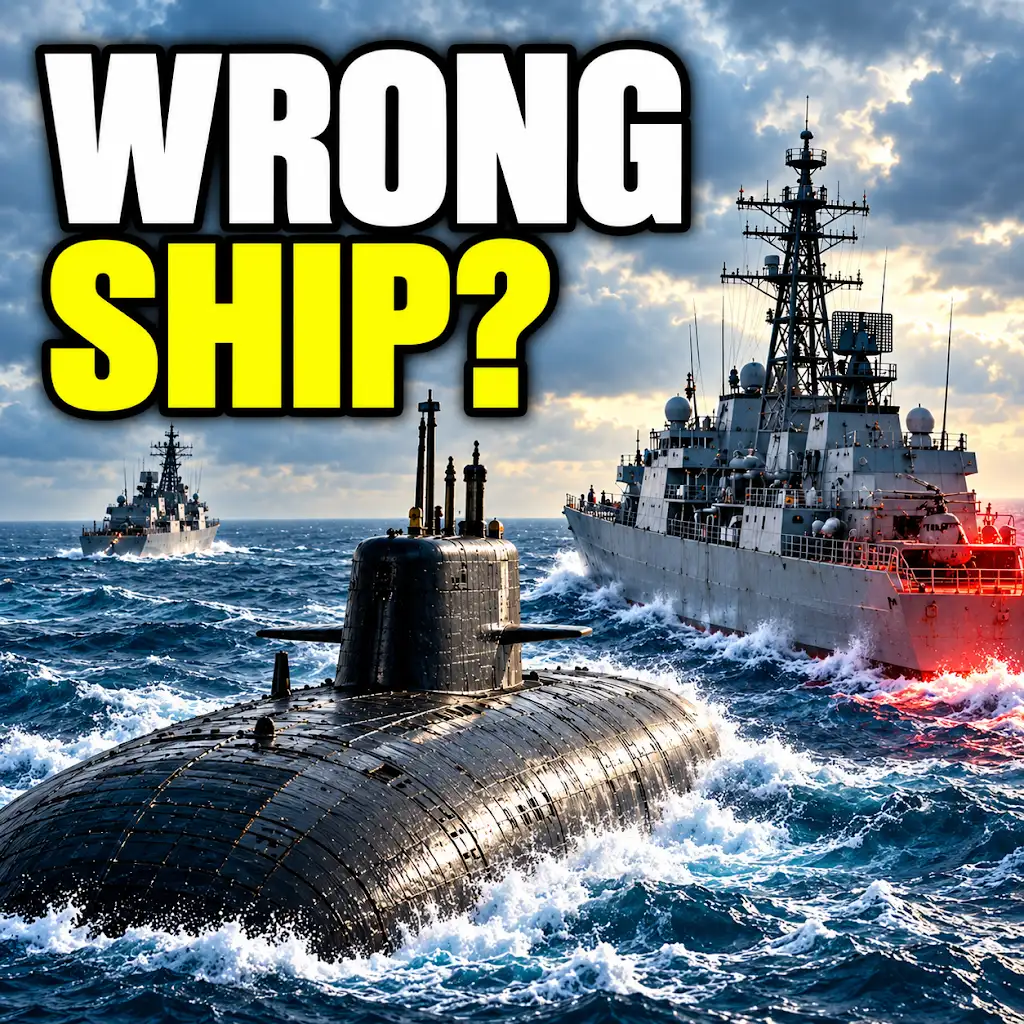
A Soviet Submarine Hit a U.S. Frigate. Was It the Wrong Ship?
FAQs
What was the purpose of the Soviet submarine tracking operation in the Mediterranean?
The purpose of the Soviet submarine tracking operation in the Mediterranean was to monitor and gather intelligence on NATO naval activities in the region during the Cold War.
How did the Soviet Union conduct submarine tracking in the Mediterranean?
The Soviet Union used a combination of surface ships, aircraft, and underwater sensors to track and monitor NATO submarines in the Mediterranean. They also utilized spy satellites for surveillance.
When did the Soviet submarine tracking operation in the Mediterranean take place?
The Soviet submarine tracking operation in the Mediterranean took place primarily during the Cold War, from the 1960s to the late 1980s.
What were the challenges faced by the Soviet Union during the submarine tracking operation in the Mediterranean?
The Soviet Union faced challenges such as evasive tactics employed by NATO submarines, the vast expanse of the Mediterranean Sea, and the presence of NATO anti-submarine warfare capabilities.
Did the Soviet submarine tracking operation in the Mediterranean have any significant impact on Cold War naval strategies?
Yes, the Soviet submarine tracking operation in the Mediterranean played a significant role in shaping Cold War naval strategies by providing valuable intelligence on NATO naval movements and capabilities in the region.