The Red Star’s Forge: Soviet Ingenuity in Cold War Defense
The Cold War was an era defined by ideological struggle and a relentless arms race, a period where innovation in military technology became a paramount concern for both superpowers. While Western observers often focused on the sheer scale of Soviet military might, the reality was also one of remarkable ingenuity and a distinctive approach to defense problem-solving. The Soviet Union, driven by a combination of ideological imperative, a fear of technological inferiority, and a deep well of scientific talent, consistently pushed the boundaries of what was thought possible in military applications. From the vastness of space to the depths of the ocean, and the very fabric of battlefield warfare, Soviet innovation left an indelible mark on the landscape of defense technology, often forging entirely new paradigms or offering unique and effective solutions to complex strategic challenges. This pursuit was not merely about matching Western capabilities; it was about developing systems that were robust, reliable, and often surprisingly effective given the economic and logistical constraints the Soviet Union faced. Their approach was characterized by a pragmatic, often brute-force, yet undeniably clever application of scientific principles, leading to advancements that continue to influence military thinking today.
For those interested in the fascinating history of Soviet military innovation, a related article can be found at In the War Room, which explores the strategic advancements and technological developments that shaped the Soviet military during the Cold War. This article delves into the key innovations that not only influenced Soviet tactics but also had a lasting impact on global military strategies.
Strategic Imperatives and the Drive for Innovation
The Soviet Union’s strategic landscape in the post-World War II era was shaped by a confluence of factors that fueled an insatiable demand for military innovation. The existential threat posed by the United States and its allies, coupled with the profound devastation of the Second World War, created a deep-seated security consciousness within the Soviet leadership. This existential anxiety translated into a national priority to develop and maintain a military force that could deter aggression and, if necessary, prevail in conflict. The ideological battle against capitalism also played a significant role, as demonstrating Soviet technological prowess was a crucial element of propaganda and a testament to the perceived superiority of the communist system. Furthermore, the Soviet Union’s vast geographical expanse and its often harsh climate necessitated the development of military hardware that was not only powerful but also incredibly rugged and adaptable to diverse operational environments.
The Shadow of Nuclear Weapons
The dawn of the nuclear age fundamentally reshaped strategic thinking and, for the Soviet Union, intensified the drive for innovation in defense. The United States’ initial nuclear monopoly created a profound sense of vulnerability, prompting a rapid and often desperate effort to achieve nuclear parity. This pursuit was not just about developing atomic bombs, but about creating reliable delivery systems capable of reaching distant targets. The Soviets poured immense resources into intercontinental ballistic missile (ICBM) programs, recognizing that a credible nuclear deterrent was essential for national survival. This focus on missile technology spurred advancements in rocketry, guidance systems, and warhead design. Beyond strategic nuclear weapons, the development of tactical nuclear weapons and their integration into conventional forces also became a significant area of research and development. The sheer destructive power of these weapons necessitated innovations in protective measures, command and control systems, and the doctrine of their use.
Geographic Realities and Environmental Challenges
The Soviet Union’s immense size and its diverse, often unforgiving, geography presented unique challenges and opportunities for military innovation. From the frozen expanses of Siberia to the vast steppe and the rugged Caucasus Mountains, military operations demanded equipment and systems that could perform reliably in extreme temperatures, across vast distances, and over difficult terrain. This led to significant advancements in areas such as all-terrain vehicles, specialized cold-weather equipment, and robust communication networks. The need to defend an enormous border also spurred innovation in surveillance technologies, border defense systems, and mobile artillery platforms. The maritime environment, with its extensive coastline and the need to project power across the Baltic, Black, and Arctic Seas, likewise drove advancements in naval technology, submarine design, and anti-ship weaponry.
Ground Warfare: Mechanization and the Art of Combined Arms

The Soviet Union’s approach to ground warfare was deeply influenced by the lessons learned from the brutal Eastern Front of World War II. The experience highlighted the critical importance of mobility, firepower, and the coordinated application of various combat arms. This led to a sustained emphasis on the development of highly mechanized forces, characterized by powerful tanks, armored personnel carriers, and self-propelled artillery. The Soviet doctrine of “Deep Battle” also emphasized the need for overwhelming offensive power to break through enemy lines and exploit the resulting penetrations deep into enemy territory. This required innovative solutions in logistics, communication, and the integration of air support with ground operations.
The Dominance of the T-Series Tanks
Perhaps the most iconic symbol of Soviet ground warfare innovation is the T-series of tanks. From the revolutionary T-34 of World War II to the later T-64, T-72, and T-80, these tanks consistently pushed the envelope in terms of firepower, protection, and mobility. Soviet tank design often prioritized simplicity, ease of production, and reliability in harsh conditions. The T-34, with its sloped armor and powerful gun, was a game-changer during the Second World War, inflicting heavy losses on German panzers. Subsequent generations continued this legacy, incorporating features such as autoloader systems to reduce crew size and increase firing rate, advanced composite armor for enhanced protection, and powerful diesel engines for excellent operational range and reliability. The Soviet emphasis on mass production and standardization meant that these tanks could be fielded in enormous numbers, providing a significant qualitative and quantitative advantage on the battlefield.
Artillery and Rocketry: The Hammer of the Land
Complementing their formidable tank forces, the Soviets also excelled in the development of artillery and rocket systems. Recognizing the devastating impact of artillery fire in World War II, they invested heavily in self-propelled artillery, which offered greater mobility and flexibility than towed guns. Systems like the 2S1 Gvozdika and 2S3 Akatsiya provided mobile, hard-hitting artillery support for advancing ground forces. Beyond conventional artillery, the Soviet Union was a pioneer in the field of multiple rocket launchers (MRLs). The legendary Katyusha rockets of World War II instilled fear and shattered enemy defenses. This legacy continued with more sophisticated systems like the BM-21 Grad and later the BM-27 Uragan, which could unleash barrages of rockets over a wide area, overwhelming enemy positions and disrupting their formations. The development of longer-range rockets and guided artillery shells also became a focus, aiming to increase the precision and effectiveness of indirect fire.
Infantry Support and Battlefield Mobility
While tanks and artillery often garnered the most attention, Soviet innovation in infantry support and battlefield mobility was equally crucial. The development of a vast fleet of armored personnel carriers (APCs) and infantry fighting vehicles (IFVs) allowed infantry to advance under armor protection, keeping pace with tanks and engaging enemy forces directly from protected vehicles. The BMP series, starting with the BMP-1, revolutionized the concept of the IFV, combining significant firepower with troop transport capabilities. These vehicles were equipped with cannons and anti-tank guided missiles (ATGMs), enabling them to engage both enemy infantry and armored vehicles. Furthermore, the Soviets developed a wide array of specialized vehicles for logistics, reconnaissance, and engineering, all designed to support the high-tempo mechanized operations that characterized their military doctrine.
Naval Power: The Submarine Threat and Surface Dominance
The Soviet Union’s strategic ambitions extended far beyond its land borders, necessitating the development of a powerful navy capable of projecting power and defending its vast coastlines. While the Soviet Navy was often perceived as being secondary to its land forces, it harbored significant innovations, particularly in submarine technology and the development of a formidable blue-water fleet. The threat posed by American carrier battle groups and the need to disrupt Western maritime trade routes were key drivers of this naval innovation.
The Silent Service: Submarine Warfare Ascendant
The Soviet Union achieved truly groundbreaking advancements in submarine technology. Driven by the need to counter the US Navy’s dominance and to threaten Western sea lanes, they poured immense resources into submarine development. This led to the creation of some of the most advanced and formidable submarines of the Cold War era. Soviet submarine designers focused on achieving high underwater speeds, extended submerged endurance, and the development of sophisticated sonar systems and quiet propulsion technologies. The Alfa-class submarines, for example, were renowned for their incredible speed, achieved through the use of titanium hulls. The Oscar-class submarines were designed to carry a formidable payload of anti-ship cruise missiles, capable of overwhelming NATO carrier groups. Furthermore, the Soviets were pioneers in the development of ballistic missile submarines (SSBNs), which formed the backbone of their nuclear deterrent and provided a highly survivable retaliatory strike capability. The relentless pursuit of stealth and acoustic quieting in Soviet submarine design posed a persistent challenge to Western anti-submarine warfare efforts.
Surface Fleet Modernization and Missile Power
While the submarine force often captured headlines, the Soviet Union also invested heavily in modernizing its surface fleet. The development of guided missile cruisers and destroyers was a key focus, equipping these vessels with a potent array of anti-ship and anti-air missiles. The Kirov-class battlecruisers, the largest surface combatants built since World War II, exemplified this trend, bristling with a diverse range of offensive and defensive weaponry. The Soviet Union also pioneered the development of vertical launching systems (VLS) for missiles, allowing for a greater missile payload and faster engagement times. The emphasis was on creating a fleet that could challenge Western naval supremacy, particularly in contested areas like the Mediterranean and the North Atlantic, and to provide air defense and anti-ship strike capabilities for its growing submarine force. The development of naval aviation, including carrier-based aircraft and naval helicopters, also played a role in enhancing the power projection capabilities of the Soviet surface fleet.
The history of Soviet military innovation is a fascinating subject that reveals the strategic advancements and technological breakthroughs during the Cold War era. For those interested in exploring this topic further, a related article offers an in-depth analysis of the various military strategies employed by the Soviet Union and their impact on global military dynamics. You can read more about these innovations and their historical significance in the article found here.
Air and Space: Reaching for the Heavens and Dominating the Skies
| Year | Innovation | Description | Impact on Military |
|---|---|---|---|
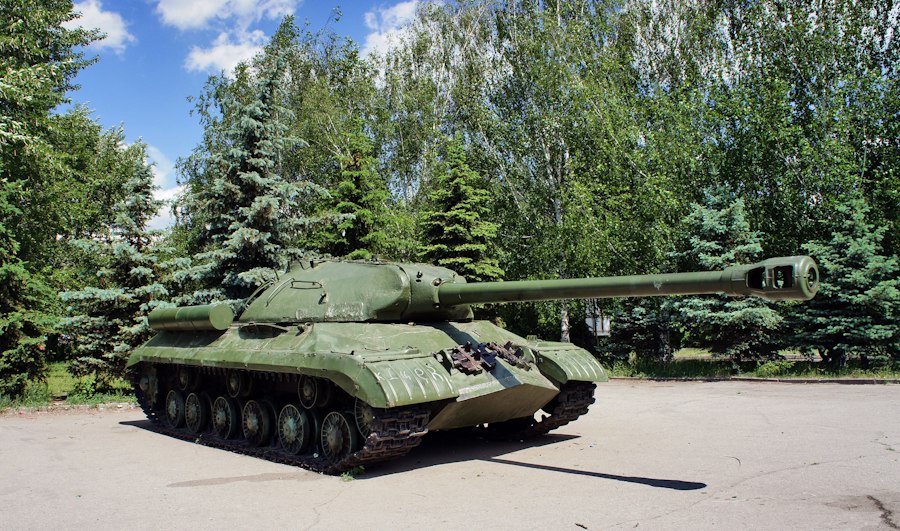
| 1945 | IS-3 Heavy Tank | Introduction of the IS-3 with a distinctive pike nose hull design for better armor protection. | Enhanced Soviet armored forces’ survivability and firepower during the early Cold War. |
| 1957 | R-7 Semyorka ICBM | First intercontinental ballistic missile developed by the USSR. | Marked the beginning of the nuclear missile age and strategic deterrence capability. |
| 1960 | MiG-21 Fighter Jet | Supersonic jet fighter with advanced aerodynamics and weapons systems. | Widely exported and used, it became a symbol of Soviet air power. |
| 1977 | T-72 Main Battle Tank | Introduced composite armor and a powerful 125mm smoothbore gun. | Improved battlefield survivability and firepower, influencing tank design worldwide. |
| 1980 | AK-74 Assault Rifle | Modernized version of the AK-47 using smaller caliber 5.45×39mm rounds. | Increased accuracy and reduced recoil, becoming standard infantry weapon. |
| 1987 | Su-27 Fighter Aircraft | Advanced air superiority fighter with superior maneuverability and avionics. | Enhanced Soviet air defense and power projection capabilities. |
The Soviet Union’s ambitions in air and space were as bold as they were expansive, fueled by a desire to achieve technological superiority and to demonstrate the prowess of its communist system. From supersonic fighter jets to pioneering achievements in space exploration, Soviet innovation in this domain was characterized by ambitious goals and often groundbreaking successes. The strategic implications of air superiority and the potential for space to be a new frontier for military advantage drove a significant portion of Soviet research and development.
The MiG and Sukhoi Legacy: Supersonic Pursuits
The skies above the Cold War battlefield were a constant arena of innovation, and the Soviet Union’s fighter aircraft were at the forefront of this competition. The design bureaus of Mikoyan-Gurevich (MiG) and Sukhoi consistently produced aircraft that were both technologically advanced and formidable adversaries. The MiG-21, for example, was one of the most widely produced supersonic jet fighters in history, known for its agility and potent armament. Later aircraft like the MiG-23 and MiG-29, and the Sukhoi Su-27, represented significant leaps forward in aerodynamics, engine technology, and avionics. These aircraft were designed for air superiority, intercepting enemy bombers and fighters, and were equipped with advanced radar systems and air-to-air missiles. The Soviet approach often favored ruggedness and ease of maintenance, making their aircraft effective in a wide range of operational conditions. The development of advanced electronic warfare capabilities and the integration of precise targeting systems also played a crucial role in the effectiveness of Soviet air power.
The Cosmic Race: Pioneering Space Exploration and Military Applications
The Soviet Union’s achievements in space exploration were legendary and deeply intertwined with military objectives. The launch of Sputnik 1 in 1957 marked a stunning initial victory in the Space Race, demonstrating the Soviet Union’s capabilities in rocketry and orbital mechanics. This achievement was not merely symbolic; it had direct military implications, showcasing the potential for satellite reconnaissance, early warning systems, and even the deployment of nuclear weapons in orbit. The subsequent manned spaceflight program, culminating in Yuri Gagarin’s historic flight, further solidified Soviet technological prestige. Beyond these early successes, the Soviet Union developed a sophisticated network of reconnaissance satellites, communication satellites, and early warning satellites, crucial for maintaining situational awareness of enemy military activities. The development of anti-satellite weapons also became a significant area of research, aiming to deny the adversary the use of space assets. The Mir space station, the culmination of decades of Soviet space ingenuity, demonstrated their long-term commitment to human presence in space and provided a platform for scientific research with potential military applications.
Electronics and Cybernetics: The Hidden Engines of Modern Warfare
While often less visible than tanks or missiles, Soviet advancements in electronics and cybernetics were fundamental to the effectiveness of their modern military. The ability to process information, communicate reliably, and control complex weapon systems depended heavily on sophisticated electronic components and the burgeoning field of computer science. The Soviet Union recognized the strategic importance of these areas, dedicating significant resources to research and development, even amidst challenges in consumer electronics.
Advancements in Radar and Electronic Warfare
The development of effective radar systems was crucial for both air defense and navigation, and the Soviets made significant strides in this area. They developed powerful early warning radar systems capable of detecting aircraft and missiles at long ranges, forming the backbone of their air defense networks. Their airborne radar systems equipped fighter jets and bombers with the ability to detect and track enemy targets. Furthermore, the Soviets were pioneers in electronic warfare (EW). They developed sophisticated jamming techniques and electronic countermeasures designed to disrupt enemy radar and communication systems, while simultaneously working to protect their own electronic assets from hostile interference. The development of sophisticated signal processing techniques allowed them to extract valuable intelligence from enemy electronic emissions, a critical component of their intelligence-gathering capabilities. The relentless pursuit of improved radar resolution and detection capabilities was a constant feature of Soviet electronic warfare development.
The Rise of Computing and Command and Control
The Soviet Union embraced the field of cybernetics and computing with enthusiasm, recognizing its potential to revolutionize military operations. Despite facing challenges in miniaturization and commercial adoption, Soviet computer scientists made significant contributions to the theoretical and practical aspects of computing. This led to the development of robust command and control systems that allowed for the effective coordination of vast military forces. Sophisticated battlefield management systems, capable of processing real-time intelligence and directing forces, were a key objective. The development of secure communication networks, resistant to jamming and interception, was also paramount. While perhaps not as widely known as their Western counterparts, Soviet computers and algorithms played a vital role in enabling complex military maneuvers and ensuring the efficient deployment of their formidable arsenal. The integration of artificial intelligence, albeit in its nascent stages, also began to be explored for applications in target recognition and decision support for military commanders. The Soviet Union’s commitment to advancing these fields, often with a focus on resilience and fault tolerance, ensured that their military could operate effectively in the increasingly complex and interconnected environment of modern warfare.

The Soviet Warship That Learned to Fly
FAQs
What were some key innovations in Soviet military technology during the Cold War?
Some key innovations in Soviet military technology during the Cold War included the development of the AK-47 assault rifle, the T-34 tank, and the MiG fighter jets. These advancements helped the Soviet Union maintain a strong military presence during the era.
How did the Soviet Union revolutionize rocket technology?
The Soviet Union revolutionized rocket technology by launching the first artificial satellite, Sputnik, into space in 1957. This event marked the beginning of the space race between the Soviet Union and the United States.
What role did Soviet military innovation play in the outcome of World War II?
Soviet military innovation played a crucial role in the outcome of World War II, with advancements such as the T-34 tank and Katyusha rocket launcher giving the Soviet Union a significant advantage on the Eastern Front against Nazi Germany.
How did the Soviet Union develop its nuclear capabilities during the Cold War?
The Soviet Union developed its nuclear capabilities during the Cold War through a combination of espionage, research and development, and testing. The successful detonation of their first atomic bomb in 1949 marked the beginning of the nuclear arms race.
What impact did Soviet military innovation have on modern warfare?
Soviet military innovation had a lasting impact on modern warfare by influencing the development of military technology and tactics around the world. Innovations such as the AK-47 and strategic missile systems continue to shape military strategies today.