The Red Star Ascendant: Pioneering Soviet Aircraft Innovations
The history of aviation is a tapestry woven with threads of ingenuity, competition, and often, geopolitical tension. Within this grand narrative, the Soviet Union stands as a powerful and distinct thread, characterized by a unique approach to aircraft development that left an indelible mark on aviation history. From the dawn of the 20th century through the Cold War, Soviet engineers and designers, often working under immense pressure and with distinct ideological and economic constraints, produced a remarkable array of aircraft that pushed the boundaries of performance, utility, and even artistic expression. Their contributions spanned a wide spectrum, from groundbreaking aerodynamic concepts and robust, practical designs to avant-garde experiments that, while not always commercially successful, offered valuable insights and inspired future generations. The Soviet legacy in aviation is not merely a collection of impressive machines; it is a testament to a persistent drive for innovation, a willingness to take risks, and a profound impact on the global aerospace landscape that continues to resonate today.
Soviet aircraft development has a rich history marked by innovation and strategic advancements, particularly during the Cold War era. For a deeper understanding of the technological breakthroughs and the impact of these aircraft on military strategy, you can explore the article titled “The Evolution of Soviet Military Aviation” available at In The War Room. This article provides an insightful analysis of the key aircraft models and their roles in shaping aerial combat tactics during that period.
Early Dreams and Wartime Realities
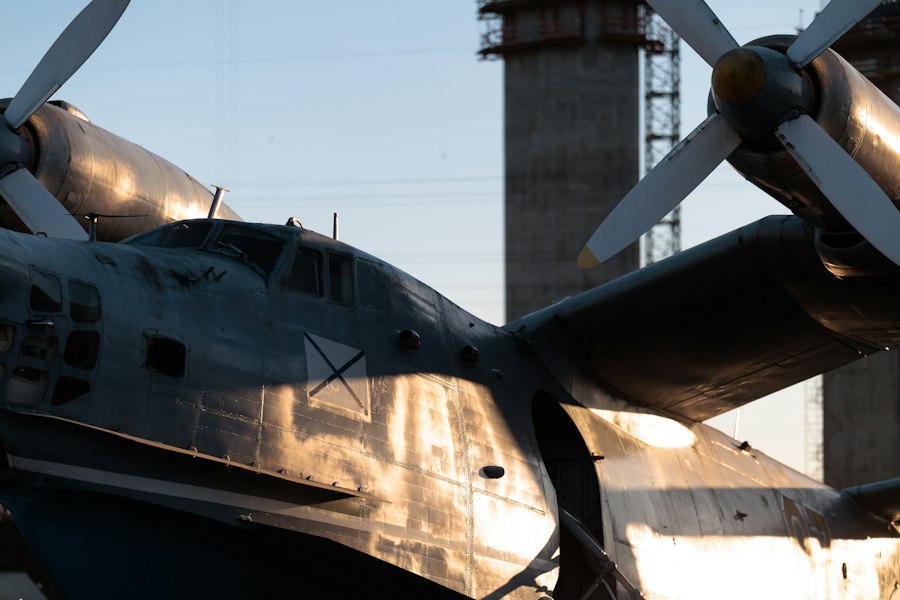
The genesis of Soviet aviation development can be traced back to the early days of flight, with individuals like Alexander Mozhaysky even predating the Wright brothers with his ambitious, albeit ultimately unsuccessful, attempts at powered flight. However, it was in the post-Revolutionary period and particularly leading up to and during World War II that Soviet aircraft development truly began to coalesce into a formidable force. The nascent Soviet state, driven by a desire for industrialization and military strength, poured resources into establishing a domestic aircraft industry. This era was defined by a pragmatic approach, focused on creating aircraft that were rugged, reliable, and capable of mass production, often with a keen eye on adapting and improving upon existing designs.
The Influence of Foreign Designs and Early Indigenous Efforts
In its early stages, Soviet aircraft development heavily relied on understanding and often replicating successful foreign designs. Engineers meticulously studied aircraft from Western powers, drawing inspiration for aerodynamic forms, engine configurations, and structural solutions. This period saw the production of licensed versions of aircraft like the Tupolev ANT series, which were highly influential. However, this reliance on foreign blueprints soon gave way to a burgeoning sense of indigenous innovation. Visionary designers like Andrei Tupolev and Nikolai Polikarpov began to establish their own design bureaus, laying the groundwork for distinctively Soviet aircraft. The Polikarpov I-15 and I-16 fighters, for instance, demonstrated significant advancements in maneuverability and speed for their time, showcasing a growing confidence in Soviet design capabilities. These early successes were crucial in building the foundation for more complex and ambitious projects that would follow.
The Great Patriotic War: A Crucible of Innovation
The German invasion of the Soviet Union in 1941 thrust the nation’s aircraft industry into a desperate race for survival and superiority. The Great Patriotic War became a brutal crucible that forged new designs and accelerated development in ways that peacetime often could not. Facing overwhelming odds and needing to replace staggering losses, Soviet aircraft manufacturers had to deliver aircraft that were not only effective but also produced in vast quantities. This period saw the emergence of some of the most iconic Soviet warbirds, including the Ilyushin Il-2 Sturmovik. The Il-2, a heavily armored ground-attack aircraft, became the most produced military aircraft in history, a testament to its effectiveness and the Soviet Union’s ability to scale production. Its distinctive “flying tank” moniker accurately reflected its formidable role in blunting German advances. Similarly, the Lavochkin La-5 and Yakovlev Yak-9 fighters proved to be formidable adversaries in the air, often outperforming their German counterparts in crucial aspects like climb rate and maneuverability. The war underscored the Soviet Union’s ability to rapidly adapt, improvise, and produce aircraft that could decisively influence the outcome of battles, even in the face of overwhelming technological challenges.
The Jet Age Dawn: Pushing the Speed Barrier

The end of World War II marked the dawn of a new era in aviation: the jet age. The Soviet Union, keenly aware of the technological leap represented by jet propulsion, rapidly shifted its focus to developing its own jet-powered aircraft. This transition was not without its challenges, as it required mastering new engine technologies and aerodynamic principles. However, the Soviets embraced this challenge with characteristic determination, quickly closing the gap with Western powers and, in some areas, even surpassing them. The pursuit of speed and performance became a defining characteristic of Soviet jet aircraft development during this period, driven by both military necessity and a desire for international prestige.
Post-War Jet Fighter Development: The MiG and Sukhoi Legacy
The legendary Mikoyan-Gurevich (MiG) and Sukhoi design bureaus emerged as the titans of Soviet jet fighter development. The MiG-15, which saw combat in the Korean War, was a revelation to the West. Its swept wings and powerful Klimov VK-1 engine, a derivative of the British Rolls-Royce Nene, provided it with exceptional speed and climb capabilities that could challenge the F-86 Sabre. The subsequent development of the MiG-17 and the revolutionary MiG-19, the first Soviet supersonic fighter, demonstrated a continuous upward trajectory in performance. The Sukhoi bureau, while perhaps less prolific in early jet fighter production than MiG, consistently pushed the envelope in aerodynamic design, leading to formidable aircraft like the Sukhoi Su-7 and Su-9. These aircraft were characterized by their powerful engines, robust construction, and increasingly sophisticated aerodynamic features, establishing the Soviet Union as a major player in advanced jet fighter technology.
Strategic Bombers: The Long Reach of the Red Star
Alongside the pursuit of superior air-to-air combat capabilities, the Soviet Union also invested heavily in developing long-range strategic bombers. The need to project power and counter the growing influence of the United States led to the design of aircraft capable of intercontinental range. The Tupolev Design Bureau, a powerhouse in bomber design, produced a series of iconic aircraft, starting with the jet-powered Tu-16 Badger and the even more impressive Tu-95 Bear. The Tu-95, with its distinctive contra-rotating propellers powered by turboprop engines, was a remarkable engineering feat, allowing it to achieve speeds previously thought unattainable for propeller-driven aircraft and providing it with exceptional range. It became a symbol of Soviet strategic power, capable of delivering nuclear weapons across vast distances. The development of these strategic bombers was not just about military capability; it was a clear signal of the Soviet Union’s emergence as a global superpower, able to project its influence on a planetary scale.
The Golden Age of Aerobatics and Record-Breaking Flights
Beyond the purely military applications, Soviet aviation during the mid-to-late 20th century also experienced a golden age of aerobatics and a relentless pursuit of aviation records. This period showcased the remarkable skill of Soviet pilots and the advanced capabilities of their aircraft, often designed with exceptional maneuverability and structural integrity. These achievements served multiple purposes: they were a powerful propaganda tool, demonstrating Soviet technological prowess and the daring spirit of its people, and they also pushed the boundaries of what was considered possible in flight, providing valuable data and inspiration for future designs.
The Majesty of Aerobatic Teams: The Storks and Swifts
Soviet aerobatic teams, most notably the “Storks” (later the “Swifts”) and the “Russian Knights,” became legendary for their precision, daring, and the sheer spectacle of their performances. Flying aircraft like the Sukhoi Su-26, Su-29, and Su-31 for solo and team aerobatics, and later the formidable Su-27 for the “Knights,” these teams captivated audiences worldwide. Their ability to execute complex formations and maneuvers at high speeds and low altitudes demonstrated the exceptional handling qualities of their aircraft and the rigorous training of their pilots. These aircraft were purpose-built for aerobatics, featuring advanced flight control systems, reinforced airframes, and powerful engines, allowing for extreme G-forces and tight turns. The performances were not just entertainment; they were a testament to the advanced state of Soviet aerodynamic design and the mastery of flight control.
Setting the Skies Alight: A Constellation of World Records
The Soviet Union harbored an insatiable appetite for setting aviation world records. From speed and altitude records to endurance and distance achievements, Soviet pilots and aircraft consistently appeared in the annals of aviation history. Aircraft like the Tupolev Tu-144, the Soviet supersonic transport, set speed records for its class. The Mikoyan Project 1.44, a prototype for a next-generation fighter, also demonstrated impressive performance capabilities. Even in the realm of lighter-than-air flight, Soviet engineers explored new frontiers. These record-breaking flights were often undertaken with highly specialized aircraft, pushing the limits of engine power, aerodynamic efficiency, and structural resilience. They were not merely individual feats but collective endeavors involving entire design bureaus and vast logistical support, underscoring the state’s commitment to demonstrating its technological supremacy on the global stage.
Soviet aircraft development during the Cold War was marked by significant advancements and innovations that shaped military aviation. The competition with Western powers led to the creation of iconic aircraft, such as the MiG series and the Tu-95 bomber. For a deeper understanding of the intricacies involved in this era of aviation, you can explore a related article that delves into the technological breakthroughs and strategic implications of these developments. This insightful piece can be found at this link.
Engineering for the Cosmos and the Everyday
| Aircraft Model | First Flight | Role | Engine Type | Max Speed (km/h) | Range (km) | Notable Features |
|---|---|---|---|---|---|---|
| MiG-15 | 1947 | Jet Fighter | Turbojet | 1075 | 1200 | First successful swept-wing jet fighter |
| Tu-95 | 1952 | Strategic Bomber | Turboprop | 925 | 15000 | Long-range with contra-rotating propellers |
| MiG-21 | 1955 | Interceptor/Fighter | Turbojet | 2170 | 1040 | Most produced supersonic jet aircraft |
| Su-27 | 1977 | Air Superiority Fighter | Turbojet | 2500 | 1500 | Advanced maneuverability and avionics |
| Il-2 Sturmovik | 1939 | Ground Attack | Reciprocating piston engine | 400 | 720 | Heavily armored, key WWII ground attack aircraft |
The innovative spirit of Soviet aircraft development was not confined to the skies; it extended into the vast expanse of space and the practicalities of civilian life. The Soviet Union’s pioneering efforts in rocketry and space exploration were inextricably linked to its advancements in aerospace engineering, building upon the expertise gained from aircraft development. Simultaneously, a focus on practical, mass-producible aircraft for civilian use demonstrated a commitment to connecting its vast territories and fostering economic development.
The Gemini of Aerospace: Rockets and Spaceplanes
The Soviet Union’s formidable lead in the early space race was directly enabled by its sophisticated aerospace engineering capabilities. The development of powerful rockets, such as the R-7 Semyorka, the launch vehicle for Sputnik and Yuri Gagarin’s historic flight, was a monumental achievement. These rockets were an evolution of aerodynamic principles and materials science honed in aircraft design, adapted for the extreme conditions of space. Furthermore, the Soviet Union pursued the concept of reusable spacecraft and spaceplanes, such as the Buran shuttle. While Buran’s operational career was limited, its development showcased advanced aerodynamic designs, robust thermal protection systems, and sophisticated flight control technologies, demonstrating a commitment to pushing the boundaries of space transportation. The expertise gained in managing complex, high-performance aerospace projects directly benefited both military and civilian aviation programs.
Bridging the Vastness: Civil Aviation Innovations
While often overshadowed by its military and space achievements, Soviet civil aviation also witnessed significant developments. The need to connect its immense landmass necessitated the development of reliable and efficient passenger and cargo aircraft. The Antonov Design Bureau became synonymous with large transport aircraft, producing iconic planes like the An-2, a rugged biplane still in service today, and the An-124 Ruslan, one of the largest cargo aircraft in the world. These aircraft were designed for challenging operating conditions, capable of taking off and landing on unpaved runways, a critical requirement for many remote Soviet regions. The Ilyushin Design Bureau also contributed significantly with its passenger jets, such as the Il-62, a long-range airliner that competed with Western counterparts. These civil aircraft, while perhaps not always as technologically cutting-edge as their Western counterparts in terms of passenger amenities, were characterized by their durability, reliability, and ability to operate in diverse environments, effectively bridging the vast distances of the Soviet Union and facilitating its economic and social integration.
The Enduring Influence: Soviet Aviation’s Lasting Echoes
The dissolution of the Soviet Union in 1991 marked the end of an era, but not the end of its aviation legacy. The innovations, designs, and engineering expertise cultivated over decades continued to influence the global aerospace industry. The robust and practical nature of many Soviet designs, their emphasis on performance, and their unique aerodynamic solutions left an indelible mark.
Post-Soviet Design Bureaus: A New Chapter
The former Soviet design bureaus, such as Sukhoi, MiG, and Antonov, did not disappear with the Soviet Union. They adapted, evolving into modern aerospace companies, often facing significant economic challenges but continuing to produce aircraft. The Sukhoi Su-27 “Flanker” family, for instance, spawned a generation of highly capable fighter jets that remain in service with numerous air forces worldwide and continue to be developed, with advanced derivatives like the Su-35 and the stealthy Su-57. The Antonov company continues to produce its formidable transport aircraft, essential for global logistics. These post-Soviet entities carry the torch of their predecessors, blending inherited design philosophies with new technologies and market demands.
A Global Impact on Design and Technology
The impact of Soviet aircraft development extends far beyond the borders of its former republics. The pursuit of high thrust-to-weight ratios in fighter jets, the innovative use of aerodynamics for maneuverability, and the development of rugged, versatile aircraft for challenging environments have all informed and inspired aerospace engineers globally. Concepts pioneered in Soviet aircraft, from advanced wing designs to innovative cockpit layouts, have been studied and adapted. The lessons learned from Soviet engineering, particularly in areas of structural integrity and efficient use of materials, continue to be relevant. Furthermore, the sheer volume of production for certain aircraft, like the Il-2, demonstrated the power of mass manufacturing in achieving military objectives, a lesson that resonated throughout the global defense industry. The legacy of Soviet aviation is not a closed chapter; it is a continuing story of influence, innovation, and a testament to the enduring power of human ingenuity in the pursuit of flight.

The Soviet Warship That Learned to Fly
FAQs
What were some key Soviet aircraft developed during the Cold War?
Some key Soviet aircraft developed during the Cold War include the MiG-21, MiG-25, Su-27, and Tu-95. These aircraft played significant roles in shaping Soviet air power during this period.
How did Soviet aircraft development compare to Western counterparts?
Soviet aircraft development often focused on different design philosophies compared to Western counterparts. Soviet aircraft tended to prioritize simplicity, ruggedness, and ease of maintenance over advanced avionics and technology.
What impact did Soviet aircraft have on military conflicts around the world?
Soviet aircraft, such as the MiG series, were widely exported to various countries and played crucial roles in numerous military conflicts around the world. These aircraft were known for their reliability and performance in combat situations.
How did the collapse of the Soviet Union affect aircraft development in Russia?
After the collapse of the Soviet Union, aircraft development in Russia faced significant challenges due to economic hardships and a lack of funding. However, some projects, such as the Su-35 and Su-57, have continued to showcase Russia’s capabilities in aircraft design.
What advancements in technology were seen in Soviet aircraft development over the years?
Advancements in technology in Soviet aircraft development included the introduction of fly-by-wire systems, stealth technology, and advanced avionics. These innovations helped improve the performance and capabilities of Soviet aircraft.