The Republican Guard, the elite fighting force of Saddam Hussein’s regime, represented the apex of Iraqi military power during the Gulf War. Its command and control structures, however, proved to be a critical vulnerability, ultimately contributing to its devastating defeat. This article will delve into the multifaceted aspects of the Republican Guard’s command and control mechanisms, examining their strengths, weaknesses, and the impact of Allied operations on their effectiveness.
The Republican Guard was established in the early 1980s, evolving from a presidential bodyguard unit into a formidable armored and mechanized corps. Its primary mission was to protect Saddam Hussein and his regime, serving as a strategic reserve and a shock force capable of overwhelming enemy formations. The Guard comprised the most heavily armed and best-trained units of the Iraqi Army, equipped with Soviet-era tanks like the T-72 and T-80, BMP infantry fighting vehicles, and artillery. Its personnel were drawn from loyalist tribes and viewed as ideologically committed to the Ba’athist regime.
Unit Structure and Hierarchy
At its core, the Republican Guard was organized into divisions, typically armored and mechanized. These divisions, in turn, were comprised of brigades, battalions, and companies, mirroring the standard Soviet military structure. The supreme commander of the Republican Guard was directly under Saddam Hussein’s authority, with a dedicated staff responsible for planning, logistics, and operations. Seniority and political loyalty played significant roles in appointments within the command chain.
The Role of the Presidential Guard
While the broader Republican Guard encompassed several divisions, a distinct Presidential Guard unit existed, serving as Saddam Hussein’s personal security detail and often integrated into the overall command structure during critical moments. This unit’s primary function was direct protection, but its proximity to the supreme leader meant its intelligence and communication channels were often privileged.
Political Influence and Loyalty
The Republican Guard’s loyalty was paramount to Saddam Hussein’s regime. Significant emphasis was placed on political indoctrination and ensuring the ideological purity of its ranks. This loyalty, however, also meant that political considerations often influenced military decisions, sometimes at the expense of tactical or strategic sound judgment. The presence of political officers within units served to reinforce party doctrine and monitor troop morale.
The command and control structure of the Republican Guard during the Gulf War played a crucial role in their operational effectiveness and strategic decisions. For a deeper understanding of this topic, you can explore the article that discusses the intricacies of military leadership and communication within the Republican Guard. This analysis provides valuable insights into how their command hierarchy influenced battlefield outcomes. To read more about it, visit this article.
Allied Intelligence and the Weakening of Command and Control
The Coalition’s intelligence apparatus played a decisive role in degrading the Republican Guard’s command and control capabilities. Through a combination of electronic intelligence (ELINT), signals intelligence (SIGINT), human intelligence (HUMINT), and aerial reconnaissance, the Allies gained an unprecedented understanding of Iraqi military dispositions, communication networks, and command personalities.
Electronic Warfare and Communications Disruption
A cornerstone of the Allied strategy was the systematic disruption of Iraqi communications. Advanced electronic warfare capabilities were employed to jam Iraqi radio frequencies, intercept communications, and even inject disinformation. This created confusion and isolation within the Republican Guard, hindering their ability to coordinate movements, relay orders, and receive critical battlefield updates.
The Impact of Jamming on Battalion-Level Coordination
Jamming, particularly at the tactical level, proved highly effective. For units operating in dispersed formations, the inability to establish reliable radio contact with their parent battalions or brigades meant that independent decision-making, often necessary in fluid combat situations, became exceedingly difficult. This led to units becoming isolated, their movements uncoordinated, and their responses delayed.
Targeting of Command Nodes and Leadership
The Coalition specifically targeted known command and control nodes, including headquarters buildings, communication centers, and key leadership elements. Precision-guided munitions and air strikes were used to neutralize these assets, further fragmenting the Republican Guard’s ability to function as a cohesive fighting force. The decapitation of leadership, even if temporary, created vacuums that were difficult to fill effectively.
The Psychological Impact of Leadership Strikes
Beyond the purely functional disruption, the targeting of leadership had a significant psychological impact. The constant threat of aerial attack and the visible destruction of command facilities instilled fear and uncertainty among Republican Guard commanders. This uncertainty often led to a reluctance to make decisive moves or to take risks, as the consequences of a misstep, amplified by potential Allied retribution, were severe.
Iraqi Command and Control Systems: Strengths and Deficiencies
While the Republican Guard was equipped with modern Soviet-era military hardware, its command and control systems suffered from inherent deficiencies that were exacerbated by the Coalition’s actions.
Reliance on Centralized Command
Iraqi military doctrine, heavily influenced by Soviet principles, favored a highly centralized command structure. While this could be effective in a static or predictable environment, it proved a significant weakness in the face of the fluid and dynamic nature of the Gulf War. Orders flowed from the top down, with limited delegation of authority to lower echelons.
The “Yes Sir” Mentality
This centralization fostered a “yes sir” mentality among subordinate commanders, discouraging initiative and independent thought. When communication lines were disrupted or orders became contradictory, lower-level officers often found themselves paralyzed, unable to act without explicit clarification. This was particularly problematic for mechanized units operating at high speeds.
Communication Infrastructure and Redundancy
The Iraqi communication infrastructure, while possessing some modern elements, lacked the redundancy and robustness necessary to withstand sustained electronic warfare and targeted attacks. Radio sets were often older models, susceptible to jamming, and backup communication methods were not always adequately developed or deployed. This left units vulnerable to complete communication blackouts.
The Vulnerability of Fixed Communication Hubs
Fixed communication hubs and relay stations, which were essential for maintaining long-range communication, became prime targets for Coalition air power. Once these hubs were destroyed, communication links to large formations could be severed for extended periods. The lack of a distributed and resilient communication network was a critical flaw.
The Role of Political Officers
Political officers, or Ba’ath Party representatives, were embedded within Republican Guard units. Their role was to ensure loyalty, monitor morale, and enforce party ideology. While intended to bolster fighting spirit, their presence could also introduce an additional layer of bureaucratic oversight and, in some cases, political interference in tactical decisions.
The Dual Command Structure Conundrum
In some instances, the dual command structure, with both military and political officers holding influence, could lead to confusion and conflicting directives, particularly during moments of crisis. The priority of political loyalty could sometimes override purely military considerations.
Allied Tactics and the Exploitation of Weaknesses
The Coalition meticulously planned and executed tactics designed to exploit the vulnerabilities in the Republican Guard’s command and control.
Air Superiority and its Impact on Ground Operations
Coalition air superiority was absolute. The continuous presence of Allied aircraft in the skies prevented Iraqi units, including the Republican Guard, from effectively maneuvering, receiving resupply, or launching offensive operations. Air strikes systematically targeted troop concentrations, artillery positions, and any visible signs of command.
The “Scorched Earth” of Aerial Bombardment
The relentless aerial bombardment created a “scorched earth” environment for Republican Guard units. Their ability to conceal their movements, establish defensive positions, or even conduct routine maintenance was severely hampered. The psychological toll of constant air attacks was also immense, contributing to low morale and a desire to surrender.
Ground Maneuver and the “Left Hook”
The ground offensive, particularly the famous “left hook” maneuver executed by Coalition ground forces, was designed to bypass heavily fortified Iraqi positions and strike at the rear of the Republican Guard divisions. This tactic aimed to disrupt their command and control by encircling them, cutting off escape routes, and forcing them to fight on multiple fronts without central coordination.
The Isolation of Elite Formations
By outmaneuvering and encircling key Republican Guard formations, the Coalition effectively isolated them from their higher command and from each other. This prevented any coordinated withdrawal or regrouping, leading to the piecemeal destruction of these elite units.
Psychological Warfare
The Coalition employed psychological warfare tactics to further erode the Republican Guard’s will to fight. Leaflets were dropped, radio broadcasts were transmitted, and messages were relayed via captured Iraqi soldiers encouraging surrender and highlighting the futility of resistance. These efforts aimed to undermine the loyalty and resolve that underpinned the Republican Guard’s operational capacity.
The Impact of Disinformation
While less documented, the potential for targeted disinformation campaigns through compromised communication channels or the spread of rumors within Iraqi ranks cannot be discounted. Such tactics could sow confusion and distrust, further degrading command and control.
The command and control structure of the Republican Guard during the Gulf War played a crucial role in their operational effectiveness, as detailed in a related article on military strategy. Understanding how their leadership and communication systems functioned can provide valuable insights into the dynamics of modern warfare. For further exploration of this topic, you can read more in this comprehensive analysis found here.
The Devastating Consequences of Failed Command and Control
| Metrics | Data |
|---|---|
| Number of Republican Guard units | Unknown |
| Command and control structure | Centralized |
| Communication equipment | Advanced |
| Intelligence gathering capabilities | Highly developed |
The cumulative effect of the Republican Guard’s command and control deficiencies and the Coalition’s relentless pressure was catastrophic.
Disintegration and Rout
The Republican Guard, once considered the pride of Saddam Hussein’s army, disintegrated under the Allied onslaught. Units found themselves cut off, without orders, and under overwhelming attack. This led to widespread surrender, abandonment of equipment, and a desperate rout.
The Highway of Death Syndrome
The “Highway of Death” incident, where retreating Iraqi forces, including elements of the Republican Guard, were annihilated by Allied air and ground attacks as they attempted to flee Kuwait City, is a stark illustration of the consequences of failed command and control. The lack of coordinated retreat and the vulnerability of unescorted convoys led to a slaughter.
Loss of Elite Manpower and Equipment
The Gulf War resulted in the devastating loss of experienced manpower and state-of-the-art military equipment for the Republican Guard. This significantly weakened Iraq’s military capability for years to come and had a profound impact on the regime’s ability to project power.
The Irreparable Damage to Iraqi Military Strength
The Republican Guard’s destruction was not just a tactical setback; it represented an irreparable blow to Iraq’s overall military strength and its ability to pose a significant threat to its neighbors. The loss of these elite units left the regime vulnerable and dependent on less capable forces.
The Legacy of Command and Control Failures
The Republican Guard’s command and control failures in the Gulf War serve as a crucial case study in modern warfare. It underscores the importance of robust, resilient, and adaptable communication systems, the dangers of over-centralization, and the critical role of intelligence in degrading an adversary’s ability to wage war. The experience highlighted how advanced technology, effective intelligence, and well-executed tactics can dismantle even the most formidable military formations by targeting their very ability to command and control. The legacy of these failures continues to inform military thinking on the importance of decentralized command and the indispensable nature of effective communication in achieving victory.
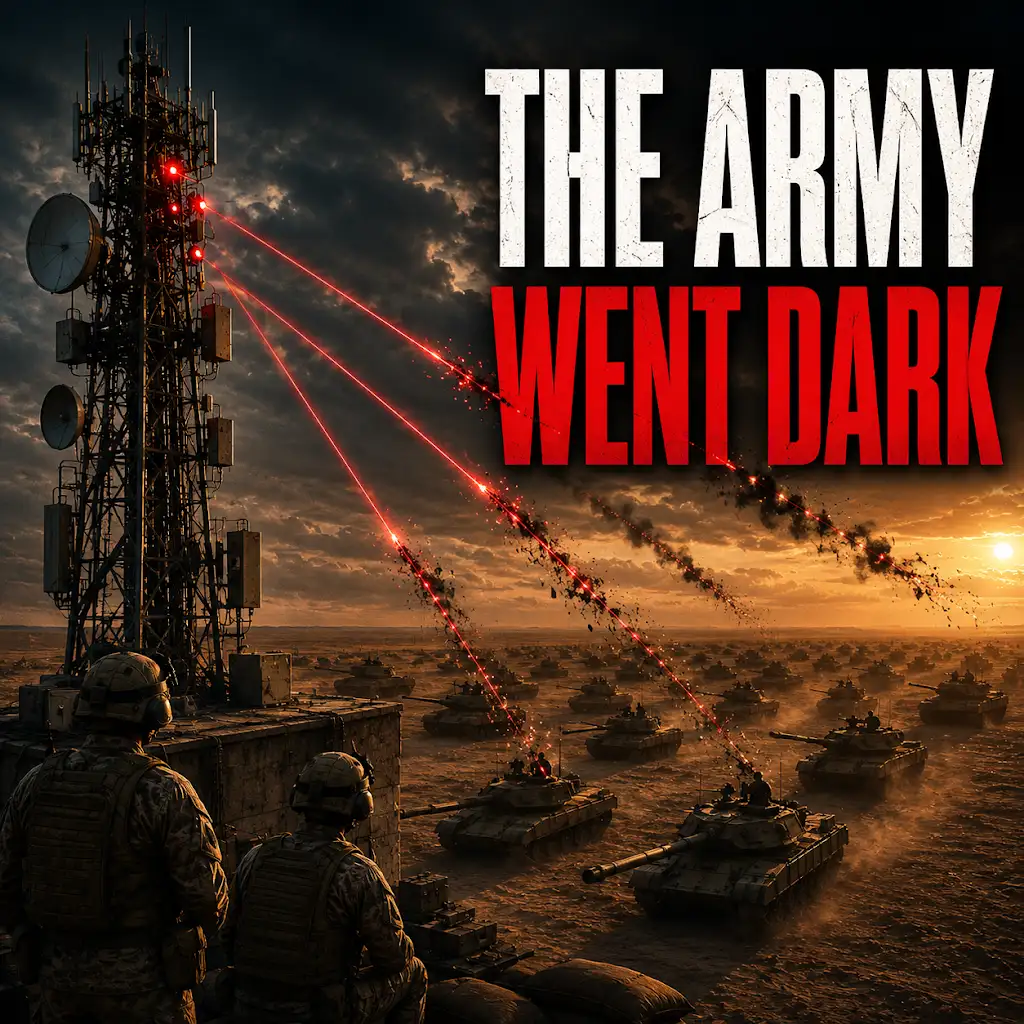
The Invisible Attack That Crippled Iraq’s Army | Desert Storm Documentary
FAQs
What was the role of the Republican Guard in the Gulf War?
The Republican Guard was a key part of the Iraqi military during the Gulf War, serving as a strategic reserve force and playing a crucial role in defending Kuwait and southern Iraq.
How did the Republican Guard command and control its forces during the Gulf War?
The Republican Guard utilized a centralized command and control structure, with orders coming from senior leadership and being disseminated down through the ranks. Communication and coordination were key elements of their command and control strategy.
What tactics did the Republican Guard employ during the Gulf War?
The Republican Guard utilized a combination of conventional military tactics, including defensive fortifications, armored warfare, and infantry maneuvers. They also employed irregular warfare tactics, such as using civilian infrastructure for cover and concealment.
What impact did the Republican Guard have on the outcome of the Gulf War?
The Republican Guard’s resistance and resilience prolonged the conflict and inflicted significant casualties on the coalition forces. However, their eventual defeat and destruction contributed to the overall success of the coalition’s military campaign.
What lessons were learned from the Republican Guard’s command and control during the Gulf War?
The Gulf War highlighted the importance of effective command and control, as well as the need for adaptable and flexible tactics in modern warfare. The experience of facing the Republican Guard also influenced future military strategies and doctrines.