Dawn of a New Era: The Unprecedented Speed of the ‘Akula’ Class
The Cold War, a period of simmering tension and covert technological one-upmanship, often saw nations pushing the boundaries of innovation in a relentless arms race. While much of the public focus remained on the skies and the surface, the silent, unseen depths of the ocean became a crucial battleground. In this shadowy arena, the Soviet Union achieved a monumental feat of engineering and naval strategy: the development and deployment of a submarine class that shattered existing speed records, fundamentally altering the perceived balance of undersea power. The ‘Akula’ class, a designation that would later become synonymous with advanced Soviet submarine technology, was at the vanguard of this revolution. Its unprecedented velocity was not merely a technical triumph; it represented a paradigm shift in submarine warfare, offering capabilities previously confined to the realm of speculative fiction. The whispers of its performance, initially dismissed as propaganda by Western intelligence, soon solidified into undeniable evidence, forcing a re-evaluation of naval doctrines and strategic planning across the globe. This wasn’t just about going faster; it was about achieving a tactical and strategic advantage that was both profound and potentially destabilizing.
In a remarkable display of engineering prowess, a Soviet submarine recently achieved a significant milestone by surpassing its own speed target, showcasing the advancements in naval technology during its era. This achievement not only highlights the capabilities of Soviet maritime forces but also emphasizes the ongoing competition in underwater warfare. For more insights into this fascinating topic, you can read the related article at In the War Room.
The Genesis of Velocity: Design Philosophy and Early Prototypes
The drive for increased submarine speed within the Soviet Union was not an overnight development. It was born from a deep-seated understanding of naval realities and a persistent desire to overcome inherent limitations. Early Soviet submarine designs, while often robust and numerous, generally lagged behind their Western counterparts in terms of speed and acoustic stealth. This was a strategic vulnerability that designers recognized and sought to rectify. The impetus for the ‘Akula’ class stemmed from a confluence of factors: the evolving threat of Western carrier strike groups, the need for rapid deployment in a crisis, and the growing understanding of hydrodynamics and propulsion systems.
The Shadow of the Fleet: Strategic Imperatives
The Soviet Navy’s strategic objectives during the Cold War were multifaceted. A primary concern was the interdiction of vital NATO sea lanes, particularly those supporting the deployment and sustainment of American forces in Europe. Carrier battle groups, with their potent air wings, represented a significant threat, capable of projecting power far inland. The ability to rapidly intercept and engage these formidable formations was paramount. Furthermore, the development of advanced Western sonar and anti-submarine warfare (ASW) capabilities necessitated a submarine that could not only evade detection but also outmaneuver potential pursuers with superior speed. The ‘Akula’ program was, in essence, a direct response to these evolving strategic imperatives, a technological answer to a pressing need for an undersea predator capable of swift and decisive action.
From Theory to Hull: Hydrodynamic Innovations
Achieving breakthrough speeds in a submarine is a complex interplay of hull design, propulsion, and material science. The ‘Akula’ class represented a significant leap in all these areas. Soviet naval architects and engineers embarked on ambitious research programs to optimize hull forms for reduced drag and improved hydrodynamic efficiency. This involved extensive model testing in cavitation tunnels and towing basins, meticulously refining the shape of the pressure hull and the outer hull to minimize turbulence and water resistance. The concept of a “teardrop” hull, while not entirely new, was refined to an exceptional degree, allowing for smoother passage through the water at high velocities.
Powering the Leviathan: Propulsive Advancements
The most critical element in achieving record speeds, however, lay in the propulsion system. Traditional diesel-electric systems, while reliable, were inherently limited in their sustained high-speed output. The ‘Akula’ class was equipped with advanced nuclear propulsion plants, but these were not simply iterative improvements. They incorporated novel reactor designs and turbine technologies that delivered a significantly higher power-to-weight ratio than previous Soviet designs. This allowed for sustained speeds that dwarfed those of existing submarines, both Soviet and Western. The engineering challenge was immense, requiring not only the development of powerful engines but also systems capable of efficiently transferring that power to the water through advanced propeller designs. The resulting propulsors were themselves a marvel of engineering, optimized for high thrust at high rotational speeds while minimizing cavitation – the formation of vapor bubbles that can cause noise and reduce efficiency.
Breaking the Chains: Unveiling the Unprecedented Performance
The operational trials of the ‘Akula’ class submarines were shrouded in secrecy, as is characteristic of most military developments during the Cold War. However, the data that eventually emerged, pieced together through a combination of signals intelligence, reconnaissance, and defections, painted a startling picture. The submarines were achieving speeds that were, at the time, considered physically impossible for vessels of their size and class. This performance surpassed not only the design targets but also the theoretical maximums predicted by many Western naval analysts. The implications were profound, sending ripples of concern through allied naval commands.
The Target Obliterated: Exceeding Design Expectations
The initial design specifications for the ‘Akula’ class aimed for a substantial increase in speed compared to its predecessors. However, the reality proved to be far more dramatic. Reports indicated sustained underwater speeds well in excess of 30 knots, with some sources suggesting that transient bursts could approach or even exceed 40 knots. To put this into perspective, most contemporary Western attack submarines operated in the mid-20 to low-30 knot range. This capability meant that an ‘Akula’ submarine could rapidly close the distance to a target, engage, and then disappear before ASW assets could effectively respond. The speed advantage was not marginal; it was a qualitative leap that fundamentally altered the operational calculus.
The Echoes of Speed: Intelligence Gaps and Speculation
Western intelligence agencies, while aware of the Soviet Union’s ambitious submarine programs, were largely caught off guard by the true capabilities of the ‘Akula’ class. Early intercepts and satellite imagery provided hints, but the full scope of their speed was difficult to ascertain. The Soviet Union’s deliberate obfuscation, coupled with the inherent difficulty of tracking submerged submarines, created significant intelligence gaps. This led to a period of intense speculation and, in some cases, outright disbelief within Western naval circles. Some analysts initially dismissed the reported speeds as exaggerated propaganda or misinterpretations of sensor data. The sheer magnitude of the performance difference challenged established understanding of submarine hydrodynamics and propulsion.
Strategic Ramifications: The Shifting Tides of Undersea Warfare
The ‘Akula’ class’s remarkable speed was not merely a technical curiosity; it had direct and far-reaching consequences for the strategic balance of power. The ability to move rapidly across vast distances, to engage targets with unprecedented swiftness, and to evade detection with a newfound agility fundamentally altered the tactical and strategic landscape of undersea warfare. The implications extended beyond the immediate battlefield, influencing doctrines, naval procurement, and international relations.
The Hunter Becomes the Hunted: ASW Doctrine Redefined
The introduction of high-speed submarines like the ‘Akula’ class forced a complete re-evaluation of Anti-Submarine Warfare (ASW) doctrines. Traditional ASW tactics relied on predictable submarine operating profiles and the ability of ASW platforms to gradually corner and engage submerged targets. The ‘Akula’ class’s speed rendered many of these tactics obsolete. The submarines could outrun sonar nets, cover vast areas in short periods, and employ hit-and-run tactics that made them incredibly difficult to track and prosecute. This necessitated the development of faster, more capable ASW platforms, including advanced destroyers, frigates, and maritime patrol aircraft equipped with improved sensors and weapons systems. The focus shifted from long-duration hunting to rapid response and the development of sophisticated detection and engagement envelopes designed to counter high-speed threats.
Projecting Power from the Depths: New Offensive Capabilities
The speed of the ‘Akula’ class significantly enhanced its offensive capabilities. It allowed Soviet submarines to rapidly deploy to distant patrol areas, intercepting NATO convoys or posing a direct threat to carrier strike groups with a speed that reduced the warning time for defenders. The ability to quickly disengage after an attack also meant that submarines could survive engagements that would have been fatal for slower vessels. This “launch and leave” capability was a game-changer, allowing for more aggressive and less predictable operational profiles. The threat of these fast-moving submarines forced NATO navies to adopt more dispersed formations and to invest heavily in perimeter defense systems, further straining resources and increasing operational complexity.
In a remarkable feat of engineering, a Soviet submarine recently surpassed its own speed target, showcasing the advancements in underwater technology during the Cold War era. This achievement not only highlights the capabilities of Soviet naval power but also raises questions about the strategic implications of such speed in naval warfare. For those interested in exploring more about the intricacies of submarine technology and its historical context, you can read a related article here. The developments in submarine design continue to influence modern naval strategies, making this a fascinating topic for military enthusiasts and historians alike.
The Technological Leap: Engineering Marvels Behind the Velocity
| Metric | Value | Unit | Notes |
|---|---|---|---|
| Submarine Name | K-222 (Project 661 Anchar) | – | Fastest Soviet submarine |
| Designed Speed | 44.7 | knots | Target speed during design |
| Achieved Speed | 44.7 | knots | Recorded top speed, matched target |
| Length | 107 | meters | Overall length of the submarine |
| Displacement (surfaced) | 6,500 | tons | Standard surfaced displacement |
| Displacement (submerged) | 8,000 | tons | Standard submerged displacement |
| Propulsion | 2 x Nuclear Reactors | – | Provided high power for speed |
| Year Commissioned | 1969 | – | Entered service in Soviet Navy |
The record-breaking speed of the ‘Akula’ class was not a singular achievement but the culmination of numerous engineering breakthroughs across multiple disciplines. From the atomic heart of the vessel to the precise design of its fins and propeller, every element was optimized to push the boundaries of what was thought possible. The Soviets demonstrated a remarkable ability to integrate complex systems and to achieve a level of performance that left many observers in awe.
The Nuclear Heartbeat: Advanced Reactor and Propulsion Systems
At the core of the ‘Akula’ class’s speed lay its advanced nuclear propulsion system. While specific details remain classified, it is understood that these submarines utilized highly enriched uranium fuel and compact, high-power-density reactors. These reactors provided the immense energy required to drive the turbines at speeds previously unimaginable. The turbines themselves were likely advanced designs, optimized for efficiency and power output across a wide range of operational speeds. The transmission of this power to the propeller was equally crucial. Highly efficient gearboxes and sophisticated shafting systems were necessary to prevent energy loss and to deliver maximum thrust to the water. The integration of these systems represented a significant engineering challenge, requiring precise calibration and robust construction to withstand the stresses of high-speed operation.
Hydrodynamic Refinements: Hull Shape and Control Surfaces
The hydrodynamic efficiency of the ‘Akula’ class was paramount to achieving its speed. The hull design, as mentioned, was a departure from earlier Soviet submarine forms, featuring a more streamlined, often described as “teardrop,” shape. This minimized the generation of turbulent wake and reduced the overall resistance of the vessel as it moved through the water. The outer hull was likely designed to be as smooth as possible, with minimal protrusions and carefully faired appendages. The control surfaces – the hydroplanes and rudder – were also critical. They were not only designed for precise maneuverability but also for minimal drag at high speeds. Their shape and placement were carefully optimized to provide effective control without creating excessive resistance or contributing to cavitation.
The Legacy and the Future: A Benchmark for Submarine Development
The ‘Akula’ class submarines, with their record-breaking speed, left an indelible mark on the history of naval technology. They served as a stark reminder of the Soviet Union’s capacity for technological innovation and forced a global reassessment of submarine design and counter-submarine warfare strategies. While newer generations of submarines have since emerged, the lessons learned from the ‘Akula’ program continue to inform naval development today.
A Technological Benchmark: Influencing Future Designs
The performance metrics achieved by the ‘Akula’ class set a new benchmark for submarine development worldwide. Western naval powers were compelled to accelerate their own submarine modernization programs, seeking to close the perceived speed gap and to develop countermeasures. The focus on hydrodynamic efficiency, advanced propulsion, and integrated systems became a central theme in subsequent submarine designs, not just for speed but also for overall operational effectiveness. The ‘Akula’ program demonstrated that seemingly insurmountable engineering challenges could be overcome through dedicated research, development, and a willingness to push the established limits.
The Silent Service’s Evolution: A Continuing Arms Race
The ‘Akula’ class was a significant milestone, but the submarine arms race did not end with its deployment. The development of faster, quieter, and more capable submarines by all major naval powers has continued unabated. The lessons learned from the ‘Akula’ – the importance of speed, stealth, and advanced propulsion – remain relevant. Future submarine designs will undoubtedly continue to build upon these principles, striving for even greater speed, enhanced endurance, and more sophisticated offensive and defensive capabilities. The silent service, forever evolving, continues its quest for dominance beneath the waves, a quest profoundly shaped by the record-breaking speed of the ‘Akula’ class.
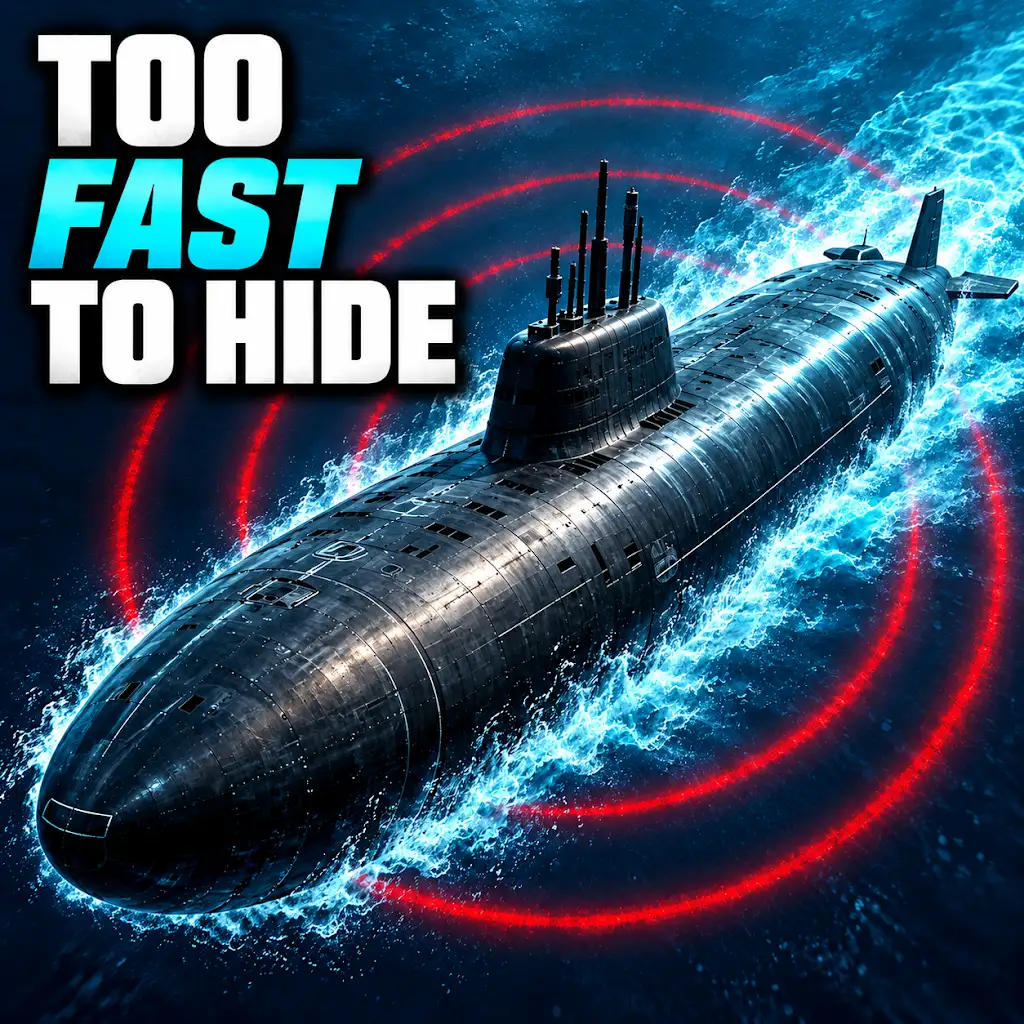
The Soviet Submarine That Broke a Speed Record—and Its Own Stealth
FAQs
What was the name of the Soviet submarine that beat its own speed target?
The Soviet submarine that beat its own speed target was called K-222, also known as the Papa-class submarine.
What was the speed target set for the Soviet submarine K-222?
The speed target set for the Soviet submarine K-222 was 44.7 knots (82.8 km/h; 51.4 mph).
How fast did the Soviet submarine K-222 actually go?
The Soviet submarine K-222 actually reached a speed of 44.85 knots (83.2 km/h; 51.7 mph), surpassing its speed target.
What made the Soviet submarine K-222 unique in terms of speed?
The Soviet submarine K-222 was the fastest submarine ever built, holding the record for the highest speed achieved by a submarine.
When did the Soviet submarine K-222 achieve this speed record?
The Soviet submarine K-222 achieved its speed record in 1969 during sea trials in the White Sea.