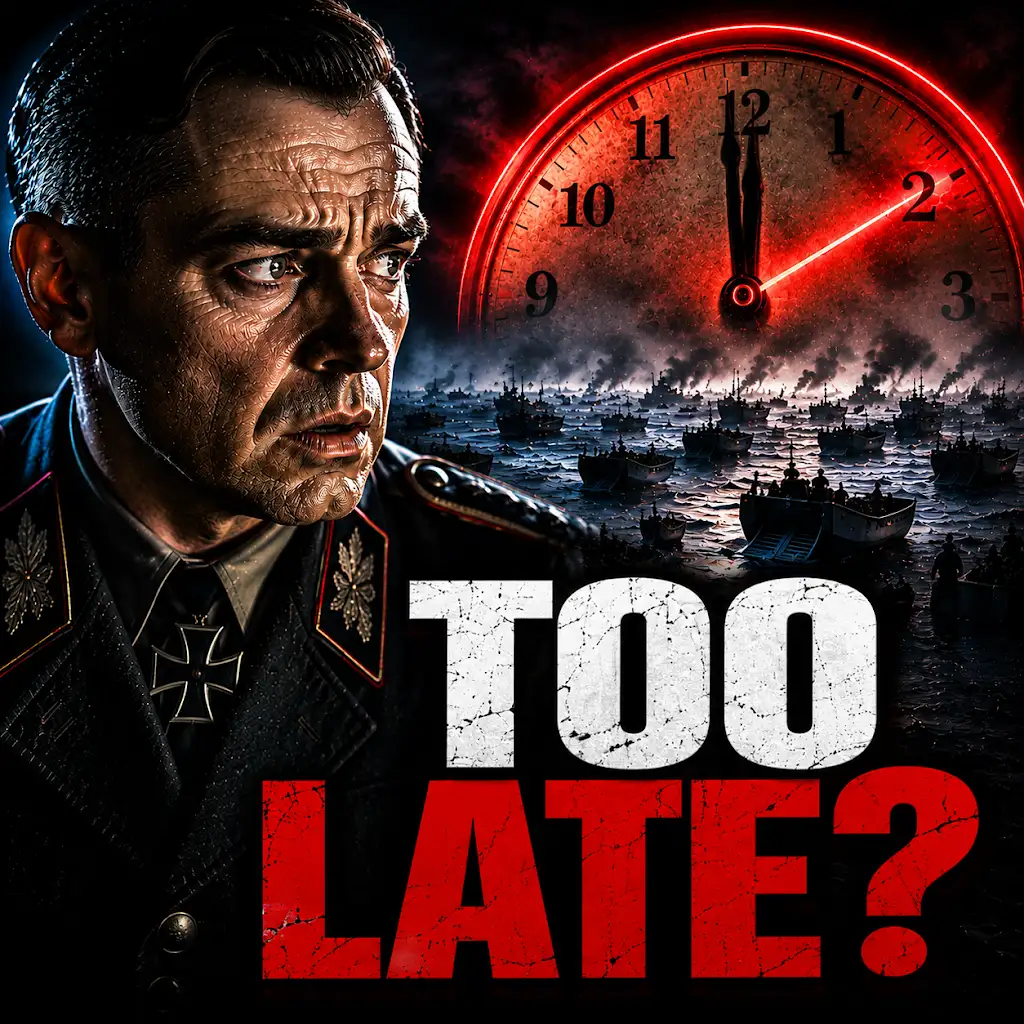
The morning of June 6th, 1944, dawned with a deceptive calm across the French coast. For the men of the German High Command, the hours leading up to and immediately following the Allied landings on D-Day were a maelstrom of confusion, misinformation, and ultimately, catastrophic miscalculation. Their understanding of the unfolding events was fractured, their responses hampered by internal disagreements and a profound underestimation of the enemy’s resolve and capabilities. This article will delve into the perspective of the German High Command on that pivotal day, examining their strategic assumptions, their intelligence shortcomings, their operational decisions, and the critical moments that defined their failure.
By the spring of 1944, Germany’s position in the war was precarious. The Eastern Front was a grinding meat grinder, and the Allies had established air superiority over Europe. The imminent threat of an invasion from the West, however, remained the most pressing concern for the Oberkommando der Wehrmacht (OKW) and the Oberkommando des Heeres (OKH).
The Atlantic Wall: A False Sense of Security
The perceived invincibility of the Atlantic Wall was a cornerstone of German defense strategy. For years, immense resources had been poured into constructing a formidable network of bunkers, minefields, coastal artillery, and anti-tank obstacles stretching from Norway to the Spanish border. The High Command genuinely believed this line, particularly in the Pas-de-Calais region, would effectively deter or repel any Allied landing.
The Pas-de-Calais: The Deceptive Focus
A significant factor in the High Command’s strategic misjudgment was their unwavering conviction that the Pas-de-Calais, the shortest sea crossing to Britain, was the only logical landing site. This belief was reinforced by extensive Allied deception operations, codenamed “Fortitude,” which convinced German intelligence that a massive invasion force was amassing there.
Panzer Reserve Deployment: The Myth of Swift Reinforcement
Despite the looming threat, the deployment of mobile Panzer reserves was a point of contention. Field Marshal Gerd von Rundstedt, commander of the Western Front, advocated for keeping significant armored forces close to the coast for immediate counter-attacks. However, this was overruled by Hitler, who insisted on retaining control of these vital reserves, believing they should only be committed to battle on his personal command and in response to a confirmed, large-scale landing. This decision, driven by Hitler’s desire to micromanage, would prove to be a critical error.
The Eastern Front’s Shadow: A Drain on Resources
The relentless pressure from the Soviet Union on the Eastern Front cast a long shadow over Western defense planning. A substantial portion of the Wehrmacht’s manpower, equipment, and logistical support was already committed to this theater, limiting the resources available for reinforcing the Atlantic Wall.
The Strategic Balance: East vs. West
The High Command was perpetually torn between the need to defend against an invasion in the West and the necessity of holding the line against the Red Army in the East. This strategic dilemma meant that no theater could be adequately reinforced to meet its existential threat.
Manpower and Material Shortages: A Growing Crisis
By D-Day, Germany was facing critical shortages in trained manpower and modern equipment. The Luftwaffe, once a dominant force, was severely depleted, and the Wehrmacht’s tank production struggled to keep pace with losses. This weakened state made effective responses to a multi-front crisis increasingly difficult.
Intelligence Failures: Blinded by Deception
The German intelligence apparatus, while possessing some capable individuals, was riddled with systemic weaknesses and ultimately fell victim to sophisticated Allied deception. The High Command operated on a foundation of flawed assumptions and incomplete information.
The Art of Deception: “Operation Fortitude” Triumphs
The Allied deception campaign, “Operation Fortitude,” was a masterpiece of psychological warfare. The creation of phantom armies, fake radio traffic, and elaborate decoy landing craft installations in Kent convinced the German High Command that the Pas-de-Calais was the true invasion target.
The Ghost Army of Dover: A Convincing Illusion
The most effective element of Fortitude was the creation of the First U.S. Army Group (FUSAG), under the nominal command of General George S. Patton. This fictitious army, with its visible encampments and broadcast radio activity, served as a powerful magnet for German intelligence resources and attention.
Misinterpreting Patrols and Probes: A Constant Stream of Misinformation
The numerous minor Allied naval patrols and reconnaissance missions along the coast were often misinterpreted as preludes to a larger invasion, further reinforcing the Pas-de-Calais obsession. This constant stream of data, however, lacked the clarity to identify the true landing zones.
The Weather Factor: A Gamble for Both Sides
The notoriously unpredictable weather in the English Channel played a significant role in both Allied planning and German anticipation. The High Command, relying on forecasts, believed the weather conditions were unfavorable for a major landing in early June, leading to a degree of complacency.
The Unforeseen Calm: A Brief Window of Opportunity
The brief period of improved weather on the night of June 5th and the morning of June 6th was something of a gamble for the Allies. The German High Command, however, interpreted the prevailing meteorological conditions as a deterrent.
The Fog of Uncertainty: Forecasting Limitations
Even with sophisticated meteorological tools, forecasting the weather over the Channel was an inexact science. German meteorologists, like their Allied counterparts, were subject to limitations, but the interpretation of these forecasts leaned heavily towards ruling out an invasion.
The Eastern Front’s Distraction: The Missing Pieces of the Puzzle
The ongoing conflict in the East meant that a significant portion of Germany’s best intelligence assets, particularly those focused on observing Allied movements and intentions, were either engaged in the East or had been redeployed there. This left the Western intelligence services with fewer resources and less comprehensive coverage.
Lack of Reconnaissance Aircraft: Limited Eyes in the Sky
The Luftwaffe’s diminished air force meant that long-range reconnaissance flights over Britain were infrequent and often dangerous. This lack of aerial observation severely hampered the High Command’s ability to gather real-time intelligence on Allied preparations.
Divided Command Structures: Inconsistent Information Flow
The division of command between the OKW and OKH, and the various theater commanders, often led to fragmented intelligence reporting and an inconsistent flow of information to the highest levels. This made it difficult to synthesize a coherent picture of the situation.
The Invasion Begins: Confusion and Hesitation
As the first waves of Allied troops hit the beaches of Normandy, the German High Command found itself in a state of disarray. The scale and location of the landings caught many by surprise, and the initial responses were characterized by hesitation and a desperate attempt to ascertain the true nature of the assault.
The Normandy Landings: An Unexpected Assault
The landing sites in Normandy, far from the heavily fortified Pas-de-Calais, were a shock. While some elements of the German defenses in Normandy were strong, they were not as comprehensively prepared as their counterparts further north.
The Paratroopers’ Arrival: Disjointed Resistance
The airborne landings behind the invasion beaches, though disruptive and causing significant casualties to German forces, were initially met with dispersed and uncoordinated German responses. The paratroopers, despite facing fierce resistance, succeeded in disrupting German communications and seizing key bridges.
The Beachhead Emerges: A Grim Reality Dawns
As the dawn broke and the scale of the Allied landings became apparent, the realization of the invasion’s success began to dawn on the High Command. The initial reports were conflicting, leading to a period of intense uncertainty.
The “No Panic” Directive: A False Sense of Control
There were directives issued to prevent panic, but the reality on the ground was far from calm. The rapid advance of Allied forces, coupled with the initial success of the airborne drops, created a chaotic situation for the defending troops.
Early Reports from the Front: Conflicting Accounts
Initial reports from the German LXXXIV Corps, responsible for the Normandy sector, painted a grim picture but were often fragmented and lacked the strategic overview needed for swift decision-making.
The Role of Rommel: Absent at the Crucial Hour
Field Marshal Erwin Rommel, the architect of the Atlantic Wall’s defenses and a staunch advocate for immediate counter-attacks, was away from the front on June 6th, having traveled to Germany for Hitler’s birthday celebrations and to consult with the Führer about defensive plans. His absence at the critical moment further contributed to the delay in decisive action.
Hitler’s Sleep: A Critical Delay
One of the most infamous aspects of D-Day from the German perspective was Hitler’s refusal to authorize the deployment of the Panzer reserves early in the day. He was reportedly asleep and his staff hesitated to wake him, fearing his wrath. This decision, or indecision, meant that valuable hours were lost, allowing the Allies to consolidate their beachheads.
The Delayed Order: A Costly Hesitation
By the time Hitler was roused and, after much debate and deliberation, eventually authorized the release of some armored divisions, the window of opportunity for a decisive counter-attack had largely passed.
The Myth of the “Second Invasion”: A Lingering Doubt
There was a lingering doubt among some in the High Command that the Normandy landings were merely a feint, a diversion to draw forces away from the true invasion site at the Pas-de-Calais. This doubt further contributed to their hesitancy to commit reserves.
The Response and Counter-Attack: A Battle Already Lost
The German response to the D-Day landings, while eventually involving significant forces, was too slow, too piecemeal, and ultimately too late. The High Command struggled to coordinate a coherent counter-offensive against a firmly established and rapidly expanding Allied presence.
Committing the Reserves: A Desperate Measure
Once the scale of the Normandy invasion was undeniable, the High Command began to release armored and mechanized units from their strategic reserves. However, these units were often spread across France, and their journey to the front was hampered by Allied air superiority and destroyed infrastructure.
The Panzer Lehr Division: A Significant but Delayed Commitment
The Panzer Lehr Division, a crack armored formation, was eventually committed to the fight. However, its movement to Normandy was subjected to prolonged air attacks and significant delays, reducing its initial impact.
The 12th SS Panzer Division: Fierce Resistance, Limited Success
The 12th SS Panzer Division “Hitlerjugend,” composed of young, fanatical soldiers, provided some of the most determined resistance in the Normandy campaign. However, even their ferocity could not stem the tide of the Allied advance once the beachheads were secured.
The Battle for the Beachhead: A Losing Proposition
The German attempts to drive the Allies back into the sea were met with fierce Allied resistance and overwhelming air and artillery support. The Allies had established a strong lodgement, and their logistical support was rapidly improving.
The “Verschiebungsbefehl”: The Order to Shift
Orders were issued for units to move towards Normandy, but the journey was fraught with peril. Allied aircraft dominated the skies, making daytime movement nearly impossible and inflicting heavy casualties on German columns.
The Destruction of Infrastructure: Paralyzing Mobility
The Allied bombing campaign had systematically targeted bridges, railway lines, and roads, making it exceedingly difficult for German units to reach the front lines in a timely and organized manner.
The Air War: Allied Dominance
The Luftwaffe’s inability to contest Allied air superiority was a critical factor in the failure of German counter-attacks. Without air cover, German ground forces were vulnerable to devastating aerial assaults.
The Luftwaffe’s Decline: A Shadow of its Former Self
By D-Day, the Luftwaffe was a fraction of its former strength. Its fighter wings had been depleted, and its operational bases were under constant threat. This meant it could offer little meaningful support to the ground forces fighting in Normandy.
Allied Air Superiority: A Decisive Weapon
The Allies enjoyed overwhelming air superiority, allowing them to conduct reconnaissance, interdict German reinforcements, and provide close air support for their ground troops. This advantage proved decisive throughout the Normandy campaign.
The Aftermath: A Strategic Collapse
The failure to contain the D-Day landings marked a turning point in the war. The German High Command was forced to confront the reality of a multi-front war that they could no longer effectively manage.
The Loss of the Western Front: A Strategic Catastrophe
The successful establishment of the Allied bridgehead in Normandy meant that Germany had lost the strategic initiative on its Western Front. The subsequent advance of Allied forces through France was relentless, leading to the eventual liberation of Paris and the push towards Germany’s borders.
The Falaise Pocket: A Devastating Defeat
The subsequent encirclement and destruction of large German formations in the Falaise Pocket in August 1944 represented a catastrophic loss of manpower and equipment, effectively crippling the German army in the West.
The Long Retreat: A Grim Prognosis
The German army in the West was forced into a long and bloody retreat. The strategic objectives that had been so carefully planned and meticulously defended were now in ruins.
The Eastern Front’s Intensification: A Second Front of Devastation
With the pressure in the West eased, the Soviet Union intensified its offensives on the Eastern Front, further stretching German resources and manpower. The High Command was now fighting a war on two fronts with dwindling strength and morale.
Operation Bagration: The Soviet Juggernaut
The massive Soviet offensive codenamed “Operation Bagration” in the summer of 1944 inflicted devastating losses on the German Army Group Center, opening up a vast front in the East and further sealing Germany’s fate.
The Inevitable Collapse: A Glimpse of the End
The combined pressures from the East and West painted a grim picture for the future of the Third Reich. The High Command was aware that the war was likely lost, but the fight continued with a desperate and ultimately futile ferocity.
The Erosion of Confidence: Doubts in Leadership
The failures of D-Day and the subsequent campaigns led to a significant erosion of confidence in the leadership of the German High Command, particularly in Hitler’s strategic acumen. While overt dissent was dangerous, a sense of despair and a questioning of the war’s ultimate outcome began to permeate the ranks.
The Hitler Cult Weakens: Cracks Appear
The myth of Hitler’s infallibility began to crumble as his strategic decisions led to successive defeats. While his authority remained absolute, the belief in his ability to secure victory waned.
The Search for a Miracle Weapon: A Desperate Hope
In the face of overwhelming odds, there was a growing, desperate hope placed on the development of “Wunderwaffen” (wonder weapons) like the V-1 flying bomb and the V-2 rocket. However, these weapons, while technologically advanced, arrived too late and in insufficient numbers to alter the strategic balance of the war.
In conclusion, the German High Command’s experience on D-Day was one of profound strategic miscalculation, intelligence failures exacerbated by deception, and a disastrously delayed and uncoordinated response. Their unwavering belief in the Pas-de-Calais as the sole invasion point, coupled with Hitler’s insistence on retaining control of vital reserves, created a perfect storm of vulnerability. The Normandy landings, executed with courage and precision by the Allies, exploited these weaknesses, initiating a strategic collapse that would ultimately lead to the downfall of the Third Reich. The events of June 6th, 1944, serve as a stark reminder of the devastating consequences of overconfidence, misjudgment, and the critical importance of accurate intelligence and decisive leadership in the crucible of war.