The vast, silent expanse of space, once a realm of scientific curiosity and national prestige, is rapidly transforming into a new theater of strategic competition. Advances in exo-atmospheric weapons technology are at the forefront of this evolution, pushing the boundaries of what is possible in both offensive and defensive capabilities. These weapons, designed to operate and engage targets beyond Earth’s atmosphere, represent a significant leap in military thinking, demanding a reassessment of existing doctrines and the development of entirely new approaches to warfare. The implications are profound, touching upon space security, global stability, and the very definition of conflict in the 21st century. Understanding these developments is crucial for navigating the complex geopolitical landscape that is emerging.
The Shifting Landscape of Space Security
The notion of space as a sanctuary is rapidly eroding. For decades, the primary concern was the potential for space-based weapons to disrupt communications, navigation, or intelligence gathering. However, the focus has now shifted to the development of offensive capabilities that can directly threaten or destroy space assets, and defensive systems designed to protect them. This escalation is driven by the increasing reliance of modern nations on space-based infrastructure for military, economic, and civilian purposes. The vulnerability of these assets has, in turn, spurred investment in technologies that can deny access to or neutralize an adversary’s space capabilities, creating a dangerous feedback loop.
Escalation Dynamics and Deterrence
The development of exo-atmospheric weapons introduces complex escalation dynamics. The perceived invulnerability of space, coupled with the immense destructive potential of some of these weapons, raises concerns about the possibility of rapid and uncontrollable escalation should a conflict erupt. While some proponents argue that such advanced capabilities can serve as a deterrent, the ambiguity surrounding their deployment and potential use creates significant uncertainty. The ability to hold an adversary’s critical space assets at risk, or to defend one’s own, can be seen as a form of deterrence, but it is a delicate balance that could easily be disrupted by miscalculation or a perceived strategic advantage.
The Strategic Importance of Space Assets
Modern military operations are deeply intertwined with space capabilities. From precision-guided munitions that rely on GPS, to real-time intelligence gathered by reconnaissance satellites, to secure communication networks that link global forces, space assets are indispensable. Consequently, the ability to deny an adversary access to these assets, or to protect one’s own, has become a paramount strategic objective. This has fueled the drive to develop weapons that can operate in the exo-atmosphere, a domain previously considered less contested. The high ground, in this new context, is not just a terrestrial advantage but a celestial one.
Recent advancements in exo-atmospheric weapons technology have sparked significant interest and debate among defense experts and policymakers. For a deeper understanding of the implications and developments in this field, you can read a related article that explores the latest innovations and their potential impact on global security. To learn more, visit this article.
Emerging Exo-Atmospheric Weapon Systems
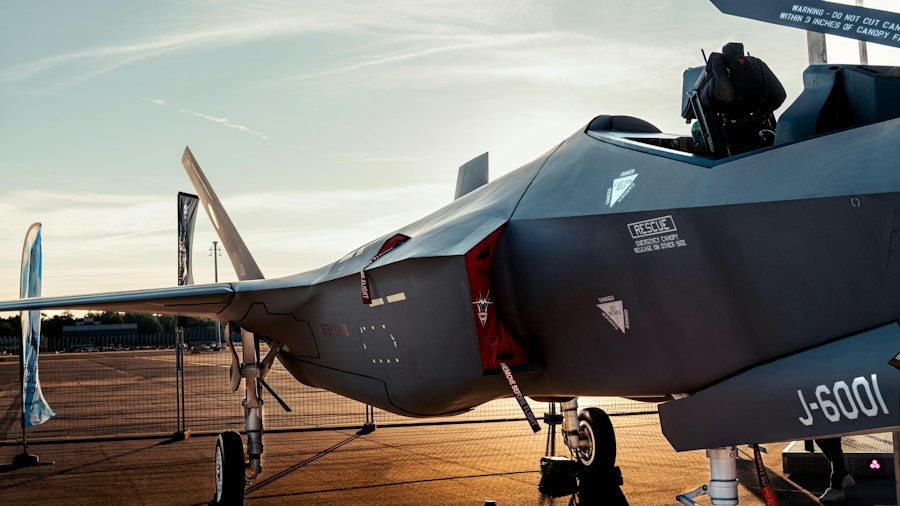
The technological advancements in this domain are diverse and rapidly evolving. They range from kinetic kill vehicles designed to physically collide with targets, to directed energy weapons that can disable or destroy satellites with intense beams of energy. The development of these systems is often cloaked in secrecy, making a comprehensive understanding challenging, but the general trajectories of innovation are becoming clearer. Each category of weapon presents unique challenges and opportunities, altering the calculus of space warfare.
Kinetic Kill Vehicles and Interceptors
Kinetic kill vehicles (KKVs) represent a direct and effective means of neutralizing space-based targets. These are essentially missiles designed to intercept other missiles or satellites in space. Their effectiveness lies in their ability to achieve extremely high velocities and to physically impact their targets with devastating force. The development of such systems requires sophisticated guidance, navigation, and control (GNC) systems capable of precise maneuvering in the vacuum of space. Anti-satellite (ASAT) missile tests, which have historically involved the destruction of old satellites in orbit, are a clear demonstration of this capability. The debris generated by such tests, however, poses a significant long-term threat to all space operations, creating a persistent hazard.
Trajectory and Targeting Challenges
Navigating the vast distances and orbital mechanics of space presents significant challenges for KKVs. Calculating precise trajectories, accounting for the Earth’s gravity, the target’s orbital path, and potential evasive maneuvers requires advanced computational power and accurate tracking data. The speed of engagement is also critical; once a target is identified, the interceptor must be launched and guided with extreme precision to achieve a successful interception. This necessitates robust sensor systems and sophisticated algorithms to predict and compensate for any deviations.
The Threat of Space Debris
A major concern associated with kinetic anti-satellite weapons is the creation of space debris. The fragmentation of a satellite upon impact can generate thousands of smaller pieces, which can remain in orbit for decades or even centuries. This debris field poses a collision risk to operational satellites, the International Space Station, and future space missions, potentially rendering certain orbital regimes unusable. International efforts to mitigate space debris, such as guidelines for de-orbiting satellites, are becoming increasingly important in light of these risks.
Directed Energy Weapons
Directed energy weapons (DEWs) offer a potentially less destructive, yet equally effective, method of disabling or destroying space assets. These weapons utilize concentrated forms of energy, such as lasers or high-powered microwaves, to target sensitive components of satellites. The advantage of DEWs lies in their ability to engage targets at the speed of light, without the need for physical interceptors, and potentially with a lower risk of creating long-lasting debris fields.
Laser-Based Systems
Laser-based DEWs can operate by either dazzling or permanently damaging a satellite’s optical sensors, rendering its surveillance or targeting capabilities useless. More powerful lasers could potentially disrupt or melt critical electronic components. The development of space-based laser weapons is a complex engineering challenge, requiring compact, powerful, and stable laser systems that can be reliably deployed and operated in the harsh environment of space. The ability to maintain a precise beam on a moving target across vast distances is a significant technical hurdle.
Microwave and Particle Beam Technologies
High-powered microwave (HPM) weapons can generate intense electromagnetic pulses that can overload and disable a satellite’s electronic systems. Particle beam weapons, while still largely theoretical for exo-atmospheric applications, could potentially deliver a concentrated stream of subatomic particles to damage satellite components. The development of these technologies requires significant advancements in power generation, beam control, and targeting accuracy to be effective against hardened targets in orbit.
Electronic Warfare and Cyber Capabilities
Beyond kinetic and directed energy approaches, electronic warfare (EW) and cyber capabilities are increasingly being employed to degrade or neutralize space systems. These methods aim to disrupt communication links, jam sensor signals, or even gain control of satellite systems through malicious cyber intrusions. The interconnectedness of space assets makes them vulnerable to such non-kinetic attacks, which can be difficult to attribute and can cause significant disruption without physically destroying hardware.
Jamming and Spoofing of Signals
Sophisticated jamming techniques can overwhelm a satellite’s communication receivers, preventing it from transmitting or receiving vital data. Spoofing involves transmitting false signals that can mislead a satellite’s navigation systems or disguise the identity of a legitimate transmitter. The development of advanced EW systems requires a deep understanding of satellite communication protocols and signal processing to effectively disrupt or deceive these systems.
Exploiting Software Vulnerabilities
The increasing reliance on software for satellite operation creates a new attack vector: cyber warfare. Exploiting vulnerabilities in satellite software, or the ground control systems that manage them, could allow adversaries to disrupt operations, steal sensitive data, or even take control of entire constellations. This necessitates robust cybersecurity measures for all space assets, from initial design to ongoing operations.
Defensive Countermeasures and Space Domain Awareness
The proliferation of exo-atmospheric offensive weapons has naturally spurred a parallel development in defensive technologies. The ability to detect, track, and ultimately defend against incoming threats is paramount for maintaining the operational integrity of space-based assets. This necessitates sophisticated space domain awareness (SDA) capabilities and a range of defensive measures to counter various types of attacks.
Enhancing Space Domain Awareness (SDA)
Effective defense begins with knowing what is happening in space. Space Domain Awareness (SDA) involves the ability to detect, track, identify, and understand all objects and activities in orbit. This requires a comprehensive network of ground-based and space-based sensors, as well as advanced data processing and fusion capabilities to create a clear and actionable picture of the space environment. Without robust SDA, identifying and responding to threats becomes exceedingly difficult.
Sensor Networks and Data Fusion
The development of advanced radar, optical, and infrared sensors is crucial for tracking satellites and potential threats. These sensors, deployed across the globe and in orbit, collect vast amounts of data. The challenge then becomes fusing this disparate data into a coherent and timely picture, identifying anomalies, and distinguishing between legitimate space traffic and potential threats. Artificial intelligence and machine learning play an increasingly important role in this data analysis.
Threat Assessment and Characterization
Once a potential threat is detected, it is essential to accurately characterize it. This involves determining its trajectory, velocity, origin, and type of weapon system. This rapid assessment is critical for selecting the appropriate defensive response. Understanding the capabilities and intentions behind a detected object is key to avoiding unnecessary escalation or misidentification.
Active and Passive Defense Systems
Defensive systems in space can be broadly categorized as active, which directly engage threats, and passive, which aim to make assets more resilient or harder to target. Both are essential components of a comprehensive defense strategy, and their integration is crucial for effective protection.
Ballistic Missile Defense Systems in Space
While primarily designed to intercept ballistic missiles during their boost or mid-course phases, some terrestrial ballistic missile defense (BMD) systems could potentially be adapted or have implications for exo-atmospheric defense. The underlying principles of tracking, intercepting, and neutralizing high-speed objects are transferable, though the operational environment of space presents unique challenges. The development of space-based interceptors or laser systems for defensive purposes also falls under this category.
Hardening and Maneuvering Capabilities
Passive defenses involve making satellites more resilient to attack. This can include hardening critical components against electromagnetic pulses or physical damage, and equipping satellites with maneuvering thrusters to evade threats. The ability for a satellite to change its orbit or altitude, even slightly, can significantly complicate targeting for an adversary and buy valuable time for a response. Redundancy in critical systems also enhances survivability.
Counter-Space Capabilities for Defense
The concept of “counter-space” capabilities is often associated with offensive actions, but it also encompasses defensive measures designed to deny an adversary the ability to attack one’s own assets. This could involve disrupting an adversary’s targeting systems or even engaging their launch platforms before they can deploy weapons. The line between offense and defense in this domain can be blurred, requiring careful consideration of strategic intent.
Ethical and Legal Considerations
The development and potential use of exo-atmospheric weapons raise profound ethical and legal questions that are still being debated within the international community. The implications for global stability, the militarization of space, and the potential for accidental or unintended conflict are significant and require careful consideration. The legal frameworks governing warfare in space are still in their nascent stages, creating a complex and often ambiguous environment.
The Militarization of Space and International Treaties
The Outer Space Treaty of 1967, a cornerstone of international space law, prohibits the placement of weapons of mass destruction in orbit and on celestial bodies. However, it does not explicitly ban all forms of space-based weaponry. The increasing development of dual-use technologies and the ambiguity surrounding offensive versus defensive capabilities challenge the spirit of the treaty. The debate over whether certain weapon systems constitute a violation of the treaty, or merely an adaptation to evolving security needs, is ongoing.
Ambiguity of Dual-Use Technologies
Many technologies developed for space exploration and civilian applications have potential military applications. This “dual-use” nature of technologies makes it difficult to distinguish between peaceful and militaristic intentions. For example, advanced propulsion systems could be used for scientific missions or to maneuver weaponized satellites. Similarly, sophisticated imaging systems can be used for Earth observation or for targeting purposes. This ambiguity complicates international efforts to regulate or ban specific types of weapons.
The Role of International Cooperation and Verification
Effective regulation of exo-atmospheric weapons requires robust international cooperation and reliable verification mechanisms. Establishing clear norms of behavior in space and developing systems to monitor compliance with treaties are crucial steps. However, the secretive nature of military research and development, particularly in the current geopolitical climate, poses significant challenges to effective verification. The creation of an international body with the authority to monitor and verify space activities is a long-term goal that faces considerable political hurdles.
The Risk of Escalation and Accidental Conflict
The introduction of new and potentially destabilizing weapons in space carries a significant risk of escalation and accidental conflict. Misunderstandings, miscalculations, or technical malfunctions could have devastating consequences, leading to a cascade of retaliatory actions. The speed at which space-based conflicts could unfold, coupled with the limited ability to de-escalate, makes the prospect particularly concerning. The potential for a “flash war” in space, where decisions are made in milliseconds, is a chilling prospect.
Attribution Challenges in Space Warfare
Pinpointing the source of an attack in space can be incredibly difficult, especially if sophisticated deception tactics are employed. This attribution challenge can lead to misdirected retaliation and further escalation. Unlike on Earth, where physical evidence can often be gathered, the vast distances and the nature of space warfare make definitive attribution a complex and time-consuming process, increasing the risk of misjudgments.
The Need for De-escalation Mechanisms
Developing effective de-escalation mechanisms and communication channels for space-related incidents is crucial. This involves establishing protocols for transparent communication, incident reporting, and mutual reassurance between space-faring nations. The absence of such mechanisms could exacerbate tensions and increase the likelihood of unintended conflict. Building trust and fostering a culture of responsibility in space are vital for preventing catastrophic outcomes.
Recent advancements in exo-atmospheric weapons technology have sparked significant interest among defense analysts and military strategists. These developments could potentially reshape the landscape of modern warfare, offering new capabilities for intercepting threats beyond the Earth’s atmosphere. For a deeper understanding of the implications and future prospects of these technologies, you can read a related article on this topic at In The War Room, which explores the strategic significance of such innovations in defense systems.
The Future of Exo-Atmospheric Warfare
| Year | Development | Description | Key Metrics | Country/Organization |
|---|---|---|---|---|
| 1960 | Project Excalibur | Development of X-ray laser weapons powered by nuclear explosions in space. | Laser pulse duration: nanoseconds; Range: exoatmospheric | USA (Lawrence Livermore National Laboratory) |
| 1983 | Strategic Defense Initiative (SDI) | Research into space-based missile defense systems including directed energy weapons. | Target interception speed: Mach 20+; Detection range: thousands of km | USA |
| 1990 | Space-Based Kinetic Energy Weapons | Concepts for orbital platforms deploying kinetic projectiles against targets. | Projectile velocity: 10 km/s; Impact energy: several MJ | USA, Russia (conceptual) |
| 2000 | Directed Energy Weapon (DEW) Testing | Testing of high-energy lasers and particle beams in exoatmospheric conditions. | Laser power: 100 kW+; Effective range: hundreds of km | USA, China |
| 2015 | Hypersonic Glide Vehicle (HGV) Development | Development of hypersonic weapons capable of exoatmospheric flight and maneuvering. | Speed: Mach 5-20; Altitude: 100 km+; Maneuverability: high | Russia, China, USA |
| 2023 | Space-Based Directed Energy Systems | Deployment of advanced laser systems on satellites for missile defense and anti-satellite roles. | Laser power: 500 kW+; Target tracking accuracy: sub-meter; Operational altitude: Low Earth Orbit | USA, China |
The trajectory of exo-atmospheric weapons technology points towards an increasingly contested and complex space environment. The innovations we are witnessing today are likely to be just the beginning, with future developments promising even greater capabilities and more profound implications. Navigating this future requires a proactive and multilateral approach, prioritizing security, stability, and the long-term sustainability of space activities. The choices made now will shape the future of humanity’s presence in space for generations to come.
The Rise of Space-Based Weaponized Platforms
The future may see the deployment of dedicated, weaponized platforms in orbit. These could range from dedicated ASAT satellites to orbital weapon systems capable of engaging multiple targets. The development of such platforms would represent a significant shift in the strategic landscape, making space a permanent and potentially volatile battleground. The ability to deploy and sustain such systems would require considerable technological and logistical capabilities.
Orbital Weapon Systems
The concept of orbital weapon systems, capable of projecting power from space onto terrestrial targets or other space assets, remains a subject of significant debate and development. While the technical challenges are immense, the potential strategic advantages continue to drive research. These systems could theoretically offer unprecedented strike capabilities, raising concerns about global security and the potential for preemptive strikes.
Swarms and Distributed Architectures
Future warfare in space may also involve the use of swarms of smaller, autonomous or semi-autonomous satellites. These distributed architectures could offer resilience and flexibility, making them harder to neutralize than single, large platforms. The coordinated actions of such swarms, potentially equipped with various offensive and defensive capabilities, could pose a significant challenge to existing defense paradigms.
The Interplay of Terrestrial and Space Warfare
Exo-atmospheric weapons are not being developed in isolation. They are intrinsically linked to terrestrial military capabilities and strategies. The ability to achieve or deny space superiority will have direct implications for operations on Earth, and vice versa. This integration of domains is a defining characteristic of modern warfare and will only become more pronounced in the future.
Enabling Terrestrial Operations
The control of space assets can significantly enhance terrestrial military operations. Secure communication, accurate targeting, and real-time intelligence are all facilitated by space capabilities. Conversely, the ability to deny these advantages to an adversary can cripple their terrestrial operations, making space control a critical enabler.
The Challenge of Deterrence in a Multi-Domain Environment
Deterrence strategies will need to evolve to encompass the multi-domain nature of future conflict. The threat of space-based retaliation or the denial of space assets will become an integral part of a nation’s overall deterrence posture. The complexity of such multi-domain deterrence, involving the interplay of land, sea, air, cyber, and space capabilities, presents a significant intellectual and strategic challenge.
The Imperative for Diplomacy and International Norms
As the technology of exo-atmospheric weapons continues to advance, the imperative for diplomacy and the establishment of clear international norms of behavior in space becomes even more urgent. A failure to address these issues proactively could lead to a dangerous and unstable future. Collaborative efforts to ensure the peaceful and sustainable use of space are essential for the benefit of all humanity. The future of space, and indeed of terrestrial security, hinges on the ability of nations to find common ground and establish a framework for responsible conduct.

The 1958 Space Nukes Meant to Destroy Soviet Missiles
FAQs
What is exo atmospheric weapons technology?
Exo atmospheric weapons technology refers to weapons designed to operate outside of the Earth’s atmosphere, typically in space. These weapons are used for defense, surveillance, and potential offensive capabilities.
What are some examples of exo atmospheric weapons technology?
Examples of exo atmospheric weapons technology include kinetic energy weapons, directed energy weapons, anti-satellite weapons, and missile defense systems. These technologies are constantly evolving and improving.
How do exo atmospheric weapons differ from traditional weapons?
Exo atmospheric weapons differ from traditional weapons in that they are designed to operate in the vacuum of space or in the upper atmosphere. They often require advanced technology and precision targeting systems to be effective.
What are the potential benefits of exo atmospheric weapons technology developments?
The potential benefits of exo atmospheric weapons technology developments include enhanced defense capabilities against threats from space, improved surveillance and reconnaissance capabilities, and the ability to protect critical assets such as satellites.
What are some concerns associated with the development of exo atmospheric weapons technology?
Some concerns associated with the development of exo atmospheric weapons technology include the potential for weaponization of space, the creation of new arms races, and the risk of creating debris that could pose a threat to existing satellites and spacecraft.