The Digital Unearthing: How DNA Testing is Revolutionizing Black American Genealogy
For generations, the fragmented and often deliberately obscured records of Black American history have presented a formidable challenge to those seeking to understand their ancestral roots. The indelible scars of slavery, the systematic destruction of family ties, and the pervasive illiteracy among enslaved populations meant that the lineage of millions was severed, leaving vast genealogical chasms. However, in the 21st century, a powerful new tool has emerged, offering a beacon of hope and a pathway to rediscovering these lost connections: direct-to-consumer DNA testing. This technology, once the domain of forensic science, has democratized genealogical research, allowing individuals to explore their heritage in ways previously unimaginable. For Black Americans, in particular, DNA testing is not just about tracing surnames; it’s about reclaiming narratives, connecting with lost communities, and piecing together a mosaic of resilience and identity that stretches back centuries.
The allure of DNA testing lies in its ability to bypass the traditional roadblocks of paper trails. While official documents like birth certificates, marriage licenses, and census records are invaluable, their availability and accuracy for Black Americans are often compromised by historical inequities. Many enslaved individuals were denied even basic documentation, and records that did exist were frequently incomplete, inaccurate, or lost to time and disaster. DNA, however, is a biological inheritance, a constant thread woven through generations. By analyzing specific genetic markers, companies can provide insights into ethnic origins, pinpointing regions of ancestral homeland with remarkable precision. For Black Americans, this can mean connecting with African ancestries that were deliberately obscured during the transatlantic slave trade, revealing the diverse geographical origins of their forebears. Beyond ethnicity, autosomal DNA tests can also identify living relatives who have also tested, opening doors to unexpected family reunions and collaborative research efforts. This digital unearthing is transforming the landscape of Black American genealogy, offering a tangible and scientific approach to understanding a complex and often painful past.
Exploring Black American family history through DNA testing has become an increasingly popular way for individuals to connect with their roots and uncover their ancestral stories. A related article that delves into this fascinating topic can be found at this link, where readers can learn about the significance of DNA testing in understanding the complex heritage of Black Americans and the impact it has on family connections and identity.
Navigating the Labyrinth: The Mechanics of Genetic Genealogy
The journey into Black American family history through DNA begins with understanding the fundamental principles of genetic genealogy. At its core, these tests analyze autosomal DNA, the genetic material inherited from both parents. This type of DNA is passed down through all lines of ancestry, making it ideal for tracing relationships up to about six to eight generations. The process involves collecting a saliva sample, which is then sent to a laboratory for analysis. Sophisticated algorithms compare the individual’s DNA to vast reference databases, which are built from the DNA of people from specific geographical regions. The results typically provide an ethnicity estimate, detailing the percentage of DNA attributed to various continents and countries. For Black Americans, these ethnicity estimates often reveal a complex tapestry of African ancestries, reflecting the diverse origins of those who were forcibly brought to the Americas.
Beyond the broad strokes of continental and regional origins, DNA testing also offers the potential to identify genetic matches – individuals who share a significant amount of DNA. These matches can be categorized by their estimated degree of relatedness, from close relatives like parents and siblings to more distant cousins. For genealogists, these matches are the key to unlocking deeper family connections. By comparing your DNA matches with those of your known relatives, or by contacting your matches directly, you can begin to build out your family tree, adding branches and filling in gaps that traditional research might have left empty. The sheer volume of potential matches can be overwhelming, but with a systematic approach and careful analysis, these genetic breadcrumbs can lead to the discovery of previously unknown ancestors and living relatives. The science behind these tests is constantly evolving, with companies investing heavily in improving the accuracy and granularity of their ethnicity estimates and the effectiveness of their matching algorithms.
Understanding the Data: Ethnicity Estimates and Ancestral Origins
The ethnicity estimate is often the most anticipated part of a DNA test for many individuals. It’s a snapshot of ancestral origins, presented as percentages of DNA linked to specific regions. For Black Americans, this component can be particularly profound, offering concrete evidence of their African heritage, a heritage that was systematically suppressed for centuries. Historically, the narrative of Black ancestry in the Americas was often homogenized, reducing diverse African cultures and peoples to a singular, often dehumanizing, label. DNA testing, however, can reveal a remarkable diversity within African ancestries. An individual might discover they have significant percentages from West Africa, for instance, with further breakdowns pointing to specific ethnic groups like the Yoruba, Igbo, or Akan. This level of detail can be incredibly validating, allowing individuals to connect with the cultural and historical legacies of specific African peoples.
It is crucial, however, to approach ethnicity estimates with a nuanced understanding. These estimates are not definitive declarations of identity but rather probabilities based on comparison to reference populations. The databases are constantly expanding and refining, meaning that future results might offer even more precise insights. Furthermore, the history of the Americas is one of significant migration and intermingling, not just within Africa but also with European and Indigenous populations. Therefore, ethnicity estimates for Black Americans often include percentages from European countries, reflecting the complex realities of the colonial and post-slavery eras. Similarly, there may be indications of Indigenous American ancestry, a testament to the often-overlooked interconnections between these communities during and after slavery. The power of the ethnicity estimate lies not in its absolute certainty, but in its ability to provide a starting point for further investigation, igniting curiosity and guiding genealogical research.
Connecting the Dots: Genetic Matches and Shared Ancestry
While ethnicity estimates paint a broad ancestral picture, genetic matches offer a more intimate and personalized view of family connections. These are individuals who share a statistically significant amount of DNA with you, indicating a common ancestor. The science behind identifying these matches is based on the principle of shared DNA segments. When parents pass DNA to their children, it’s a mixture of their own genetic material. Over generations, these segments are broken down and recombined. By analyzing the length and number of shared DNA segments, DNA testing companies can estimate the most recent common ancestor between two individuals. This information is presented as a list of potential relatives, often with an estimated relationship (e.g., “close family,” “second cousin”).
The real work, and indeed the most rewarding aspect, lies in deciphering these matches. A long list of genetic matches can seem daunting, but with careful analysis, it can become a roadmap to uncovering lost family branches. The first step is often to identify which side of your family a match likely belongs to. If you have tested with siblings or parents, you can compare your match lists to help determine paternal versus maternal connections. For more distant matches, researching their shared matches, or reaching out to them directly to inquire about their known family history, can provide invaluable clues. This collaborative aspect of genetic genealogy is particularly potent for Black Americans. Finding a relative who has already documented a particular branch of the family can provide access to years of research, bridging gaps that might have seemed insurmountable through traditional methods alone. These connections are not just about names and dates; they are about rebuilding fractured family trees and re-establishing lost kinship networks.
The Overcoming of Obstacles: Black American Genealogy in the Face of Historical Erasure
The path to uncovering Black American family history has historically been fraught with unique and deeply entrenched challenges. The legacy of slavery is the most significant hurdle, a brutal system designed to systematically dehumanize and erase Black people. Families were torn apart through sale and forced migration, rendering generations of kin scattered and without knowledge of one another. Enslaved individuals were often given new, imposed names, severing ties to their original African identities and the lineages they represented. Furthermore, the lack of comprehensive and accessible record-keeping for enslaved people meant that their existence was often barely acknowledged in official documents. Births, marriages, and deaths were frequently unrecorded, leaving a void in the genealogical narrative.
Even after emancipation, the challenges persisted. Discriminatory practices continued to limit access to education and economic opportunities, impacting the ability of many Black families to maintain and pass down genealogical information. Illiteracy rates, a direct consequence of systemic oppression, meant that many could not read or write to document their own histories. The Great Migration, while a period of immense progress and cultural flourishing, also saw many families move across the country, sometimes losing touch with relatives and the repositories of family history in their former communities. The destruction of physical records due to natural disasters, fires, and neglect further compounded the difficulty of tracing lineage. In this context, DNA testing emerges not just as a genealogical tool, but as a powerful act of reclamation, a means to pierce through the veil of historical erasure and reclaim ancestral narratives that were deliberately silenced.
The Scars of Slavery: Documentation Gaps and Imposed Identities
The institution of slavery in America was inherently destructive to familial bonds and personal identity. Enslaved individuals were considered property, and their humanity was denied. This meant that their family structures were not recognized, and their personal histories were not deemed worthy of record. Births of enslaved children were rarely officially documented, and if they were, it was often as property of the enslaver, not as the birth of a new individual with a lineage. Marriages between enslaved people were not legally recognized, and couples could be separated at any moment at the whim of the enslaver. This constant threat of separation meant that strong familial ties could be tragically severed without any official trace.
Furthermore, the practice of giving enslaved people new names, often dictated by their enslavers, was a deliberate act of stripping away their identity and severing their connection to their African heritage. These new names, often simple and lacking genealogical context, became the only identifiers for many in official records. The absence of surnames or patronymics in many early records makes it incredibly difficult to trace family lines, as individuals often share common first names. Even when surnames appear, they are often the names of enslavers, further complicating the search for true ancestral origins. This period of imposed identities has left a profound legacy, making the task of uncovering Black American family history a complex detective mission, often requiring the piecing together of fragmented clues and the interpretation of sparse and often biased historical records.
Rebuilding the Narrative: Post-Emancipation Records and Migratory Trails
Following emancipation, the landscape of record-keeping for Black Americans began to shift, though not without its own set of challenges. The establishment of Freedmen’s Bureau records, Reconstruction-era vital statistics, and later census records offered new avenues for genealogical research. However, these records were not always consistently or accurately maintained, and access to them could be difficult. The desire to establish their own identities and solidify their family connections led many newly freed individuals to seek out their lost relatives. This often involved the creation of family Bibles, the recording of marriages and births in newly formed churches, and the diligent, albeit often informal, passing down of oral histories.
The Great Migration, beginning in the early 20th century, saw millions of Black Americans move from the rural South to urban centers in the North, Midwest, and West. This mass movement, while driven by a desire for greater opportunity and freedom from Jim Crow laws, also resulted in the fragmentation of some family networks. As families relocated, their genealogical documentation might have remained in their ancestral communities, or they might have started new records in their new homes. Understanding these migratory patterns is crucial for Black genealogists, as it can help explain why certain family branches are found in specific geographical locations and why historical records might be concentrated in particular archives. DNA testing can act as a powerful complement to these historical records, helping to connect individuals across these migratory trails and re-establish links between families who may have lost touch during these significant population shifts.
The Power of Connection: DNA Testing as a Catalyst for Community and Reconciliation
Beyond the individual pursuit of ancestral knowledge, DNA testing is emerging as a powerful catalyst for community building and reconciliation within the Black American diaspora. The shared experience of uncovering complex and often painful histories can foster a profound sense of connection and solidarity among individuals who are tracing similar lineages. These discoveries often transcend geographical boundaries and even perceived social divides, uniting people through their shared biological heritage. The ability to connect with living relatives, whether they are a few states away or across oceans, can lead to the formation of new familial bonds and the re-establishment of lost kinship networks.
This newfound sense of connection can be incredibly empowering, particularly for a community whose history has been marked by deliberate fragmentation and cultural isolation. The shared stories, the discoveries of common ancestors, and the collective effort to piece together the puzzle of their past create a vibrant and growing sense of shared identity. Furthermore, DNA testing can facilitate a deeper understanding and appreciation of the diverse cultural and ethnic backgrounds that constitute the Black American experience. It provides tangible evidence of ancestral homelands, sparking renewed interest in African cultures, languages, and histories that may have been suppressed or forgotten. This process of rediscovery can lead to a richer, more nuanced understanding of identity and a renewed sense of pride in one’s heritage.
Finding Lost Kin: Reuniting Families Through Genetic Matches
The most emotionally resonant aspect of DNA testing for many Black Americans is the potential to find lost kin. The systematic separation of families during slavery, and the subsequent migrations and societal disruptions, have left many with a profound sense of longing for connection to their extended family. DNA testing offers a scientifically verifiable way to bridge these gaps. When individuals discover genetic matches, they are not just discovering a name on a family tree; they are discovering a living relative, a potential source of information, and a tangible link to their past.
These reunions can be incredibly moving and transformative. Imagine an individual who has spent years searching for information about their great-grandparents, only to discover a second cousin through DNA testing who has meticulously documented that very branch of the family. This connection can unlock a treasure trove of information, including photographs, family stories, and even access to private family documents that might have otherwise remained hidden. These discoveries can provide closure, fill in crucial gaps in genealogical research, and offer a sense of belonging that was previously missing. The process of sharing these discoveries and collaborating on research can foster deep and lasting relationships, rebuilding the sense of community and extended family that was so brutally fractured by history.
Rekindling Cultural Heritage: Embracing Diverse African and Indigenous Roots
For centuries, the narrative of Black identity in America was often presented as monolithic, overlooking the vast diversity of African cultures and the significant contributions of Indigenous peoples. DNA testing is helping to dismantle this simplistic portrayal by revealing the complex and multifaceted origins of Black Americans. The detailed ethnicity estimates can pinpoint specific ethnic groups within Africa, allowing individuals to explore the histories, languages, traditions, and cultural legacies of their ancestral peoples. This can spark a renewed interest in African history, art, music, and spirituality, fostering a deeper and more nuanced understanding of one’s heritage.
Moreover, many DNA tests reveal evidence of Indigenous American ancestry, a testament to the often-overlooked interconnections between Black and Indigenous communities throughout American history, particularly during the eras of slavery and its aftermath. For generations, this ancestry may have been suppressed due to social stigma and fear, or simply lost to oral traditions. DNA testing provides scientific validation of these connections, encouraging individuals to explore the histories and cultures of Native American tribes that their ancestors may have been a part of. This recognition and embrace of diverse ancestral roots contribute to a richer, more authentic understanding of Black identity, one that acknowledges the complex tapestry of influences that have shaped it. It is a journey of reconciliation, not just with one’s own past, but with the broader historical narratives of the Americas.
Exploring Black American family history through DNA testing has become an increasingly popular way for individuals to connect with their roots and uncover ancestral stories. A fascinating article that delves into this topic can be found at In The War Room, where it discusses the impact of genetic research on understanding the complex narratives of African American heritage. This resource provides valuable insights into how DNA can bridge gaps in family histories and foster a deeper appreciation for cultural identity.
The Future of Black American Genealogy: Technology, Collaboration, and Empowerment
| Metric | Description | Typical Findings | Significance |
|---|---|---|---|
| Average African Ancestry Percentage | Proportion of African genetic heritage in Black American DNA | Approximately 70-80% | Reflects primary ancestral roots from various African regions |
| European Ancestry Percentage | Proportion of European genetic heritage in Black American DNA | Approximately 15-25% | Indicates historical admixture during and after slavery era |
| Native American Ancestry Percentage | Proportion of Native American genetic heritage | Typically 1-5% | Represents intermixing with indigenous populations |
| Common African Regions Identified | Regions in Africa most frequently linked to Black American DNA | West Africa (Senegal, Nigeria, Ghana), Central Africa (Congo) | Helps trace lineage to specific ethnic groups and cultures |
| Y-DNA Haplogroups | Male lineage markers found in Black American males | E1b1a (most common), A, B haplogroups | Used to trace paternal ancestry back to African origins |
| mtDNA Haplogroups | Maternal lineage markers found in Black Americans | L0, L1, L2, L3 haplogroups | Used to trace maternal ancestry to African maternal lines |
| Genetic Diversity | Level of genetic variation within Black American populations | High diversity due to multiple African ethnic groups and admixture | Reflects complex ancestry and migration patterns |
The advent of DNA testing has undeniably revolutionized the field of Black American genealogy, but it is just one piece of a larger, evolving puzzle. As technology continues to advance, so too will the tools and methodologies available for uncovering these histories. The ongoing development of more sophisticated algorithms, the expansion of reference populations for ethnicity estimates, and the increasing integration of genetic data with traditional genealogical records promise even deeper insights in the years to come. The future of Black American genealogy is not solely about scientific advancement; it is also about fostering collaboration, promoting education, and empowering individuals to take ownership of their ancestral narratives.
The power of collective research cannot be overstated. As more Black Americans embrace DNA testing, the size and diversity of the genetic databases will grow, leading to more accurate ethnicity estimates and a greater number of potential matches. This creates a virtuous cycle, where each new tester contributes to the collective knowledge base. Furthermore, the development of online communities and forums dedicated to Black genealogy provides a vital space for individuals to share their findings, ask questions, and support one another. These platforms are invaluable for navigating the complexities of genetic data, overcoming genealogical roadblocks, and celebrating shared discoveries. The ultimate goal is to move beyond simply tracing lineage to actively reconstructing and celebrating the rich, complex, and resilient history of Black Americans.
Collaborative Networks: Building Bridges Through Shared Genetic Discoveries
The true potential of DNA testing for Black American genealogy is amplified through collaborative networks. While an individual might find a few key matches, the power of shared discoveries comes when these individuals begin to connect with each other. This can happen organically through the DNA testing companies’ match lists, or it can be facilitated through dedicated online groups and forums. These collaborative spaces allow individuals to pool their genetic matches, compare their known family trees, and work together to identify common ancestors and fill in genealogical gaps.
For Black Americans, these networks are particularly crucial given the historical challenges in accessing information. One person’s meticulously documented family branch might be the key to unlocking another’s ancestral mystery. The sharing of family photos, oral histories, and even DNA match information within these trusted communities can accelerate research exponentially. Furthermore, these networks offer a vital support system, providing a space for individuals to share their emotional journeys, celebrate their discoveries, and commiserate over their challenges. They are building bridges across time and distance, recreating the extended family and community structures that were so often deliberately broken.
Empowering the Next Generation: Passing Down the Legacy of Ancestry
The journey of uncovering Black American family history through DNA is not just about the present; it’s about empowering future generations. By actively engaging in genealogical research, individuals are not only discovering their own roots but also building a foundation of knowledge that can be passed down. This act of historical reclamation is an essential part of identity formation and cultural preservation. As more Black Americans engage with their ancestry, they are creating a more complete and accurate historical record, one that honors the resilience, strength, and diversity of their forebears.
Education plays a crucial role in this process. Encouraging younger generations to engage with their family history, to learn about the tools of genealogical research, and to understand the significance of their ancestral stories is vital. This can be done through family history projects, workshops, and by simply sharing the discoveries made through DNA testing. The knowledge gained is not just academic; it is deeply personal and profoundly empowering. It allows individuals to understand where they come from, to appreciate the struggles and triumphs of their ancestors, and to carry forward a legacy of pride and resilience. DNA testing, therefore, is more than just a technological tool; it is a pathway to empowerment, a catalyst for community, and a vital instrument in the ongoing process of uncovering and celebrating the rich tapestry of Black American history.
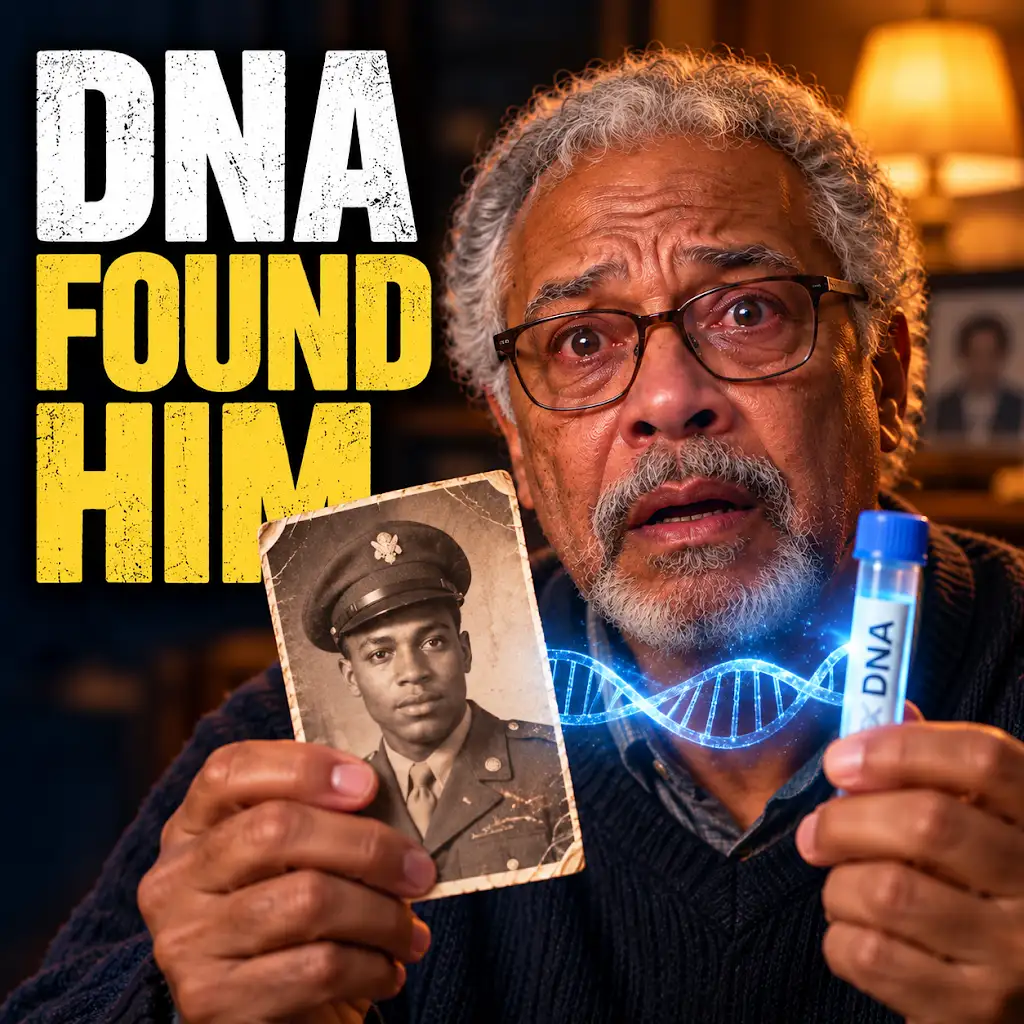
His WWII GI Father Was a Mystery for Nearly 80 Years
FAQs
What is DNA testing for Black American family history?
DNA testing for Black American family history involves analyzing an individual’s DNA to trace their ancestry and genetic roots back to their African heritage.
How can DNA testing help Black Americans trace their family history?
DNA testing can help Black Americans trace their family history by providing information about their ethnic origins, connecting them with distant relatives, and uncovering migration patterns of their ancestors.
What are the different types of DNA tests available for Black American family history research?
The main types of DNA tests used for Black American family history research are autosomal DNA tests, Y-DNA tests, and mitochondrial DNA tests. Autosomal DNA tests provide information about a person’s overall ancestry, while Y-DNA tests trace the paternal line and mitochondrial DNA tests trace the maternal line.
How accurate are DNA tests for Black American family history?
DNA tests for Black American family history are generally accurate in providing information about a person’s genetic ancestry and connections to specific populations. However, the accuracy may vary depending on the testing company and the size of their reference database.
Are there any privacy concerns associated with DNA testing for Black American family history?
There are privacy concerns associated with DNA testing for Black American family history, as the information obtained from these tests can be sensitive and may be shared with third parties. It is important for individuals to carefully review the privacy policies of the testing company before taking a DNA test.