The silent hunt beneath the waves, a defining feature of naval warfare, reached a new epoch with the advent of the Second World War. The technological advancements forged in this crucible of conflict, particularly in submarine design and operational doctrine, would cast a long shadow, shaping the nascent geopolitical landscape of the Cold War. This period witnessed an unprecedented transfer of submarine technology, not always through open exchange, but often through captured materiel, defecting personnel, and the adaptation of enemy innovations. The United States and the Soviet Union, emerging as the primary adversaries, became locked in a silent, yet deadly, arms race that owed a significant debt to the submarines that patrolled the oceans during the Second World War.
The Submarine’s Lethal Evolution During World War II
The Second World War witnessed a dramatic acceleration in submarine technology and tactics. What began as relatively crude submersible vessels evolved into sophisticated underwater weapon platforms capable of sustained operations and posing a significant threat to surface fleets. This evolution was driven by the desperate need for effective naval weaponry, the constant pressure of innovation and counter-innovation, and the sheer scale of operations across multiple theaters.
The German U-Boat Enigma: A Technological and Tactical Masterclass
The German U-boat arm represented the zenith of submarine development by the mid-war period. Their success in strangling Allied supply lines in the Battle of the Atlantic forced a continuous cycle of technological advancement. Initially, German submarines were characterized by their potent torpedo armament and skilled crews, adept at employing wolfpack tactics. However, the true leap in technology came with the introduction of the Type XXI and Type XXIII U-boats.
The Type XXI, often considered the first true ” 전술 잠수함” (tactical submarine), was a revolutionary design. It boasted a streamlined hull, allowing for significantly higher underwater speeds than its predecessors. Crucially, it was equipped with a snorkel, a device that allowed the diesel engines to run while submerged, enabling the U-boat to recharge its batteries without surfacing. This dramatically increased its operational endurance and reduced its vulnerability. The Type XXI also featured advanced sonar and radar systems, as well as a more potent battery capacity, further enhancing its underwater capabilities. The Type XXIII, while smaller, was designed for coastal operations and demonstrated the growing emphasis on specialized submarine designs. These innovations, born out of desperate necessity, provided a blueprint for future submarine development across the globe.
Allied Countermeasures and the Dawn of Advanced Sonar
The Allied response to the U-boat menace was equally instrumental in pushing submarine technology forward. The development of effective anti-submarine warfare (ASW) capabilities was paramount. This included the widespread deployment of sonar, both passive and active, which allowed ships to detect submerged submarines. The evolution of airborne ASW platforms, equipped with radar and depth charges, also forced German submariners to adapt and operate at greater depths. The introduction of escort carriers and hunter-killer groups further intensified the pressure on U-boat operations.
Furthermore, the Allies developed their own advanced submarine designs. American submarines, such as the Gato, Balao, and Tench classes, were renowned for their speed, endurance, and torpedo capacity, proving highly effective against Japanese shipping in the Pacific. British submarines also played a vital role, particularly in operations against the German surface fleet and in mine-laying missions. The collective experience and technological lessons learned by the Allied navies in combating and operating submarines provided a rich foundation for post-war development.
During the Cold War, the technological advancements in submarine warfare that originated during World War II played a crucial role in shaping naval strategies and capabilities. An insightful article that delves into this topic is available at In the War Room, where it explores how the transfer of submarine technology influenced the arms race and the development of nuclear submarines. This historical perspective highlights the significant impact of WWII innovations on Cold War dynamics and naval power.
The Scramble for Submarine Secrets: Post-War Acquisition and Espionage

As the dust settled on the Second World War, the victors found themselves in possession of invaluable enemy technology. The intellectual property, designs, and operational knowledge of the defeated Axis powers, particularly Germany, became a highly coveted commodity. This led to a significant transfer of submarine technology, often under the guise of salvage and scientific study, but frequently with a keen eye on military applications.
Operation Paperclip and the German Technical Advantage
Operation Paperclip, the American initiative to recruit German scientists and engineers, extended its reach into the realm of naval technology. German submarine experts, including designers and U-boat commanders, were brought to the United States to share their knowledge. They provided insights into hull design, propulsion systems, snorkel technology, and advanced acoustic systems that had been developed by the Kriegsmarine. This influx of expertise allowed the U.S. Navy to rapidly advance its own submarine programs, incorporating proven German concepts into new American designs. The lessons learned from the Type XXI, in particular, heavily influenced the development of American post-war submarines, emphasizing underwater speed and endurance.
Soviet Acquisition and the Silent Appropriation
The Soviet Union was equally active in acquiring German submarine technology and expertise. Following the end of the war, Soviet forces scoured German shipyards and research facilities, seizing blueprints, prototypes, and even entire submarines. The Soviets were particularly interested in the advanced propulsion systems and hull designs of the Type XXI and XXIII U-boats. This acquisition was crucial for the Soviet Union, which had lagged behind the Western powers in submarine technology during the war. The integration of German designs and the knowledge gained from German engineers provided a significant boost to the Soviet submarine program, laying the groundwork for their formidable post-war submarine fleet. This often involved not just studying captured technology but also the direct appropriation of designs and manufacturing techniques.
The Birth of the Cold War Submarine Arms Race

The technological gains from the Second World War, coupled with the burgeoning ideological divide between the United States and the Soviet Union, ignited a fierce submarine arms race. Both superpowers recognized the strategic importance of submarines, not only for disrupting enemy supply lines but also for their potential to deliver nuclear weapons. The lessons of the war, particularly the effectiveness of German U-boats and the Allied counter-measures, provided the strategic context for this escalating competition.
The U.S. Navy’s Post-War Dominance and the Rise of Nuclear Power
The U.S. Navy, with its established industrial base and the influx of German expertise, was well-positioned to lead the post-war submarine development. The immediate post-war years saw the U.S. Navy focus on improving diesel-electric submarine designs, incorporating lessons learned from German technologies. However, the true revolution came with the advent of nuclear power. The USS Nautilus, commissioned in 1954, was the world’s first nuclear-powered submarine. This was a paradigm shift, liberating submarines from the constraints of air-breathing engines and allowing for unprecedented underwater speed, endurance, and operational flexibility.
Nuclear submarines offered a vastly extended range and the ability to remain submerged for months at a time. This capability was crucial for strategic deterrence. U.S. nuclear submarines, particularly the Ballistic Missile Submarine (SSBN) classes, were equipped with Polaris and later Trident missiles, capable of delivering nuclear warheads to targets thousands of miles away. This created a credible second-strike capability, a cornerstone of Cold War deterrence strategy. The U.S. also continued to refine its conventional submarine designs, developing quieter and more capable diesel-electric boats for specific roles.
The Soviet Response: Catching Up and Surpassing
The Soviet Union, spurred by the U.S. success with nuclear propulsion, embarked on an ambitious program to develop its own nuclear-powered submarines. Despite initially lagging, the Soviet Union poured vast resources into its submarine program, driven by a determination to match and eventually surpass U.S. naval power. Soviet engineers and designers, building upon their acquired German knowledge and their own innovative approaches, rapidly closed the technological gap.
The Soviets soon deployed their own nuclear-powered submarines, including both attack submarines (SSNs) and ballistic missile submarines (SSBNs). Their designs often emphasized robust construction, high speed, and the ability to operate in the harsh Arctic environment. Soviet submarine doctrine also differed, with a greater emphasis on offensive operations and the capacity to overwhelm NATO naval forces. The development of the Akula and Typhoon classes of SSBNs, for example, represented a significant challenge to U.S. strategic dominance. The Soviets also continued to produce large numbers of highly capable diesel-electric submarines, which posed a considerable threat to NATO’s vital sea lanes.
The Strategic Implications: Deterrence and the Silent Sea
The technological advancements and the sheer proliferation of submarines during the Cold War had profound strategic implications. Submarines became integral to the concept of nuclear deterrence, forming the backbone of the “mutually assured destruction” (MAD) doctrine. The ability of submarines to operate undetected beneath the waves meant that even in the event of a surprise nuclear attack, a nation could retaliate with its submarine-launched ballistic missiles, ensuring the destruction of the aggressor.
The Nuclear Deterrent: Submarines as Unsinkable Aircraft Carriers
The advent of the SSBN fundamentally altered the strategic balance of power. These vessels, effectively “unsinkable aircraft carriers” of nuclear weapons, provided a survivable and mobile platform for delivering a devastating retaliatory strike. The psychological impact of this capability was immense. It created a constant, albeit silent, threat that shaped diplomatic negotiations and military planning for decades. The arms control treaties that emerged during this period often specifically addressed the proliferation and capabilities of submarine-launched ballistic missile systems. The ability to hide these strategic assets beneath the ocean’s surface made them incredibly difficult to track and neutralize, thus ensuring their retaliatory power.
Conventional Warfare and the Threat to Seaborne Supply
Beyond their nuclear role, submarines continued to pose a significant threat to conventional maritime operations. The vast numbers of diesel-electric and nuclear-powered attack submarines operated by both the U.S. and the Soviet Union meant that the control of the seas remained a precarious endeavor. The fear of submarine interdiction of vital supply lines, a lesson learned acutely during the Second World War, remained a potent concern for NATO. The development of advanced sonar countermeasures, torpedoes, and anti-submarine warfare tactics became a continuous area of research and development for all naval powers, a direct legacy of the submarine threat. The silent hunt for submarines, and the equally silent hunt for surface ships, defined a new dimension of naval warfare.
The advancements in submarine technology during World War II had a profound impact on naval warfare, and this influence continued into the Cold War era as nations sought to enhance their underwater capabilities. A fascinating exploration of this topic can be found in an article that discusses the intricate transfer of submarine technology between countries during this period. For a deeper understanding of how these developments shaped modern naval strategies, you can read more in this insightful piece on submarine technology.
The Enduring Legacy: How WWII Submarine Technology Shaped Today’s Navies
| Aspect | Description | WW2 Technology | Cold War Adaptation | Impact on Submarine Warfare |
|---|---|---|---|---|
| Propulsion Systems | Type of engine and power source used for underwater propulsion | Diesel-electric engines with limited underwater endurance | Nuclear propulsion introduced, allowing extended submerged operations | Greatly increased underwater endurance and speed, changing strategic capabilities |
| Hull Design | Shape and materials used for submarine hulls | Steel hulls with riveted construction, limited depth capability | Hydrodynamic teardrop hulls with welded construction, improved depth and stealth | Enhanced underwater speed and reduced noise signature |
| Sonar Technology | Systems for underwater detection and navigation | Basic passive and active sonar with limited range and resolution | Advanced passive arrays and active sonar with improved detection and tracking | Improved situational awareness and target acquisition |
| Torpedo Technology | Weapons used for attacking enemy vessels | Straight-running torpedoes with mechanical guidance | Homing torpedoes with acoustic and wire guidance systems | Increased hit probability and engagement range |
| Communication Systems | Methods for submarine communication with command | Radio communication with limited underwater capability | Very low frequency (VLF) and satellite communication enabling submerged contact | Improved command and control while submerged |
| Technology Transfer | Exchange and adaptation of submarine technology between nations | Captured German U-boat technology and blueprints post-WW2 | US and USSR reverse-engineered and improved upon German designs | Accelerated submarine development and arms race during Cold War |
The technological transfer and the competitive drive spurred by the Second World War and its immediate aftermath have left an indelible mark on modern submarine technology and naval strategy. The fundamental principles of submarine design, operational tactics, and the strategic importance of underwater warfare, all forged in the crucible of WWII, continue to influence naval capabilities today.
The Continued Evolution of Quietness and Stealth
The pursuit of stealth, a characteristic that defined the effectiveness of submarines in WWII, remains a paramount objective for modern submarine development. The development of quieter propulsion systems, advanced hull coatings to reduce sonar reflection, and sophisticated electronic countermeasures are all direct descendants of the post-WWII drive to improve submarine survivability and offensive capability. The legacy of the German Type XXI’s streamlined hull and snorkel continues to be refined in modern designs, albeit with vastly more advanced materials and engineering. The constant battle between sonar detection and stealthy evasion, so central to WWII submarine warfare, remains the defining dynamic in modern submarine operations.
Diversification and Specialization in Submarine Roles
The trend towards specialized submarine designs, evident in the late stages of WWII, has continued and intensified. Modern navies operate a diverse range of submarines, from large nuclear-powered ballistic missile submarines dedicated to strategic deterrence, to smaller, highly maneuverable attack submarines designed for reconnaissance, anti-ship warfare, and special operations. The lessons learned from the adaptability of both Allied and Axis submarines during WWII have informed this diversification, ensuring that naval forces possess the underwater assets best suited to a wide array of missions. The fundamental capabilities established during WWII, such as torpedo warfare and extended submerged operations, remain core competencies for all submarine classes, continually being enhanced by new technologies. The foundation laid by the technological leaps of the Second World War, the intense post-war acquisition of knowledge, and the subsequent arms race with the Soviet Union, irrevocably shaped the silent, yet powerful, world of submarine warfare, a world that continues to evolve and influence global maritime security to this day.
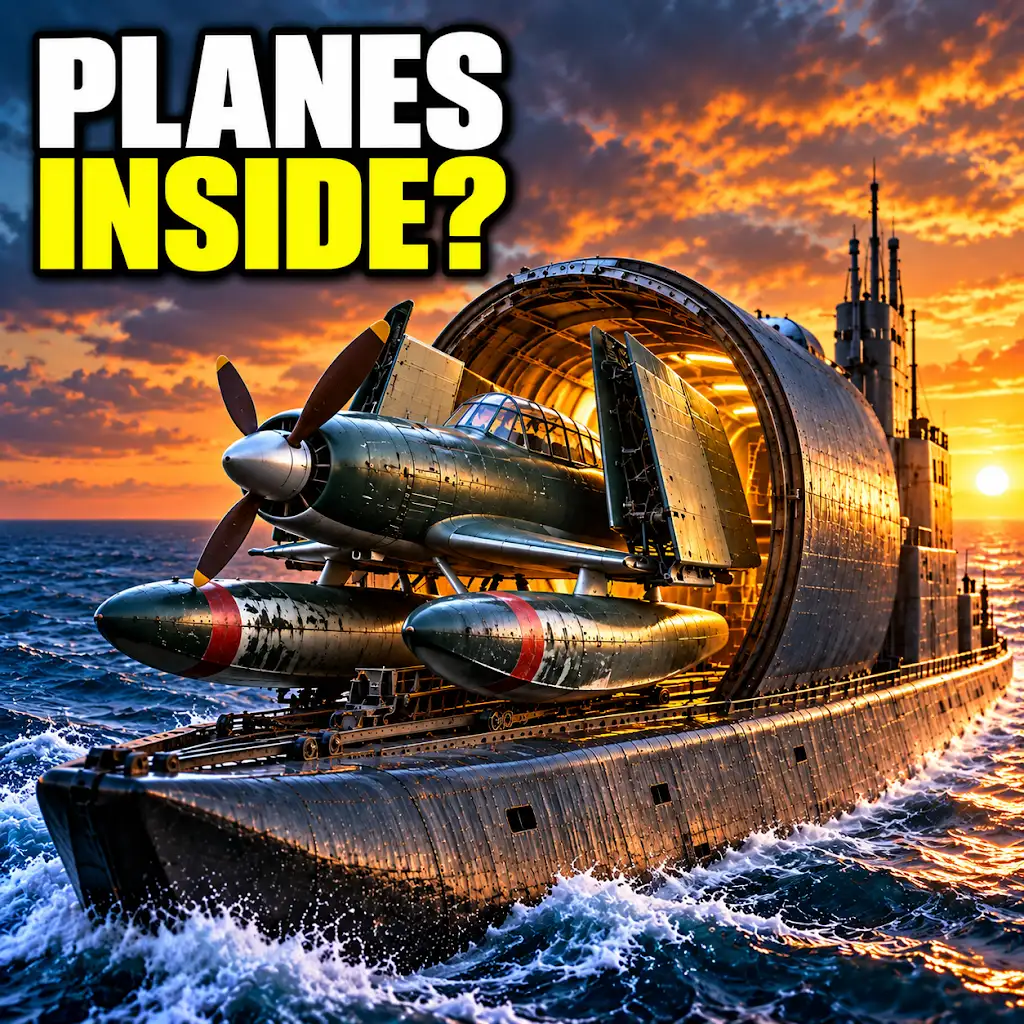
Japan Built a Submarine That Could Launch Three Planes
FAQs
What was the significance of World War II submarine technology transfer during the Cold War?
World War II submarine technology transfer played a crucial role in shaping the development of submarines during the Cold War. The advancements made during WWII were utilized by various countries to enhance their submarine capabilities and gain a strategic advantage.
Which countries were involved in the transfer of submarine technology after World War II?
Countries such as the United States, Soviet Union, United Kingdom, and Germany were actively involved in the transfer of submarine technology after World War II. These nations sought to improve their naval capabilities and maintain a competitive edge during the Cold War.
What specific technologies were transferred between countries in terms of submarine technology?
Technologies such as sonar systems, periscopes, torpedo systems, hull designs, propulsion systems, and navigation equipment were among the key components transferred between countries in terms of submarine technology. These advancements significantly improved the stealth, speed, and overall effectiveness of submarines.
How did the transfer of submarine technology impact the naval arms race during the Cold War?
The transfer of submarine technology fueled the naval arms race during the Cold War, as countries sought to develop more advanced and sophisticated submarines to gain a strategic advantage. This led to the development of nuclear-powered submarines, ballistic missile submarines, and other cutting-edge technologies.
What were some of the long-term implications of World War II submarine technology transfer during the Cold War?
The long-term implications of World War II submarine technology transfer during the Cold War included the proliferation of advanced submarine capabilities among various nations, increased surveillance and reconnaissance capabilities, and the establishment of a more complex and competitive naval landscape.