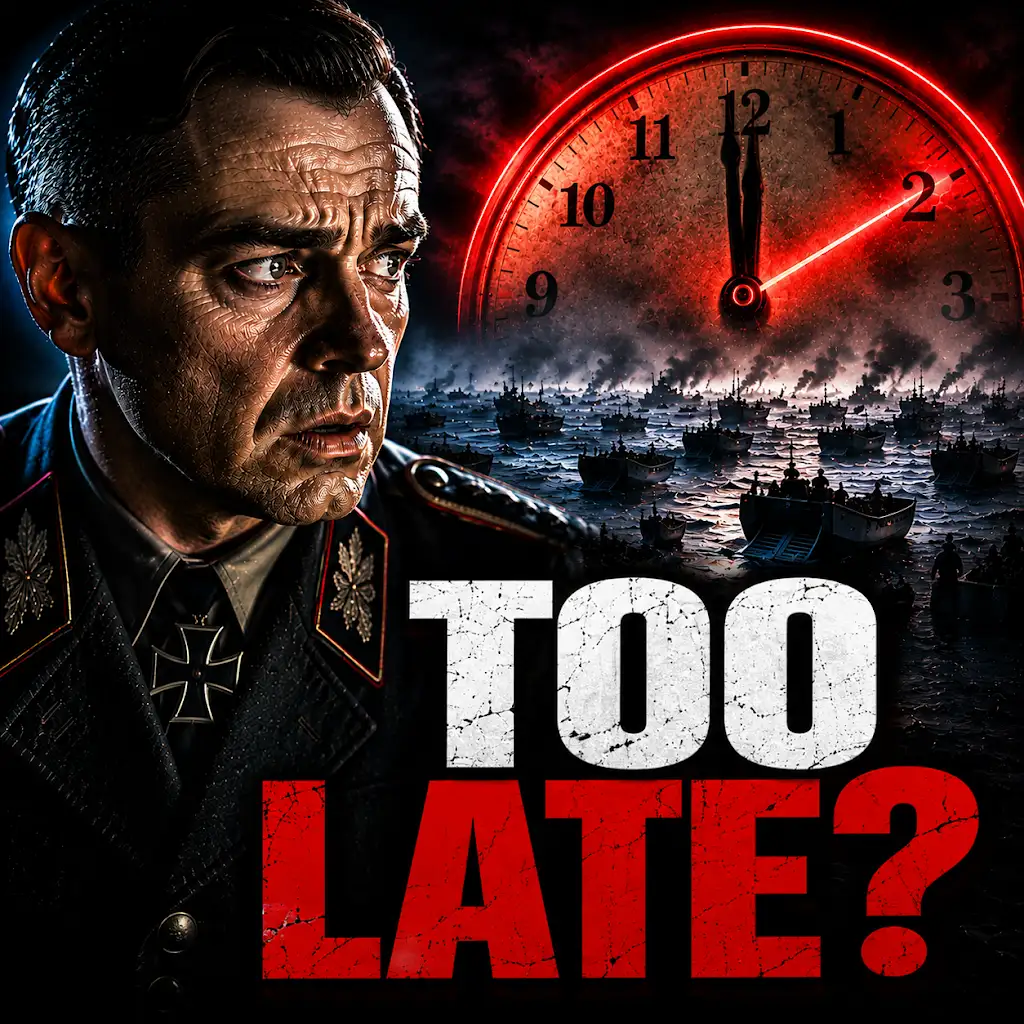
The question of “What if German Panzers moved earlier?” is a tantalizing one, a pivot point in the grand narrative of World War II that has fueled countless hours of historical speculation and wargaming. The conventional wisdom often points to the initial stages of the Western Front in 1940, where a more aggressive and earlier deployment of armored forces could have dramatically altered the outcome of the Battle of France. However, the implications ripple far beyond that initial campaign, potentially reshaping the entire trajectory of the war, influencing the Eastern Front, and even impacting the eventual Allied victory.
The German doctrine of Blitzkrieg, or “lightning war,” was still in its relative infancy in 1939. While the concept of concentrated armored thrusts supported by close air support had been tested in exercises and subtly incorporated into doctrine, the full realization of its potential was still some years away. The Polish campaign in September 1939, while a stunning success, was a testament to the rudimentary application of these principles. The tanks were often deployed in larger formations than their interwar counterparts, but their coordination with air power and infantry was still being refined. The key question then becomes: what if the decision-makers in the Oberkommando der Wehrmacht (OKW) had possessed the confidence and foresight to unleash their nascent panzer divisions with greater aggression and earlier in any significant conflict prior to the full-scale invasion of France?
Early Opportunities and Missed Chances
The most obvious, and perhaps most impactful, scenario for an earlier panzer deployment would have been during the period known as the “Phoney War” (Sitzkrieg) after the invasion of Poland. While France and Britain had declared war on Germany, no major land offensive was launched by the Western Allies. Conversely, Germany was still in the process of building up its forces and, by some accounts, was not entirely prepared for a protracted war against the major Western powers.
The Polish Campaign: A Dress Rehearsal?
While the Polish campaign was a tactical triumph, it also revealed certain limitations and areas for improvement in German armored warfare. The distances involved were significant, and supply lines, though relatively well-managed, stretched the logistical capabilities of the panzer divisions. Had the war against France begun in late 1939 or early 1940, some argue, these nascent forces would have faced a more prepared and less surprised enemy. However, another perspective suggests that an earlier confrontation could have forced the Germans to accelerate their doctrine development and refine their operational art in the face of a more formidable opponent, leading to even greater proficiency later on.
The Western Front: A Different Spark
The most widely discussed “what if” scenario revolves around the Western Front in 1940. The German plan, Sichelschnitt (Sickle Cut), involved a swift armored thrust through the Ardennes Forest, bypassing the Maginot Line and cutting off Allied forces in Belgium. The success of this plan hinged on surprise and the speed of the panzer divisions.
The Ardennes: A Precocious Advance
The historical plan for the invasion of France, Operation Fall Gelb, called for the main armored thrust through the Ardennes. However, the initial deployments and the overall tempo of operations were somewhat cautious, at least in comparison to the sheer ferocity and speed with which the panzer divisions eventually moved once the offensive began. If the decision had been made to commit these forces earlier in the spring of 1940, perhaps even before the Dutch and Belgian defenses had fully mobilized, the element of surprise could have been amplified.
Overcoming Logistical Hurdles
A key concern for any significantly earlier panzer offensive would be logistics. While the Wehrmacht had made strides in mechanized transport, supporting a large armored force in sustained offensive operations was a monumental task. Fuel, ammunition, spare parts, and even food for the troops would need to be delivered in unprecedented quantities and at a rapid pace. An earlier start would have placed even greater strain on these nascent logistical networks. However, some historians contend that the Germans, driven by necessity, might have been forced to innovate and prioritize logistical support for armored operations even more aggressively, leading to quicker advancements in their logistical capabilities.
Impact on the Western Front: A Swifter Fall?
The most immediate and perhaps dramatic consequence of an earlier panzer offensive would have been on the Western Front. The Battle of France, as it unfolded, was characterized by a rapid German advance that caught the Allied powers largely off guard. An earlier commencement of hostilities, coupled with a more aggressive deployment of panzer divisions, could have accelerated this collapse.
The Battle of France: A More Decisive Victory
The historical Battle of France saw a swift and devastating defeat for the Allied forces. The German panzer divisions, once unleashed, tore through the French and British lines, encircling large formations and leading to the evacuation at Dunkirk. If the panzers had been deployed even a few weeks or months earlier, the opportunities for surprise and exploiting existing weaknesses could have been significantly enhanced.
Dunkirk: A Different Outcome?
The Dunkirk evacuation was a crucial event, allowing a significant portion of the British Expeditionary Force (BEF) to escape capture and return to Britain. Had the German advance been even faster and more coordinated in the early stages of the campaign, it is plausible that more Allied forces could have been trapped and destroyed in France. This could have had profound implications for Britain’s ability to continue the war, potentially weakening its resolve or even leading to a different negotiated outcome.
The French Resistance: A Shorter Lifespan
The French army, while brave, was not prepared for the speed and ferocity of the German panzer attack. An earlier and more concentrated assault could have overwhelmed their defensive positions even more quickly, leading to a swifter capitulation of France. This would have freed up German forces for other fronts and potentially altered the strategic landscape of the war.
The Maginot Line: A Hollow Threat?
The Maginot Line, a formidable series of fortifications along the Franco-German border, was famously bypassed by the German invasion through the Ardennes. If the panzers had been deployed earlier and with greater emphasis on a rapid advance through Belgium and the Netherlands, the effectiveness of the Maginot Line as a deterrent would have been further diminished. It might have been rendered largely irrelevant as the German advance swept around it before it could play a significant role.
Shifting Sands: Implications for the Eastern Front
The question of earlier panzer deployment also has profound implications for the Eastern Front, the eventual theater of the largest land war in history. The invasion of the Soviet Union, Operation Barbarossa, launched in June 1941, was a colossal undertaking that ultimately stretched German resources thin.
Operation Barbarossa: A Different Timing?
If Germany had achieved a more decisive and swifter victory in the West, or if the war had taken a different turn, the strategic calculus for invading the Soviet Union could have shifted. It’s possible that Germany, emboldened by a quick triumph, might have accelerated its plans for Barbarossa. Conversely, if the Western campaign had been more costly or protracted due to earlier panzer deployment, the resources and manpower available for the Eastern Front might have been depleted.
The Soviet Defense: Less Prepared?
The Soviet Union, despite significant industrialization, was not fully prepared for the German invasion in 1941. Stalin had purged many experienced military leaders, and the Red Army, while vast, was undergoing modernization and restructuring. If Barbarossa had been launched earlier, say in 1940 or early 1941, the Soviet defenses might have been even weaker, potentially leading to a more catastrophic initial collapse.
The Weather Factor: A Double-Edged Sword
The Russian winter was a significant factor in the failure of the German advance on Moscow in 1941. If Barbarossa had been launched earlier, the initial operations might have been conducted in warmer weather, allowing for more sustained and rapid advances. However, this would also mean that the punishing winter would arrive sooner, potentially catching the advancing German forces in unfavorable conditions for a longer period.
Allied Repercussions: A Different War
The impact of earlier panzer deployments would have reverberated through the Allied powers, forcing them to adapt their strategies and potentially altering the course of their war efforts.
Britain’s Defenses: A Greater Threat?
A faster and more decisive fall of France would have presented Britain with a more immediate and formidable threat. With German forces on the Channel coast, the prospect of invasion, however unlikely in reality, would have become a far more pressing concern. This could have led to a greater emphasis on home defenses, potentially diverting resources from other theaters.
The United States: A Changed Decision Timeline?
The United States entered World War II after the attack on Pearl Harbor in December 1941. If the war in Europe had concluded much earlier with a decisive German victory in the West, the geopolitical landscape would have been dramatically altered. The motivations and timing of American intervention might have been significantly different, perhaps leading to a later or even different form of involvement.
Technological and Doctrinal Development: Accelerated Evolution?
The early and more aggressive deployment of panzer divisions could have acted as a catalyst for accelerated technological and doctrinal development within the German military. Facing tougher opposition or operating under greater pressure, the Wehrmacht might have been forced to innovate more rapidly.
Tank Design: Faster Advancements?
The early panzer divisions relied on tanks like the Panzer I and Panzer II, which were light and lacked significant firepower. While the Panzer III and Panzer IV were developing, an earlier and more sustained offensive would have highlighted the deficiencies of these early models more acutely. This could have pressured German engineers and industrialists to accelerate the development and production of more capable tanks, potentially leading to the introduction of models like the Panther and Tiger sooner, or in greater numbers.
Anti-Tank Capabilities: A Race Against Time
Conversely, an earlier and more successful panzer offensive would have also spurred the development of anti-tank weaponry and tactics among Allied forces. Nations like Britain and France, if they had more time to react and adapt to a more aggressive German armored threat, might have developed more effective anti-tank guns and strategies sooner. This could have led to a more balanced arms race, where advances in armor were met with corresponding improvements in anti-armor technology.
Combined Arms Warfare: Refinement Under Fire
The core of Blitzkrieg was the effective integration of armor, motorized infantry, artillery, and air power. An earlier and more demanding operational environment would have forced the German military to refine its combined arms tactics even further. Learning from mistakes and successes in real-time combat could have led to a more sophisticated and efficient doctrine of warfare.
The Unforeseen Consequences: A Different World Order
The “what if” scenario of earlier panzer deployment is not merely an academic exercise in military history. It delves into the realm of profound geopolitical and societal changes. A dramatically altered outcome in World War II would have reshaped the global order in ways that are difficult to fully comprehend.
A Post-War Europe: German Hegemony?
A swift and decisive German victory in 1940 could have led to a vastly different post-war Europe. The continent might have fallen under German hegemony for an extended period, with profound implications for political systems, cultural development, and national identities. The legacy of Nazism might have been entrenched in a way that is difficult to imagine.
The Fate of the Soviet Union: A Different Iron Curtain?
If the Eastern Front had unfolded differently due to earlier Western victories, the fate of the Soviet Union would have been significantly altered. Perhaps a negotiated peace, a protracted war of attrition on a different scale, or even a complete collapse of the Soviet state could have occurred. The ideological struggle that defined the Cold War might have taken a completely different form, or not materialized at all.
The Americas: A Changed Global Power Dynamic?
With a dominant Germany in Europe and potentially a weakened Britain, the global influence of the United States might have been challenged or even diminished. The post-war period might not have seen the rise of American superpower status as it historically did.
The Holocaust and Other Atrocities: Extended Shadow?
The full horrors of the Holocaust and other Nazi atrocities unfolded over years of war and occupation. A swifter German victory, while potentially curtailing the duration of the war, could also have allowed for the even more systematic and widespread implementation of these genocidal policies across a larger swathe of Europe. The scope and scale of these crimes are almost too terrible to contemplate in this hypothetical context.
In conclusion, the question of “What if German Panzers moved earlier?” opens a Pandora’s Box of possibilities. While a definitive answer is impossible, exploring these scenarios highlights the critical junctures and delicate balances that determined the course of World War II. The potential for a swifter, more devastating German victory in the West, the ripple effects on the Eastern Front, and the cascading impact on the global order all underscore the profound and far-reaching consequences of military decisions and the often-unpredictable nature of warfare. The early deployment of panzers, while a tantalizing prospect for strategic revisionists, also serves as a stark reminder of the immense human cost and the fragile nature of peace.