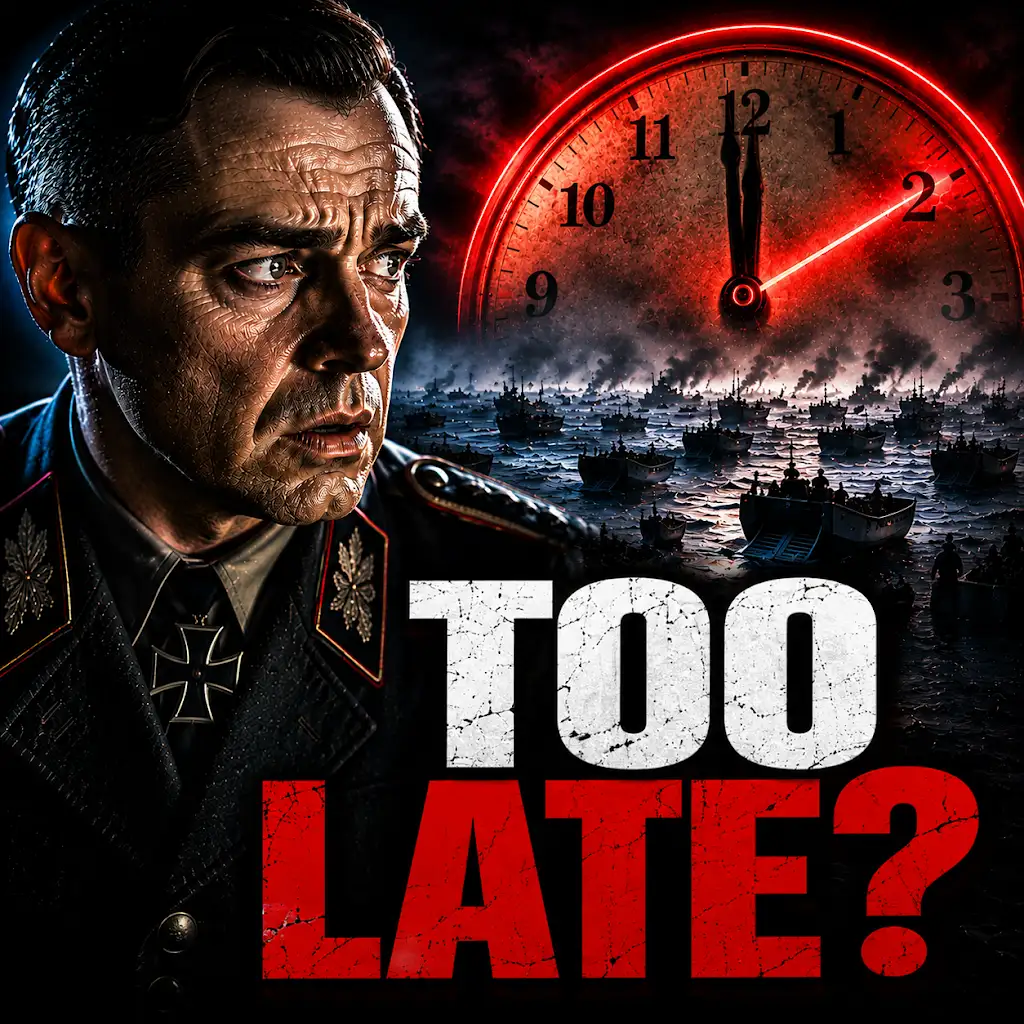
The predawn hours of June 6, 1944, pulsed with an anxious energy within the commandeered French château that served as German Army Group B headquarters near La Roche-Guyon. This was not a typical day, even for a military command center operating under the shadow of a continent-wide war. The air crackled not only with the hum of radios and the murmur of hushed conversations but also with an unspoken dread, a primal fear that the long-awaited Allied invasion was finally upon them. Inside this nerve center, a complex web of command, communication, and deeply ingrained assumptions would soon be tested to its breaking point.
The German high command, specifically Army Group B under the command of Field Marshal Erwin Rommel, had been preparing for an Allied landing on the coast of France for months. The Atlantic Wall, a formidable line of defenses stretching across the occupied territories, was meant to be an impenetrable barrier. Yet, beneath the surface of this impressive construction lay a simmering unease, a knowledge that sheer force of will and concrete might not be enough to repel the combined might of the Allied nations.
The Illusion of Control: Rommel’s Strategic Vision
Field Marshal Erwin Rommel, known as the “Desert Fox” for his brilliant campaigns in North Africa, was a man of action and direct command. Appointed to oversee the defenses of Normandy, he possessed an acute understanding of the capabilities of the Allied forces. Rommel believed that the crucial phase of the invasion would be the initial landing itself. He argued vehemently for the deployment of the armored reserves, particularly the Panzer divisions, directly behind the coastal defenses. His rationale was simple: if the Allies were to establish a beachhead, they would need to be crushed before they could consolidate their forces and bring their overwhelming logistical power to bear. He envisioned a swift, decisive counterattack that would throw the invaders back into the sea.
Hitler’s Hesitation: The Shadow of the East
However, Rommel’s strategic insights clashed with the broader directives emanating from Hitler’s Wolfsschanze, his Eastern Front headquarters. Adolf Hitler, consumed by the ongoing and brutal war against the Soviet Union, viewed the Western Front with a degree of detachment. He believed that the primary threat remained in the East, and he was reluctant to commit his most potent armored formations to the West without absolute certainty of the invasion’s location and scale. This caused a significant strategic dilemma. The valuable Panzer divisions, Rommel’s envisioned instruments of victory, were held back as a strategic reserve, subject to the whims of the Führer and his scattered intelligence assessments. This geographical and operational separation of crucial forces would prove to be a catastrophic error.
The Role of Intelligence: A Fog of Uncertainty
German intelligence had been working tirelessly to predict the timing and location of the Allied landings. However, their efforts were hampered by a multitude of factors. Allied deception operations, masterfully executed through Operation Fortitude, had successfully convinced the Germans that the main invasion would occur at the Pas-de-Calais, the narrowest point of the English Channel, and not Normandy. This elaborate ruse, involving dummy armies, radio traffic, and misinformation, played a significant role in diverting German attention and resources away from the true landing zones. Furthermore, the inherent complexity of Allied operations, with their vast network of planners and secret communications, made it exceedingly difficult for German agents and listening posts to gather concrete, actionable intelligence.
The Critical Hours: Misinterpretation and Indecision
As the night of June 5th bled into the early morning of June 6th, a series of events unfolded that would dictate the fate of the German defenses. The weather, a crucial factor for both sides, was a source of debate and misinterpretation within the German command structure.
The Stormy Seas: A Temporary Reprieve?
The weather forecast for June 6th was grim. High winds, heavy seas, and poor visibility were predicted for the English Channel. Rommel, in particular, believed that such conditions would make a large-scale amphibious assault virtually impossible. He famously declared that the Allies would not dare attempt an invasion in such weather and took the opportunity to return to Germany for a brief visit with his wife. This decision, born of a reasonable assessment of meteorological conditions, would tragically remove him from the front lines at the most critical juncture.
The Airborne Threat: A Distraction or the Real Deal?
In the pre-dawn darkness, German radar and observation posts began to report increased aerial activity. Paratroopers were seen dropping behind enemy lines in various locations, most notably in the Cotentin Peninsula. For many German commanders on the ground, this was a clear indication of the main invasion force. Airborne assaults were typically the prelude to a larger amphibious landing. However, the scattered nature of these drops, and the sheer audacity of the airborne operations, contributed to a sense of confusion. Were these diversionary tactics, or was this the beginning of the main assault? The uncertainty gnawed at the decision-makers.
Communication Breakdown: The Lag in Information Flow
The vastness of the German military apparatus, coupled with the limitations of wartime communication technology, meant that information did not always travel quickly or efficiently. Reports from the front lines, from scattered units observing the airborne landings, had to be relayed through multiple channels before reaching the higher echelons of command. This delay, measured in precious minutes and hours, allowed the Allied forces to gain a critical advantage. By the time decisions were made and orders were dispatched, the situation on the ground had often evolved significantly.
The Beachhead Emerges: The Shock of Reality
The first reports of Allied ships appearing off the coast of Normandy began to filter into headquarters. This was not the Pas-de-Calais, but the long, relatively undefended coastline of Normandy. The realization dawned slowly, painfully.
The Unexpected Target: Normandy’s Vulnerability
The Allied choice of Normandy, while strategically sound for them, represented a deviation from the most probable landing sites predicted by German intelligence. The extensive defenses of the Pas-de-Calais, coupled with the deception operations, had effectively drawn the German reserves away. Normandy, with its softer defenses and more dispersed garrisons, presented a more inviting, albeit still dangerous, target. The German command structure was ill-prepared to react to an assault in this region with the speed and force required.
The Fierce Resistance: Pockets of German Valor
Despite the strategic miscalculations at the highest levels, many German soldiers on the ground fought with incredible bravery and ferocity. On the beaches themselves, along the bluffs, and in the small villages, German units, though often outnumbered and outgunned, inflicted heavy casualties on the attacking Allied forces. Machine-gun nests, artillery emplacements, and well-placed bunkers became deadly obstacles for the landing troops. These were the men who bore the brunt of the initial Allied onslaught, their courage a stark contrast to the indecision and confusion that pervaded the higher command.
The Unfolding Nightmare: Reports of Chaos
As the D-Day landings progressed, the communications within German Army Group B headquarters became increasingly chaotic. Radio operators struggled to keep up with the influx of reports, many of them contradictory or incomplete. Commanders on the ground desperately pleaded for reinforcements and instructions, but their calls often went unanswered or were met with delayed and inadequate responses. The image of a meticulously planned defense crumbling under the relentless pressure of the Allied assault began to take shape.
The Command Crisis: A Failure of Leadership
The D-Day invasion exposed a profound crisis of leadership within the German command structure. The complex chain of command, the conflicting directives, and the lack of decisive action created a vacuum that the Allies exploited to their fullest.
The Authority Vacuum: Who Was Truly in Charge?
The ultimate authority for committing the Panzer reserves rested with Hitler himself. However, the military command structure was notoriously convoluted, with multiple layers of authority and frequent interventions from the Führer’s personal staff. This created a situation where no single individual within Army Group B felt empowered to make the critical decisions without explicit approval from the very top. This hesitation and diffusion of authority proved to be a fatal flaw.
Rommel’s Absence: A Strategic Blind Spot
Field Marshal Rommel’s absence from the front lines during the initial hours of the invasion was a significant blow. While he was a subordinate commander, his strategic insights and his ability to make rapid, on-the-spot decisions were invaluable. His return to Germany, though understandable given the weather, meant that the crucial initial phases of the battle were fought without his direct leadership and strategic overview.
The Myth of Infallibility: The Cost of Ideology
The Nazi regime, driven by an ideology that fostered a belief in the Führer’s infallibility, often discouraged dissent and independent thought. This created an environment where subordinates were hesitant to challenge directives or offer alternative solutions, even when those directives seemed flawed. The ingrained obedience, while often admirable in military contexts, became a detrimental factor when faced with an unprecedented and rapidly evolving threat.
The Aftermath: A Turning Tide
By the end of June 6, 1944, the grim reality of the situation began to sink in for the German command. The beaches had been breached, and the Allies had established a foothold on the continent. The defensive lines, meticulously planned and built, had been largely bypassed or overwhelmed in key sectors.
The Lost Opportunity: The Price of Hesitation
The most significant consequence of the confusion and indecision within German headquarters was the lost opportunity to decisively counter the invasion in its early stages. The reserves, particularly the Panzer divisions, remained largely uncommitted for too long. When they were eventually released, the Allies had already consolidated their gains, brought ashore additional troops and equipment, and were pushing inland. The window of opportunity to destroy the invasion force had closed.
The Grim Assessment: A Long and Bloody Road Ahead
As reports continued to flood in, a grim assessment of the situation began to take shape. The invasion was not a feint. It was the real thing, and it was far larger and more successful than many had dared to imagine. The men within German Army Group B headquarters understood, with a chilling certainty, that the war had reached a critical turning point. The road ahead would be long, brutal, and ultimately, they knew, a losing one. The decisions made, and not made, within that château on D-Day had irrevocably altered the course of the Second World War. The whispers of dread that had permeated the air in the predawn hours had given way to the thunderous roar of a new, devastating chapter of the conflict.