
The Shadowy Depths of the Cold War
The Cold War, a period of intense geopolitical rivalry and ideological struggle, was fought not only on land and in the air but also in the vast, unforgiving expanse of the world’s oceans. Beneath the surface, a silent, deadly ballet of submarines played out, a constant dance of cat and mouse between the superpowers. While overt conflict was largely avoided, the inherent risks of operating these stealthy behemoths in close proximity inevitably led to dangerous encounters. One such chilling incident, shrouded in the secrecy of the era, involved the USS Voge and a Soviet submarine, a collision that brought the two nations to the brink of escalation in the dark, silent world of the deep.
This collision, though not resulting in a catastrophic loss of life or a direct military confrontation, serves as a potent reminder of the razor’s edge upon which the world teetered during those decades of tension. It highlights the immense pressures on naval commanders, the technological limitations of the time, and the ever-present possibility of miscalculation that could have plunged the world into unimaginable conflict. The USS Voge incident, therefore, is not merely a footnote in naval history; it is a stark illustration of the perils of the underwater arms race and the fragile peace maintained by a delicate balance of fear and deterrence.
The collision between the USS Voge and a Soviet submarine in the 1980s remains a significant event in naval history, highlighting the tensions of the Cold War era. For a deeper understanding of the geopolitical implications and the operational challenges faced by naval forces during this period, you can read a related article on this topic at In The War Room. This article provides insights into the strategies employed by both sides and the impact of such incidents on international relations.
The Prelude to Encounter: Strategic Postures and Intelligence Gathering
The Cold War submarine war was a relentless pursuit of intelligence and a constant effort to maintain a strategic advantage. For the United States, the primary objective was to track Soviet submarine deployments, particularly the Ballistic Missile Submarines (SSBNs) carrying nuclear weapons, to ensure a retaliatory strike capability. This involved a sophisticated network of sonar arrays, airborne surveillance, and, crucially, the deployment of hunter-killer submarines designed to shadow and, if necessary, neutralize Soviet threats. The USS Voge, a destroyer, played a supporting role in this complex intelligence-gathering enterprise, often acting as a surface escort and platform for advanced sonar equipment.
The Silent Watch: US Naval Operations in the Atlantic
The North Atlantic, a vital artery for transatlantic communication and trade, was a primary theater for submarine activity. U.S. naval forces were constantly on patrol, employing advanced sonar systems to detect the faint acoustic signatures of Soviet submarines. These operations were often conducted in challenging environmental conditions, with the ocean’s depths and currents creating acoustic anomalies that could mask even the largest of vessels. The goal was not always to engage, but to know. Knowing where Soviet submarines were, what they were carrying, and their operational patterns was paramount to national security. The USS Voge, as a capable anti-submarine warfare (ASW) vessel, would have been an integral part of this watch. Its role could have included operating towed sonar arrays, conducting ASW exercises, and providing a visible deterrent presence in key areas of interest. The constant pressure to maintain this silent watch, often for extended periods with limited direct contact, created a high-stakes environment where any deviation from routine could have significant consequences.
Soviet Submarine Operations: The Shadow of Deterrence
The Soviet Union, on the other hand, viewed its submarine fleet as the cornerstone of its nuclear deterrence strategy. SSBNs, in particular, were designed to be stealthy and survivable, able to penetrate the open ocean and evade detection. Their missions often involved long patrols in international waters, seeking to remain undetected for extended periods. However, the need to maintain operational readiness and to conduct training exercises meant that Soviet submarines also traversed busy sea lanes and areas where U.S. naval assets were actively operating. The presence of a U.S. destroyer like the Voge, equipped with ASW capabilities, would have been a clear signal that their movements were being monitored. This often led to cat-and-mouse games, where Soviet submarines would attempt to evade detection while U.S. forces would try to maintain contact, a nerve-wracking endeavor in the three-dimensional, often acoustically challenging, underwater environment. The Soviet submarine involved in the incident likely had its own set of operational parameters, perhaps on a patrol, a transit, or even an exercise, unaware that its path would intersect with a determined U.S. Navy asset.
The Fateful Encounter: A Collision in the Deep
The exact details of the USS Voge and the Soviet submarine collision remain partially obscured by the veil of Cold War secrecy. However, accounts from naval personnel and declassified intelligence suggest a close-quarters encounter in the North Atlantic. Such incidents were not entirely uncommon, as the increasing density of naval operations in strategically important areas meant that the chances of accidental contact grew. The technology of the era, while advanced, was not infallible, and the inherent limitations of sonar and navigational equipment in a constantly shifting underwater environment played a significant role in the lead-up to the collision.
Navigational Challenges and Sonar Limitations
Operating submarines and surface vessels in close proximity, especially in the deep ocean, is a testament to the skill and professionalism of naval crews. However, the underwater world presents unique challenges. Sonar, the primary tool for detecting and tracking submarines, is affected by factors such as water temperature, salinity, and the presence of marine life, all of which can create false contacts or mask true ones. Furthermore, the acoustic signatures of submarines can be deceptive, making it difficult to accurately determine their size, type, and even their exact location. For a destroyer like the USS Voge, relying on its hull-mounted sonar and potentially towed arrays, distinguishing a distant, stealthy submarine from background noise or other underwater phenomena would have been a constant challenge. Similarly, the Soviet submarine, operating at depth, would have been reliant on its own sonar, which might have been less sophisticated or its crew less experienced in detecting surface vessels at close range.
The Moment of Impact: A Shared Miscalculation
The collision itself was likely a result of a shared miscalculation or a series of unfortunate events. Perhaps the USS Voge was attempting to gain a better sonar lock on the Soviet submarine, maneuvering closer in the process. Alternatively, the Soviet submarine might have been undertaking a maneuver that brought it unexpectedly into the path of the Voge. The precise sequence of events remains a subject of speculation, but the outcome was undeniable: a physical impact between two heavily armed vessels of opposing superpowers. The force of the collision, while not catastrophic enough to sink either vessel, would have been significant, causing damage and undoubtedly creating a moment of immense shock and alarm for the crews aboard both ships. The suddenness of the impact in the silent depths would have been a visceral reminder of the inherent dangers of their mission.
Immediate Aftermath: Tensions Escalate
The moments following the collision would have been fraught with tension. For the crews of both the USS Voge and the Soviet submarine, the immediate concern would have been the safety of their vessels and personnel, followed by a swift assessment of the damage. Beyond the immediate impact, however, lay the broader geopolitical ramifications. A collision between a U.S. Navy vessel and a Soviet submarine was not just a naval incident; it was a potential flashpoint in the Cold War.
Damage Assessment and Crew Safety
Onboard the USS Voge, damage control teams would have immediately sprung into action. The extent of the damage would have determined the immediate course of action, whether it was to continue with its mission, limped back to port, or required immediate assistance. The primary concern for any naval commander in such a situation is the well-being of their crew. Injuries would have been assessed and treated, and the structural integrity of the ship verified. Similarly, the Soviet submarine crew would have been dealing with their own internal damage control and ensuring the safety of their ship. The shock of the impact would have been compounded by the knowledge that they were in a potentially hostile encounter with an adversary. The loss of life, if any, would have dramatically escalated the situation, but thankfully, in this instance, reports suggest that both vessels sustained damage but avoided catastrophic losses.
The Alarm Bells Ring in Moscow and Washington
News of the collision, however it was communicated, would have sent ripples of alarm through the naval commands and intelligence agencies of both the United States and the Soviet Union. Protocols for such incidents would have been initiated, likely involving immediate reporting up the chain of command. The overriding fear would have been escalation. Could this be a deliberate act? Was it a precursor to a larger confrontation? Both sides would have been scrambling to gather information, ascertain the facts, and formulate a response. Diplomatic channels, often strained during the Cold War, would have been activated, with both nations seeking to de-escalate the situation while also signaling their resolve. The communication between the vessels themselves, if any, would have been crucial in determining the nature of the encounter. The possibility of a misunderstanding or accident would have been weighed against the potential for a deliberate provocation.
The collision between the USS Voge and a Soviet submarine serves as a significant event in naval history, highlighting the tensions of the Cold War era. For those interested in exploring more about the complexities of naval engagements during this time, a related article can provide further insights into the strategic implications and the aftermath of such incidents. You can read more about it in this detailed analysis that delves into the broader context of military operations and international relations during the Cold War.
De-escalation and Declassified Truths: The Long Shadow of Secrecy
| Metric | Details |
|---|---|
| Incident | USS Voge and Soviet submarine collision |
| Date | January 1976 |
| Location | North Atlantic Ocean |
| USS Voge Class | Dealey-class destroyer escort |
| Soviet Submarine Class | Foxtrot-class diesel-electric submarine |
| Collision Type | Underwater collision during tracking operation |
| Damage to USS Voge | Minor hull damage, no casualties |
| Damage to Soviet Submarine | Unknown, presumed minor |
| Outcome | Both vessels continued operations after repairs |
| Significance | Highlighted risks of close submarine tracking during Cold War |
In the immediate aftermath of the collision, the priority for both superpowers was de-escalation. The risks of a misunderstanding escalating into a full-blown conflict were too great. Naval commanders on both sides would have been under immense pressure to report the incident accurately and to avoid any actions that could be perceived as aggressive. The subsequent handling of the incident, typical of the Cold War era, involved a degree of secrecy and deliberate ambiguity. It was often more advantageous to acknowledge an incident indirectly or to keep it classified rather than to provide a full public accounting, which could have fueled public anxiety or emboldened adversaries.
The Art of Damage Control: Diplomatic and Naval Restraint
The careful management of information and the avoidance of public pronouncements were crucial in preventing the incident from spiraling out of control. Diplomats likely engaged in back-channel communications to assure each other that the collision was an accident and not an act of aggression. Naval commands would have issued strict orders to their crews to maintain radio silence regarding the incident and to avoid any provocative actions. The focus would have been on repairing damage and resuming normal operations, all while conducting internal investigations to understand how such an event could have occurred. This period would have tested the professionalism and restraint of naval officers and diplomats alike, forcing them to navigate a minefield of potential misunderstandings.
Unveiling the Past: Declassification and Historical Perspective
For
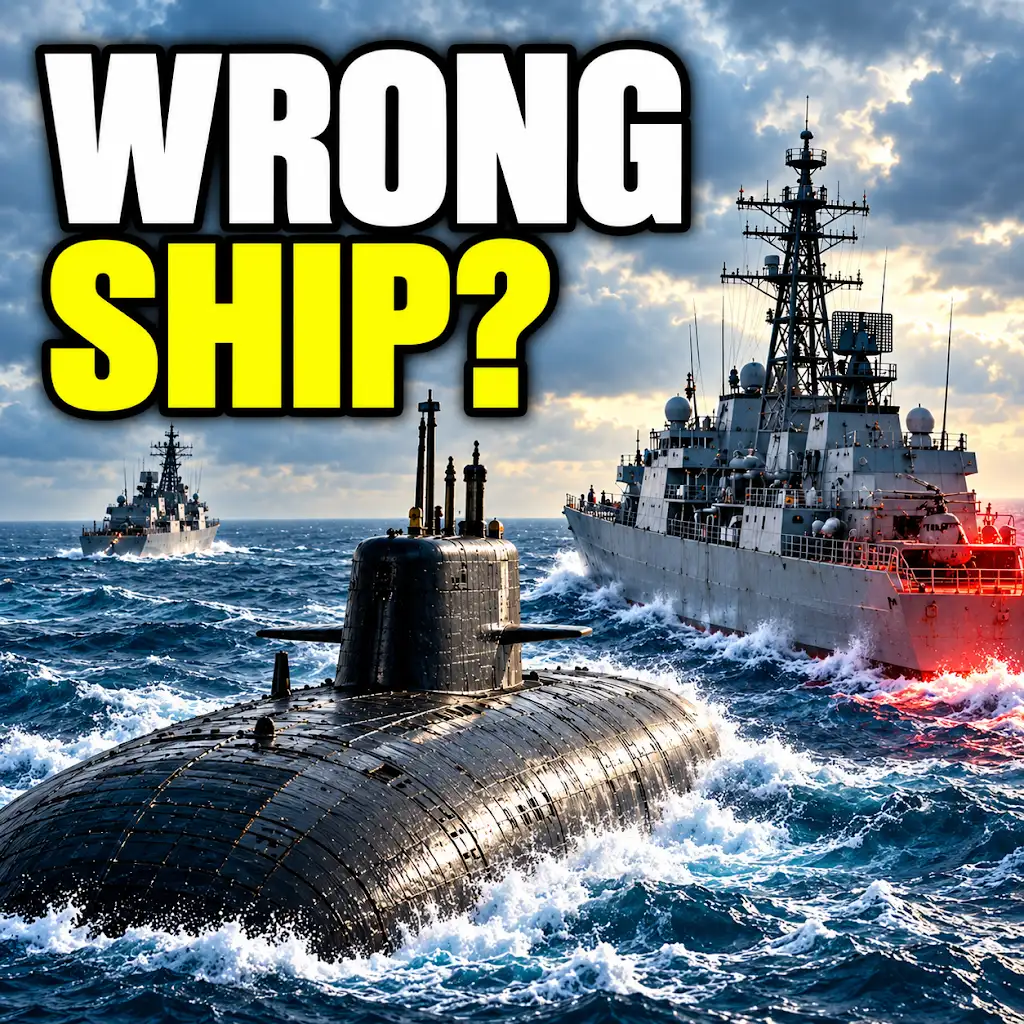
A Soviet Submarine Hit a U.S. Frigate. Was It the Wrong Ship?
FAQs
What happened during the USS Voge Soviet submarine collision?
The USS Voge collided with a Soviet submarine in the Barents Sea on October 3, 1986. The collision resulted in damage to the submarine’s sail and the Voge’s sonar dome.
Was there any loss of life during the USS Voge Soviet submarine collision?
Fortunately, there were no casualties reported as a result of the collision between the USS Voge and the Soviet submarine.
What was the response of the Soviet Union to the USS Voge collision?
Following the collision, the Soviet Union initially denied that any incident had occurred. However, they later acknowledged the collision and claimed that the USS Voge had violated Soviet territorial waters.
How did the United States respond to the USS Voge Soviet submarine collision?
The United States government confirmed the collision and stated that the USS Voge was operating in international waters at the time of the incident. They criticized the Soviet Union for not following proper maritime procedures.
What were the long-term implications of the USS Voge Soviet submarine collision?
The collision between the USS Voge and the Soviet submarine highlighted the tensions between the United States and the Soviet Union during the Cold War. It also raised concerns about the risks of naval operations in the Arctic region.