The Unlikely Architect of Allied Victory
History often focuses on the generals who strategized and the soldiers who fought. Yet, behind the thunder of cannons and the roar of aircraft, there are often quieter figures, whose actions, though less visible, were no less crucial. Such was the case with Juan Pujol Garcia, a Spanish double agent whose elaborate deceptions played a pivotal role in the success of the D-Day landings. Known to the British as “Garbo” and to the Germans as “Arabel,” Pujol was a master of his craft, a man whose very existence was a testament to the power of imagination and manipulation. His story is not one of brute force or military might, but of cunning intellect, audacious risk-taking, and an unwavering commitment to a cause he ultimately believed in, even if his initial motivations were more personal than patriotic.
Garcia’s journey to becoming a linchpin of Allied intelligence was as circuitous as his deceptions. A Spaniard of modest means, he harbored a deep-seated animosity towards both the Nazis and the Fascists, fueled by his experiences during the Spanish Civil War. Initially, his attempts to offer his services to the British Secret Intelligence Service (SIS) were met with dismissal. Undeterred, Garcia embarked on a self-styled campaign of espionage, creating a fabricated network of sub-agents and meticulously crafting a persona of a disgruntled but highly placed informant. This audacious move, born out of frustration and a desire to prove his worth, inadvertently paved the way for his eventual recruitment. He understood, perhaps more intuitively than the seasoned intelligence officers, that perceived value and the illusion of access were as potent as actual intelligence. His early self-initiated operations were a masterclass in reverse psychology, making himself indispensable by appearing so, even before being formally enlisted.
Juan Pujol Garcia, also known as “Garbo,” played a crucial role in the D-Day deception operations during World War II, providing the Allies with invaluable misinformation that misled the Germans about the timing and location of the Normandy invasion. His remarkable ability to craft believable narratives and manipulate intelligence reports significantly contributed to the success of Operation Overlord. For a deeper understanding of the strategic impact of deception in warfare, you can read a related article that explores various tactics used during this pivotal moment in history at this link.
Crafting a Web of Intrigue
The core of Juan Pujol Garcia’s success lay in his unparalleled ability to weave an intricate tapestry of disinformation. The Allied invasion of Normandy, codenamed Operation Overlord, was the most complex amphibious assault in history. Its success hinged on diverting German attention and resources away from the true landing sites. This is where Garcia, codenamed “Garbo” by the British, truly shone. He not only convinced the German Abwehr (military intelligence) of his loyalty but also constructed a vast, fictitious network of informants across Britain. These “agents” were entirely products of his fertile imagination, each with a distinct personality, background, and “intelligence” to offer. Garcia’s genius was in the detail, the consistency, and the sheer volume of his fabricated reports. He supplied the Germans with a steady stream of information, much of it accurate but subtly skewed, and crucially, reinforcing the German belief that the main Allied invasion would target the Pas-de-Calais, a shorter sea crossing from Britain.
The Art of the Fabricated Network
Garcia’s “agents” were his most formidable weapon. He invented fictional characters with elaborate backstories, each meticulously documented. He created “accounts” for them, detailing their supposed roles and the information they were privy to. Some were presented as disgruntled civil servants, others as sympathetic dockworkers, and still others as disillusioned military personnel. He even invented a fictitious Portuguese vice-consul in Gibraltar, through whom he purported to pass information, adding another layer of verisimilitude to his operations. This elaborate charade required an incredible amount of creative energy and meticulous record-keeping. He would send periodic “reports” from these imaginary individuals, detailing troop movements, equipment deliveries, and morale within the Allied forces. The Germans, desperate for information about Allied intentions, readily accepted these reports at face value. Garcia’s ability to maintain the illusion of a thriving espionage network was a testament to his deep understanding of human psychology and the desire to believe what one wants to believe.
The Significance of Pas-de-Calais
The strategic importance of the Pas-de-Calais region cannot be overstated in understanding Garcia’s deception. Geographically, it was the closest point in German-occupied France to Britain, making it the most logical and expected invasion site. The Germans had heavily fortified this area, anticipating an assault there. Garcia’s primary objective was to convince the German high command that the Allied invasion forces were massing in that region, drawing their strategic reserves and fortifications towards it. He fed them details about nonexistent landing craft being built in Dover, troop concentrations in Kent, and planned airborne assaults aimed at capturing key bridges in the Pas-de-Calais. The sheer volume and apparent detail of his reports made it incredibly difficult for the Germans to dismiss. They saw the intelligence as corroborating their own assessments and reinforcing their defensive strategies, unwittingly weakening other, more vulnerable sectors of the French coast.
The Double Agent’s Balancing Act
Operating as a double agent is a perilous endeavor, demanding an extraordinary level of control and adaptability. Juan Pujol Garcia navigated this tightrope with remarkable skill, constantly balancing the demands of his handlers on both sides. His relationship with the British SIS, particularly his handler Tomás Harris, was crucial. Harris recognized Garcia’s potential and provided him with the resources and guidance to perfect his deceptions. The British, in turn, carefully managed the information Garcia fed to the Germans, ensuring it aligned with their broader strategic objectives. This symbiotic relationship, built on mutual trust and shared objectives, allowed Garcia to execute his elaborate charade with unparalleled effectiveness. His ability to appear convincing to both sides, to understand their motivations and expectations, was the key to his success.
Collaboration with Tomás Harris
Tomás Harris, a Spanish expatriate and a seasoned intelligence officer, played an instrumental role in nurturing Garcia’s potential. Harris recognized the inherent risks and the extraordinary value of Garcia’s unique position. He provided Garcia with a steady stream of “intelligence” to feed to the Germans, often carefully crafted by British counter-intelligence to subtly mislead them. Harris also equipped Garcia with the means to conduct his operations, including funding for his fictitious agents and communication equipment. More importantly, Harris provided Garcia with a degree of legitimacy and support that allowed him to flourish. Their collaboration was a masterclass in intelligence tradecraft, where a complex web of misinformation was woven with meticulous precision, with each piece of fabricated intelligence designed to serve a specific strategic purpose. Harris acted as both a mentor and a gatekeeper, ensuring Garcia’s efforts were aligned with the Allied war aims.
The Illusion of Access and Loyalty
Garcia’s success was predicated on his ability to cultivate the illusion of being a valuable asset to the German Abwehr, while simultaneously being a trusted operative for the British. He learned to anticipate the questions the Germans would ask and to tailor his fabricated information accordingly. He understood that genuine-seeming frustration with Allied secrecy and a desire for recognition would make him more believable. He would occasionally “complain” about the British withholding crucial information, further solidifying his image as a dedicated informant seeking to provide the Germans with the best possible intelligence. This constant balancing act required immense psychological fortitude. He had to maintain the trust of both sides, never betraying the confidence of one to the other, all while aware of the severe consequences should his deception be exposed. His life was a constant performance, and the stakes were the highest imaginable.
The Grand Illusion: Operation Fortitude
The climax of Juan Pujol Garcia’s deceptions came with Operation Fortitude, the elaborate Allied plan to mislead the Germans about the timing and location of the D-Day landings. Garcia was central to Fortitude, creating the impression of a massive Allied army, commanded by the fictitious General Patton, poised to invade the Pas-de-Calais. He flooded the German intelligence channels with reports detailing the strength and intentions of this phantom army, effectively drawing crucial German forces away from Normandy. His fabricated reports played a significant role in convincing Hitler and his generals that the Pas-de-Calais was the primary threat, allowing the real invasion force to land on the beaches of Normandy with significantly less opposition than might otherwise have been the case. The success of D-Day, a turning point in the Second World War, owes a substantial debt to Garcia’s audacious and meticulously executed deception.
Creating the Phantom Army
The cornerstone of Operation Fortitude was the creation of a formidable, albeit entirely fictional, Allied army led by the highly respected General George S. Patton. Garcia’s task was to imbue this phantom army with a tangible presence in the minds of the German high command. He fabricated reports detailing its supposed size, equipment, and deployment. He described entire divisions, their designations, and their operational readiness. He even invented logistical preparations, such as fictitious embarkation points and training exercises. This “army” was presented as the main thrust of the Allied invasion, designed to draw the bulk of German reserves and attention away from Normandy. The sheer scale and detail of these fabrications were astonishing, requiring an immense creative effort to maintain consistency and plausibility over time. The Germans, by this stage, were eager to believe in a well-defined threat, and Garcia provided it in abundance.
The Impact on German Defenses
The success of Garcia’s deceptions had a profound impact on the German defensive posture. Believing that the Pas-de-Calais was the true target, the German high command concentrated a significant portion of their elite Panzer divisions in that region. This included the formidable II SS Panzer Corps, which was held back from Normandy and instead positioned to counter the expected invasion in the north. Furthermore, Hitler’s own apprehension about the Pas-de-Calais kept him from releasing strategic reserves that could have been deployed to reinforce the beaches of Normandy on D-Day. Garcia’s carefully crafted misinformation directly contributed to the Allies landing on beaches that were less heavily defended than they otherwise would have been. The “shadow” of Patton’s army, conjured by Garcia’s ingenuity, cast a long and decisive shadow over the real invasion.
Juan Pujol Garcia, famously known as “Garbo,” played a crucial role in the D-Day deception operations during World War II, helping to mislead the Nazis about the location of the Allied invasion. His remarkable ability to create a network of fictitious spies and relay false information significantly contributed to the success of the operation. For those interested in exploring more about the intricacies of deception in warfare, a related article can be found at In the War Room, which delves into various strategies employed throughout history to outsmart the enemy.
A Life of Double Identity and Disappearing Act
| Metric | Data |
|---|---|
| Full Name | Juan Pujol Garcia |
| Codename | Garbo |
| Role | Double Agent |
| Operation | D-Day Deception (Operation Fortitude) |
| Number of Fake Agents Controlled | 27 |
| Number of False Reports Sent | Approximately 500 |
| Impact on D-Day | Misled German forces about invasion location, contributing to Allied success |
| Recognition | Received Iron Cross from Germany and MBE from Britain |
After the war, Juan Pujol Garcia’s life took a fascinating turn. The sheer complexity of his double life and the risks he had taken meant that he could not simply fade back into obscurity. He was recognized for his invaluable contributions, receiving commendations from both British and American intelligence. However, the dangers he had courted meant that his continued safety was paramount. He was eventually granted a safe haven, a chance to disappear from the public eye and live a life free from the constant threat of exposure or retribution. His story, though remarkable, remained largely untold for decades, a testament to the clandestine nature of his work and the importance of secrecy in the world of espionage.
Post-War Recognition and Risks
Following the successful conclusion of the war, Juan Pujol Garcia was showered with accolades, though his recognition was largely kept under wraps due to the sensitive nature of his operations. He received the MBE from the British and was even considered for the Medal of Freedom by the Americans. However, the double life he had led, and the enemies he had undoubtedly made, meant that his safety was a constant concern. He had operated in the shadows for so long, convincing both sides of his loyalty, that the potential for retribution from those he had deceived was a genuine threat. The very success of his deceptions meant he had to be carefully managed, lest his enemies discover his true allegiance or his past activities.
The Disappearing Act and Legacy
Juan Pujol Garcia’s post-war life was characterized by a deliberate effort to disappear from the public eye. The immense stress and danger of his espionage career had taken their toll, and he sought a period of peace and anonymity. He was eventually allowed to relocate to Venezuela, where he lived out his remaining years under a different identity. His story, so crucial to the success of D-Day, remained largely unknown to the general public for decades. It was only through the diligent work of historians and biographers, piecing together declassified documents and conducting interviews, that the full extent of his remarkable achievements began to emerge. Juan Pujol Garcia, the unassuming Spanish garage owner, proved to be a pivotal figure in the Allied victory, a testament to the fact that sometimes, the most powerful weapons are not made of steel, but of imagination and deception. His legacy is not one of battlefield heroics, but of a singular triumph of intelligence and psychological warfare that helped to turn the tide of a global conflict.
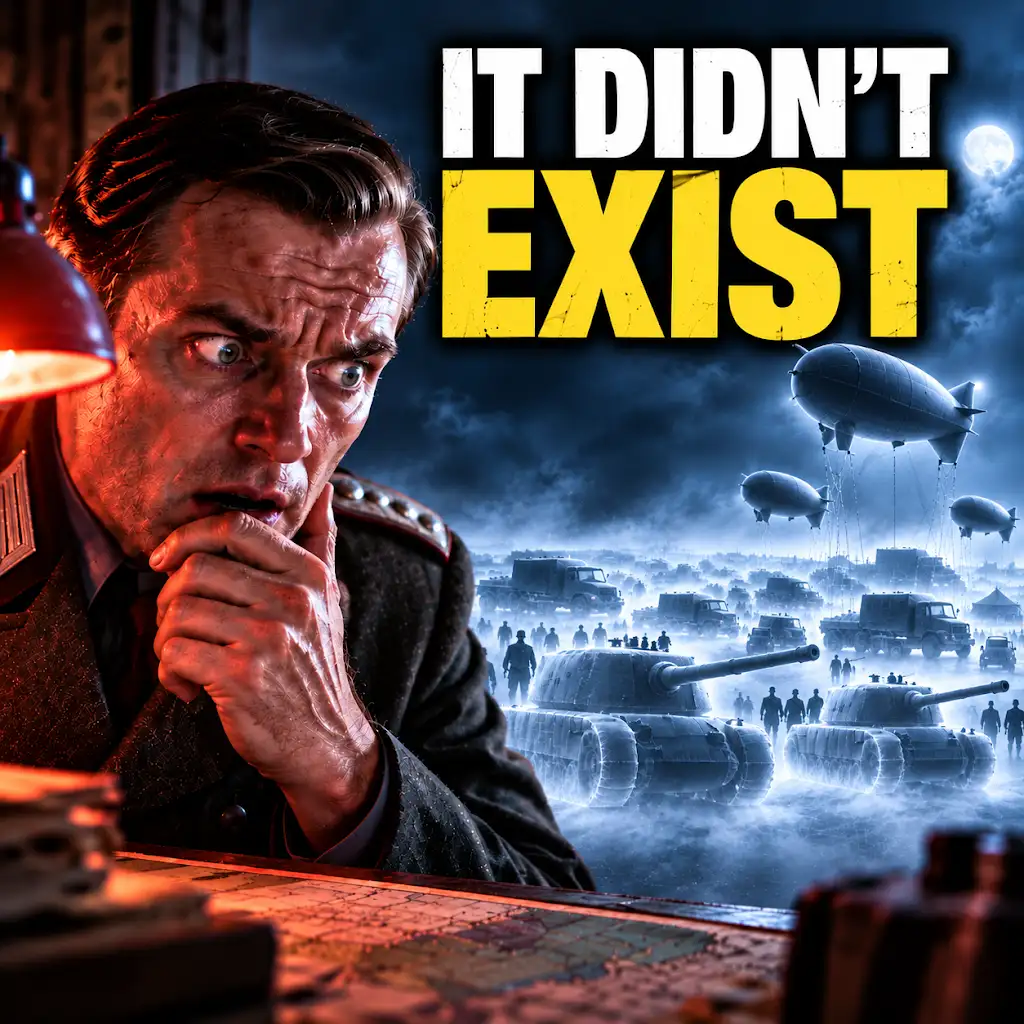
How the Allies Built an Army for Germany to Discover
FAQs
1. Who was Juan Pujol Garcia?
Juan Pujol Garcia, also known by his codename “Garbo,” was a Spanish double agent who played a crucial role in deceiving the Germans during World War II.
2. What was Juan Pujol Garcia’s role in the D-Day deception?
Juan Pujol Garcia fed false information to the Germans, convincing them that the Allied invasion of Normandy on D-Day would take place at Pas-de-Calais instead of the actual landing site of Normandy.
3. How did Juan Pujol Garcia manage to deceive the Germans?
Juan Pujol Garcia created a network of fictitious sub-agents and sent misleading reports to the Germans, using a combination of real and fabricated information to make his deception more convincing.
4. What impact did Juan Pujol Garcia’s deception have on D-Day?
Juan Pujol Garcia’s deception played a significant role in diverting German resources away from the actual landing site in Normandy, contributing to the success of the Allied invasion on D-Day.
5. What recognition did Juan Pujol Garcia receive for his efforts during World War II?
Juan Pujol Garcia was awarded the Member of the Order of the British Empire (MBE) by the British government for his contributions to the Allied war effort during World War II.