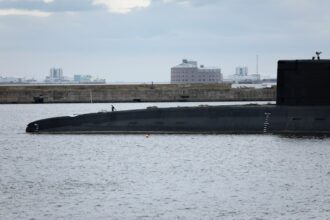
The United States Navy’s decision to scuttle the Imperial Japanese Navy’s I-400 class submarines at the end of World War II remains a controversial and fascinating subject. These colossal submarines, designed as “carrier submarines” capable of launching devastating aerial attacks, represented a significant technological leap and a potent threat. Their ultimate fate, however, was not to be a celebrated part of naval history, but a carefully orchestrated destruction, shrouded in secrecy and driven by complex geopolitical considerations. Understanding this decision requires delving into the strategic landscape of the war’s final months, the unique capabilities of the I-400s, and the burgeoning Cold War anxieties that began to shape the Allied powers’ post-war planning.
The Apex of Japanese Submarine Technology
The I-400 class submarines were, without question, the zenith of Japanese submarine design and engineering during World War II. Conceived as a response to the overwhelming air superiority of the United States, their primary purpose was to deliver a psychological and strategic blow by attacking targets far beyond the reach of conventional naval forces. The idea was audacious: equip submarines with aircraft, allowing them to project air power across vast oceanic distances. This concept was more than just theoretical; it was meticulously planned and executed.
Conception and Design Philosophy
The genesis of the I-400 class lay in the strategic imperative to strike at the heart of American power. Following devastating defeats in the Pacific, Japan’s naval strategists sought innovative ways to circumvent the U.S. Navy’s dominance. The concept of a “fleet submarine” capable of operating independently and engaging in offensive operations far from their home waters had already been explored. However, the I-400s pushed this concept to an unprecedented extreme. The core idea was to create a submersible aircraft carrier that could launch its strike aircraft against targets in the United States, such as the Panama Canal, or naval bases in the Pacific. This was not merely a defensive measure; it was a desperate gambit for strategic surprise and a means to inflict significant damage and sow terror.
The design itself was revolutionary. These were the largest submarines ever built up to that time, dwarfing their American contemporaries in sheer size and displacement. Their immense hull was designed to accommodate a specialized hangar, capable of housing three Aichi M6A1 “Seiran” (Mountain Cloud) floatplane bombers. These aircraft were also specially designed for their submarine carrier role, featuring folding wings and the ability to be launched and recovered with remarkable speed and efficiency. The submarines were equipped with a powerful catapult system for launching the Seirans, and a crane for recovering them after their missions, although recovery was considered a secondary and less reliable option. The sheer scale and complexity of the I-400s were a testament to the engineering prowess of the Japanese, even as their nation faced increasing hardship due to the Allied blockade and bombing campaigns.
The “Sen-Toku” Project: A Doomsday Weapon?
The I-400 class was code-named the “Sen-Toku” (Special Submarine) project. This moniker hinted at the clandestine and highly sensitive nature of its development. The project was initiated in 1942, and despite the immense challenges posed by wartime resource shortages and Allied bombing, the first submarine, I-400, was completed in September 1944. The I-401 followed in January 1945, and the I-402 in April 1945. A fourth submarine, I-404, was never completed. The secrecy surrounding the Sen-Toku project was so profound that even many within the Japanese Navy were unaware of its full capabilities and intended purpose.
The intended operational doctrine for the I-400s was as terrifying as it was innovative. They were envisioned as a spearhead force capable of projecting power deep into enemy territory. The most prominent and chillingly feasible target was the Panama Canal. By launching their Seiran bombers from waters off the coast of Central America, the I-400s could have inflicted catastrophic damage on this vital artery of global trade and military logistics. The psychological impact of such an attack, on American soil, would have been immense, potentially diverting crucial resources and morale. Other potential targets included San Diego, the home of the U.S. Pacific Fleet, or even cities on the West Coast of the United States. The potential for these submarines to carry out surprise attacks, undetected and unhindered by conventional defenses, made them a truly formidable, albeit belated, weapon in Japan’s arsenal. The sheer potential for disruption and terror lent the I-400s an almost mythical status, a “doomsday weapon” that, thankfully, never had the opportunity to unleash its full destructive potential.
The decision by the US Navy to sink the I-400, a Japanese submarine aircraft carrier from World War II, marked a significant moment in naval history. This action was taken to prevent the advanced technology of the I-400 from falling into enemy hands after the war. For more insights into this fascinating topic, you can read a related article that delves deeper into the implications of this decision and its historical context. Check it out here: related article.
The Grim Reality of War’s End
As the tide of World War II irrevocably turned against Japan, the strategic context in which the I-400s were conceived dissolved. By the time the submarines were operational, the Allied forces had achieved overwhelming air and sea superiority, and the Japanese homeland itself was facing imminent invasion. The audacious plans for striking American soil were rendered increasingly unrealistic by the sheer overwhelming might of the Allied war machine.
Operational Deployments and Missed Opportunities
Despite their advanced capabilities, the I-400 submarines never saw significant combat in their intended role. The operational constraints and the rapidly deteriorating strategic situation meant that their deployment became a matter of desperate improvisation rather than calculated offense. The I-400s were initially tasked with a mission to attack U.S. naval forces operating in the Western Pacific, particularly carriers. However, by the time they were ready, the Japanese carrier fleet had been largely annihilated, rendering such missions largely pointless.
The closest the I-400s came to a significant offensive operation was in the summer of 1945. A small force, comprising the I-400, I-401, and the cruiser Kikyo, was dispatched on a mission to attack the U.S. fleet refueling at Ulithi Atoll in the Caroline Islands. This was a desperate attempt to inflict damage and disrupt Allied operations. However, the mission was fraught with difficulties. The submarines were slow to deploy, and by the time they reached the vicinity of Ulithi, the U.S. fleet had already dispersed. Furthermore, the mission was complicated by the fact that their intended targets were no longer present. The submarines were recalled before any engagement could take place. The failure of this mission, more than anything, highlighted the futility of deploying these powerful assets in an already lost war. The strategic window for their unique capabilities had closed, leaving them as expensive and largely useless relics of a bygone era of naval warfare.
Surrender and the Dawn of a New Era
The unconditional surrender of Japan in August 1945 brought an abrupt end to the war and the operational life of the I-400 submarines. As part of the terms of surrender, all remaining Japanese naval vessels, including the I-400 class submarines, were to be turned over to Allied forces. This presented a unique logistical and strategic challenge for the victorious powers, particularly the United States, which was now grappling with the implications of the emerging Cold War.
The capture of these advanced submarines, with their revolutionary technology and immense size, immediately raised questions about their future. The U.S. Navy was keen to assess their capabilities and understand the full extent of Japanese naval innovation. However, the idea of incorporating such formidable Japanese assets into the U.S. Navy, or even allowing them to fall into the hands of the Soviet Union, was deeply problematic. This tension between scientific curiosity and geopolitical caution would ultimately lead to the decision to sink them. The war had ended, but the seeds of a new global conflict were already being sown, and the fate of these captured behemoths would be decided by the emerging power dynamics.
The Decision to Scuttle: A Strategic Enigma
The decision by the United States Navy to sink the captured I-400 class submarines, rather than study them or preserve them, has long been a source of debate and speculation. While the precise motivations remain somewhat opaque, a confluence of factors, including security concerns, technological secrecy, and the burgeoning geopolitical landscape of the post-war era, likely contributed to this drastic course of action. The immense size and unique capabilities of these submarines posed a significant dilemma for their captors.
Secrecy and the Fear of Soviet Acquisition
One of the primary drivers behind the decision to scuttle the I-400s was the paramount need for secrecy, particularly concerning the technologies they embodied. The submarines represented a significant advancement in submarine design and operational capabilities, and the United States was keen to maintain its technological edge, especially in the nascent stages of the Cold War. The fear that the Soviet Union, a burgeoning rival of the United States, might somehow gain access to this advanced Japanese technology was a significant concern.
The Soviet Union, having declared war on Japan in the final days of the conflict, was also present in the Pacific and was actively seeking to acquire Japanese naval assets. The presence of the I-400s, with their unique hangar and aircraft launching capabilities, represented a potentially significant technological prize. Allowing these submarines to fall into Soviet hands, or even to be studied by Soviet intelligence, was anathema to American strategic interests. The decision to sink them effectively removed any possibility of the Soviets acquiring this advanced technology. It was a preemptive strike against potential Soviet gains, ensuring that this particular facet of Japanese naval innovation remained exclusively within the American sphere of knowledge. The secrecy surrounding the I-400s during their operational life was mirrored in their demise, ensuring that their secrets would not be shared with a rival superpower.
The Burden of Study and Disposal
Beyond the immediate geopolitical concerns, the practicalities of dealing with such large and technologically complex vessels also played a role. The I-400 class submarines were enormous, requiring significant resources and specialized personnel for thorough study, dismantling, or even continued operation. The U.S. Navy already possessed a substantial fleet of its own submarines and was transitioning its focus to post-war development and training. The prospect of dedicating considerable time, money, and manpower to extensively study and potentially reverse-engineer these captured Japanese vessels may have seemed less appealing than simply eliminating the problem.
Furthermore, the logistical challenges of disposing of such large vessels were considerable. Sinking them, albeit in a controlled manner, offered a relatively swift and decisive solution. The process of transporting them to a secure location, disassembling them, or even attempting to integrate them into the U.S. Navy would have been a prolonged and resource-intensive undertaking. In the chaotic aftermath of a global war, with pressing reconstruction and reorientation needs, the simpler solution of scuttling offered a way to quickly remove these potentially problematic assets from the naval inventory. While there was undoubtedly scientific and strategic interest in the I-400s, the practical burdens of their disposition likely tipped the scales towards their destruction.
The Fate of the Sen-Toku: A Controlled Demise
The scuttling of the I-400 class submarines was not a haphazard act but a deliberate and carefully executed operation. The U.S. Navy took steps to ensure that the submarines were destroyed in a manner that prevented their salvage or discovery, further reinforcing the secrecy surrounding their fate. The location and methods of their sinking were chosen to ensure their permanent disappearance.
The Scuttling Operation
In February 1946, the captured I-400 and I-401 submarines were towed out to sea off the coast of Japan, in waters that were deep and remote. The exact locations were chosen to make future recovery extremely difficult, if not impossible. The submarines were then deliberately sunk. While the exact methods employed for each submarine may have varied slightly, the general principle involved scuttling charges or simply allowing them to sink due to being intentionally breached. The goal was to ensure that they went to the bottom of the ocean, taking their secrets with them.
The I-402, which had been converted into a transport submarine, was sunk in a similar fashion off the coast of Nagasaki on April 11, 1946. The aim was to erase all physical evidence of these remarkable, and potentially dangerous, Japanese warships. The operation was conducted with a high degree of discretion, reflecting the ongoing sensitivity surrounding their technology and the emerging geopolitical climate. The sinking of these submarines marked a definitive end to their operational existence, and effectively to any chance of the Soviet Union or other potential adversaries gaining access to their advanced design.
The Silent Depths and Later Rediscovery
For decades, the I-400 class submarines lay forgotten on the ocean floor, their secrets preserved by the crushing depths. However, the relentless march of technological advancement in underwater exploration would eventually lead to their rediscovery. In 2005, a team of marine archaeologists and researchers, utilizing advanced sonar and remotely operated vehicles (ROVs), located the wreckage of the I-401 off the coast of Oahu, Hawaii. Later, the I-400 was also found in the same general area.
The discovery of these wrecks was a significant event, offering a tangible link to a unique chapter in naval history. The detailed examination of the wrecks provided invaluable insights into the design, construction, and operational capabilities of these extraordinary submarines. It allowed historians and engineers to finally appreciate the full scope of the “Sen-Toku” project and to understand why they were considered such a formidable threat. The rediscovery also brought renewed attention to the decision to scuttle them, fueling further debate about whether their potential technological value was lost to the depths, or whether the security imperative of the time justified their destruction. The silent depths had preserved the physical remains, but the historical debate surrounding their demise continues.
The decision by the US Navy to sink the I-400, a Japanese submarine aircraft carrier from World War II, marked a significant moment in naval history. This action was not just a demonstration of military power but also a strategic move to prevent the technology from falling into enemy hands. For those interested in exploring more about the implications of such military decisions, you can read a detailed analysis in this related article on naval warfare. The article provides insights into the broader context of the war and the technological advancements of that era. You can find it here: naval warfare.
Legacy and Lingering Questions
| Metric | Details |
|---|---|
| Submarine Name | I-400 |
| Type | Sentoku-class (I-400 class) submarine |
| Displacement | 5,900 tons (surfaced), 6,500 tons (submerged) |
| Length | 122 meters (400 feet) |
| Armament | 3 Seaplanes, torpedoes, deck gun |
| Purpose | Carrying and launching aircraft for surprise attacks |
| Date Sunk by US Navy | April 1946 |
| Reason for Sinking | Prevent technology from falling into Soviet hands |
| Location of Sinking | Near Hawaiian Islands, Pacific Ocean |
| Method of Sinking | Towed out and scuttled by US Navy ships |
The decision to sink the I-400 class submarines continues to resonate in naval history and strategic studies. It represents a complex interplay of technological innovation, wartime exigency, and the emergent geopolitical realities of the post-war world. While the immediate reasons for their scuttling are understood through the lens of Cold War anxieties, lingering questions and alternative perspectives persist.
The “What Ifs” of Naval History
The fate of the I-400s inevitably prompts contemplation of the “what ifs” that permeate military history. Had these submarines been deployed earlier in the war, or under different circumstances, what impact might they have had? Their capacity to launch aircraft against targets within the United States, while perhaps not decisive in the overall war, could have inflicted significant psychological and logistical damage. The Panama Canal attack, in particular, remains a chillingly plausible scenario that was thwarted not by naval interception, but by the rapid collapse of Japanese offensive capabilities.
The decision to sink them also raises questions about the potential benefits that were foregone. The advanced engineering and unique operational concepts embodied in the I-400s represented a significant achievement. Could studying them have provided the U.S. Navy with valuable lessons that might have accelerated its own submarine development or strategic thinking? The fear of Soviet acquisition, while understandable, also meant that a unique repository of Japanese technological prowess was deliberately destroyed, rather than being carefully analyzed and potentially adapted. The strategic calculus of the time prioritized immediate security over long-term scientific or strategic gains, a choice that highlights the harsh realities of international relations during periods of intense rivalry.
A Cautionary Tale of Technological Superiority and Geopolitical Strategy
The story of the I-400 class submarines serves as a potent cautionary tale. It underscores the fact that technological superiority, while a crucial factor in warfare, is not always decisive. The effectiveness of a weapon system is intrinsically linked to its strategic context, its timing, and the broader geopolitical landscape. The I-400s were conceived in a period of Japanese naval dominance but ultimately became operational when that dominance had evaporated.
Furthermore, their fate highlights the profound influence of geopolitical strategy on military decisions. The burgeoning Cold War cast a long shadow over the post-war world, and the desire to deny potential adversaries access to advanced technology often superseded other considerations. The decision to scuttle the I-400s, while perhaps pragmatic from a security perspective at the time, also represents a missed opportunity for scientific and historical understanding. It serves as a stark reminder that the pursuit of immediate strategic advantage can sometimes come at the cost of broader knowledge and potential future benefits. The silent depths now hold the physical remnants of these extraordinary submarines, but the questions surrounding their demise, and the strategic choices that led to it, continue to echo through the annals of naval history.
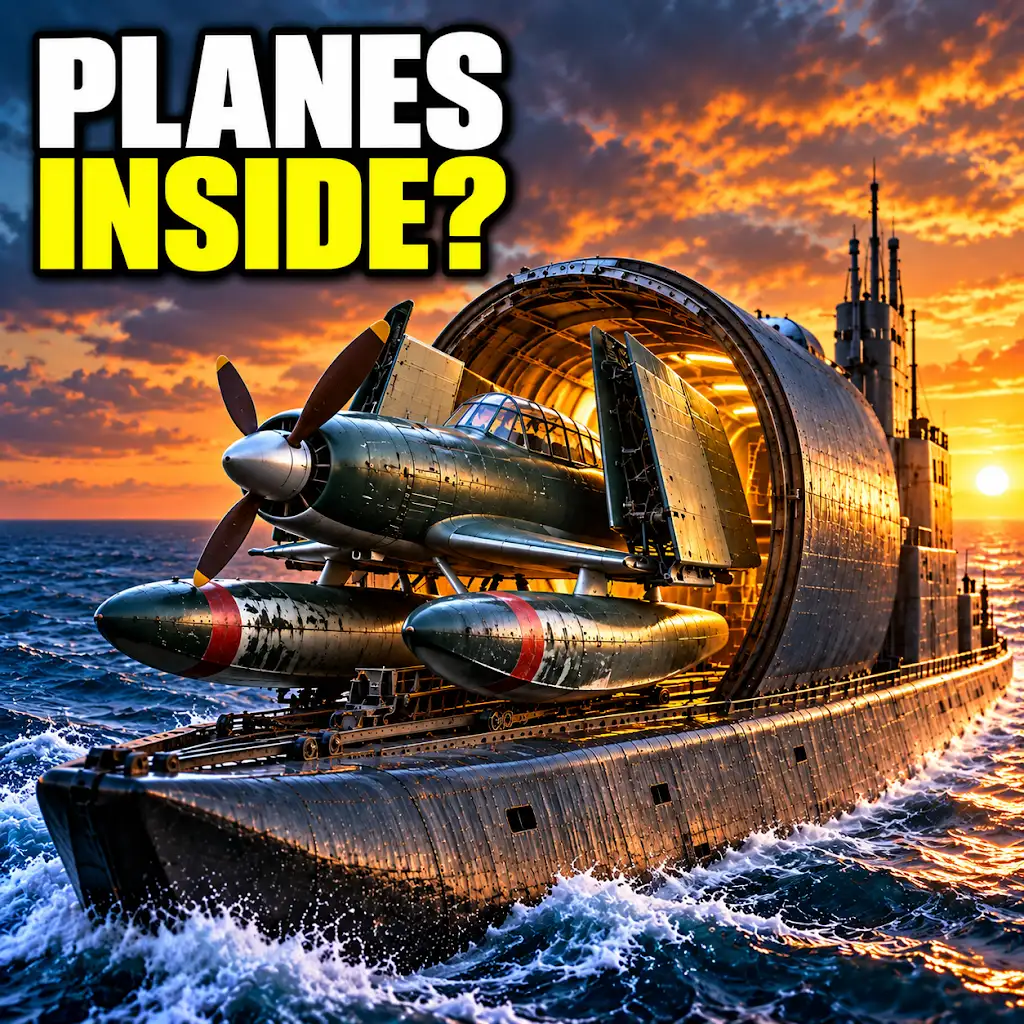
Japan Built a Submarine That Could Launch Three Planes
FAQs
What is the I-400 submarine?
The I-400 submarine was a large Japanese submarine used during World War II, known for its ability to carry and launch aircraft.
Why did the US Navy decide to sink the I-400 submarine?
The US Navy decided to sink the I-400 submarine after capturing it at the end of World War II to prevent its advanced technology from falling into the hands of other countries.
How was the I-400 submarine sunk by the US Navy?
The US Navy sank the I-400 submarine off the coast of Hawaii in 1946 by using it as target practice for torpedo bombers and surface ships.
What impact did sinking the I-400 submarine have on naval warfare?
The sinking of the I-400 submarine by the US Navy demonstrated the importance of preventing advanced military technology from being used by potential adversaries, influencing future strategies in naval warfare.
Are there any remnants of the I-400 submarine that can be visited today?
No, there are no known remnants of the I-400 submarine that can be visited today as it was intentionally sunk and remains at the bottom of the ocean.