The salt spray stung the faces of the American sailors as their destroyer, the USS Ward, churned through the dark waters. It was a routine patrol, a constant game of cat and mouse with the elusive Japanese fleet, a fleet whose submarines, the silent predators of the Pacific, had inflicted untold damage on Allied shipping. But this day, the script was about to change. In a stunning display of naval prowess and sheer luck, the Ward had stumbled upon something far more significant than a routine sighting: the I-400, the crown jewel of the Imperial Japanese Navy’s submarine fleet, a vessel so advanced, so strategically potent, that its capture would represent a monumental victory for the United States.
The Genesis of the I-400: A Technological Marvel
The genesis of the I-400 class of submarines lay in Japan’s desperate strategic calculations as the tide of war turned against them in the Pacific. The United States, with its seemingly inexhaustible industrial might and increasingly powerful naval presence, presented an insurmountable challenge. Traditional submarine warfare, while effective, was not enough to cripple the American war machine. The Imperial Japanese Navy sought a weapon that could project power directly onto the American homeland, striking at its very heart and forcing a capitulation. This ambition gave birth to the concept of the Sen Toku (Special Submarine), a vessel designed to carry and launch aircraft capable of bombing American cities.
Design Philosophy: Air Power Beneath the Waves
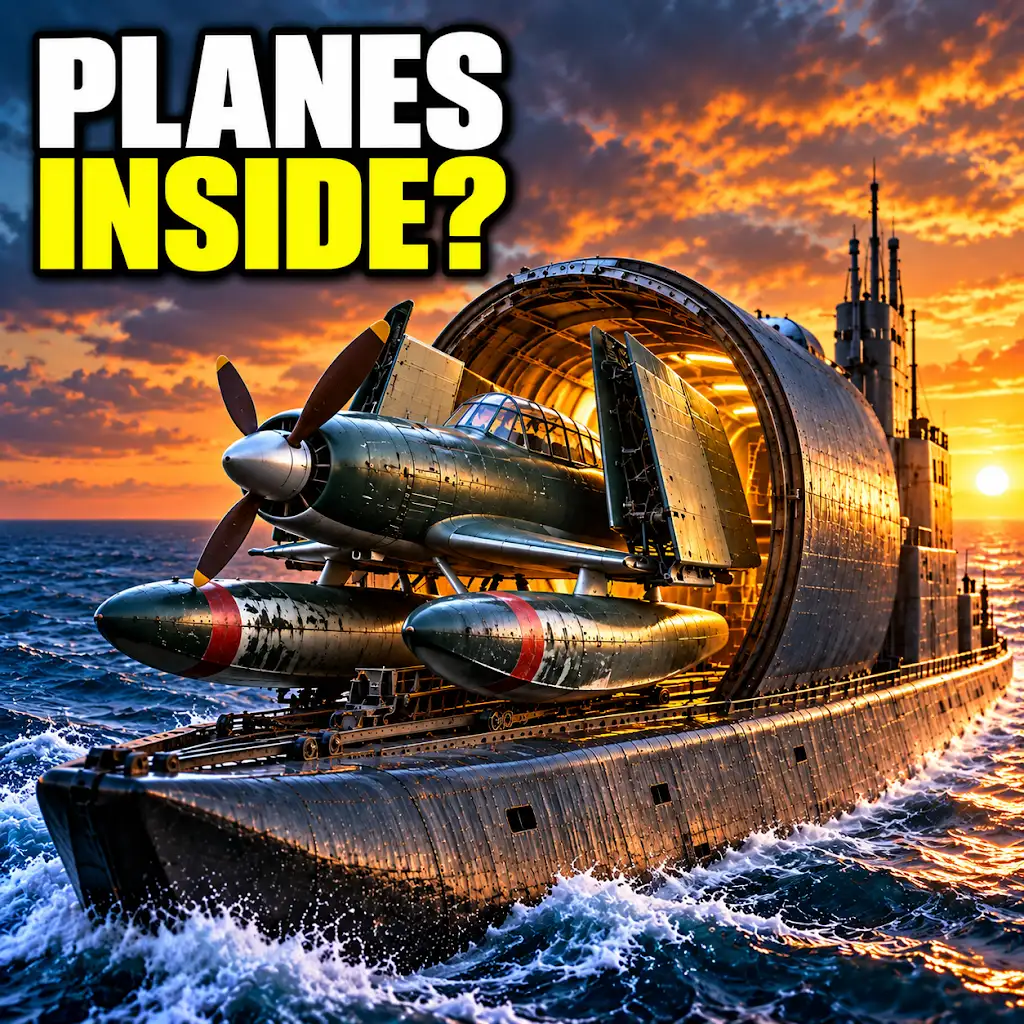
The design of the I-400 was a radical departure from conventional submarine thinking. It was conceived not merely as a submersible warship but as a mobile aircraft carrier, a veritable floating airbase that could operate far from Japanese shores. The primary goal was to deliver a devastating blow to targets such as the Panama Canal, a vital artery for American logistics and troop movement, or even the West Coast cities themselves. To achieve this, the submarines were designed with immense size, dwarfing all previous submarine classes, and equipped with a unique hangar capable of housing three Yokosuka MXY7 Ohka kamikaze planes or, more conventionally, three reconnaissance or attack aircraft like the Aichi E16A ‘Zuiun’.
Unprecedented Scale and Capabilities
The sheer scale of the I-400 was unprecedented. At over 400 feet long, they were larger than many destroyers and possessed a submerged displacement of over 6,500 tons. This gargantuan size allowed for the extensive modifications required to support their aerial mission. A retractable hangar, running along the length of the pressure hull, was the most striking feature. A large catapult system was mounted on the forward deck, enabling the rapid launch of aircraft. To facilitate rapid rearming and relaunching, a crane was also integrated into the design. Furthermore, the I-400 was equipped with advanced features for its time, including a powerful diesel-electric propulsion system that gave it considerable range and speed, both on the surface and submerged. These submarines were also armed with a formidable array of torpedoes and deck guns, making them a threat even without their aerial contingent. Their robust construction and innovative design made them a formidable and deeply concerning prospect for Allied strategists.
The capture of Japan’s most advanced submarine during World War II marked a significant turning point in naval warfare, showcasing the ingenuity and determination of U.S. forces. This event is explored in detail in a related article that delves into the strategic implications and technological advancements that arose from this capture. For more insights on this fascinating topic, you can read the full article at In The War Room.
The Strategic Imperative: Why the I-400 Mattered
The I-400 class represented more than just a technological leap; it embodied a desperate gamble by Japan to regain the strategic initiative. As the war progressed, it became increasingly clear that Japan was losing the war of attrition. Their naval fleet had been decimated in a series of devastating battles, and their industrial capacity could not match that of the United States. In such a dire situation, the I-400 offered a potential asymmetric advantage, a way to strike at the enemy’s soft underbelly and inflict psychological and strategic damage that could alter the course of the war.
The Panama Canal: A Prime Target
The most well-documented and arguably the most strategically significant target for the I-400 submarines was the Panama Canal. This man-made waterway was the lifeline of the American war effort in the Pacific, allowing for the rapid transit of warships, troop transports, and vital supplies between the Atlantic and Pacific Oceans. A successful attack on the canal, even a minor disruption, could have had catastrophic consequences, severing this crucial link and significantly prolonging the war. The idea of a submarine-launched aerial bombardment of the canal’s locks, designed to disable or destroy them, was a chilling prospect that kept Allied planners awake at night. The I-400s were equipped with specially designed torpedoes that could be launched from aircraft for this precise purpose, a testament to the seriousness with which this threat was considered.
Psychological Warfare and Home Front Disruption
Beyond the tangible strategic implications, the I-400 class was also envisioned as a powerful tool of psychological warfare. The mere possibility of Japanese aircraft operating from submarines and attacking American soil would have had a profound impact on the morale of the civilian population. It would have shattered the perception of invincibility that the United States had cultivated and brought the brutal realities of the war directly to American homes. Imagine the panic and fear that would have ensued if news reports spoke of kamikaze planes launched from beneath the waves striking cities like Los Angeles or San Francisco. This element of terror, combined with the potential for industrial sabotage and disruption, made the I-400s a multi-faceted threat that transcended conventional naval warfare.
The Hunt and Capture: A Turning Point at Sea
The fate of the I-400 class was ultimately sealed not by its devastating potential, but by the relentless pursuit and superior intelligence of the Allied forces. As the war drew to a close, the Japanese launched their final desperate gambit with the I-400s, but the veil of secrecy surrounding these advanced submarines was beginning to lift. The capture of one of these formidable vessels would prove to be a watershed moment, providing invaluable intelligence and a significant boost to Allied morale.
The Final Mission and Unforeseen Circumstances
The I-400 submarines were never fully deployed in their intended strategic role. By the time they were operational, the strategic landscape had shifted dramatically. Japan’s naval power was crippled, and the American mainland was increasingly well-defended. The planned attacks on the Panama Canal and other targets were ultimately deemed too risky or strategically unfeasible given the overwhelming American naval superiority. Instead, the remaining I-400 submarines were repurposed for reconnaissance missions and the deployment of smaller attack aircraft. One such vessel, the I-401, along with its sister ships, was ordered to conduct a reconnaissance mission of the American fleet and then proceed to Japan to await further orders. However, the war ended before these orders could be fully executed.
The Encounter with the USS Ward and Subsequent Capture
It was during this period of fading conflict that the USS Ward, a veteran destroyer, made its pivotal discovery. On August 27, 1945, just days after Japan’s formal surrender, the Ward encountered a large submarine operating in its patrol area off the coast of Japan. This was no ordinary submarine; its size and configuration were unlike anything the crew had previously encountered. Through skillful maneuvering and the application of overwhelming force, the Ward compelled the submarine to surface. To the astonishment of the American sailors, they had cornered the I-401, one of the most advanced and feared submarines ever built by the Japanese. The surrender of the I-401 was a significant event, a tangible symbol of Japan’s defeat and a crucial intelligence coup for the United States. The capture was not a violent confrontation in the traditional sense but a display of naval dominance that forced the surrender of the formidable vessel and its crew.
The Prize of Intelligence: Unveiling Japanese Secrets
The capture of the I-401 and its sister submarines was a treasure trove of intelligence for the United States. The advanced technology and innovative design of these vessels offered a unique window into the capabilities and strategic thinking of the Imperial Japanese Navy. The information gleaned from these captured submarines would have far-reaching implications for the development of future naval technologies and strategies.
Technological Insights and Design Revelations
American naval engineers and intelligence officers immediately descended upon the captured I-400 class submarines. They meticulously studied every aspect of the vessels, from their advanced hull design and propulsion systems to their sophisticated navigation and communication equipment. The hangar, catapult, and crane mechanisms were of particular interest, offering insights into Japan’s ambition to integrate air power with submarine warfare. The construction techniques, the materials used, and the overall engineering philosophy provided valuable lessons for American naval architects and engineers. The sheer size and operational capabilities of these submarines challenged existing assumptions about what was possible in submarine design.
Operational Doctrine and Strategic Intent
Beyond the hardware, the captured submarines also provided invaluable intelligence regarding Japanese operational doctrine and strategic intent. Documents, charts, and logbooks revealed the intended targets, operational ranges, and tactical approaches of the I-400 class. The detailed plans for attacking the Panama Canal, while ultimately thwarted, offered critical insights into Japan’s most pressing strategic objectives and their willingness to undertake high-risk, high-reward operations. This intelligence helped the United States to better understand the enemy’s mindset and anticipate future threats, even as the war was winding down. The understanding of their capacity for such ambitious and unconventional warfare proved crucial in shaping post-war military planning and defense strategies.
In a remarkable turn of events during World War II, the United States successfully captured Japan’s most advanced submarine, which significantly altered the dynamics of naval warfare in the Pacific. This operation not only provided the U.S. with valuable intelligence but also showcased the strategic importance of submarine technology in modern combat. For those interested in exploring more about this fascinating topic, you can read a related article that delves deeper into the intricacies of submarine warfare and its impact on the war by following this link.
A Strategic Victory’s Lasting Impact
| Metric | Details |
|---|---|
| Submarine Name | I-400 |
| Type | Sentoku-class (largest submarine aircraft carrier) |
| Length | 122 meters (400 feet) |
| Displacement | 5,900 tons (surfaced) |
| Aircraft Capacity | 3 Seaplanes (Aichi M6A) |
| Capture Date | August 1945 |
| Location of Capture | Near the coast of Hawaii |
| US Navy Operation | Operation Road’s End |
| Significance | Largest submarine of WWII; advanced technology including aircraft launch capability |
| Outcome | Submarine was studied by US Navy and later scuttled to prevent Soviet acquisition |
The capture of the I-400 class submarines, while occurring