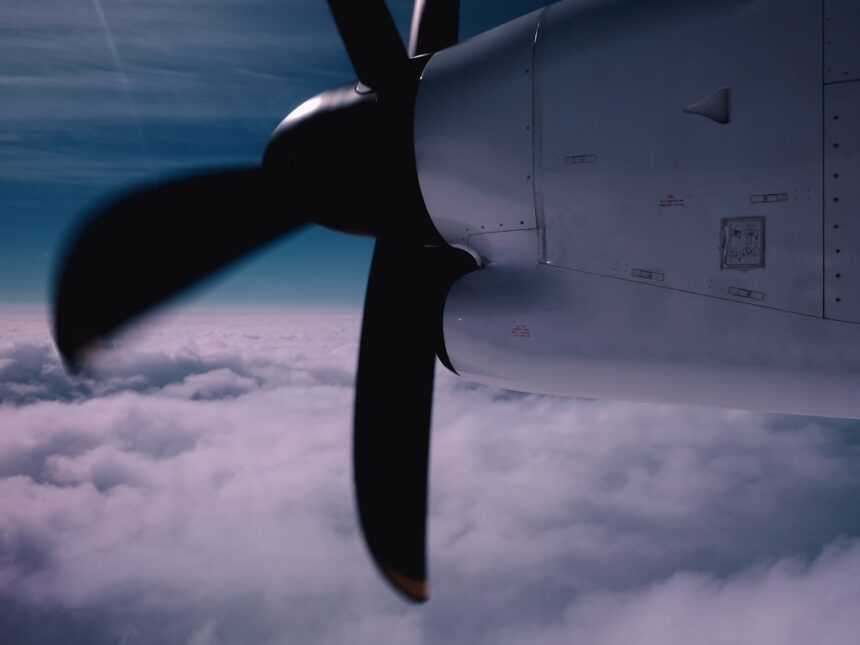
The whisper of a propeller, once a mere hum, has evolved into a near-imperceptible sigh in the world of aviation and beyond. This dramatic reduction in noise is not an accident of engineering but a testament to a deep understanding and manipulation of fundamental physics. Unveiling the physics behind silent propellers requires a dive into the intricate dance between aerodynamics, acoustics, and advanced material science. It is a journey that transforms the once-brash roar of rotating blades into a subtle breeze, allowing for applications once constrained by noise pollution.
The inherent noisiness of a propeller originates from the very principles that allow it to generate thrust. As a propeller blade rotates, it acts as a high-speed airfoil, interacting with the surrounding air. This interaction is a complex phenomenon, and the noise it produces can be broadly categorized into two primary sources: aerodynamic noise and mechanical noise.
Aerodynamic Noise: The Air’s Resignation
The lion’s share of propeller noise emanates from the aerodynamic interaction between the rotating blades and the air. This is not a single, monolithic sound but a cacophony of distinct acoustic events.
Broadband Noise: The Whispers of Disruption
At the heart of aerodynamic noise lies broadband noise. This type of noise is characterized by its wide frequency spectrum, lacking any distinct tonal components. It arises from the inherent unsteadiness of airflow as the propeller blades cut through the atmosphere.
Turbulence Interaction Noise: The constant churn of air molecules against the propeller surface, particularly along the leading and trailing edges, generates small-scale eddies and vortices. These turbulent structures, like tiny agitated waves on a pond, radiate sound as they dissipate. The faster the propeller spins, the more energetic these eddies become, amplifying the broadband noise.
Loading Noise: As the propeller blade generates lift, which is the force that propels an aircraft forward, it also creates pressure differentials across its surface. The rapid changes in air pressure as air flows over the blade, especially near the tips, contribute to broadband noise. Imagine squeezing a balloon too quickly – the sudden release of air generates a hiss. Similarly, these pressure fluctuations radiate sound waves.
Inflow Turbulence Noise: Even if the propeller blades themselves are perfectly smooth, the air entering the propeller disc (the area swept by the blades) is rarely perfectly still. Any atmospheric turbulence, or turbulence generated by upstream components like the aircraft fuselage or engine, is ingested by the propeller. This incoming turbulence acts as a disturbance, exciting the blades and generating acoustic radiation.
Tonal Noise: The Harmonic Growl
In contrast to broadband noise, tonal noise consists of distinct, pure tones at specific frequencies. These frequencies are often directly related to the rotational speed of the propeller.
Blade Passing Frequency (BPF): This is the most significant source of tonal noise. Every time a propeller blade passes a fixed point in space, it creates a pressure pulse. The frequency of these pulses is directly proportional to the propeller’s rotational speed and the number of blades. Think of a metronome – each click is a discrete event, and the speed of the clicks determines the pitch. For a propeller, each “click” is a blade passing by, and the faster it rotates, the higher the pitch of the tonal noise.
Harmonics of BPF: The BPF is rarely the only tonal component. Due to the complex nature of the pressure waves generated by the blades, harmonics – integer multiples of the BPF – are also often present, contributing to a richer, more complex tonal sound.
Rotor-Stator Interaction Noise: In some applications, particularly in turbomachinery like jet engines, propellers or fans are followed by stationary vanes (stators). As the rotating blades pass these stationary vanes, a strong interaction occurs, generating distinct tones at frequencies related to both the blade passing frequency and the number of stator vanes. This is akin to a drum being struck by a series of hammers – the pattern of strikes creates a rhythmic sound.
Mechanical Noise: The Machine’s Complaining
While aerodynamic noise dominates, mechanical noise also plays a role, albeit often a smaller one in modern, well-designed propellers.
Gearbox Noise: If the propeller is driven by a gearbox, the meshing of gears can produce whine or grinding sounds. The precision of the gear manufacturing and lubrication are critical in minimizing this source of noise.
Bearing Noise: The bearings that support the rotating propeller shaft are another potential source of mechanical noise, especially if they are worn or improperly lubricated.
Engine Vibration: Vibrations transmitted from the engine to the propeller mounting can also induce acoustic radiation.
Silent propellers operate on the principles of fluid dynamics and acoustic engineering, allowing for reduced noise levels while maintaining efficiency. For a deeper understanding of the physics behind silent propellers and their applications in various fields, you can explore a related article on this topic at In the War Room. This resource provides insights into the design and functionality of these innovative propellers, highlighting their significance in both military and civilian contexts.
The Physics of Quiet: Principles of Noise Reduction
The pursuit of silent propellers is not about eliminating sound entirely, which is physically impossible for a device designed to move air, but about intelligently reducing its intensity and shifting its characteristics to less perceptible frequencies. This involves a multifaceted approach grounded in a deep understanding of the physics of sound generation and propagation.
Aerodynamic Shaping: Sculpting the Silent Flow
The fundamental principle here is to manipulate the airflow around the propeller blades in a way that minimizes turbulence and pressure fluctuations. This is akin to designing a stealth bomber’s wings to deflect radar waves – here, the goal is to deflect sound waves or prevent their formation in the first place.
Blade Planform and Airfoil Design: The shape of the propeller blades themselves is paramount.
Blade Twist: Propeller blades are not flat. They are twisted from root to tip. This twist is crucial for optimizing the angle of attack of each section of the blade at different radii. A carefully designed twist ensures that each section operates at an efficient angle, minimizing the generation of undesirable vortices and associated noise. Imagine a screw – the threads are angled to efficiently bite into a material. Similarly, propeller twist optimizes the angle the blade presents to the air along its span.
Trailing Edge Design: The trailing edge of the blade is a primary source of turbulence and noise. Smoother, more aerodynamically refined trailing edges, often featuring serrations or specialized shapes, can significantly reduce the shedding of vortices and thus broadband noise. These subtle contours are like carefully honed chisel marks, directing the airflow with precision.
Leading Edge Design: Similarly, the leading edge’s interaction with the incoming air influences noise. Rounded or specifically profiled leading edges can reduce the intensity of turbulence generated upon entry.
Tip Speed Management: The tips of propeller blades move at the highest speeds. This speed is a direct driver of noise, particularly broadband noise generated by tip vortices.
Reducing Tip Mach Number: Keeping the tip speed below the speed of sound is crucial. As tip speeds approach and exceed the speed of sound, significant increases in noise occur due to shock wave formation and intense turbulence. Propeller designers meticulously manage the tip speed to stay within desirable acoustic limits.
Wingtip Vortices Mitigation: The strong vortices that form at the blade tips are a significant noise generator. Advanced designs incorporate features to weaken or diffuse these vortices before they can radiate noise effectively. This is akin to adding breakwaters to a harbor to reduce the impact of large waves.
Acoustic Treatments: The Damping Hand
Beyond shaping the blades, acoustic treatments can be applied to the propeller itself or its surroundings to absorb or redirect sound waves.
Blade Surface Treatments: Some advanced propellers incorporate specialized surface treatments or coatings that can absorb or scatter sound waves.
Porous Materials: While not common on propellers due to structural requirements, the principle of using porous materials to absorb sound is a well-established acoustic treatment.
Surface Texturing: Micro-texturing or specific surface geometries can alter the way air flows over the blade, influencing the acoustics. These tiny engineered features act like an anechoic chamber on a microscopic level.
Passive Noise Control: This involves incorporating features into the propeller design that inherently reduce noise without active intervention.
Tip Modifications: Winglets or other specialized tip designs, borrowed from aircraft wing technology, can help to diffuse tip vortices, thereby reducing noise.
Silent propellers operate on principles of fluid dynamics and advanced engineering to minimize noise while maximizing efficiency. For a deeper understanding of the physics behind these innovative designs, you can explore a related article that delves into the mechanics of sound reduction in marine technology. This resource provides valuable insights into how these propellers achieve their remarkable performance. You can find it here.
Active Noise Control: The Counter-Attack
A more sophisticated approach involves actively counteracting the generated noise using sound waves. This technology, while more complex, offers the potential for significant noise reduction.
Phase Inversion: The principle behind active noise control is to generate sound waves that are precisely out of phase with the “unwanted” noise. When these two sets of waves meet, they cancel each other out, a phenomenon known as destructive interference. This is like two ripples on water meeting in such a way that they flatten out.
Sensors and Actuators: Active noise control systems typically employ microphones to detect the propeller noise and then use loudspeakers or specialized actuators embedded within the propeller blades to generate the counteracting sound waves.
Adaptive Systems: The challenge lies in the rapidly changing acoustic environment of a rotating propeller. Advanced systems must be adaptive, constantly monitoring and adjusting the counter-sound waves in real-time to maintain effective cancellation.
Propeller Design for Reduced Noise: A Balancing Act of Forces

The creation of a silent propeller is not merely an academic exercise in fluid dynamics and acoustics; it is a profound engineering challenge that demands a delicate balancing of multiple, often competing, requirements. The physics of noise reduction must be woven into the very fabric of the propeller’s design, influencing everything from its shape and material to its operational parameters.
Structural Integrity and Weight: The Unseen Foundation
A silent propeller is ultimately a functional propeller. Its primary role is to generate thrust efficiently without failing. This necessitates considerations of structural integrity and weight, which are intrinsically linked to the physics of materials and mechanics.
Material Selection: The choice of materials plays a crucial role in both strength and acoustic properties.
Composites: Advanced composite materials, such as carbon fiber reinforced polymers, are widely used. They offer high strength-to-weight ratios and can be molded into complex aerodynamic shapes. Their inherent damping properties can also contribute to noise reduction by absorbing vibrations. These materials are like a finely woven chainmail, strong yet flexible.
Aluminum Alloys: While still used in some applications, traditional aluminum alloys may offer less flexibility in terms of complex shaping and damping compared to composites.
Flexibility and Stiffness: The stiffness of the propeller blade influences its vibration modes. Blades that are too flexible can flutter and generate noise, while overly stiff blades may be heavier. The design must strike a balance for optimal aerodynamic performance and minimal acoustic signature.
Blade Thickness and Spar Design: The internal structure of the blade, including the distribution of material and the design of load-bearing spars, directly impacts its strength and stiffness. Optimizing these elements is crucial for ensuring the blade can withstand the immense forces it experiences without deforming in ways that generate excessive noise.
Aerodynamic Efficiency and Noise: The Constant Negotiation
The pursuit of noise reduction must not come at the expense of aerodynamic efficiency, which is the propeller’s ability to convert rotational power into useful thrust. These two objectives are often in a perpetual tug-of-war.
The Trade-off: Generally, aggressive aerodynamic designs aimed at maximizing thrust can also be inherently noisier. Minimizing turbulence and sharp edges, which are beneficial for noise reduction, might slightly compromise peak efficiency in certain operating regimes.
Angle of Attack Optimization: The angle at which the air strikes the blade, the angle of attack, is critical for both thrust generation and noise. Operating at angles that are too high can lead to flow separation and stall, generating significant turbulence and noise.
Blade Loading: The amount of force a blade is designed to handle, known as blade loading, also influences noise. Higher blade loadings can lead to more intense pressure gradients and, consequently, more noise.
Multi-Objective Optimization: Modern propeller design employs sophisticated computational tools, such as Computational Fluid Dynamics (CFD) and aeroacoustic simulations, to explore the complex relationships between aerodynamic performance and noise. These tools allow engineers to iteratively refine designs, seeking a sweet spot that delivers acceptable levels of both. This is like a chef trying to balance sweet, sour, salty, and bitter to create a harmonious dish.
Applications and Future Directions: The Expanding Horizon
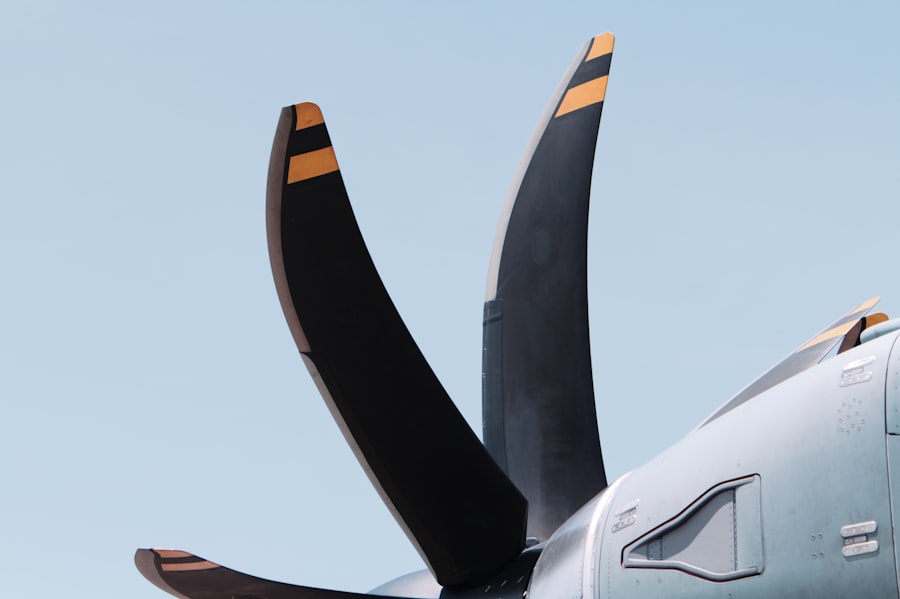
The advancement in silent propeller technology has unlocked a wealth of new opportunities across various sectors, pushing the boundaries of what is possible.
Drones and Unmanned Aerial Vehicles (UAVs): The Silent Sentinels
Perhaps the most visible beneficiary of silent propeller technology is the burgeoning field of drones.
Urban Air Mobility (UAM): As the concept of “flying cars” and air taxis gains traction, noise pollution becomes a critical hurdle. Silent propellers are essential for making urban aviation a socially acceptable reality, allowing passengers to travel without disturbing city dwellers. Imagine a swarm of delivery drones moving through a cityscape like silent migratory birds.
Surveillance and Reconnaissance: In military and law enforcement applications, stealth is paramount. Silent propellers enable drones to operate undetected, providing valuable intelligence without alerting their targets.
Filmmaking and Photography: The ability to capture aerial footage without the intrusive drone propeller noise opens up new creative possibilities for documentaries, films, and commercial photography.
Electric Aircraft and General Aviation: The Greener Skies
The shift towards electric propulsion in aviation is being closely paralle C with the development of quieter propellers.
Electric Propulsion Integration: Electric motors offer the advantage of being inherently quieter than internal combustion engines. However, their rotational speeds and torque characteristics can necessitate the use of different propeller designs. Silent propellers are crucial for realizing the full acoustic benefits of electric flight.
Reducing Community Noise Impact: For general aviation airports, which are often located near residential areas, reducing propeller noise is a significant concern. Silent propeller technology can make flying more accessible and less disruptive to nearby communities.
Marine Applications: The Underwater Whisper
The principles of silent propeller design extend beyond the atmosphere into the realm of marine engineering.
Submarine Acoustics: In naval warfare, stealth is critical for submarines. The noise radiated by propeller blades can betray a submarine’s location. Advanced propeller designs aim to minimize this acoustic signature, making them virtually undetectable.
Remotely Operated Vehicles (ROVs) and Autonomous Underwater Vehicles (AUVs): For scientific research and underwater exploration, quiet propulsion systems are essential to avoid disturbing marine life and to maintain the integrity of acoustic measurements.
Emerging Trends and Future Research: The Uncharted Waters of Acoustics
The quest for ever-quieter propellers continues, with research pushing the boundaries of our understanding and technological capabilities.
Biomimicry: Engineers are increasingly looking to nature for inspiration. The silent flight of owls, for instance, with their specially adapted feather structures that break up airflow and reduce noise, offers valuable insights for propeller design.
Advanced Materials and Manufacturing: The development of new materials with enhanced acoustic damping properties and novel manufacturing techniques, such as additive manufacturing (3D printing), will enable even more complex and optimized propeller designs.
Aeroelastic Tailoring: Future propellers may incorporate “smart” materials or actively deformable structures that can change their shape in response to aerodynamic loads, optimizing performance and noise characteristics in real-time. This is akin to a bird subtly adjusting its wing shape in flight.
In conclusion, unveiling the physics behind silent propellers is a journey into the intricate interplay of forces that govern how we move through air and water. It is a testament to human ingenuity, where fundamental scientific principles are harnessed to transform a source of noise into a subtle whisper. As this technology continues to evolve, it promises to unlock a future where flight and marine movement are not only more efficient and sustainable but also far more harmonious with our environment.

WATCH NOW ▶️ WARNING: The $17M Deal That Blinded The US Navy
FAQs
What is the basic principle behind silent propellers?
Silent propellers work by minimizing noise generated through aerodynamic design, such as optimized blade shape, pitch, and rotation speed, which reduces turbulence and sound waves produced during operation.
How does blade shape affect the noise level of a propeller?
The shape of the blades influences how air flows around them; smoother, curved, and thinner blades reduce air resistance and turbulence, leading to quieter operation compared to traditional flat or thick blades.
Why is rotation speed important in reducing propeller noise?
Lower rotation speeds decrease the velocity of the blades cutting through the air, which reduces the intensity of pressure fluctuations and vortex shedding, thereby lowering the noise produced by the propeller.
What role does physics play in designing silent propellers?
Physics principles such as fluid dynamics, acoustics, and aerodynamics guide the design of silent propellers by analyzing airflow patterns, sound wave propagation, and energy efficiency to create quieter and more effective propulsion systems.
Can silent propellers improve the efficiency of aircraft or drones?
Yes, silent propellers often improve efficiency by reducing drag and optimizing thrust, which can lead to lower energy consumption and longer operational times, in addition to providing the benefit of reduced noise pollution.