So, you’re curious about “Project Stargate: Remote Viewing Documentary,” right? The short answer is: yes, there’s a documentary that delves into this fascinating and often controversial topic. It’s not some fringe conspiracy flick, but rather an exploration of a real US intelligence program that investigated the potential of psychic abilities, specifically remote viewing, for intelligence gathering. This documentary aims to shed light on what happened, who was involved, and what lessons can be learned from this unique period in intelligence history.
Before we dive into the documentary, let’s get a handle on Project Stargate itself. Imagine the Cold War. Tensions were high, and nations were looking for every possible edge. In this climate, the idea of using psychic phenomena for intelligence gathering, while it sounds like something out of a sci-fi novel, actually gained traction within certain government agencies.
The Birth of Psychic Espionage
The origins of Project Stargate trace back to the late 1960s and early 1970s. The CIA and DIA (Defense Intelligence Agency) became aware of similar Soviet research into parapsychology. The fear was that if the Soviets were developing and potentially weaponizing psychic abilities, the US needed to catch up or at least understand the threat. This led to the establishment of various research projects, many of which eventually coalesced under the umbrella name “Stargate.”
The Core Concept: Remote Viewing
At its heart, Project Stargate was primarily concerned with something called “remote viewing.” The idea is straightforward, albeit hard to prove scientifically: individuals could supposedly access information about a distant or unseen target using their minds. This information could be visual, auditory, or even tactile. The goal was to see if these “remote viewers” could provide useful intelligence about locations, people, or events that were otherwise inaccessible through traditional means.
The Government’s Investment
Over its decades-long run, Project Stargate involved significant investment from the US government. While the exact figures are debated and often difficult to pin down due to the classified nature of the work, it’s clear that substantial resources were allocated to research, training, and operational testing. This wasn’t a small, experimental side project; it was a sustained effort by intelligence agencies.
For those interested in the intriguing world of remote viewing and its historical context, a related article can be found at this link. This article delves deeper into the implications of Project Stargate and the various experiments conducted during the Cold War, providing a comprehensive overview of how the U.S. government explored the potential of psychic phenomena for intelligence purposes.
The Documentary’s Focus: Unveiling the Truth
The “Project Stargate: Remote Viewing Documentary” isn’t just about presenting the concept; it’s about digging into the reality of the program. It aims to present a balanced view, exploring both the promising aspects and the inherent challenges of such an endeavor.
Interviews with Key Players
A crucial element of any good documentary is hearing from the people who were there. This film reportedly features interviews with former intelligence officers, scientists, and, importantly, the remote viewers themselves. Hearing firsthand accounts of their experiences, the training they underwent, and the alleged successes and failures is what gives the documentary its weight. It’s one thing to read about it; it’s another to hear it from the individuals who lived it.
The Science and the Skeptics
No exploration of remote viewing would be complete without addressing the scientific aspect. The documentary likely delves into the methodologies used to train and test remote viewers, the attempts to quantify results, and the ongoing debate about the scientific validity of these phenomena. It’s also expected to include voices of skepticism, offering a counterpoint to the claims made by proponents. This is important for a comprehensive understanding, acknowledging that not everyone in the scientific or intelligence community was convinced.
Operational Successes or Failures?
The big question for any intelligence program is: did it work? The documentary likely examines specific instances where remote viewing was allegedly used to gather actionable intelligence. It will probably showcase examples presented as successes, where viewers seemingly provided accurate details about targets. Conversely, it will also need to address the times when the results were inconclusive or outright wrong, as well as the reasons for these outcomes. Understanding the limitations is just as important as understanding the potential.
The Remote Viewers: Unlikely Spies

The individuals who participated in Project Stargate were not your typical spies. They came from diverse backgrounds, often with no prior military or intelligence experience. Their “talent” was their mind, and their training was unconventional.
From Ordinary to Psychic Operatives
The documentary likely paints a picture of how these individuals were identified and recruited. It’s not a process of issuing a recruitment drive with flyers. Often, it involved people who had reported unusual psychic experiences or were known within parapsychology circles. They were then brought into a structured program, given rigorous training, and expected to perform under pressure.
The Stresses of the Job
Imagine being tasked with describing a top-secret Soviet facility or a sensitive military operation based solely on mental impressions. The pressure must have been immense. The documentary might touch upon the psychological toll this kind of work could take on remote viewers, dealing with uncertainty, the burden of potentially crucial information, and the inherent strangeness of their abilities.
The Ethical and Personal Quandaries
Beyond the operational aspects, the lives of these remote viewers were undoubtedly impacted. The secrecy, the potential for exploitation, and the constant questioning of their own sanity or abilities would have presented unique ethical and personal challenges. The documentary might offer glimpses into these personal struggles and how they navigated their roles.
The Program’s Demise and Legacy

Like many government programs, Project Stargate eventually came to an end. The documentary will likely explore the reasons behind its termination and what its lasting impact has been.
The End of an Era
The program officially concluded in the mid-1990s. Various factors contributed to this decision, including a perceived lack of consistent, actionable intelligence, budget constraints, and a shifting geopolitical landscape following the end of the Cold War. The documentary will likely detail the official reasons for its closure and perhaps explore any unspoken or underlying causes.
The “Declassified” Files
A significant part of the documentary’s narrative will likely revolve around the declassification of documents related to Project Stargate. For years, the existence of the program was largely unknown or rumored. The declassification has allowed researchers and the public to get a clearer picture of the government’s involvement and the findings of the program. The film will likely leverage these released documents to support its claims.
What Did We Learn?
The legacy of Project Stargate is multifaceted. For some, it’s a testament to the untapped potential of the human mind. For others, it’s a cautionary tale about the dangers of pursuing fringe science within government. The documentary will probably explore these differing interpretations and discuss what lessons can be drawn from this unique chapter in intelligence history. Did it prove anything definitively? Or did it leave more questions than answers?
The intriguing world of remote viewing, particularly as explored in the Project Stargate documentary, has captivated many who are curious about the intersection of science and the paranormal. For those interested in delving deeper into this fascinating topic, a related article can provide additional insights and context. You can read more about the implications and history of remote viewing in this comprehensive piece available at In The War Room.
The Documentary’s Contribution to the Conversation
| Metrics | Data |
|---|---|
| Release Date | 2022 |
| Duration | 90 minutes |
| Director | Lance Mungia |
| Subject | Project Stargate remote viewing |
| Interviewees | Former military personnel |
Ultimately, “Project Stargate: Remote Viewing Documentary” aims to contribute to a broader conversation about consciousness, perception, and the limits of what we understand. It’s not just about debunking or confirming psychic abilities, but about exploring the human drive to understand the unknown.
Beyond the Paranormal
While the subject matter is inherently paranormal for many, the documentary likely frames it as a scientific and intelligence-gathering inquiry. It’s about exploring a genuine government effort, regardless of whether one believes in the efficacy of remote viewing. The focus is on the program, the people, and the historical context.
A Catalyst for Further Inquiry
Hopefully, this documentary will serve as a springboard for further discussion and research. By bringing these declassified details and firsthand accounts to a wider audience, it encourages people to think critically about the nature of information, the mind, and the potential for unconventional approaches to problem-solving.
Understanding Intelligence in a New Light
The program offers a fascinating glimpse into how intelligence agencies have historically approached challenges and explored unconventional avenues. It challenges our conventional notions of what constitutes “intelligence” and how it can be gathered, pushing the boundaries of our understanding of espionage and human capability.
In conclusion, if you’re intrigued by the idea of government-backed psychic research, or simply interested in a unique piece of Cold War history, the “Project Stargate: Remote Viewing Documentary” seems like a compelling watch. It promises to be an in-depth look at a program that, for decades, operated in the shadows, and now, through declassification and documentaries like this, is stepping into the light. It’s a story about human curiosity, the pursuit of knowledge, and the enduring mystery of the mind itself.
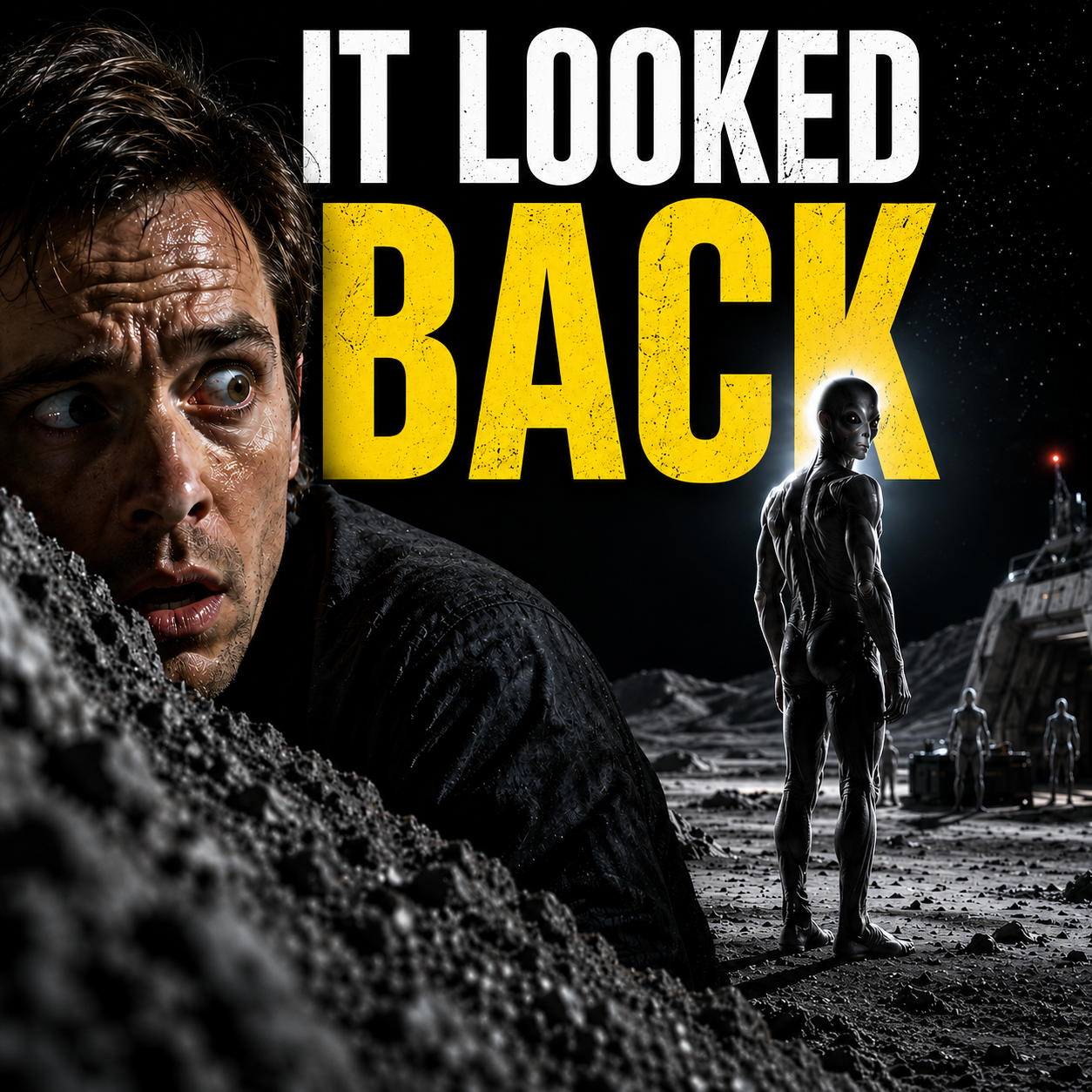
He Remote Viewed the Moon. Then Something Saw Him.
FAQs
What is Project Stargate?
Project Stargate was a secret program that was conducted by the United States government to investigate the potential for psychic phenomena in military and domestic intelligence applications. The program ran from the 1970s to the 1990s.
What is remote viewing?
Remote viewing is the practice of seeking impressions about a distant or unseen target using paranormal means, in particular, extra-sensory perception (ESP) or “sensing with mind”. It was a key focus of the Project Stargate program.
What is the Project Stargate remote viewing documentary about?
The Project Stargate remote viewing documentary explores the history and impact of the Project Stargate program, including interviews with former military personnel and researchers involved in the program. It delves into the use of remote viewing in intelligence gathering and its implications.
Is remote viewing considered a credible practice?
Remote viewing has been a topic of controversy and skepticism within the scientific community. While some researchers and practitioners claim success in remote viewing experiments, the practice remains widely disputed and lacks empirical evidence to support its validity.
Where can I watch the Project Stargate remote viewing documentary?
The Project Stargate remote viewing documentary may be available for viewing on various streaming platforms or through online rental or purchase. Check with your preferred streaming service or online retailer for availability.