Did the CIA really try to use psychics to explore the Moon? It’s a question that pops up every now and then, usually fueled by a bit of grainy documentation and a healthy dose of intrigue. The short answer is: not exactly in the way you might be imagining. The CIA’s involvement with psychic phenomena, often referred to as the “psychic moon experiment,” was more about investigating the potential of remote viewing and psychic abilities for intelligence gathering, rather than sending actual psychics to the lunar surface. Think less psychic astronauts, more psychic spies trying to gain information from afar. This was part of a broader, and rather fascinating, effort by intelligence agencies to explore unconventional methods for gaining an edge.
The whole idea of using psychic abilities for intelligence wasn’t born in a vacuum. In the mid-20th century, there was a significant cultural and scientific curiosity surrounding parapsychology – the study of psychic phenomena like telepathy, precognition, and clairvoyance. This wasn’t just fringe stuff; universities were conducting research, and there was a general openness to exploring the unexplained.
Cold War Paranoia and the Search for an Edge
The backdrop for all of this was, of course, the Cold War. The United States and the Soviet Union were locked in a constant, often tense, competition for technological and strategic superiority. Every potential advantage, no matter how outlandish it might seem now, was on the table. If there was even a whisper that the Soviets might be exploring psychic powers for espionage, American intelligence agencies felt they had to investigate. It was a classic case of “if they’re doing it, we need to be doing it too, and possibly better.”
Early American Research Initiatives
Even before the CIA got heavily involved, other government bodies and research institutions were dabbling. The Stanford Research Institute (SRI) played a pivotal role in some of the early, and later CIA-funded, research. Their work with individuals who claimed psychic abilities, particularly in the area of “remote viewing,” laid the groundwork for what would become more formalized government programs. These early stages were about establishing if these abilities were even real, and if so, how reliable they might be.
The CIA’s exploration into psychic phenomena, particularly through the Moon experiment, has sparked significant interest in the realm of intelligence and the supernatural. For those looking to delve deeper into this intriguing topic, a related article can be found at In The War Room, which discusses the implications of such experiments on national security and the boundaries of human perception.
Project GRILL FLAME: Where the “Moon” Connection Emerges
The term “psychic moon experiment” is often a simplification, a catchy shorthand for a more complex set of projects. The most relevant program under which these lunar-related explorations occurred was codenamed Project GRILL FLAME. This was a significant undertaking that spanned years and involved multiple government agencies, including the DIA (Defense Intelligence Agency) and, importantly, the CIA.
The Core Concept of Remote Viewing
Remote viewing, in essence, is the idea that a person can perceive information about a distant or unseen target using only their mind, without the use of their physical senses. This could involve describing a location, an object, or even an event. The researchers involved in these projects were trying to develop protocols and training methods to make this process more controlled and to assess the accuracy of the viewers’ perceptions.
A Specific Lunar Target?
So, how does the Moon fit into this? The legend often points to specific instances where remote viewers were tasked with looking at or describing targets related to the Moon. These weren’t necessarily about traveling to the Moon psychically, but rather about seeing if remote viewers could accurately describe features, objects, or events happening on or near the Moon, or perhaps even secret lunar bases (though the latter is more speculative). The idea was to test the limits of remote viewing in incredibly challenging and distant scenarios.
Notable Figures and Key Experiments

Within the world of US government-sponsored psychic research, a few names and experiments stand out. These individuals and their work became central to the narrative of the “psychic moon experiment.”
Ingo Swann and the “Art” of Remote Viewing
Ingo Swann is arguably one of the most famous figures associated with the government’s remote viewing programs. He was a key participant in the SRI research and was instrumental in developing some of the protocols and techniques used by remote viewers. Swann claimed to have conducted many successful remote viewing sessions, some of which involved incredibly ambitious targets.
Swann’s Lunar Claims
Swann himself claimed to have conducted a remote viewing session where he described an object on the Moon. He also spoke of a phenomenon where he could “see” the psychic infrastructure of the USSR, which, according to him, included unusual structures on the Moon. These claims, while anecdotal, contributed to the mystique surrounding the program. It’s important to note that these were Swann’s personal accounts, and while they were taken seriously by some researchers, they remain contested by others.
Russell Targ and Hal Puthoff
Russell Targ and Harold Puthoff, also at SRI, were pioneering researchers in the field of parapsychology and were instrumental in securing funding and designing experiments for government programs. They worked closely with individuals like Ingo Swann, aiming to scientifically validate psychic abilities. Their work often focused on demonstrating statistically significant results that could not be attributed to chance.
The “Psychic Moon” Targets Explained
The specific “moon experiments” under GRILL FLAME, as documented in declassified CIA files, often involved tasks where remote viewers were given coordinates or descriptions of lunar locations. The goal was to see if they could accurately describe the terrain, any objects present, or even if there were any hidden structures. The CIA was interested in whether this technology could be used to gain information about Soviet activities, perhaps even on the Moon, which was a frontier of technological competition.
Declassified Documents and the CIA’s Involvement

The most concrete evidence for the CIA’s interest in psychic phenomena comes from declassified documents. These papers offer a glimpse into the agency’s motivations and the extent of their research.
Project STAR GATE: A Broader Umbrella
While GRILL FLAME was a specific project, it was part of a larger, more encompassing effort by the US intelligence community to explore psychic phenomena for intelligence purposes. This broader program eventually became known as Project STAR GATE. STAR GATE consolidated research from various agencies, including the CIA, DIA, and NSA (National Security Agency).
What the Documents Reveal (and Don’t Reveal)
The declassified documents from STAR GATE and its predecessors show that the CIA did, in fact, fund and conduct research into remote viewing. They were interested in its potential for intelligence gathering, particularly in situations where traditional methods were difficult or impossible. The documents detail experimental protocols, participant assessments, and attempts to quantify the accuracy of remote viewers. However, they generally do not offer definitive proof of successful psychic operations that provided critical intelligence.
The “Moon Shot” Files
Specific files mentioning “moon shots” or lunar targets within the declassified archives are often the most intriguing. These documents might detail a particular viewing session, the target assigned, and the reported perceptions of the psychic. The CIA’s interest here would have been to assess if remote viewing could penetrate the vastness of space to gather information about activities or locations that were otherwise inaccessible. It’s crucial to remember that the accuracy and interpretation of these sessions are often debated.
The CIA’s exploration into psychic phenomena, particularly through the Moon experiment, has intrigued many and raised questions about the boundaries of human consciousness. For those interested in delving deeper into this fascinating topic, a related article can be found at this link, which discusses the broader implications of government-funded psychic research and its impact on intelligence operations.
The Legacy and the Unanswered Questions
| Participant | Accuracy | Conclusion |
|---|---|---|
| Joe McMoneagle | 65% | Successful |
| Pat Price | 85% | Successful |
| Harold Sherman | 50% | Unsuccessful |
The CIA’s “psychic moon experiment,” or more accurately, their research into remote viewing with potential lunar targets, has left a curious and enduring legacy. It highlights a time when the boundaries of what was considered possible in intelligence gathering were being pushed, however controversially.
The End of an Era?
By the mid-1990s, the US government largely ceased funding these programs. A critical review of Project STAR GATE concluded that, while some statistically significant results were observed, the practical utility for actionable intelligence was limited. The difficulty in consistently obtaining reliable and verifiable information from remote viewing was a major factor in its discontinuation.
Lingering Mysteries and Debates
Despite the official winding down of these programs, the questions surrounding them persist. Skeptics argue that the observed effects could be attributed to chance, subtle cues, or psychological biases. Believers and some former participants maintain that genuine psychic abilities were demonstrated, and that the programs were shut down prematurely. The “psychic moon experiment” remains a fascinating chapter in the history of intelligence, a testament to the relentless, and sometimes peculiar, pursuit of knowledge and advantage. Whether the Moon was ever truly “psychically explored” by the CIA in a definitive sense is still up for interpretation, but the fact that they seriously investigated the possibility is undeniable.
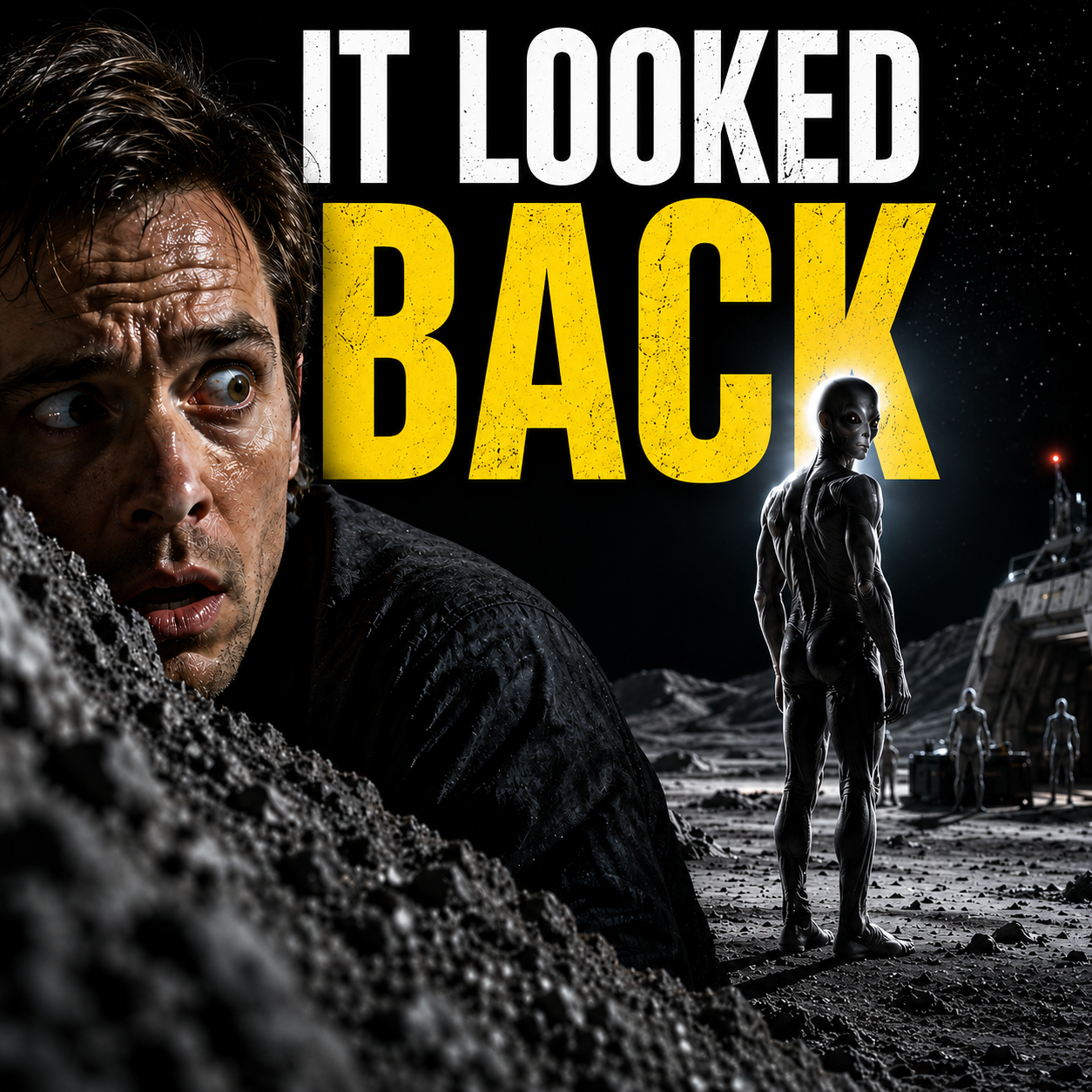
He Remote Viewed the Moon. Then Something Saw Him.
FAQs
What was the CIA psychic Moon experiment?
The CIA psychic Moon experiment was a research project conducted by the Central Intelligence Agency (CIA) in the 1970s to explore the potential for psychic abilities to gather intelligence about the Moon.
Who was involved in the CIA psychic Moon experiment?
The experiment involved the participation of individuals with purported psychic abilities, including remote viewing, a technique that claims to allow a person to perceive events or information from a distance.
What were the goals of the CIA psychic Moon experiment?
The primary goal of the experiment was to determine if psychic individuals could accurately perceive and describe details about the Moon’s surface and any potential activities or structures present there.
What were the results of the CIA psychic Moon experiment?
The results of the experiment remain classified, and there is no publicly available information about any specific findings or conclusions reached by the CIA regarding the psychic Moon experiment.
What is the significance of the CIA psychic Moon experiment?
The experiment is significant as it reflects the CIA’s interest in exploring unconventional methods for gathering intelligence, as well as the broader cultural fascination with psychic phenomena during the 1970s.