The year is 1962. The world teeters on the precipice of nuclear annihilation, a terrifying dance between two superpowers fueled by paranoia and an escalating arms race. Amidst this high-stakes brinkmanship, a single individual, a Soviet submarine officer named Vasili Arkhipov, found himself in a position of unimaginable responsibility. His quiet refusal to authorize a nuclear strike, against the fervent wishes of his superiors, is widely considered to be the moment humanity narrowly averted its own destruction. This is the story of an unsung hero, the man who, in the darkest hour, may have saved the world.
The Crucible of the Cuban Missile Crisis
The Cuban Missile Crisis, a thirteen-day confrontation that brought the United States and the Soviet Union closer to nuclear war than ever before, was the ultimate manifestation of the Cold War’s inherent danger.
The Genesis of the Crisis
The roots of the crisis lay in the uneasy geopolitical landscape of the early 1960s. Following the failed Bay of Pigs invasion in 1961, aimed at overthrowing Fidel Castro’s communist regime in Cuba, Soviet Premier Nikita Khrushchev saw an opportunity to counter American influence in the Western Hemisphere and, more importantly, to address the strategic imbalance created by U.S. missile bases in Turkey, which were capable of striking Soviet cities. In secret, the Soviets began deploying intermediate-range and medium-range ballistic nuclear missiles to Cuba.
The Discovery and Escalation
On October 14, 1962, American U-2 spy planes photographed evidence of Soviet missile sites under construction in Cuba. This discovery sent shockwaves through Washington. President John F. Kennedy and his advisors were faced with a grave dilemma. The presence of nuclear missiles so close to American shores represented an unacceptable threat. After intense deliberation, Kennedy opted for a naval blockade, or “quarantine,” of Cuba, demanding the removal of the missiles. This move was met with defiance by the Soviets, who declared the blockade an act of aggression.
The World Holds Its Breath
As the days ticked by, tensions reached fever pitch. Soviet ships carrying military supplies continued to approach the blockade line, while U.S. naval vessels prepared to intercept them. The world watched with bated breath, acutely aware that a single misstep could trigger a catastrophic nuclear exchange. Military commanders on both sides were on high alert, with authorization for tactical nuclear weapons in the hands of local commanders in certain scenarios.
In exploring the pivotal moments of the Cold War, one cannot overlook the extraordinary actions of Vasili Arkhipov, who is often credited with saving the world from nuclear catastrophe during the Cuban Missile Crisis. His decision to withhold his consent for a nuclear strike aboard a Soviet submarine prevented a potential escalation into global conflict. For a deeper understanding of this critical event and its implications, you can read a related article that delves into the intricacies of the crisis and the key players involved. Check it out here: Vasili Arkhipov: The Man Who Saved the World.
Project 155: The Unseen Threat Beneath the Waves
While the world’s attention was fixed on the U.S. naval blockade and the diplomatic maneuvers in Washington and Moscow, a separate and equally perilous drama was unfolding beneath the ocean’s surface.
The Role of Soviet Submarines
The Soviet Union, in an effort to counter the U.S. naval superiority and project power, had a fleet of submarines, some of which were equipped with nuclear torpedoes. The B-59, a Foxtrot-class diesel-electric submarine, was one such vessel. Under the command of Captain Valentin Savitsky, and with Vasili Arkhipov as the flotilla commander and second-in-command, the B-59 was part of a squadron tasked with evading U.S. naval patrols during the crisis.
The Purpose of the Mission
The mission of these submarines was not to engage in direct combat, but to survive and remain undetected. However, a clandestine secondary objective was to carry nuclear torpedoes, a deterrent measure intended to be used if the submarines were attacked and believed their mission was compromised. The Soviets had hoped their submarines could operate in the Caribbean unnoticed, a strategic gamble to project strength and deter further U.S. actions.
The Isolation and Stress
Operating in hostile waters, deep beneath the surface, the crew of the B-59 was largely cut off from communication with Moscow. The constant threat of detection by American warships, coupled with the oppressive heat and limited space within the submarine, created an environment of immense psychological pressure. The crew was unaware of the full extent of the diplomatic negotiations happening above them, and their reality was one of immediate, tangible danger.
The Brink of Nuclear War: The Confrontation at Sea
The B-59’s journey through the tense waters off Cuba became a microcosm of the larger global conflict, a terrifying illustration of how easily a localized engagement could spiral out of control.
The Encounter with the U.S. Navy
On October 27, 1962, a day often referred to as “Black Saturday” due to the extreme tensions, the B-59 was detected by U.S. Navy destroyers. The American ships, under orders to force Soviet submarines to surface, began dropping non-lethal depth charges. These were intended as signals, a way to communicate that the submarine had been found and to urge it to surface. However, from the perspective of the crew trapped inside the B-59, these were attacks.
Misinterpreting the Signals
The constant pounding of the depth charges, reverberating through the hull of the submarine, created an atmosphere of panic and fear. The crew, already stressed and disoriented, interpreted these signals as a direct assault. Communication with the surface was extremely difficult, and any information that did filter through was often garbled or incomplete. The submarine’s radio equipment was also damaged, further isolating them from any understanding of the broader context.
The Captain’s Decision
Captain Savitsky, convinced that the submarine was under direct attack and that war had begun, believed it was his duty to retaliate. He ordered the preparation of one of the nuclear torpedoes for launch. This was a devastating weapon, capable of causing widespread destruction. The launch order, however, required the authorization of three senior officers onboard: Captain Savitsky, the political officer, and Vasili Arkhipov, who, as the flotilla commander, held the ultimate authority.
Vasili Arkhipov: The Reluctant Savior
In the confined, claustrophobic space of the B-59, with the deafening roar of depth charges outside and the pressure to act mounting, Vasili Arkhipov faced a choice that would define his legacy and, potentially, the fate of the world.
The Disagreement Among Commanders
The political officer, Ivan Maslennikov, was inclined to follow the captain’s lead, likely believing that any attack on a Soviet vessel meant war. However, Vasili Arkhipov, possessing a more nuanced understanding of the situation and the potential consequences, disagreed. He understood the gravity of launching a nuclear weapon and the certainty of a devastating response from the United States.
The Weight of Responsibility
Arkhipov was not a man seeking glory or power. He was a trained naval officer, following orders and upholding duty. Yet, in this extraordinary moment, his duty transcended the immediate command structure. He recognized the immense danger of escalating the conflict and the lack of certainty regarding the U.S. Navy’s intentions. He knew that launching the nuclear torpedo would likely be the point of no return.
The Power of “No”
With calm resolve, Arkhipov refused to authorize the launch. He argued that the depth charges were not weapons but signals and that launching a nuclear torpedo would be a catastrophic overreaction. His persistent and reasoned opposition, backed by his authority as flotilla commander, held firm against Captain Savitsky’s heated demands. He forced Savitsky to confront the horrifying implications of his order. The ensuing debate was intense, but Arkhipov’s refusal was absolute.
Vasili Arkhipov’s decision to withhold his agreement during the Cuban Missile Crisis is often credited with saving the world from nuclear catastrophe. His calm and rational judgment in a moment of extreme tension highlights the importance of individual actions in the face of global threats. For a deeper understanding of the implications of such pivotal moments in history, you can explore the article on strategic decision-making in crises found at In the War Room. This resource provides valuable insights into how critical choices can alter the course of events and prevent disaster.
The Aftermath and the Unacknowledged Heroism
The standoff within the B-59 ended when Arkhipov’s refusal finally prevailed. The submarine eventually surfaced and was escorted back to Soviet waters. The immediate threat of nuclear war emanating from that specific vessel was averted.
The Return to Surface
Following Arkhipov’s decisive action, the B-59 was allowed to surface and proceed towards the Soviet Union. The crew, exhausted and shaken, were unaware of the full magnitude of the decision made within their own vessel. The events aboard the submarine remained largely secret for decades.
The Secrecy and the Legacy
The Soviet Union, embroiled in its own internal politics and Cold War propaganda, had little incentive to publicize an incident where a Soviet submarine nearly initiated a nuclear war due to a misunderstanding, especially with the ultimate decision resting on a subordinate officer’s refusal of his captain. The heroism of Vasili Arkhipov remained largely unknown to the world outside of a very small circle for many years. His name did not feature in the public discourse surrounding the Cuban Missile Crisis.
The Growing Recognition
It was only in the late 20th and early 21st centuries, with the declassification of documents and the opening up of Soviet archives, that the full story of the B-59 and Vasili Arkhipov’s role began to emerge. Historians and researchers pieced together the narrative, highlighting the crucial intervention that prevented a potentially world-ending event. Films like “K-19: The Widowmaker” brought aspects of submarine life and crisis to a wider audience, though the specifics of Arkhipov’s pivotal role were often less emphasized in popular culture.
A Quiet Man, a Monumental Act
Vasili Arkhipov lived out his life and passed away in 1998, never having sought public recognition for his actions. He was a man of quiet duty and immense moral courage. The world owes an immeasurable debt to this man who, in the face of overwhelming pressure and the threat of annihilation, chose restraint and reason. His name may not be as widely recognized as those of Kennedy or Khrushchev, but his actions, or rather his refusal to act, stand as a testament to the power of individual conscience and the profound impact one person can have on the course of history. He truly was an unsung hero.
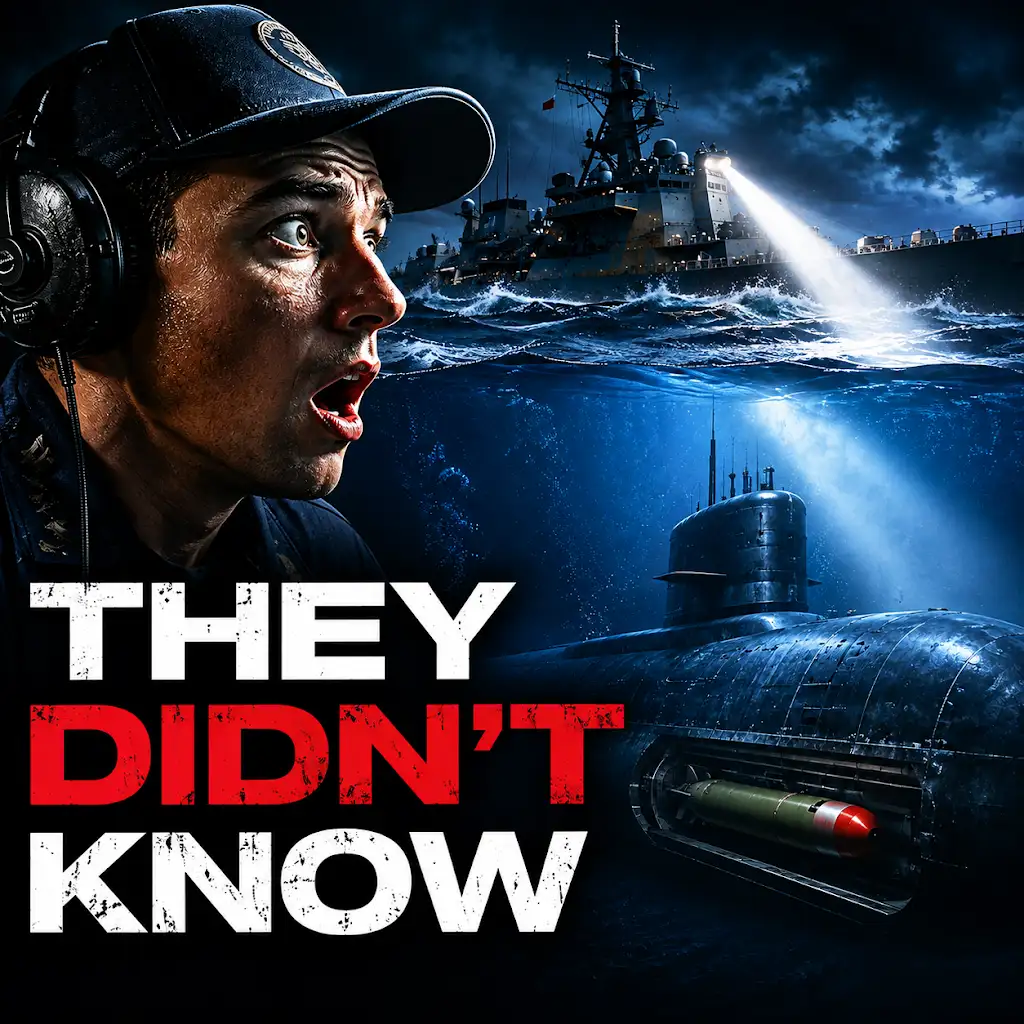
The U.S. Navy Didn’t Know This Submarine Had a Nuclear Torpedo
FAQs

1. Who is Vasili Arkhipov and what did he do?
Vasili Arkhipov was a Soviet naval officer who played a critical role in preventing a nuclear war during the Cuban Missile Crisis in 1962. He was the deputy commander of a Soviet submarine and he refused to authorize the use of nuclear torpedoes, thereby preventing a potential nuclear conflict between the United States and the Soviet Union.
2. What was the Cuban Missile Crisis?
The Cuban Missile Crisis was a 13-day confrontation between the United States and the Soviet Union in October 1962, stemming from the installation of nuclear-armed Soviet missiles in Cuba. The crisis is widely regarded as the closest the world has ever come to nuclear war.
3. How did Vasili Arkhipov’s actions save the world?
During the Cuban Missile Crisis, a Soviet submarine, which Arkhipov was on, was depth-charged by US warships. The submarine was unable to communicate with Moscow and believed that war had already broken out. The captain and political officer of the submarine wanted to launch a nuclear torpedo, but Arkhipov, as deputy commander, refused to authorize it. His decision prevented a potential nuclear conflict.
4. What impact did Vasili Arkhipov’s actions have on the world?
Vasili Arkhipov’s decision to prevent the launch of a nuclear torpedo during the Cuban Missile Crisis is widely credited with preventing a nuclear war between the United States and the Soviet Union. His actions had a profound impact on global history and helped avert a potential catastrophe.
5. How is Vasili Arkhipov remembered today?
Vasili Arkhipov is remembered as a hero and a key figure in preventing a nuclear war. His actions during the Cuban Missile Crisis have been widely recognized and celebrated, and he is considered a symbol of the importance of level-headed decision-making in times of crisis.