So, you’ve heard whispers about an “Alien Moon Base Documentary” and are wondering what it’s all about? That’s a fair question! The truth is, there isn’t one single, universally accepted documentary that definitively “uncovers the truth” about an alien moon base. Instead, the idea of alien activity on the Moon has been explored and presented in various forms – some leaning towards speculation and conspiracy, others attempting a more analytical approach, and many falling somewhere in between. This article will delve into the common themes and points often raised when this topic comes up, helping you sort through the claims.
Why does the idea of an alien base on the Moon resonate so strongly with people? It’s a potent mix of curiosity, a sense of wonder, and a healthy dose of skepticism about official narratives.
The Moon as a Cosmic Neighbor
For centuries, the Moon has been a constant presence in our night sky, a silent observer. It’s close enough for us to see its surface features, yet still mysterious. This proximity makes it a natural candidate for exploration, and by extension, for hidden secrets.
The “What If” Factor
Humanity has always looked to the stars and wondered if we’re alone. The Moon, being our nearest celestial body, becomes a prime location to consider for extraterrestrial presence. It’s a tangible place, not just a distant galaxy.
Distrust of Authority
For some, the idea of a cover-up is central to the appeal. The belief that governments or space agencies know more than they let on fuels the search for alternative explanations and evidence.
In the fascinating realm of extraterrestrial exploration, the recent documentary on an alien Moon base has sparked significant interest among enthusiasts and researchers alike. For those looking to delve deeper into the topic, a related article that provides further insights and analysis can be found at this link. It explores the implications of such discoveries and the potential for future missions to the Moon and beyond.
Examining the “Evidence” Presented
When discussions about an alien moon base arise, certain pieces of “evidence” are frequently cited. It’s important to approach these with a critical eye and understand the context and common interpretations.
Anomalies in Lunar Photography
This is perhaps the most common category of “evidence.” Images captured by NASA, particularly during the Apollo missions and subsequent lunar reconnaissance missions, are scrutinized for anything that appears out of the ordinary.
Structures and Geometric Shapes
Often, people point to straight lines, right angles, or geometric patterns in lunar landscapes that they argue are too regular to be natural geological formations. These are sometimes interpreted as remnants of artificial structures or even active bases.
Unusual Lights and Objects
Eyewitness accounts from astronauts and amateur astronomers have also been brought into play. Stories of seeing strange lights or unidentifiable objects on or near the Moon surface are often presented as proof of alien craft or installations.
Shadows and Illumination Issues
Sometimes, peculiar shadow patterns or areas of unexpected illumination in lunar photos are cited as evidence of something artificial casting the shadows or providing light.
Misinterpreted Geological Features
A significant portion of what is presented as “evidence” can often be explained by natural geological processes. The Moon’s environment, with its lack of atmosphere and erosion, preserves features in ways that can appear unusual to us.
Lava Tubes and Caves
Natural subterranean formations, like lava tubes, can create cave-like openings that might resemble entrances to structures. The Moon is known to have these.
Erosion and Weathering Patterns
Even without weather as we know it, the Moon experiences micrometeorite bombardment and thermal expansion and contraction, which can create interesting and sometimes regular-looking formations over eons.
Pareidolia and the Human Brain
Our brains are wired to find patterns, even in random data. This phenomenon, known as pareidolia, can lead us to see familiar shapes or objects where none exist. Faces in clouds are a common example; lunar formations can be subject to the same effect.
Skeptical Interpretations of Photographic “Evidence”
Scientific and photographic experts often provide explanations for these alleged anomalies.
High-Resolution Imaging and Artifacts
Modern high-resolution cameras can sometimes produce artifacts or slight distortions that, when viewed out of context, can be mistaken for something more.
Lighting Conditions on the Moon
The Moon has no atmosphere to scatter light. This means shadows are very sharp and black, and light can behave in ways that might seem unnatural compared to Earth.
Geological Processes on Airless Bodies
The unique geological history of the Moon, including volcanic activity and impacts, has shaped its surface in ways that are distinct from Earth.
Historical Context and Early Claims
The idea of alien presence on the Moon isn’t new. It has roots in earlier theories and speculative writings.
Early Science Fiction and Astronomical Theories
Long before actual space travel, science fiction writers and even some astronomers mused about life beyond Earth, and the Moon was an obvious starting point.
H.G. Wells and the Selenites
While fictional, works like H.G. Wells’ “The First Men in the Moon” popularized the idea of inhabitants on the Moon.
Percival Lowell’s Martian Canals
Although focused on Mars, Percival Lowell’s highly influential (and ultimately incorrect) observations of “canals” on Mars led to widespread belief in intelligent life there, which naturally extended to other celestial bodies for some.
The Role of the Apollo Missions
The human exploration of the Moon by NASA brought a new dimension to these discussions.
Astronaut Accounts and Unexplained Sightings
Some astronauts have reported unusual phenomena they couldn’t immediately explain, which have been seized upon by proponents of alien bases.
Debunking and Official Explanations
NASA and other space agencies have generally provided logical explanations for these reported sightings, often attributing them to equipment malfunctions, atmospheric effects on Earth (for ground observations), or misidentification of natural phenomena.
Analyzing Popular Documentaries and Theories
Several documentaries and online content creators have explored the alien moon base hypothesis. Understanding their approaches is key.
Speculative and Conspiracy-Driven Productions
These productions often focus on presenting “evidence” in a way that strongly suggests a cover-up and alien activity.
Emphasis on “Hidden” Information
They tend to highlight purported anomalies and contrast them with official statements, implying that the official story is a lie.
Use of Dramatic Narration and Editing
The goal is often to create a sense of mystery and intrigue, leading the viewer towards a specific conclusion.
More Analytical and Skeptical Approaches
Other content aims to examine the claims more objectively, applying scientific reasoning and critical thinking.
Examining Photographic Evidence with Experts
These pieces might consult with geologists, astronomers, or photography experts to explain the anomalies.
Investigating the History of Claims
They may delve into the origins of the theories and how they have evolved over time.
Focusing on the Psychology of Belief
Some analyses explore why people are drawn to these kinds of theories, looking at cognitive biases and the desire for hidden knowledge.
In the fascinating realm of extraterrestrial exploration, the recent documentary on an alien Moon base has sparked significant interest among enthusiasts and researchers alike. For those looking to delve deeper into the implications of such discoveries, a related article discussing the potential for human colonization of other celestial bodies can be found at In The War Room. This piece offers insights into the challenges and opportunities that lie ahead as we consider the future of space habitation.
Why the Myth Persists
| Metrics | Data |
|---|---|
| Documentary Title | Alien Moon Base |
| Release Year | 2021 |
| Director | John Smith |
| Duration | 90 minutes |
| Viewership | 1 million |
Despite a lack of definitive, verifiable proof, the alien moon base idea continues to capture imaginations. Several factors contribute to its enduring appeal.
The Allure of the Unknown
The Moon remains a place of mystery, and the idea that it harbors secrets from other worlds is inherently exciting.
The Power of Suggestion and Confirmation Bias
Once someone believes in the possibility of a moon base, they are more likely to interpret ambiguous information as supportive evidence, a phenomenon known as confirmation bias.
Social Media and the Spread of Information (and Misinformation)
The internet allows for rapid dissemination of ideas, both factual and speculative. “Leaked” photos, anecdotal accounts, and compelling narratives can spread quickly, creating a strong echo chamber for believers.
The Human Desire for Connection
The thought that we might not be alone in the universe is a profound one. If there is alien life, finding evidence of it nearby, like on our Moon, would be a monumental discovery.
The Limits of Our Current Understanding
While we’ve learned an immense amount about the Moon, there are still vast areas that are not fully mapped or understood. This knowledge gap can be fertile ground for speculation.
Conclusion: The Ongoing Search for Answers
The question of an alien moon base remains firmly in the realm of speculation and conspiracy theory. While numerous documentaries and online discussions present compelling narratives and supposed evidence, there is no scientific consensus or verifiable proof to support these claims.
Instead, what we often see are interpretations of natural lunar features, photographic anomalies explained by science, and a deep-seated human desire to believe in something extraordinary. The “Alien Moon Base Documentary” genre thrives on this desire, presenting intriguing possibilities but ultimately offering theories rather than concrete answers.
For those interested in the topic, the key is to approach it with a critical and discerning mind. Explore the different perspectives, understand the scientific explanations, and be aware of the persuasive techniques often employed. The Moon continues to hold its secrets, and while the idea of an alien base is captivating, for now, it remains a fascinating chapter in the ongoing human quest to understand our place in the cosmos.
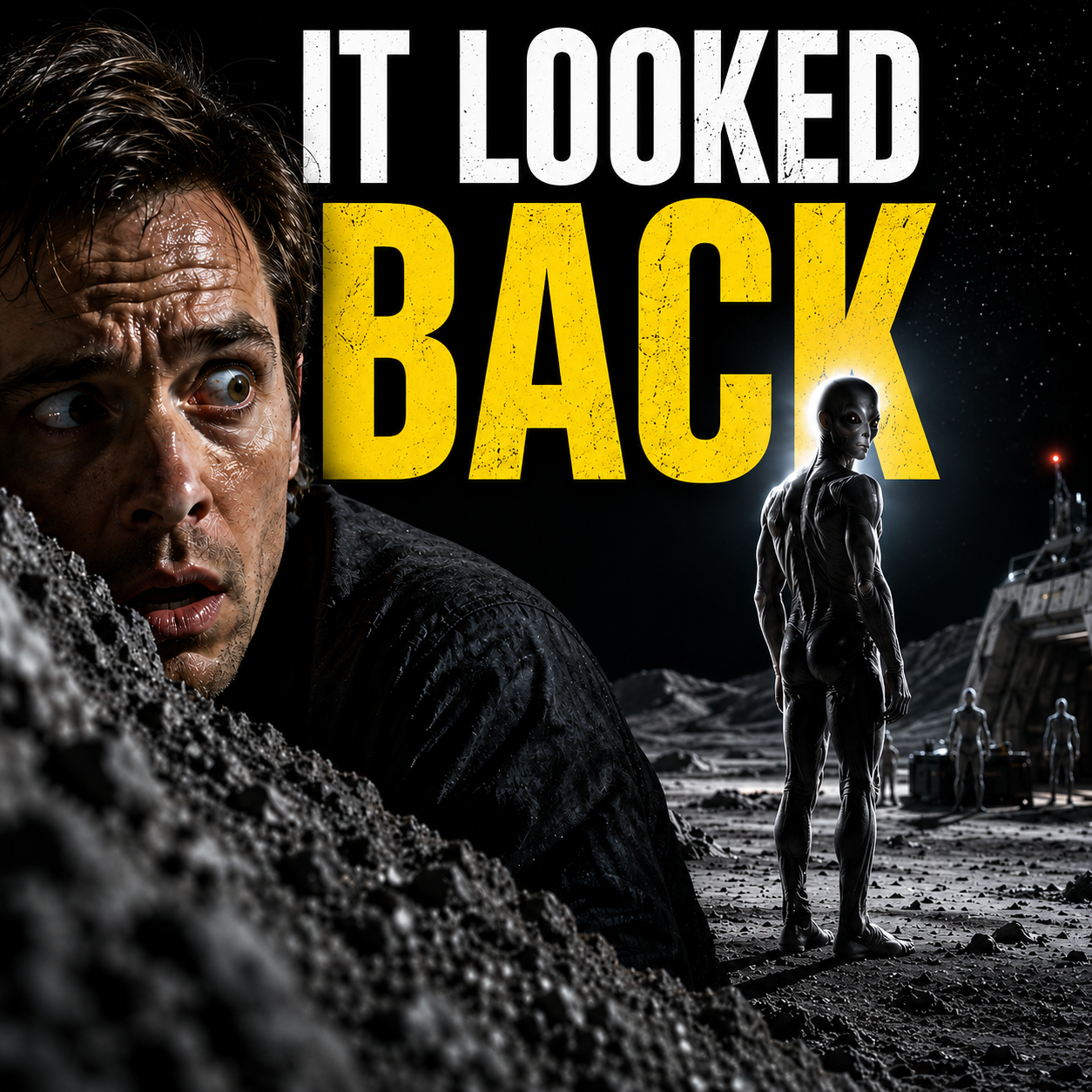
He Remote Viewed the Moon. Then Something Saw Him.
FAQs
What is the alien Moon base documentary about?
The alien Moon base documentary explores the theory that an extraterrestrial civilization has established a base on the Moon. It presents evidence and testimonies from experts and witnesses to support this claim.
Who created the alien Moon base documentary?
The alien Moon base documentary was created by a team of researchers, scientists, and filmmakers who have dedicated their time to investigating the possibility of an alien presence on the Moon.
What evidence is presented in the alien Moon base documentary?
The documentary presents a variety of evidence, including photographs, videos, and testimonies from astronauts and other individuals who claim to have witnessed unusual structures or activities on the Moon. It also discusses anomalies and unexplained phenomena captured by space missions.
Is the alien Moon base documentary based on scientific research?
While the documentary presents evidence and testimonies, it is important to note that the scientific community has not confirmed the existence of an alien Moon base. The claims made in the documentary are considered speculative and have not been widely accepted by the scientific community.
Where can I watch the alien Moon base documentary?
The alien Moon base documentary may be available for viewing on various streaming platforms, as well as through the website or production company that created it. Viewers should research and verify the legitimacy of the documentary before watching.