The cold war was a period of intense geopolitical tension, characterized by a constant arms race between the United States and the Soviet Union. Within this vast and complex struggle, naval power played a crucial role. Submarines, with their inherent stealth and offensive capabilities, became a key component of both nations’ strategic arsenals. While the Soviet Union boasted a formidable submarine fleet, its design philosophy, particularly concerning high-speed operation, harbored a critical flaw that would have significant implications for its underwater dominance. This flaw, fundamentally rooted in acoustic signature management, involved an inherent vulnerability that emerged when Soviet submarines operated at high speeds, revealing their presence through a distinctive and amplified noise profile.
The Silent Hunter’s Paradox
The allure of the submarine lies in its ability to operate unseen, a phantom beneath the waves. The ideal submarine is one that can evade detection, strike with impunity, and then disappear back into the oceanic abyss. For decades, submarine designers grappled with the paradox of speed versus stealth. Faster submarines offered greater operational flexibility, allowing them to reach distant patrol areas quickly, evade enemy forces more effectively, and launch torpedoes from a greater range. However, increased speed invariably brought increased noise. The fundamental physics of water displacement and propeller cavitation meant that the faster a submarine moved, the louder it became. For the Soviet Union, this equation presented a unique challenge, one that their design choices would ultimately exacerbate.
The Soviet Submarine Program: Ambition and Innovation
Following World War II, the Soviet Union embarked on an ambitious program to rebuild and modernize its naval capabilities. This effort was driven by a desire to counter the growing naval power of the United States and to project Soviet influence globally. Early Soviet submarine designs were heavily influenced by captured German technology, but soon, indigenous innovation began to take hold. The Soviets invested heavily in developing powerful nuclear propulsion systems, enabling their submarines to achieve higher speeds and longer endurance than their diesel-electric predecessors. This pursuit of speed was a defining characteristic of many Soviet submarine classes, from the Whiskey-class to the more advanced Victor and Akula classes.
The Hydrodynamic Hurdle
The fundamental challenge in minimizing submarine noise lies in the complex interaction between the hull and the surrounding water. As a submarine moves, it displaces water, creating pressure waves. At higher speeds, these pressures increase, leading to greater resistance and turbulence. The shape of the hull, the smoothness of its surface, and the management of water flow around protrusions all contribute to the overall hydrodynamic noise. Soviet designers, while capable of producing powerful propulsion systems, often prioritized speed and firepower over the finer points of hydrodynamic refinement. This meant that their hulls, while functional, might not have been as optimized for low-noise operation at high speeds as some Western counterparts.
The design flaws in Soviet submarines, particularly concerning high-speed noise generation, have been a topic of extensive analysis in military engineering circles. A related article that delves deeper into this issue can be found on In The War Room, which discusses the implications of these design shortcomings on naval operations and stealth capabilities. For more information, you can read the article here: In The War Room.
The Propeller’s Predicament: Cavitation’s Cacophony
Perhaps the most significant contributor to a submarine’s noise signature, especially at higher speeds, is the propeller. Propellers are essential for generating thrust, but their rotation in water can lead to a phenomenon known as cavitation. Cavitation occurs when the pressure on the rotating blades drops below the vapor pressure of the water, causing tiny bubbles to form and then collapse explosively. This collapse generates a distinct popping or hissing sound that can travel significant distances underwater.
Cavitation: A Physics of Sound
The onset of cavitation is directly related to the speed of rotation and the blade design. Faster rotation and more aggressive blade angles increase the likelihood and intensity of cavitation. Soviet submarines, with their emphasis on high-speed transit, were often pushed to operate their propellers at speeds that induced significant cavitation. This resulted in a characteristic acoustic signature that, while perhaps not overtly obvious at low speeds, became a defining characteristic of their presence when they engaged their full power. The complexity of propeller design involves balancing thrust, efficiency, and noise. The Soviets, while achieving high thrust, may have fallen short in optimizing for low-noise cavitation characteristics.
Propeller Design Philosophies
Different naval powers approached propeller design with varying priorities. The United States, for example, placed a strong emphasis on quieting propeller technology, investing in advanced hydrodynamic modeling and experimenting with novel blade shapes and materials to minimize cavitation. Soviet propeller designs, while robust and capable of delivering immense power, were often perceived as less refined in their noise reduction characteristics. This could be attributed to a combination of factors, including material science limitations, different design philosophies that prioritized power over stealth, and potentially less sophisticated acoustic modeling tools. The audible signature of these propellers, especially when operating at speed, became a critical vulnerability.
The Soviet Approach to Noise Reduction: A Qualified Success
The Soviet Union was not oblivious to the importance of acoustic stealth. They recognized that a quieter submarine was a more survivable submarine. Consequently, significant efforts were made to reduce noise levels. These efforts encompassed various aspects of submarine design and operation. However, the inherent flaw at high speeds suggests that these measures, while effective to a degree, were ultimately insufficient to overcome the fundamental physics of noise generation when pushed to their operational limits.
Insulation and Damping Technologies
Soviet engineers employed various techniques to dampen and insulate noise-generating components. This included mounting machinery on resilient mounts to isolate vibrations from the hull, using sound-absorbing materials within the submarine’s structure, and encapsulating noisy equipment. These measures were crucial for reducing internal noise that could transmit through the hull and be detected by enemy sonar. The effectiveness of these technologies, however, was likely hampered by the sheer power and mechanical nature of some Soviet systems, particularly their high-speed propulsion.
Hull Coatings and Hydrodynamic Shaping
Efforts were also made to improve the hydrodynamic performance of the hull and to reduce flow noise. This involved the application of anechoic coatings, designed to absorb sonar pings and reduce the reflection of sound waves, as well as refinements in hull shaping to minimize turbulence. While these were important steps, the fundamental challenges of high-speed water displacement and propeller noise remained significant hurdles that these technologies could not entirely overcome. The characteristic sound of a Soviet submarine at speed was a testament to this persistent challenge.
The Acoustic Signature: A Predictable Problem
The core of the Soviet submarine design flaw at high speed was the predictable and amplified acoustic signature that emerged. Unlike the subtle, broadband noise that might characterize a well-designed Western submarine at moderate speeds, Soviet submarines, when operating at their higher operational speeds, produced a more distinct and identifiable sound profile. This signature was a giveaway, allowing anti-submarine warfare (ASW) forces to not only detect their presence but also to potentially identify their class and even their operational intent.
The “Characteristic Sound” of Soviet Submarines
Naval acousticians and sonar operators developed a keen understanding of the acoustic signatures of various submarine classes. For Soviet submarines, the noise generated at high speeds became a recognizable fingerprint. This was often described as a louder, more distinct hum or growl, with specific tonal characteristics indicative of propeller cavitation and the strain on propulsion machinery. While Western submarines strived for a quieter, more diffuse sound profile that blended with ambient ocean noise, Soviet submarines at speed tended to stand out, making them easier targets for detection and tracking.
Implications for Anti-Submarine Warfare
The predictable high-speed noise signature of Soviet submarines had profound implications for ASW operations. Instead of relying on sophisticated, multi-spectral analysis to detect faint signals, ASW forces could often detect and track Soviet submarines more readily when they were operating at higher speeds. This allowed them to anticipate patrol areas, interdict their movements, and develop more effective countermeasures. The flaw essentially turned a potential advantage – high speed – into a liability, revealing their presence when it mattered most.
The design flaws in Soviet submarines, particularly concerning high-speed noise, have been a topic of extensive analysis and discussion among military historians and naval engineers. These issues not only affected the submarines’ stealth capabilities but also had significant implications for naval strategy during the Cold War. For a deeper understanding of the complexities surrounding submarine design and its impact on naval warfare, you can read more in this insightful article on the subject. To explore further, visit this link.
The Strategic Ramifications and Legacy
| Metric | Description | Impact | Notes |
|---|---|---|---|
| Maximum Speed (knots) | Top submerged speed of Soviet submarines | High speed increased noise levels | Typically 30+ knots for some classes |
| Noise Level (dB) | Acoustic signature at high speed | Increased detectability by sonar | Noise could exceed 120 dB at high speeds |
| Hull Design | Shape and materials used | Contributed to hydrodynamic noise | Less optimized for quiet operation compared to US designs |
| Propeller Cavitation | Formation of vapor bubbles causing noise | Major source of high-speed noise | Design flaws led to early onset of cavitation |
| Acoustic Coating | Sound-absorbing tiles on hull | Reduced noise but less effective at high speeds | Applied in later models to mitigate noise |
| Operational Speed Limit | Recommended max speed for stealth | Lower speeds used to minimize noise | Often limited to 20-25 knots for covert ops |
The Soviet submarine design flaw, while not necessarily rendering their fleet obsolete, undoubtedly impacted its strategic effectiveness. It created a tactical vulnerability that the United States and its allies exploited throughout the Cold War. The ability of ASW forces to more readily detect and track Soviet submarines at speed altered the balance of power and influenced naval doctrine and technological development on both sides.
A Tactical Disadvantage in the Deep
The flaw meant that Soviet submarines could not operate with the same level of impunity at high speeds as their Western counterparts. This limited their ability to conduct surprise attacks, to evade pursuit effectively, or to engage in covert reconnaissance missions without revealing their position. While Soviet submarines were still a formidable threat, their operational envelope at high speeds was effectively constrained by their acoustic signature. This gave ASW forces a critical advantage in engagements.
The Evolution of Submarine Design
The persistent challenge of high-speed noise in Soviet submarines undoubtedly influenced the trajectory of submarine design globally. The need to overcome this limitation spurred further research and development into quieter propulsion systems, advanced hydrodynamic design, and more effective noise reduction technologies. The legacy of this Soviet flaw is a testament to the constant cat-and-mouse game of naval warfare, where technological innovation is driven by the pursuit of both offensive power and absolute stealth. The quest for the truly silent hunter continues, forever shaped by the lessons learned from the amplified roar of Soviet submarines at speed.
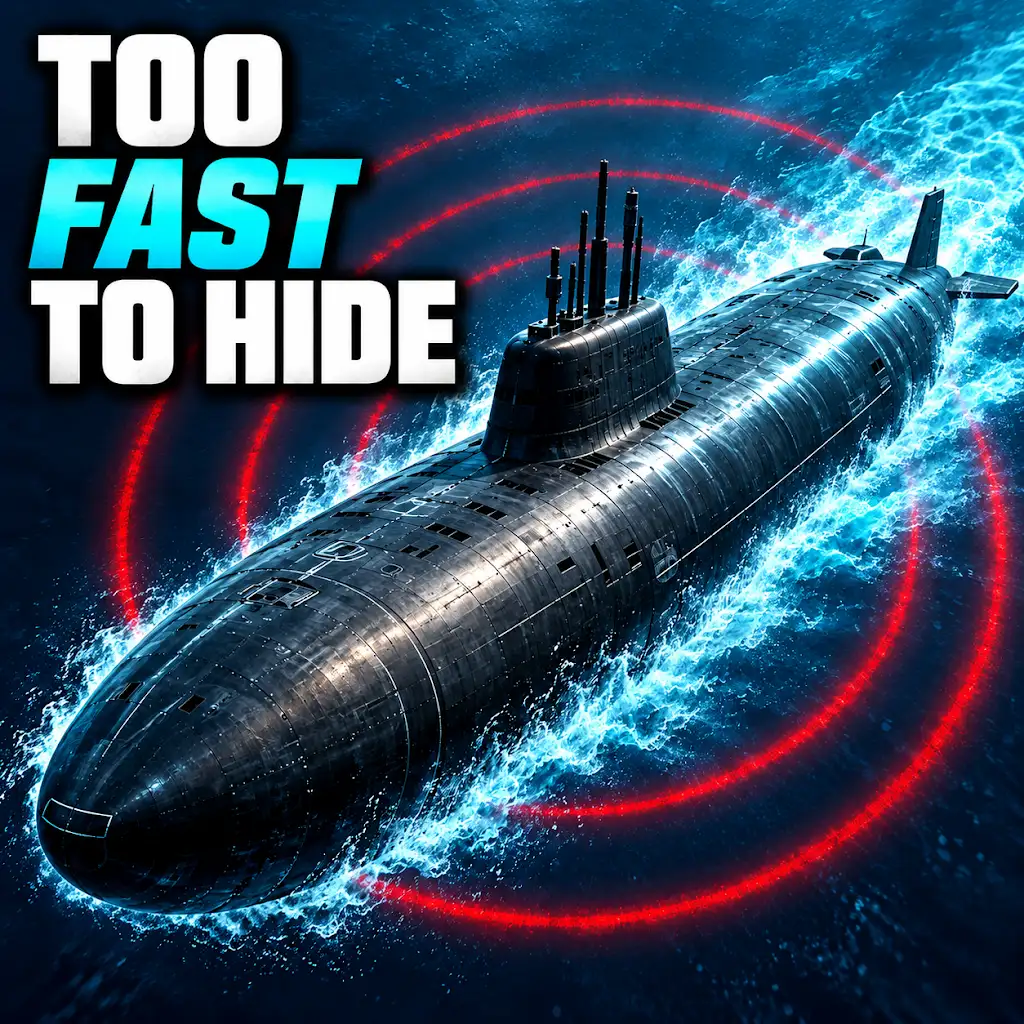
The Soviet Submarine That Broke a Speed Record—and Its Own Stealth
FAQs
What was the Soviet submarine design flaw related to high speed noise?
The Soviet submarine design flaw related to high speed noise was the excessive noise generated by the propellers at high speeds, which made the submarines easily detectable by enemy sonar systems.
How did the high speed noise affect the stealth capabilities of Soviet submarines?
The high speed noise made the Soviet submarines less stealthy, as it increased their acoustic signature and made them easier to detect by enemy anti-submarine warfare systems.
What were the consequences of the Soviet submarine design flaw on their operational effectiveness?
The design flaw of high speed noise compromised the operational effectiveness of Soviet submarines, as it limited their ability to operate covertly and carry out missions without being detected by enemy forces.
Did the Soviet Navy take any measures to address the high speed noise issue in their submarines?
Yes, the Soviet Navy implemented various measures to address the high speed noise issue in their submarines, including redesigning the propellers, improving sound insulation, and developing quieter propulsion systems.
How did the Soviet submarine design flaw impact their overall naval strategy and capabilities?
The Soviet submarine design flaw of high speed noise had a significant impact on their overall naval strategy and capabilities, as it undermined their ability to conduct stealthy operations and maintain a credible deterrent against potential adversaries.