The seemingly invincible Japanese Empire, basking in the glow of its swift and devastating victory at Pearl Harbor, stood at a precipice. The attack on December 7, 1941, had achieved its immediate objectives: crippling the U.S. Pacific Fleet and asserting Japanese dominance in the region. Yet, in the longer arc of history, this audacious strike would prove to be a monumental miscalculation, a tactical triumph that sowed the seeds of strategic defeat. The months following Pearl Harbor were a desperate scramble for survival for the Allied forces, a period characterized by relentless Japanese expansion. However, beneath the surface of this initial Japanese momentum, the seeds of their eventual downfall were being sown, and a nascent American resolve was hardening. The Battle of Midway, a mere six months after Pearl Harbor, would become the crucible where this shift, this turning of the tide, was irrevocably forged.
The dawn of December 7, 1941, was not merely a Sunday for those in Hawaii; it was a cataclysm that irrevocably altered the course of American history and its place in the world. The surprise attack on Pearl Harbor was a masterclass in naval warfare, executed with precision and ruthless efficiency. The Imperial Japanese Navy’s goal was clear: to neutralize the United States’ Pacific Fleet, thereby securing Japan’s burgeoning empire and preventing American interference in its expansionist ambitions across Southeast Asia and the Pacific.
A Devastating Blow to American Naval Power
The initial wave of Japanese bombers and torpedo planes descended upon the unsuspecting naval base with devastating effect. Battleships, the pride of the U.S. Navy, were caught at their moorings, vulnerable and unable to effectively retaliate. The USS Arizona, a symbol of American naval might, was obliterated in a fiery explosion, becoming an enduring emblem of the attack’s savagery. Other battleships, though damaged, were not sunk and would eventually be repaired, a testament to American industrial capacity and the resilience of its personnel. The attack inflicted severe losses, including over 2,400 American lives and significant damage to crucial naval assets.
The Galvanizing Effect of Aggression
While the immediate impact was one of shock and despair, the attack on Pearl Harbor had an unintended but profound consequence: it unified a previously divided American public. The isolationist sentiments that had held sway for years evaporated overnight, replaced by a burning sense of outrage and a collective desire for retribution. President Franklin D. Roosevelt famously declared December 7th “a date which will live in infamy,” a sentiment that resonated deeply across the nation. The United States, forced from its isolationist slumber, now stood fully committed to the global conflict.
The Illusion of Invincibility: Japan’s Initial Gains
In the immediate aftermath of Pearl Harbor, Japan appeared unstoppable. The swiftness and effectiveness of their attack fostered an aura of invincibility around the Imperial Japanese Navy. The crippled U.S. Pacific Fleet, though not entirely destroyed, was significantly hobbled, leaving the vast expanse of the Pacific vulnerable. This perceived weakness emboldened Japan to launch a series of lightning-fast offensives across the Pacific, rapidly expanding their territorial gains.
The attack on Pearl Harbor marked a pivotal moment in World War II, leading to the United States’ entry into the conflict and setting the stage for significant naval battles in the Pacific. One of the most crucial encounters that followed was the Battle of Midway, which turned the tide in favor of the Allies. For a deeper understanding of these events and their impact on the war, you can read a related article that explores the strategies and outcomes of these battles at In The War Room.
The Expanding Japanese Empire: A Pacific Dominion
The initial success at Pearl Harbor provided Japan with the breathing room it desperately needed to consolidate its gains and project its power across the Pacific. For the subsequent months, the Japanese military machine moved with breathtaking speed, achieving a string of victories that seemed to confirm their ascendant power.
The Fall of Southeast Asian Strongholds
Following the attack on Pearl Harbor, Japanese forces launched coordinated assaults across Southeast Asia. The seemingly impregnable British fortress of Singapore fell in February 1942, a humiliating defeat that sent shockwaves through the Allied powers. The Philippines, occupied by American and Filipino forces, also succumbed to the relentless Japanese advance, leading to the infamous Bataan Death March, a brutal testament to the harsh realities of Japanese occupation. The Dutch East Indies, rich in vital oil resources, were swiftly conquered, further bolstering Japan’s strategic position and economic capabilities.
Naval Dominance and the “Great East Asia Co-Prosperity Sphere”
With the U.S. Pacific Fleet in disarray, Japan’s naval superiority allowed it to control key sea lanes and project its influence throughout the region. The concept of the “Greater East Asia Co-Prosperity Sphere,” a Japanese vision of a self-sufficient Asian bloc free from Western influence, seemed to be rapidly materializing. Japan positioned itself as the liberator of Asian nations from colonial powers, though in practice, this liberation often meant a replacement of Western overlords with Japanese ones.
The Strategic Overreach: Seeds of Vulnerability
While the territorial gains were impressive, they also represented a significant strategic overreach. The vastness of the conquered territories stretched Japanese resources and military capabilities thin. Maintaining control over such a large and diverse area, coupled with a relentless expansionist policy, created logistical nightmares and sowed the seeds of resentment among the subjugated populations. The very scale of their victories made them more vulnerable to concentrated counterattacks.
The Undercurrent of Resistance: Early American Efforts

Despite the overwhelming initial Japanese successes, the American military and intelligence apparatus, though reeling, did not succumb to despair. Behind the scenes, a fierce determination to fight back began to take root, fueled by the national outrage and the strategic imperative to regain lost ground.
The Doolittle Raid: A Morale Booster and a Warning
In April 1942, a daring and almost suicidal mission known as the Doolittle Raid provided a much-needed psychological boost for the American public. B-25 bombers, launched from the aircraft carrier USS Hornet, attacked Tokyo and other Japanese cities. While the military damage was limited, the psychological impact was immense. It demonstrated that Japan was not immune to attack and provided a symbolic retaliation for Pearl Harbor, bolstering American morale. More importantly, it forced the Japanese military to confront the vulnerability of their home islands.
The Codebreakers: Unlocking the Enemy’s Secrets
Crucial to the eventual turning of the tide was the tireless work of American cryptanalysts. Stationed at Pearl Harbor and later in Melbourne, Australia, the codebreakers of Station Hypo, led by Joseph Rochefort, worked diligently to decipher Japanese naval communications. Their breakthrough in cracking the JN-25 code was a watershed moment, providing invaluable intelligence about Japanese intentions and movements. This intelligence was the lifeblood that would eventually allow American forces to anticipate and counter Japanese strategies.
The Silent Service: The Submarine Campaign
While often overshadowed by the larger naval battles, the American submarine campaign played a vital role in disrupting Japanese supply lines and inflicting significant damage on their merchant and naval shipping. Operating in a dangerous and often lonely environment, American submariners proved to be a constant thorn in Japan’s side, slowly but surely eroding their logistical capabilities and limiting their ability to reinforce their vast empire.
The Crucible of Midway: The Decisive Engagement

The Battle of Midway, fought from June 4th to June 7th, 1942, represents the pivotal moment where the momentum of the Pacific War irrevocably shifted. It was a clash of titans, a daring gamble by both sides, and a testament to the strategic brilliance and sheer luck that can define the outcome of a battle.
Yamamoto’s Grand Design: The Lure of Midway
Admiral Isoroku Yamamoto, the architect of the Pearl Harbor attack, envisioned a decisive fleet engagement that would annihilate the remaining U.S. Pacific Fleet and force America to sue for peace. His plan involved luring the American carriers into a trap near the strategically important Midway Atoll, a key American outpost in the central Pacific. The Japanese assembled an overwhelming force, including four of their most powerful aircraft carriers, the Akagi, Kaga, Soryu, and Hiryu.
The American Response: A Calculated Risk
Despite being outnumbered in terms of ships, Admiral Chester W. Nimitz, commander-in-chief of the U.S. Pacific Fleet, had a crucial advantage: intelligence. Thanks to the codebreakers, Nimitz knew the target of Yamamoto’s offensive and the approximate timing. He chose to concentrate his limited carrier forces, the USS Enterprise, USS Hornet, and USS Yorktown, to ambush the Japanese fleet. The strategy was a high-stakes gamble, relying on speed, surprise, and the effectiveness of American carrier aircraft.
The Day of Reckoning: June 4th, 1942
The battle commenced in the early morning of June 4th. The initial Japanese attack on Midway Atoll was successful, but it left their carrier strike forces vulnerable. American torpedo bombers, flying low and slow, suffered horrific casualties but managed to draw the Japanese fighter screen away from their more heavily armed dive bombers. It was the dive bombers that inflicted the fatal blows, catching the Japanese carriers at a critical moment when their decks were crowded with fueled and armed aircraft, readying for a second strike.
The Destruction of the Japanese Carrier Force
Within a matter of hours, the pride of the Imperial Japanese Navy was shattered. The Akagi, Kaga, and Soryu were engulfed in flames and eventually scuttled. The Hiryu, the last remaining Japanese carrier, managed to launch a counterattack that severely damaged the USS Yorktown, but it too was subsequently sunk by American torpedoes. The loss of four of Japan’s most experienced aircraft carriers, along with a significant number of its veteran pilots, was a blow from which the Imperial Japanese Navy would never fully recover.
The events surrounding Pearl Harbor and the subsequent Battle of Midway were pivotal moments in World War II, showcasing the strategic shifts in naval warfare. For a deeper understanding of these battles and their impact on the war, you can explore a related article that delves into the intricacies of these historic confrontations. This insightful piece not only highlights the significance of Pearl Harbor but also examines how it set the stage for the decisive victory at Midway. To read more about this fascinating topic, visit this article.
The Aftermath: A New Dawn for the Pacific War
| Event | Date | Location | Significance |
|---|---|---|---|
| Pearl Harbor Attack | December 7, 1941 | Pearl Harbor, Hawaii | Surprise military strike by the Imperial Japanese Navy against the United States naval base, leading to the entry of the United States into World War II. |
| Battle of Midway | June 4-7, 1942 | Midway Atoll, Pacific Ocean | Turning point in the Pacific War, where the United States Navy defeated a Japanese attack against Midway Atoll, resulting in significant damage to the Japanese fleet and a shift in the balance of power in the Pacific. |
The Battle of Midway was not just a tactical victory; it was a strategic masterpiece that fundamentally altered the balance of power in the Pacific. The decisive American triumph marked the end of Japan’s offensive capabilities and the beginning of a long and arduous Allied counteroffensive.
The Strategic Initiative Shifts
With the destruction of its carrier force, Japan was forced onto the defensive. The initiative in the Pacific War passed from the aggressor to the defender. The vast resources and industrial might of the United States, now fully mobilized, began to assert their dominance. The subsequent island-hopping campaigns, commencing with Guadalcanal, would see American forces systematically retake territory and push the Japanese back towards their homeland.
The Devastating Loss of Experienced Aircrews
Beyond the loss of ships, the battle represented a catastrophic loss of trained and experienced naval aviators for Japan. These pilots were incredibly difficult to replace, and their absence had a profound and lasting impact on the effectiveness of Japanese naval aviation throughout the remainder of the war.
The Psychological Impact and Renewed Allied Resolve
The victory at Midway had a profound psychological impact on both sides. For the Allies, it was a massive morale boost, a tangible sign that the seemingly invincible Japanese could be defeated. For Japan, it was a stark realization that their dream of Pacific dominance was slipping away, a bitter pill that fueled a desperate and often fanatical resistance in the years to come. The battle solidified Allied resolve and paved the way for the eventual Allied victory in the Pacific. The tide had irrevocably turned, and the long road to Tokyo had begun.
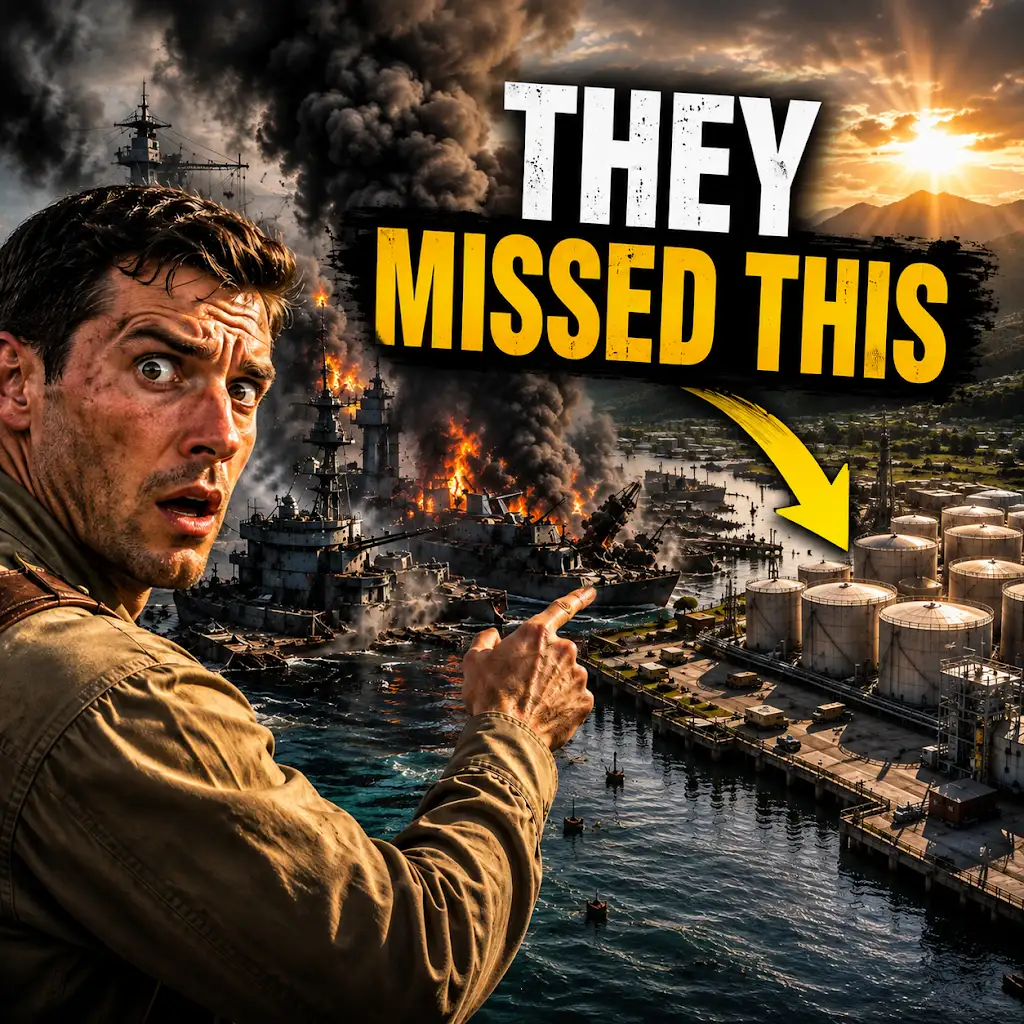
Japan Won Pearl Harbor—So Why Did It Lose the War?
FAQs
1. What was the significance of the attack on Pearl Harbor?
The attack on Pearl Harbor, which occurred on December 7, 1941, was a surprise military strike by the Imperial Japanese Navy against the United States naval base at Pearl Harbor, Hawaii. The attack led to the United States’ entry into World War II.
2. What was the Battle of Midway and why was it important?
The Battle of Midway, which took place from June 4 to 7, 1942, was a crucial naval battle between the United States and Japan. It marked a turning point in the Pacific Theater of World War II, as the United States successfully defeated a Japanese attack and inflicted significant damage on the Japanese fleet, shifting the balance of power in the Pacific.
3. How did the events at Pearl Harbor lead to the Battle of Midway?
The attack on Pearl Harbor prompted the United States to fully commit to the war effort in the Pacific. The devastating loss at Pearl Harbor galvanized the American public and military, leading to increased resources and strategic focus on the Pacific Theater. This ultimately set the stage for the Battle of Midway, where the United States was able to turn the tide of the war in the Pacific.
4. What were the key outcomes of the Battle of Midway?
The Battle of Midway resulted in a decisive victory for the United States, as they were able to destroy four Japanese aircraft carriers and effectively cripple the Japanese Navy’s offensive capabilities. This victory significantly weakened Japan’s position in the Pacific and allowed the United States to take the offensive in the region.
5. How did the events at Pearl Harbor and the Battle of Midway impact the course of World War II?
The events at Pearl Harbor and the Battle of Midway were pivotal moments in World War II, as they shifted the balance of power in the Pacific and ultimately contributed to the eventual defeat of Japan. The United States’ successful response to the attacks demonstrated their military strength and resolve, ultimately leading to the liberation of the Pacific from Japanese control.