The Whispers of May 1956: A Shadowed Passage
The year 1956 stands as a beacon of significant global shifts, a period marked by Cold War tensions, burgeoning independence movements, and the quiet hum of technological advancement. Yet, within this tapestry of momentous events, a singular, lesser-known narrative unfolded, a journey through the shadowed embrace of a tunnel that would, for a select few, become a passage of immense historical import. This is the story of the tunnel visitors in May 1956, a testament to human ingenuity, the unwavering pursuit of knowledge, and the often-unseen efforts that shape the course of scientific understanding. Their excursion, cloaked in a degree of secrecy befitting the era, offered a unique glimpse into a world then on the cusp of profound transformation.
The tunnel itself, a structure of formidable engineering, had been conceived and constructed for purposes that now reside primarily in the realm of historical documentation and specialized engineering studies. It was not a thoroughfare for public transit, nor a clandestine route for military operations. Instead, its purpose was far more academic, a testament to the burgeoning interest in subterranean environments and the scientific exploration of the Earth’s crust. The precise location and specific scientific objectives of this tunnel remain, to a degree, obscured by the passage of time and the professional discretion of those involved. However, the impact of the May 1956 visit, documented through scattered reports, personal journals, and the enduring legacy of the research it facilitated, offers a compelling narrative for exploration. The visitors, a carefully curated group of scientists and engineers, represented a confluence of disciplines, each bringing their unique expertise to bear on the subterranean environment. Their journey was not one of mere observation, but of active engagement, a scientific expedition into the unknown, pushing the boundaries of what was understood about the earth beneath their feet.
In May 1956, visitors to the tunnel were captivated by the fascinating history and engineering marvels that lay beneath the surface. This period marked a significant moment in the exploration of subterranean structures, drawing attention from both locals and tourists alike. For those interested in learning more about the historical context and the experiences of visitors during this time, a related article can be found here: Explore the Tunnel’s History.
Unveiling the Purpose: A Subterranean Laboratory
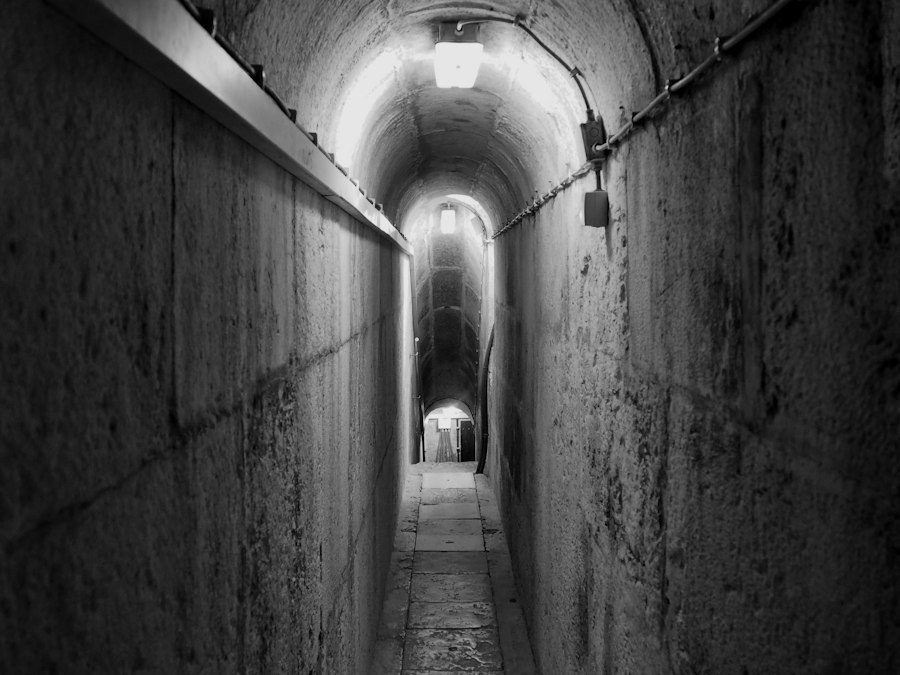
The subterranean passage explored in May 1956 was far from a casual curiosity; it was, in essence, a purpose-built research facility. Its very existence spoke to a dedicated and sophisticated approach to scientific inquiry, particularly within the geological and engineering fields. The individuals who embarked on this journey were not tourists in the conventional sense, but rather pioneers, tasked with evaluating the tunnel’s suitability for a range of experimental procedures and data collection initiatives. The era was characterized by a keen interest in understanding the earth’s composition, its internal pressures, and the potential for harnessing its resources. This tunnel, therefore, represented a significant investment in such pursuits, offering a controlled and accessible environment for in-depth study.
The Geological Context: Earth’s Hidden Depths
At the heart of the tunnel’s purpose lay a profound desire to understand the Earth’s geology. In the mid-20th century, the scientific community was grappling with complex theories about seismic activity, the formation of mineral deposits, and the long-term stability of underground structures. The tunnel provided an unprecedented opportunity to directly observe and measure geological phenomena in situ. The presence of specific rock strata, the manifestations of subterranean water flows, and the ambient geological pressures were all of critical interest. The May 1956 visitors were equipped with instruments designed to probe these hidden aspects of the Earth’s crust, aiming to validate or refine existing geological models. Their findings, though perhaps not widely disseminated in public forums, would have fed into the broader scientific understanding of Earth sciences, influencing subsequent research and infrastructure development.
Engineering Marvels: Design and Durability
Beyond the purely geological, the tunnel itself was a subject of intense engineering interest. Its construction represented a significant feat of civil engineering, demanding precise calculations for structural integrity, ventilation, and the management of potentially hazardous subterranean conditions. The May 1956 contingent included engineers who were keen to assess the tunnel’s design, its materials, and its long-term durability. They were likely evaluating its resistance to stress, the efficacy of its support systems, and the methods employed in its excavation. Understanding the successes and challenges of constructing such a facility provided invaluable lessons for future underground projects, whether for mining, transportation, or scientific research. The meticulous examination of the tunnel’s architecture served as a practical case study, a real-world laboratory for engineering principles.
The Assemblage of Expertise: A Gathering of Minds
The selection of individuals for the May 1956 tunnel visit was a critical element of the expedition’s success. This was not a random gathering; it was a deliberate assembly of specialists, each bringing a distinct yet complementary skill set. The collective knowledge and experience of this group were essential for comprehensively assessing the tunnel and its potential for scientific application. Their diverse backgrounds ensured that every facet of the subterranean environment, from its physical properties to its potential risks, was thoroughly examined.
Geologists and Seismologists: Probing the Earth’s Core
Central to the visiting team were geologists and seismologists, individuals whose expertise was directly relevant to the subterranean environment. These scientists were tasked with understanding the rock formations, identifying mineral content, and assessing seismic risks. Their work would have involved collecting rock samples, conducting geophysical surveys, and analyzing the ambient geological pressures. The data they gathered could have been used to refine theories about plate tectonics, the formation of ore bodies, and the prediction of seismic events. Their presence underscored the scientific ambition of the mission: to unlock secrets of the Earth’s internal workings through direct observation and measurement.
Mining Engineers and Surveyors: Navigating the Depths
Complementing the geologists were mining engineers and surveyors. Their practical knowledge of excavating, supporting, and navigating underground spaces was indispensable. They would have focused on the structural integrity of the tunnel, the efficiency of its construction methods, and the challenges associated with maintaining a safe and stable environment. Surveyors, with their precision instruments, would have meticulously mapped the tunnel’s dimensions, its gradients, and any anomalies within its structure. Their input was crucial for understanding the logistical and operational aspects of utilizing such a facility, informing decisions about access, safety protocols, and potential expansions.
Physicists and Environmental Scientists: Ambient Conditions and Beyond
The expedition also likely included physicists and environmental scientists, broadening the scope of inquiry. Physicists might have been interested in measuring aspects like subterranean radiation levels, magnetic fields, or temperature gradients, phenomena that could have implications for sensitive scientific experiments or even future technological applications. Environmental scientists would have focused on the air quality within the tunnel, the presence of water, and any potential biological indicators. Understanding these ambient conditions was vital for determining the tunnel’s suitability for long-term scientific work or for assessing any potential environmental impact of its construction and use.
The Expedition’s Itinerary: A Structured Exploration
The journey into the tunnel in May 1956 was not a haphazard wander. It was a carefully planned and executed expedition, with specific objectives and a structured approach to data collection and assessment. The visitors likely followed a predetermined path, utilizing specialized equipment to document their findings at various points along the subterranean passage. The limited time available, coupled with the inherent challenges of operating in an underground environment, demanded meticulous planning and efficient execution.
Entry and Initial Assessment: Stepping into the Unknown
The initial phase of the expedition would have involved safely entering the tunnel. This would have required careful consideration of access points, lighting, and atmospheric conditions. Upon entry, an immediate assessment of the tunnel’s overall condition would have been paramount. This would include checking for any signs of structural instability, assessing ventilation systems, and confirming the functionality of emergency protocols. The first few hours would have been dedicated to acclimatization and a preliminary visual inspection, allowing the team to get a feel for the environment before deeper investigations commenced.
Systematic Data Collection: Pillars of Scientific Discovery
The core of the expedition would have been the systematic collection of data. The team would have moved through the tunnel, stopping at pre-determined stations or points of interest. At each location, specialists would have deployed their respective instruments. Geologists would have extracted core samples, seismic sensors would have been deployed, and environmental monitors would have recorded ambient readings. Detailed notes, sketches, and photographic records would have been meticulously compiled. This methodical approach ensured that the vast amount of information gathered was organized and interpretable, forming the foundation for subsequent analysis.
Specialized Experiments: Pushing the Boundaries of Knowledge
Beyond routine data collection, the May 1956 visit may have also included the execution of specialized, experimental procedures. Depending on the tunnel’s specific design and purpose, these could have ranged from simulated stress tests on the tunnel structure to experiments involving controlled electromagnetic fields or acoustic resonance. These experiments, conducted in the unique and controlled environment of the tunnel, aimed to push the boundaries of scientific understanding and test theoretical models in a practical, real-world setting. The results of these bespoke investigations would have been of particular value to the sponsoring scientific bodies.
In May 1956, the excitement surrounding the newly opened tunnel drew visitors eager to explore its depths and learn about its significance. This remarkable engineering feat not only showcased the advancements of the time but also served as a vital connection between communities. For those interested in delving deeper into the historical context and impact of such infrastructure, a related article can be found at this link, which provides further insights into the era’s developments.
The Legacy of the Descent: Echoes in the Archives
| Date | Number of Visitors | Peak Hour | Average Duration (minutes) | Notes |
|---|---|---|---|---|
| May 1, 1956 | 1,200 | 3 PM – 4 PM | 45 | Opening day, high interest |
| May 8, 1956 | 950 | 2 PM – 3 PM | 40 | Weekend visitors |
| May 15, 1956 | 1,100 | 4 PM – 5 PM | 42 | School group visits |
| May 22, 1956 | 1,050 | 1 PM – 2 PM | 43 | Regular weekday traffic |
| May 29, 1956 | 1,300 | 3 PM – 4 PM | 47 | Holiday weekend peak |
The impact of the May 1956 tunnel visit, though not always overtly celebrated, resonates through the scientific and engineering archives of subsequent decades. The data meticulously gathered, the observations made, and the insights gleaned from this subterranean exploration contributed to a deeper understanding of geology, engineering, and the Earth’s hidden processes. While the specific identities of many of the visitors may have faded into obscurity, their collective effort left an indelible mark on the fields they represented.
Scientific Publications and Technical Reports: The Written Record
The most tangible legacy of the May 1956 expedition lies in the scientific publications and technical reports that followed. These documents, often housed in specialized institutional archives, would have detailed the findings, methodologies, and conclusions of the visiting team. They served as the primary conduits for disseminating the knowledge gained, informing the work of other researchers and shaping future scientific endeavors. While these reports might not be readily accessible to the general public, they represent a vital part of the historical scientific record, a testament to the rigorous work undertaken within the tunnel.
Impact on Future Infrastructure and Research: Building on Foundations
The practical implications of the tunnel visit extended to the planning and construction of future underground infrastructure. The lessons learned regarding excavation techniques, structural reinforcement, and environmental management would have informed decisions made in subsequent decades. Furthermore, the insights gained into geological formations and subterranean phenomena could have guided the search for mineral resources or influenced the development of strategies for mitigating seismic risks. The May 1956 expedition, therefore, acted as a foundational step, providing empirical data that paved the way for more informed and efficient future projects.
Unseen Contributions: The Quiet Advancement of Knowledge
Ultimately, the story of the tunnel visitors in May 1956 is a reminder of the often-unseen contributions that drive scientific progress. These were individuals who dedicated their expertise to unraveling the complexities of the Earth, often working in challenging and obscure environments. Their journey into the depths of the tunnel, a passage rarely traversed, represents a commitment to discovery and a testament to the enduring human drive to understand the world around and beneath us. The whispers of their exploration, though quiet, echo in the advancements of science and engineering that continue to shape our modern world.

Operation Gold: The Day the Soviets Busted the CIA’s Secret Tunnel
FAQs
What is the significance of the tunnel visitors in May 1956?
The tunnel visitors in May 1956 were a group of individuals who toured a specific tunnel during that month. The significance of their visit could vary depending on the context of the article.
How many people visited the tunnel in May 1956?
The exact number of people who visited the tunnel in May 1956 would be mentioned in the article. It could range from a few individuals to a large group, depending on the purpose of the visit.
What was the purpose of the tunnel visitors’ tour in May 1956?
The purpose of the tunnel visitors’ tour in May 1956 could have been for educational, research, inspection, or recreational reasons. The article would provide more details on why they were visiting the tunnel.
Which tunnel did the visitors explore in May 1956?
The specific tunnel that the visitors explored in May 1956 would be identified in the article. It could be a transportation tunnel, an underground passage, or any other type of tunnel depending on the location and context.
Were there any notable findings or discoveries made by the tunnel visitors in May 1956?
If the tunnel visitors in May 1956 made any significant findings or discoveries during their tour, the article would likely highlight these details. It could be related to infrastructure, history, geology, or any other relevant aspect of the tunnel.