The geopolitical landscape of the 21st century is defined by a complex interplay of long-standing alliances and emerging strategic imperatives. Among these, the North Atlantic Treaty Organization (NATO) and Russia’s evolving approach to the Arctic stand out as two of the most significant and potentially combustible factors. The expansion of NATO, a defensive alliance initially formed to counter the Soviet Union, has been a persistent source of tension with Moscow. Simultaneously, the accelerating strategic importance of the Arctic, driven by climate change and the opening of new trade routes and resource access, has become a central arena for Russian national strategy. Understanding the intricate relationship between NATO expansion and Russia’s Arctic strategy is crucial for comprehending the current state of global security and anticipating future challenges.
The North Atlantic Treaty Organization was established in 1949, a product of the Cold War’s existential threat. Its foundational purpose was to provide collective security for its Western European and North American members against Soviet aggression. For decades, the alliance’s membership remained largely static, a testament to the rigid bipolar world order. However, the dissolution of the Soviet Union in 1991 opened a new chapter for NATO, ushering in an era of eastward expansion.
The Post-Cold War Reorientation
Following the collapse of the Warsaw Pact, many Central and Eastern European nations, having experienced decades of Soviet domination, sought closer ties with the West and security assurances. This desire for integration found a receptive audience within NATO, which saw an opportunity to promote democratic values, stability, and economic development in the newly liberated states.
The First Wave of Expansion
The initial phase of NATO enlargement saw the inclusion of Poland, Hungary, and the Czech Republic in 1999. This move was met with considerable apprehension from Russia, which viewed it as a betrayal of informal understandings reached during the German reunification process. Moscow argued that the West had promised not to expand NATO eastward, a claim that NATO members have consistently denied, stating no formal agreement was ever made.
Subsequent Enlargements and Growing Russian Discontent
Subsequent waves of expansion further solidified NATO’s presence closer to Russia’s borders. In 2004, Bulgaria, Estonia, Latvia, Lithuania, Romania, Slovakia, and Slovenia joined the alliance. The 2009 accession of Albania and Croatia, followed by Montenegro in 2017 and North Macedonia in 2020, continued this trend. Each of these expansions, while framed by NATO as a voluntary choice by sovereign nations seeking security, was perceived by Russia as an increasingly provocative encirclement, eroding its perceived security buffer and infringing upon its sphere of influence. The language used by Russian officials evolved from cautious concern to outright condemnation, highlighting a growing sense of strategic vulnerability.
The Strategic Rationale Behind NATO’s Enlargement
From NATO’s perspective, the expansion was driven by several interconnected strategic rationales. The primary objective was to foster a stable and secure Europe by integrating former Soviet bloc nations into the transatlantic security framework.
Promoting Democracy and Market Economies
NATO membership was seen as a powerful incentive for aspiring democracies to implement reforms, strengthen the rule of law, and embrace market economies. The shared values of democracy, individual liberty, and the rule of law were central to NATO’s identity, and its expansion was intended to bolster these principles across a wider European landscape.
Preventing Resurgent Authoritarianism
Another key driver was the concern that a failure to integrate these nations could leave them vulnerable to renewed Russian influence or even aggression. By incorporating them into a collective defense alliance, NATO aimed to prevent a resurgence of authoritarianism and ensure that these countries would not be drawn back into a Russian orbit.
Enhancing Collective Security Capabilities
The enlargement also aimed to enhance the overall security capabilities of the alliance by adding new members with potentially valuable military contributions and strategically important geographical locations. This was particularly relevant in terms of securing Eastern and Southern Europe.
The ongoing discussions surrounding NATO expansion and Russia’s Arctic strategy have significant implications for global security dynamics. A related article that delves deeper into these issues can be found at In the War Room, where experts analyze the geopolitical tensions and the strategic maneuvers of both NATO and Russia in the Arctic region. This article provides valuable insights into how these developments may shape future military and diplomatic engagements in one of the world’s most contested areas.
Russia’s Arctic Strategy: A New Frontier
While NATO expansion has been a long-standing point of contention, Russia’s strategic focus on the Arctic has gained significant momentum in recent decades. This shift is driven by a confluence of factors, most notably the accelerating impact of climate change, which is transforming the region’s geography and accessibility.
The Geopolitical and Economic Imperatives of the Arctic
The Arctic is no longer a remote, frozen wasteland. Its strategic importance is rapidly escalating due to several critical developments:
Melting Ice and New Trade Routes
The dramatic melting of Arctic sea ice has opened up new shipping routes, most notably the Northern Sea Route (NSR) along Russia’s northern coast. This route offers a significantly shorter transit time between Asia and Europe compared to traditional routes through the Suez Canal, promising substantial economic benefits for nations with Arctic coastlines.
Resource Extraction Potential
The Arctic is also believed to hold vast untapped reserves of oil, natural gas, and other mineral resources. As these resources become more accessible, the region is attracting increased interest from both state and non-state actors seeking to exploit them. This potential for resource wealth is a major driver of Russia’s strategic calculus.
Military and Strategic Considerations
Beyond economics, the Arctic holds significant military and strategic value. The region’s waterways are crucial for naval deployments, and its vastness presents challenges and opportunities for military presence and surveillance. The opening of the NSR, for instance, has implications for naval power projection and maritime security.
Russia’s Assertive Arctic Posture
Russia has been the most assertive player in the Arctic, actively seeking to solidify its claims and enhance its capabilities in the region. This has manifested in a multi-pronged approach encompassing military modernization, infrastructure development, and diplomatic engagement.
Reopening Soviet-Era Bases and Military Buildup
A key element of Russia’s strategy has been the reopening and modernization of Soviet-era military bases and the establishment of new ones across its Arctic coastline. This includes the deployment of advanced military hardware, including fighter jets, bombers, and missile systems, as well as the strengthening of its Northern Fleet. The rationale is to project power, defend its vast Arctic territory, and ensure freedom of navigation for its own vessels.
Developing the Northern Sea Route (NSR)
Russia views the NSR as a critical national project and has invested heavily in its development. This includes building icebreaker fleets, expanding port infrastructure, and establishing navigation and search-and-rescue services. Moscow views the NSR as a vital artery for its economic future and asserts its right to regulate passage along the route, a stance that has drawn scrutiny from other Arctic nations and international maritime organizations.
Asserting Sovereignty and Resource Claims
Russia is actively asserting its sovereignty over its Arctic territories and its exclusive economic zone. This includes conducting extensive geological surveys to bolster claims for extended continental shelves, which could grant it rights to vast seabed resources. Moscow has also been vocal in advocating for its interpretation of international maritime law in the Arctic.
The Intersection: NATO Expansion’s Impact on Russia’s Arctic Strategy

The expansion of NATO, while not directly focused on the Arctic in its initial stages, has undoubtedly influenced Russia’s strategic thinking in the region. The perception of a shrinking security space and a growing threat from the West has amplified Moscow’s determination to secure its Arctic flank and project strength in what it considers its backyard.
The “Encirclement” Narrative and Arctic Defense
Russia’s long-standing narrative of being encircled by NATO has been a significant factor in its foreign policy. The eastward expansion of the alliance has been interpreted by Moscow as a deliberate attempt to diminish its influence and strategic autonomy. This perception directly spills over into its Arctic strategy.
Perceived Threat to Russian Arctic Territories
As NATO has expanded, particularly to include nations bordering the Baltic Sea and, indirectly, influencing the Arctic periphery through its members’ northern territories, Russia has increasingly viewed its Arctic borders as less secure. The potential for NATO forces to operate closer to its strategic Arctic assets, such as naval bases and resource exploration sites, has become a growing concern.
Increased Military Readiness and Forward Deployment
In response to this perceived threat, Russia has undertaken a significant military buildup in its Arctic regions. This is not solely driven by the Arctic’s inherent strategic value but also by the need to counter any potential incursions or threats emanating from a potentially hostile NATO presence in neighboring areas. The emphasis on robust air defense, naval power, and border security in the Arctic can be seen as a direct consequence of this broader security environment shaped by NATO expansion.
The Arctic as a Strategic Counterbalance
For Russia, its assertive Arctic strategy can also be viewed as a means to counterbalance perceived Western pressure elsewhere. By dominating the Arctic, Russia aims to secure a vital economic and strategic domain that it believes is less susceptible to direct Western military intervention.
Securing an Economic Lifeline
The economic potential of the Arctic, particularly through the NSR, offers Russia a degree of economic independence and leverage that could be particularly valuable in an environment of Western sanctions and economic pressure. This economic security is seen as a crucial component of its overall national security.
Demonstrating Sovereign Power and Influence
A strong military presence and control over its Arctic territories allow Russia to project an image of sovereign power and influence on the global stage. In a geopolitical environment where its influence in other regions might be challenged, the Arctic offers a tangible and demonstrable area of strength.
NATO’s Evolving Arctic Considerations
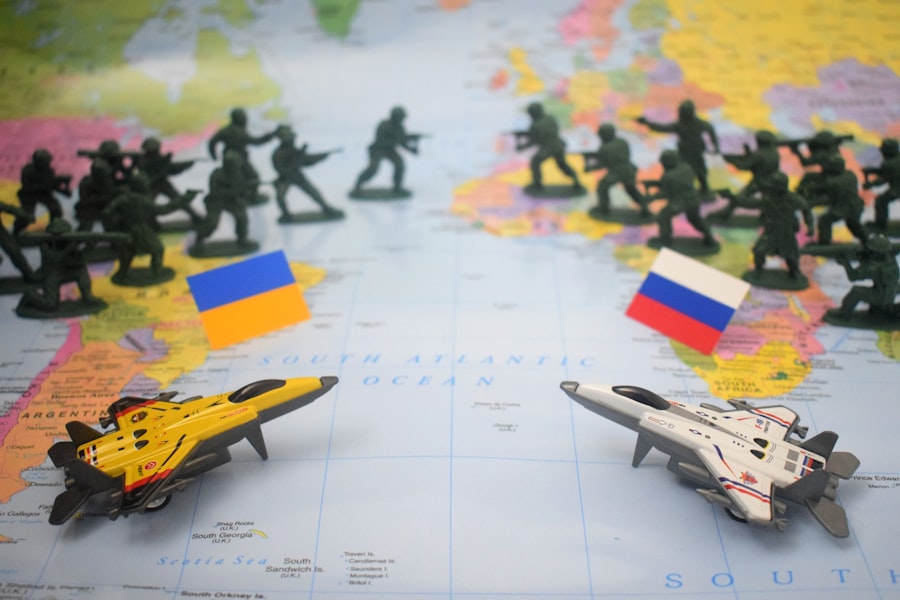
While NATO’s primary focus has historically been on the Euro-Atlantic area, the growing strategic importance of the Arctic has compelled the alliance to increasingly consider the region in its defense planning and strategic assessments.
The Arctic as a Region of Strategic Interest for NATO
The accelerating militarization of the Arctic, coupled with the increasing geopolitical competition, has elevated the Arctic’s status as a region of strategic interest for NATO members.
Emerging Security Challenges in the High North
NATO recognizes that the Arctic is not immune to broader security challenges. Issues such as maritime security, freedom of navigation, potential for miscalculation and escalation, and the impact of climate change on military operations are all concerns that require attention.
The Importance of Collective Defense in a Changing Arctic
For many NATO members, particularly those with Arctic coastlines like Norway, Denmark (via Greenland), Iceland, Canada, and the United States, the security of the High North is a direct concern. The alliance’s principle of collective defense is increasingly being applied to this evolving theater.
NATO’s Response to Russian Arctic Activities
NATO’s response to Russia’s assertive Arctic strategy has been measured but increasingly visible. The alliance is focused on maintaining deterrence, ensuring freedom of navigation, and promoting transparency and de-escalation.
Enhanced Surveillance and Reconnaissance
NATO members have increased their surveillance and reconnaissance activities in the Arctic region. This includes the use of maritime patrol aircraft, naval vessels, and satellite imagery to monitor Russian military movements and activities.
Joint Military Exercises in Northern Regions
NATO has also been conducting joint military exercises in the Arctic and sub-Arctic regions. These exercises are designed to enhance interoperability among member states, test defensive capabilities, and signal NATO’s commitment to the security of its northern flank. Examples include exercises like “Cold Response” in Norway.
Diplomatic Engagement and Arctic Council
While military readiness is crucial, NATO also engages in diplomatic efforts to manage Arctic security. Many NATO members are active participants in the Arctic Council, an intergovernmental forum promoting cooperation on Arctic issues, although Russia’s participation has been significantly curtailed in recent times. NATO also emphasizes the importance of adhering to international law and norms in the region.
The ongoing discussions surrounding NATO expansion and Russia’s Arctic strategy have significant implications for global security dynamics. A related article that delves deeper into these issues can be found on In The War Room, which explores how the Arctic region is becoming a focal point for military and geopolitical competition. For more insights, you can read the article here. Understanding these developments is crucial as nations navigate the complexities of territorial claims and military readiness in this strategically important area.
The Future of the Arctic: A Contested Domain
| Country | NATO Expansion | Russia Arctic Strategy |
|---|---|---|
| United States | Supports | Increasing military presence |
| Canada | Supports | Asserting sovereignty |
| Norway | Supports | Enhancing defense capabilities |
| Denmark | Supports | Monitoring Russian activities |
The interplay between NATO expansion and Russia’s Arctic strategy creates a complex and potentially volatile future for the region. The High North is increasingly becoming a domain of competition, where geopolitical rivalries are superimposed upon the environmental transformations driven by climate change.
The Risk of Escalation and Miscalculation
The heightened military presence and assertive posturing by both Russia and NATO members in the Arctic raise the risk of unintended escalation and miscalculation. Incidents at sea, airspace violations, or misinterpretations of military exercises could quickly spiral into more serious confrontations.
The Challenge of Maintaining Open Communication Channels
Given the current geopolitical climate, maintaining open and effective communication channels between NATO and Russia regarding Arctic activities is paramount. A lack of transparency and dialogue increases the potential for misunderstandings and accidental conflicts.
The Dual Nature of Arctic Development: Cooperation vs. Competition
While competition is evident, there are also areas where cooperation is essential for the sustainable development and security of the Arctic. This includes collaboration on search and rescue operations, environmental protection, and scientific research. However, the broader geopolitical tensions often overshadow these opportunities.
The Arctic as a Microcosm of Global Power Dynamics
The Arctic region, in many ways, serves as a microcosm of larger global power dynamics. The tensions between NATO and Russia in the Arctic reflect the broader strategic competition between these actors. The region’s future will likely be shaped by how effectively these global powers can manage their rivalries and find common ground for shared security and prosperity. The continued expansion of NATO and Russia’s determined efforts to secure its Arctic interests are inextricably linked, creating a dynamic that will define the geopolitical landscape of the High North for years to come. The challenge lies in navigating this complex terrain with a focus on de-escalation, transparency, and the pursuit of common interests, lest the melting ice of the Arctic usher in a new era of frozen conflict.

Russia’s Nuclear Submarines Depend on This Arctic Lifeline
FAQs
What is NATO expansion?
NATO expansion refers to the process of adding new member countries to the North Atlantic Treaty Organization. This expansion has occurred multiple times since the organization’s founding in 1949, with the most recent additions being Montenegro in 2017 and North Macedonia in 2020.
What is Russia’s Arctic strategy?
Russia’s Arctic strategy involves asserting its influence and control in the Arctic region, which is rich in natural resources and has strategic importance. This includes increasing military presence, developing infrastructure, and pursuing economic opportunities in the Arctic.
How does NATO expansion impact Russia’s Arctic strategy?
NATO expansion is viewed by Russia as a threat to its security and influence, particularly in the Arctic region. Russia sees the expansion of NATO as an attempt to encroach on its sphere of influence and has responded by increasing its military presence and activities in the Arctic.
What are the implications of NATO expansion for Arctic security?
NATO expansion has led to increased tensions in the Arctic region, as both NATO and Russia seek to assert their influence and protect their interests. This has raised concerns about the potential for military confrontation and the need for diplomatic efforts to manage these tensions.
What are the potential future developments in NATO expansion and Russia’s Arctic strategy?
The future of NATO expansion and Russia’s Arctic strategy is uncertain and will likely be influenced by geopolitical dynamics, economic interests, and security concerns. It is important for all parties involved to engage in dialogue and cooperation to prevent escalation and promote stability in the Arctic region.