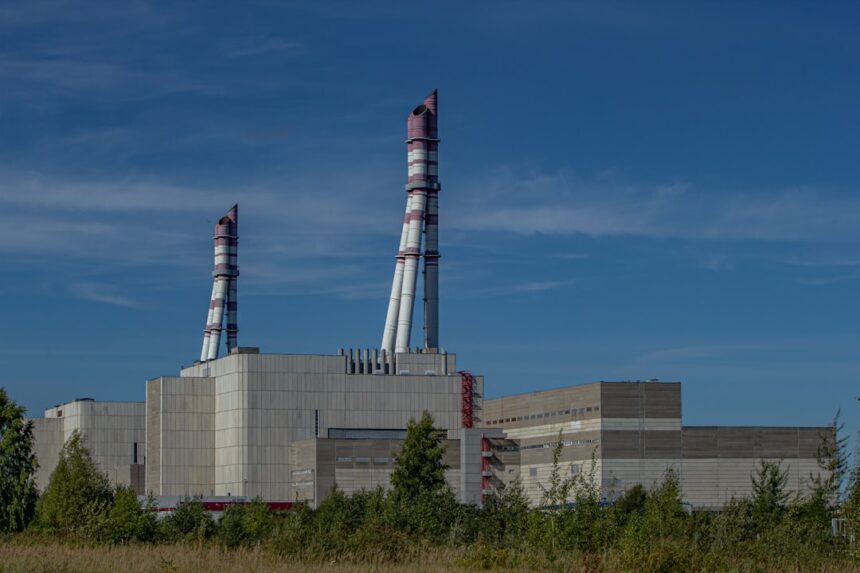
Nuclear reactors might sound like something out of a science fiction movie, but they’re actually quietly working behind the scenes to keep us healthy in very real ways. You might be surprised to learn just how essential they are to modern medicine, from helping doctors diagnose diseases to treating some of the most challenging cancers. Ultimately, these aren’t just powerhouses for electricity; they’re crucial tools in our fight for better health.
It’s easy to think of nuclear reactors purely in terms of energy generation for our homes and industries. But venture into the world of healthcare, and you’ll find their impact is just as profound, though perhaps less visible. Nuclear reactors are the unsung heroes of many medical procedures and diagnostic tools that we often take for granted. This isn’t about flashy headlines; it’s about the quiet, consistent production of materials and isotopes that enable life-saving treatments and accurate diagnoses.
The Heart of the Matter: Isotopes for Health
The real magic of nuclear reactors in medicine lies in their ability to produce radioactive isotopes. These are atoms with an unstable nucleus that emit radiation. While that might sound alarming, in controlled medical settings, this radiation is precisely what we need. It’s the key to seeing inside the body in ways that traditional imaging can’t, and it’s also a potent weapon against diseased cells.
What Exactly Are Radioactive Isotopes?
Think of isotopes as different versions of the same element. They have the same number of protons but a different number of neutrons. This difference in neutrons makes some isotopes unstable, meaning they want to shed some energy and particles to become stable. This shedding is what we call radioactive decay, and it’s this process that allows us to detect and utilize them in medicine.
From Reactor to Patient: The Production Pipeline
The journey of a medical isotope begins deep within a nuclear reactor. These reactors provide a controlled environment with a high neutron flux. When specific target materials are placed within this flux, they absorb neutrons, transforming into new, often radioactive, isotopes. These isotopes are then carefully extracted, purified, and prepared for medical use. It’s a complex process requiring specialized facilities and strict quality control to ensure safety and efficacy.
Modern medicine relies heavily on advancements in technology, and one of the critical components is the use of nuclear reactors. These reactors play a vital role in the production of medical isotopes, which are essential for various diagnostic and therapeutic procedures, including cancer treatment and imaging techniques. For a deeper understanding of this relationship between nuclear technology and healthcare, you can read more in the article found at this link.
Unveiling the Invisible: Nuclear Medicine Imaging
One of the most significant contributions of nuclear reactors to medicine is in the field of diagnostic imaging. We’re talking about techniques that allow doctors to visualize the inner workings of the body with incredible detail, spotting issues long before they become apparent in other ways.
The Power of PET Scans
Positron Emission Tomography (PET) scans are a prime example. These scans use radioactive tracers that are injected into the patient. These tracers, often produced using reactors (or cyclotrons, which are smaller particle accelerators often used for short-lived isotopes), emit positrons. When a positron meets an electron in the body, they annihilate each other, producing gamma rays. These gamma rays are detected by the PET scanner, creating detailed images of metabolic activity. This is invaluable for detecting cancers, assessing brain disorders like Alzheimer’s and Parkinson’s, and evaluating heart conditions.
How PET Scans See Metabolism
The key to PET scans is that they don’t just show anatomy; they show function. The radioactive tracers are designed to be taken up by specific tissues or organs based on their metabolic activity. For instance, a common tracer, Fluorodeoxyglucose (FDG), is a sugar molecule tagged with a radioactive isotope. Cancer cells often have a higher metabolic rate and absorb more glucose than healthy cells. Thus, a PET scan can light up cancerous tumors, revealing their location and extent.
The Role of Specific Isotopes in PET
Several isotopes are crucial for PET imaging. One of the most common is Fluorine-18 ($^{18}$F), which is used in FDG. $^{18}$F has a relatively short half-life (about 110 minutes), meaning it decays quickly. This is advantageous because it allows the patient to receive a dose and get scanned relatively soon after the isotope’s production, minimizing radiation exposure. Other isotopes like Carbon-11 ($^{11}$C) and Oxygen-15 ($^{15}$O) are also vital for specialized PET imaging, particularly in neurological research.
SPECT: A Different Kind of Radiographic Insight
Single-Photon Emission Computed Tomography (SPECT) is another key imaging technique that relies on radioactive isotopes. Similar to PET, SPECT uses injected radiopharmaceuticals, but instead of positrons, these compounds emit gamma rays directly. These gamma rays are detected by a rotating gamma camera, which builds a 3D image of the body’s organs and tissues. SPECT is widely used for evaluating heart function, diagnosing bone diseases, and assessing brain activity, particularly in relation to epilepsy and Parkinson’s disease.
Isotopes for SPECT Imaging
Commonly used isotopes in SPECT include Technetium-99m ($^{99m}$Tc), Iodine-123 ($^{123}$I), and Thallium-201 ($^{201}$Tl). $^{99m}$Tc is the workhorse of nuclear medicine, used in a vast array of SPECT procedures. It’s produced from Molybdenum-99 ($^{99}$Mo), which is itself a fission product generated in nuclear reactors. The relatively convenient half-life of $^{99m}$Tc (about six hours) makes it ideal for many diagnostic applications, allowing enough time for imaging after administration without prolonged radiation exposure for the patient.
Advantages of SPECT Imaging
SPECT offers excellent spatial resolution and can visualize a wide range of physiological processes. It’s often more readily available and less expensive than PET imaging, making it a cornerstone of diagnostic nuclear medicine in many healthcare systems. The ability to combine SPECT imaging with CT or MRI scans further enhances its diagnostic power by providing both functional and anatomical information in a single study.
Radiation Therapy: A Targeted Assault on Cancer
Beyond diagnosis, nuclear reactors play a crucial role in one of the most effective cancer treatments available: radiation therapy. Here, the isotopes produced are not used for imaging but as a direct weapon against malignant cells.
The Principle of Radiotherapy
Radiotherapy, or radiation treatment, uses high-energy radiation to damage DNA in cancer cells, preventing them from growing and dividing. Because cancer cells are often more susceptible to radiation damage than healthy cells, this treatment can effectively target and destroy cancerous growths.
External Beam Radiation Therapy
In external beam radiation therapy, a machine outside the body directs radiation at the cancerous tumor. While the machines themselves don’t involve isotopes produced directly in reactors, the calibration and quality assurance of these machines often rely on radioactive sources. More importantly, some radioisotopes are used in brachytherapy.
Brachytherapy: Internal Radiation at its Finest
Brachytherapy involves placing radioactive sources directly inside or very near the tumor. This allows for a highly localized dose of radiation, maximizing its effect on the cancer while minimizing damage to surrounding healthy tissues. This is where isotopes from nuclear reactors are absolutely vital.
Common Isotopes in Brachytherapy
Iodine-125 ($^{125}$I) and Palladium-103 ($^{103}$Pd) are frequently used for brachytherapy, particularly in the treatment of prostate cancer. These isotopes have relatively short half-lives, meaning their radioactivity decreases significantly over time, reducing the long-term radiation risk to the patient and their loved ones. Other isotopes like Cesium-137 ($^{137}$Cs) and Cobalt-60 ($^{60}$Co) have also been used historically and in certain applications, though their longer half-lives require more careful management.
The Precision of Internal Radiation
The ability to place these radioactive sources precisely where they are needed is a remarkable feat of medical engineering. By delivering radiation directly to the tumor site, brachytherapy offers a powerful and precise way to combat cancer, often with fewer side effects compared to conventional external beam radiation. This precision is made possible by the controlled production of these specific isotopes in reactors.
The Unseen Impact: Radioisotopes in Research and Development
The influence of nuclear reactors extends far beyond direct patient care. They are indispensable tools in the ongoing research and development that drives medical innovation. Without them, many of the advancements we rely on today wouldn’t have been possible, and future breakthroughs would be significantly hindered.
Researching Disease Mechanisms
Scientists use radioisotopes as tracers to understand complex biological processes. By attaching a radioactive atom to a molecule of interest, they can track its movement and fate within the body. This is invaluable for studying how diseases develop, how drugs are absorbed and metabolized, and how the body functions at a cellular level.
Drug Development and Trials
In the pharmaceutical industry, radioisotopes are used to meticulously study how new drugs interact with the body. They help researchers understand absorption, distribution, metabolism, and excretion (ADME) profiles. This vital information guides the development of safer and more effective medications. Early clinical trials might also utilize radiolabeled drugs to assess their behavior in human subjects.
Advancing Diagnostic and Therapeutic Techniques
The development of new imaging agents and more precise radiation delivery systems all rely on the availability of specific isotopes produced in nuclear reactors. Researchers are constantly exploring new isotopes and their applications to push the boundaries of what’s possible in medicine.
Modern medicine relies heavily on advanced technologies, and one of the lesser-known yet crucial components is the use of nuclear reactors. These reactors produce isotopes that are essential for various medical applications, including diagnostic imaging and cancer treatment. For a deeper understanding of this fascinating intersection between nuclear technology and healthcare, you can read more in this insightful article on the topic. The advancements in nuclear medicine have transformed patient care, making it a vital area of research and development. To explore further, check out this related article that delves into the specifics of how nuclear reactors contribute to modern medical practices.
Ensuring Continuity: The Importance of Reactor Reliability
Given the critical role of nuclear reactors in producing essential medical isotopes, their reliable operation is paramount. Disruptions in supply can have serious consequences for patient care.
Challenges in Isotope Production
The production of certain medical isotopes, particularly those with short half-lives, is time-sensitive and requires a consistent, stable supply of neutrons from reactors. The aging of some research reactors and occasional shutdowns for maintenance or unforeseen issues can lead to temporary shortages, prompting concerns about the global supply chain for these vital medical materials.
The Global Network of Reactors
A coordinated global effort is needed to ensure a steady supply of medical isotopes. This involves a network of research reactors operating in various countries, adhering to strict safety and quality standards. International collaboration is key to mitigating risks and ensuring that these essential medical supplies are available to patients worldwide.
Nuclear reactors are far more than just power generators. They are intricate engines of innovation, silently powering advancements in medicine that save lives and improve health outcomes every single day. From peering inside the human body with stunning clarity to delivering targeted treatments for devastating diseases, their contribution to modern healthcare is undeniable and ongoing.

Why Modern Medicine Can’t Store Tomorrow
FAQs

What is the role of nuclear reactors in modern medicine?
Nuclear reactors are essential for producing radioisotopes, which are used in various medical procedures such as diagnostic imaging, cancer treatment, and sterilization of medical equipment.
How are radioisotopes produced in nuclear reactors used in medicine?
Radioisotopes produced in nuclear reactors are used in medical imaging techniques such as PET scans, SPECT scans, and gamma camera imaging. They are also used in cancer treatments, known as radiotherapy, and in sterilizing medical equipment.
What are some examples of radioisotopes used in modern medicine?
Some examples of radioisotopes used in modern medicine include technetium-99m, iodine-131, and cobalt-60. Technetium-99m is the most widely used radioisotope in medical imaging.
How do nuclear reactors ensure a steady supply of radioisotopes for medical use?
Nuclear reactors are designed to produce a steady supply of radioisotopes by irradiating specific target materials, which are then processed to extract the desired radioisotopes for medical use.
What are the benefits of using radioisotopes produced in nuclear reactors for medical purposes?
The use of radioisotopes produced in nuclear reactors allows for non-invasive diagnostic imaging, targeted cancer treatments, and effective sterilization of medical equipment, ultimately improving patient care and outcomes in modern medicine.