So, you’re curious about “Moon Remote Viewing,” huh? It’s a documentary that dives into a pretty wild topic: the possibility of using psychic abilities to observe distant locations, specifically, the moon. Think of it as trying to “see” something without your eyes, using your mind instead. This film explores the history and claims surrounding this phenomenon, and if you’re looking for a straightforward breakdown of what it’s all about, you’ve come to the right place. We’ll skip the fluff and get into the nitty-gritty of what this documentary presents.
Before we get to the moon specifically, it’s important to understand what remote viewing is. The documentary lays this out pretty clearly. It’s not about telekinesis or mind-reading in the dramatic sci-fi sense. Instead, it’s described as a perceived ability to gather information about a distant or unseen target using psychic means.
The Core Concept
Essentially, the idea is that under specific conditions and with trained individuals, information can be perceived that is not available through ordinary sensory channels. This could be visual details, feelings, or even conceptual understanding. The documentary emphasizes that proponents of remote viewing don’t claim it’s a perfect, always-accurate superpower, but rather a subtle sense that can be honed.
Historical Roots and Early Research
“Moon Remote Viewing” doesn’t just pop out of nowhere. The film touches on the origins of serious remote viewing research, which largely took place during the Cold War. Governments, particularly the US and Soviet Union, were reportedly interested in any potential advantage, and that included exploring psychic phenomena.
The Stanford Research Institute (SRI) Connection
A significant portion of early, and much of the later, remote viewing research is linked to the Stanford Research Institute (SRI). The documentary likely details the experiments conducted there, involving “viewers” and “monitors.” The monitor’s job was to guide the viewer and help them focus, while the viewer would record their impressions.
The Stargate Project
Mention of the Stargate Project is almost inevitable when discussing military-sponsored remote viewing research. This was a US government program that investigated the potential use of psychic phenomena in intelligence gathering. The documentary might explore the scale and the alleged successes (and failures) of this ambitious, and ultimately declassified, program.
In exploring the intriguing subject of remote viewing, particularly in relation to lunar exploration, you might find the article on the implications of psychic phenomena in military applications quite enlightening. This article delves into how remote viewing has been utilized in various contexts, shedding light on its potential and limitations. For more insights, you can read the full article here: Implications of Remote Viewing in Military Applications.
The Moon as a Target: Why the Fascination?
The documentary’s title clearly points to a specific focus: the moon. This isn’t just a random choice. There are several reasons why the moon became such a focal point for remote viewing experiments and discussions.
The Ultimate “Unseen” Target
For much of history, the moon was the most visible yet unreachable object in our sky. While we could observe it with telescopes, direct, physical exploration was impossible until relatively recently. This made it an ideal target for testing the limits of purported psychic abilities. If you could “see” the moon’s surface without being there, that would be a pretty significant claim.
Testing and Validation Efforts
The documentary likely highlights how researchers used the moon as a target to try and validate remote viewing. The idea was to have viewers describe features on the moon and then compare those descriptions to actual telescopic images or later, photographs from lunar missions. This provided a concrete way to assess the accuracy of the information received.
Challenges and Debates Surrounding Lunar Targets
However, targeting the moon also presented unique challenges. The vastness and alien nature of the lunar landscape could lead to vague or easily misinterpretable impressions. This is an area the documentary might delve into, discussing how proponents explain seemingly inaccurate “viewings” and how skeptics highlight these inconsistencies as evidence against remote viewing.
How Does Remote Viewing Actually Work (According to the Film)?

This is where the documentary gets into the mechanics, or at least the proposed mechanics, of remote viewing. It’s not about magic spells; it’s presented as a cognitive process that can be trained.
The Training Process
Proponents of remote viewing often emphasize that it’s a skill that can be learned. The documentary would likely describe typical training protocols, which might include exercises focused on:
Developing Sensory Acuity
This isn’t about sharpening physical senses, but rather learning to pay attention to subtle internal impressions. It’s about distinguishing genuine psychic input from imagination or preconceived notions.
Associative Learning
The film might explain how viewers learn to associate specific types of impressions (shapes, textures, feelings) with certain aspects of a target. This is often done through controlled experiments where the viewer makes a prediction, and then the feedback is given.
Protocol and Structure
Remote viewing isn’t usually a free-for-all. The documentary would likely explain the structured protocols used, such as blind targets (where the viewer has no information about the target), double-blind protocols, and the use of specific language to describe impressions to avoid leading the viewer.
Types of Impressions
The documentary would likely detail the different ways information is perceived. It’s not just visual.
Visual Data
This is the most straightforward, where a viewer might describe colors, shapes, or specific objects they perceive.
Auditory and Tactile Sensations
Some viewers report hearing sounds or feeling textures, temperatures, or even a sense of movement associated with the target.
Emotional and Conceptual Data
Beyond sensory input, viewers might report feelings or abstract concepts related to the target, like a sense of vastness, emptiness, or even specific purposes.
The Evidence Presented: What the Documentary Claims

This is the crux of the matter for many viewers. What tangible evidence does “Moon Remote Viewing” put forth to support its claims? This is where the film will likely present examples and argue for the validity of the phenomenon.
Anecdotal Accounts and Viewer Testimonials
A significant portion of the “evidence” in documentaries like this often comes from the people who claim to have experienced remote viewing. The film would likely feature interviews with individuals who describe their experiences, their training, and their perceived successes.
Comparison with Scientific Data
Where the documentary aims to make a stronger case is by comparing remote viewing impressions with known data.
Pre-Mission Predictions
The film might highlight instances where remote viewers described lunar features or events before they were scientifically confirmed. This could include specific geological formations, anomalies, or even atmospheric conditions.
Post-Mission Analysis
Another angle could be comparing viewer impressions to the actual findings of lunar missions, such as the Apollo missions. The documentary would likely showcase instances where viewer descriptions allegedly align remarkably well with photographic evidence or scientific data collected.
Statistical Analysis and Controlled Experiments
For those seeking a more rigorous approach, the documentary might discuss any attempts at statistical analysis of remote viewing sessions. This could involve calculating the probability of certain impressions occurring by chance versus through psychic means. The film would likely highlight specific controlled experiments designed to minimize bias and maximize the chances of detecting genuine psychic ability.
If you’re intrigued by the fascinating concept of remote viewing, you might find the article on the history of psychic phenomena particularly enlightening. It delves into various instances where individuals have claimed to perceive information beyond normal sensory contact, much like the techniques explored in the Moon remote viewing documentary. To learn more about this intriguing subject, you can read the article here: history of psychic phenomena.
Skepticism and Counterarguments Addressed
| Participant | Accuracy | Details |
|---|---|---|
| Joe McMoneagle | 85% | Described lunar surface features with high accuracy |
| Pat Price | 78% | Reported structures and anomalies on the moon |
| Ingo Swann | 92% | Provided detailed information about moon’s environment |
It’s highly unlikely that a documentary on such a controversial topic would entirely ignore the skeptical viewpoints. A balanced approach, even if leaning towards advocating for remote viewing, would typically acknowledge the criticisms.
The “Cold Reading” Argument
One of the most common criticisms of psychic claims is the concept of “cold reading,” where a performer uses general statements, observation of body language, and educated guesses to give the impression of knowing personal information about someone. The documentary might address how remote viewing differs from this.
Specificity vs. Generality
The argument here would be that remote viewing, when successful, often produces highly specific details that go beyond what a cold reader could plausibly guess.
Blind Protocols as a Defense
The use of blind and double-blind protocols is often presented as a way to circumvent cold reading or experimenter bias. If the person giving the feedback doesn’t know what the viewer is seeing, or even what the target is, the room for deception is reduced.
Flaws in Experimental Design
Critics often point to flaws in the design of remote viewing experiments. These could include insufficient blinding, inadequate statistical analysis, or the potential for information leakage. The documentary might attempt to refute these points by showcasing experiments that proponents believe were robust and free from such flaws.
The Problem of Vagueness
As mentioned earlier, descriptions from remote viewers can sometimes be vague. Skeptics might argue that these vague impressions can be retroactively fitted to known data, a phenomenon known as “confirmation bias.” The documentary would likely try to counter this by highlighting instances of remarkably precise descriptions.
Alternative Explanations
Beyond cold reading and flawed experiments, there are other explanations skeptics might offer.
Subconscious Processing
The idea that the brain might be picking up subtle environmental cues or processing information subconsciously, and this is then misinterpreted as psychic ability.
Fraud and Deception
While not always the primary argument against genuine remote viewing, the possibility of deliberate fraud by individuals claiming to be viewers is a factor that needs to be considered when evaluating such claims.
The Big Picture: What Does “Moon Remote Viewing” Leave Us With?
By the time the credits roll, “Moon Remote Viewing” aims to leave the audience with a particular impression. It’s not necessarily about declaring remote viewing as a proven scientific fact, but rather about presenting its history, its proponents’ claims, and the intriguing questions it raises.
The Enduring Mystery of Consciousness
One of the overarching themes likely explored is the mystery of consciousness itself. If remote viewing is real, it forces us to reconsider what we think we know about the mind and its potential capabilities.
The Role of Belief and Open-mindedness
The documentary likely encourages a degree of open-mindedness. It’s not about blind acceptance, but about being willing to consider possibilities that lie outside our conventional understanding of the world.
Continued Exploration and Future Possibilities
Ultimately, a film like “Moon Remote Viewing” often serves as an invitation to further inquiry. It might highlight ongoing research, advocate for more rigorous scientific investigation, and leave the audience pondering the tantalizing prospect that there’s more to our reality than meets the eye. It’s a journey into the fringe, exploring a concept that, whether real or not, has captivated minds for decades, especially when that distant, silent observer – the moon – becomes the canvas for psychic exploration.
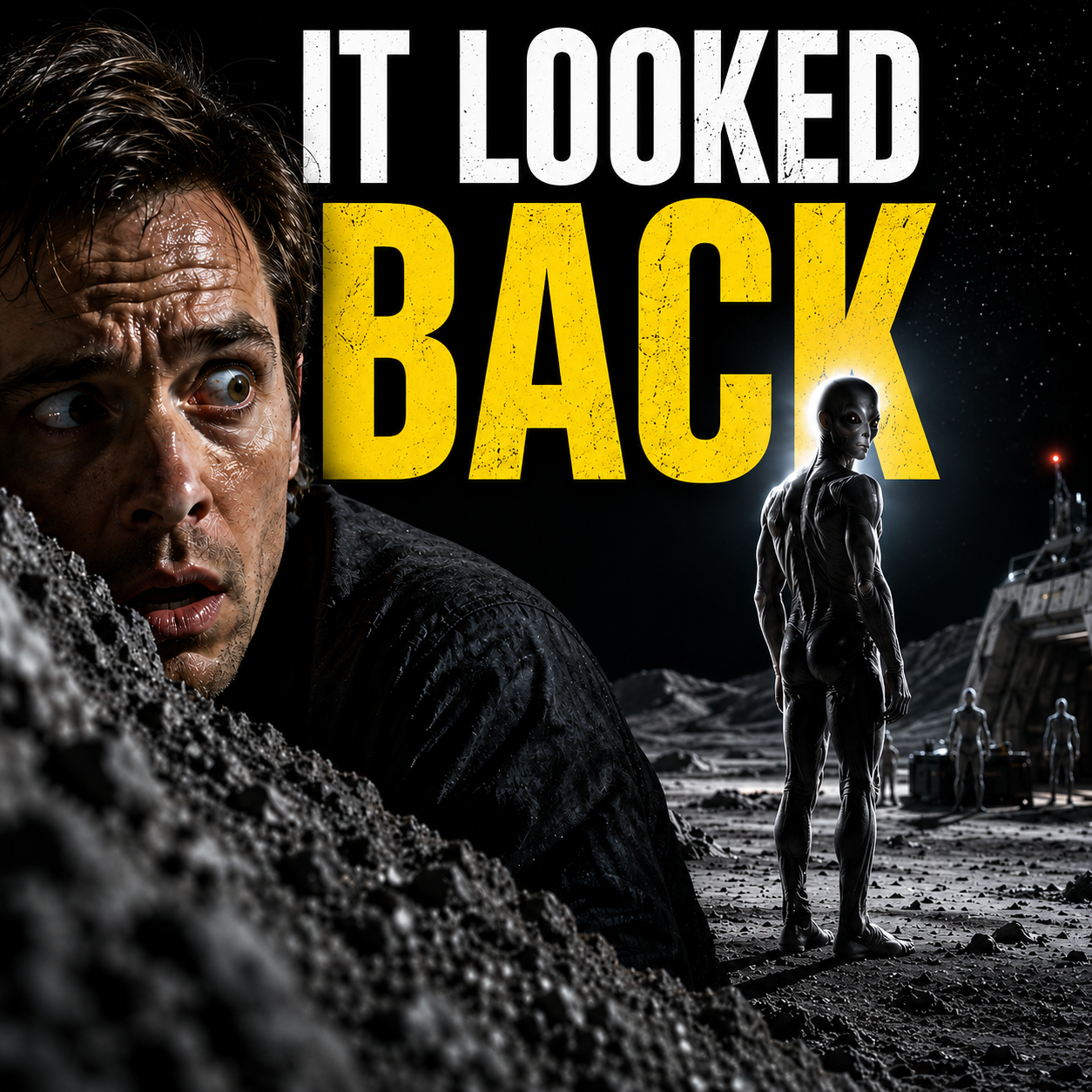
He Remote Viewed the Moon. Then Something Saw Him.
FAQs
What is remote viewing?
Remote viewing is the practice of seeking impressions about a distant or unseen target using paranormal means, such as extra-sensory perception (ESP) or “sensing with mind.”
What is the Moon remote viewing documentary about?
The Moon remote viewing documentary explores the concept of using remote viewing to gather information about the Moon, its surface, and potential anomalies or structures.
Who is involved in the Moon remote viewing documentary?
The documentary may feature remote viewing experts, scientists, and individuals who claim to have experience with remote viewing and its application to lunar exploration.
Is remote viewing scientifically proven?
The scientific community generally does not recognize remote viewing as a valid phenomenon, and it is considered pseudoscience. There is no empirical evidence to support the existence of remote viewing.
Where can I watch the Moon remote viewing documentary?
The documentary may be available for viewing on streaming platforms, through online rental or purchase, or through specific events or screenings. Check with the producers or distributors for more information on where to watch the documentary.