The icy tension of the Cold War, a period defined by existential dread and the ever-present threat of nuclear annihilation, often conjures images of stoic leaders in smoky rooms and daring espionage. Yet, within this global chessboard of superpower rivalry, unsung heroes emerged, their actions quiet and their names largely forgotten by the masses. Among them stands Vasili Arkhipov, a Soviet naval officer whose single act of defiance, repeated three times, averted a catastrophic nuclear exchange and, in doing so, arguably saved humanity from itself. His story is not one of grand pronouncements or celebrated victories, but a testament to the immense weight of responsibility and the courage to question authority when the stakes were unimaginably high.
The year is 1962. The world holds its breath. The Cuban Missile Crisis, a thirteen-day confrontation between the United States and the Soviet Union concerning Soviet ballistic missile deployment in Cuba, stands as the closest the two superpowers ever came to a full-scale nuclear war. The discovery of Soviet missile sites on the island, just 90 miles off the coast of Florida, sent shockwaves through the American government and public. President John F. Kennedy declared a naval blockade, or “quarantine,” of Cuba, demanding the removal of the missiles. The Soviet response was a mixture of defiance and calculation, setting the stage for a confrontation that would test the resolve of leaders on both sides.
The Strategic Significance of Cuba
Cuba, led by Fidel Castro, had recently aligned itself with the Soviet Union, creating a geopolitical flashpoint in America’s backyard. The placement of Soviet nuclear missiles on Cuban soil was a strategic masterstroke by Nikita Khrushchev, aimed at redressing the perceived imbalance of nuclear power after the US had deployed Jupiter missiles in Turkey, bordering the USSR. These missiles, capable of reaching Moscow in minutes, posed an undeniable threat to Soviet security. The Cuban deployment, conversely, would give the Soviets a comparable striking distance into the heart of the United States.
The Escalating Tensions
As the naval quarantine tightened, Soviet ships carrying military cargo steamed towards Cuba. The US Navy was under strict orders to intercept and board any vessel suspected of violating the blockade. The air was thick with anticipation, each passing ship a potential trigger for open conflict. The world watched with a mixture of fear and morbid fascination as the two nuclear behemoths edged closer and closer to the precipice. Diplomatic channels were strained, and miscalculation or an unintended act could have had irreversible consequences.
Vasili Arkhipov played a crucial role during the Cold War, particularly during the Cuban Missile Crisis, where his decision to withhold consent for a nuclear strike potentially saved millions of lives. For a deeper understanding of the events surrounding this pivotal moment in history, you can read a related article that explores the broader implications of Arkhipov’s actions and the tense atmosphere of the era. Check it out here: Related Article on Cold War History.
The Silent Watch: The B-59 Submarine
Deep beneath the Caribbean waves, a different kind of tension was unfolding. The Soviet submarine B-59, a diesel-electric vessel on a clandestine mission, carried a formidable payload: a nuclear torpedo. Its captain, Valentin Savitsky, was under immense pressure. The submarine was far from Soviet waters, its crew exhausted and disoriented, and they had been detected by American warships. The constant harassment from the US Navy, including depth charge attacks intended to force the submarine to surface, was taking its toll.
The Unconventional Mission
The B-59 was part of a larger Soviet naval deployment to Cuba, a deliberate show of force and a deterrent against a potential US invasion. The submarines, armed with nuclear torpedoes, were designed to be a potent countermeasure, capable of inflicting significant damage on enemy fleets. However, their mission was inherently dangerous, operating in waters patrolled by the formidable US Navy. The secrecy and isolation of their deployment added to the psychological strain on the crew.
The Harassment and Isolation
For days, the B-59 had been evading detection, submerged and vulnerable. The American destroyers, equipped with sonar, relentlessly hunted them. The depth charges, though not designed to sink the submarine, were a terrifying reminder of their precarious situation. Each explosion reverberated through the hull, rattling the crew and testing their nerves. The crew was running low on fresh air, and communication with Moscow was sporadic and difficult. The psychological toll of constant threat and isolation was immense.
The Unspoken Authority: Vasili Arkhipov’s Role

Within the claustrophobic confines of the B-59, a critical chain of command existed. Captain Savitsky had the ultimate authority to launch the nuclear torpedo. However, a peculiar protocol was in place for such a high-stakes situation: two other senior officers, including the flotilla commander on board, Vasili Arkhipov, had to concur with the captain’s decision. This was a safeguard, intended to prevent rash actions in the face of extreme pressure. It was this obscure, seemingly minor detail that would prove to be the linchpin of global survival.
The Power of Three
The existence of this three-man veto was not widely publicized, even within the Soviet military. It was a silent understanding, a recognition of the unimaginable consequences of a nuclear launch. The intent was to ensure that such a decision was not made by a single, potentially compromised individual. Arkhipov, as a senior officer, held a position of immense responsibility, albeit one that was not publicly acknowledged. His presence on the B-59, as flotilla commander, gave him this crucial, albeit often overlooked, power.
The Burden of Command
Captain Savitsky, convinced they were under direct attack and believing that nuclear war had already begun, was intent on launching the nuclear torpedo. He saw the depth charges as a prelude to annihilation and felt a desperate need to retaliate. The pressure on him was immense, amplified by the claustrophobia, the lack of air, and the constant threat. He was operating under the assumption that protocol dictated a launch in such circumstances.
The Pivotal Moment: Three Times No

In the heat of the moment, with the submarine being battered by depth charges, Captain Savitsky ordered the launch of the nuclear torpedo. However, it was Vasili Arkhipov who stood in the way. He recognized the dire circumstances but also understood the immense ramifications of such an action. He argued vehemently with Savitsky, asserting that they had no concrete confirmation of an all-out war and that launching a nuclear weapon would inevitably trigger a full-scale retaliation from the United States.
The First Refusal
Savitsky, enraged and convinced of an imminent attack, pushed for the launch. Arkhipov, however, held firm. He reasoned that the depth charges, while alarming, were likely warning shots, designed to force them to the surface rather than to destroy them. He knew that a nuclear launch from their position would be a definitive act of war, with no possibility of a peaceful resolution. His calm demeanor and reasoned argument, amidst the chaos, began to sway the other senior officer on board, Ivan Maslennikov, who also had a vote.
The Second Consultation and Reluctance
The tension in the submarine’s control room was palpable. Savitsky, realizing he didn’t have the unanimous consent, but still determined, continued to press. Arkhipov, undeterred, reiterated his points. He reminded Savitsky of the orders to avoid escalation and the dire consequences of a nuclear strike. He appealed to their shared duty to prevent such a catastrophe. The weight of the world rested on their decision.
The Third and Decisive Refusal
After a tense period of debate and argument, and with Arkhipov’s steadfast refusal, Savitsky eventually relented. The third officer, Maslennikov, also sided with Arkhipov, recognizing the grave danger of their potential action. The decision was made: the nuclear torpedo would not be launched. The B-59 surfaced, and eventually, under tense negotiations, the crisis was defused. Arkhipov’s unwavering commitment to reason and de-escalation, against the immediate perceived threat, averted a global catastrophe.
Vasili Arkhipov played a crucial role during the Cold War, particularly during the Cuban Missile Crisis, when his decision to withhold authorization for a nuclear strike prevented a potential catastrophe. His story is a powerful reminder of the importance of individual choices in moments of crisis. For those interested in exploring more about Cold War history and its key figures, a related article can be found at In The War Room, which delves into the complexities of military decisions during this tense period.
The Quiet Hero: Legacy and Recognition
| Event | Date | Location | Significance |
|---|---|---|---|
| Cuban Missile Crisis | October 1962 | Cuba | Vasili Arkhipov prevented a nuclear launch by refusing to authorize the use of nuclear torpedoes |
| Soviet Navy Submarine B-59 | October 1962 | Caribbean Sea | Arkhipov’s decision prevented a potential nuclear war between the US and the Soviet Union |
Vasili Arkhipov’s name remains largely unknown to the general public, a stark contrast to the world-altering impact of his actions. Unlike soldiers who fight on battlefields or diplomats who broker peace treaties, his heroism was enacted in the silent depths of the ocean, a solitary act of moral courage. While the Soviet Union maintained a degree of secrecy around the incident, the broader implications of Arkhipov’s actions were eventually acknowledged by some.
The Unsung Savior
The story of the B-59 and Vasili Arkhipov is a powerful reminder that history is not always shaped by grand pronouncements but often by the quiet, courageous choices of individuals in critical moments. His decision to defy his captain, knowing the potential repercussions, was an act of immense bravery and profound responsibility. He chose reason over instinct, de-escalation over retaliation, and in doing so, he may have saved millions, if not billions, of lives.
The Cold War’s Shadow
The Cuban Missile Crisis, and Arkhipov’s role in it, highlights the inherent dangers of the Cold War arms race. The existence of nuclear weapons, coupled with the immense pressure and potential for miscalculation, created a volatile environment where a single moment of panic or poor judgment could have led to unimaginable destruction. Arkhipov’s story serves as a cautionary tale, emphasizing the vital importance of diplomacy, communication, and the presence of individuals willing to stand against the tide of escalation.
The Slow Burn of Recognition
While the full story of Arkhipov’s actions only emerged years later through declassified documents and memoirs, his legacy is slowly gaining recognition. He is now increasingly cited as a pivotal figure in preventing nuclear war. His quiet heroism, once buried in the sands of time and Soviet secrecy, is finally coming to light, offering a crucial perspective on a pivotal moment in human history. His story is a powerful testament to the fact that even in the darkest of times, the courage of one individual can indeed change the course of history. The Untold Story of Vasili Arkhipov is a story that deserves to be remembered, not for glory, but for the profound, life-saving act of human conscience.
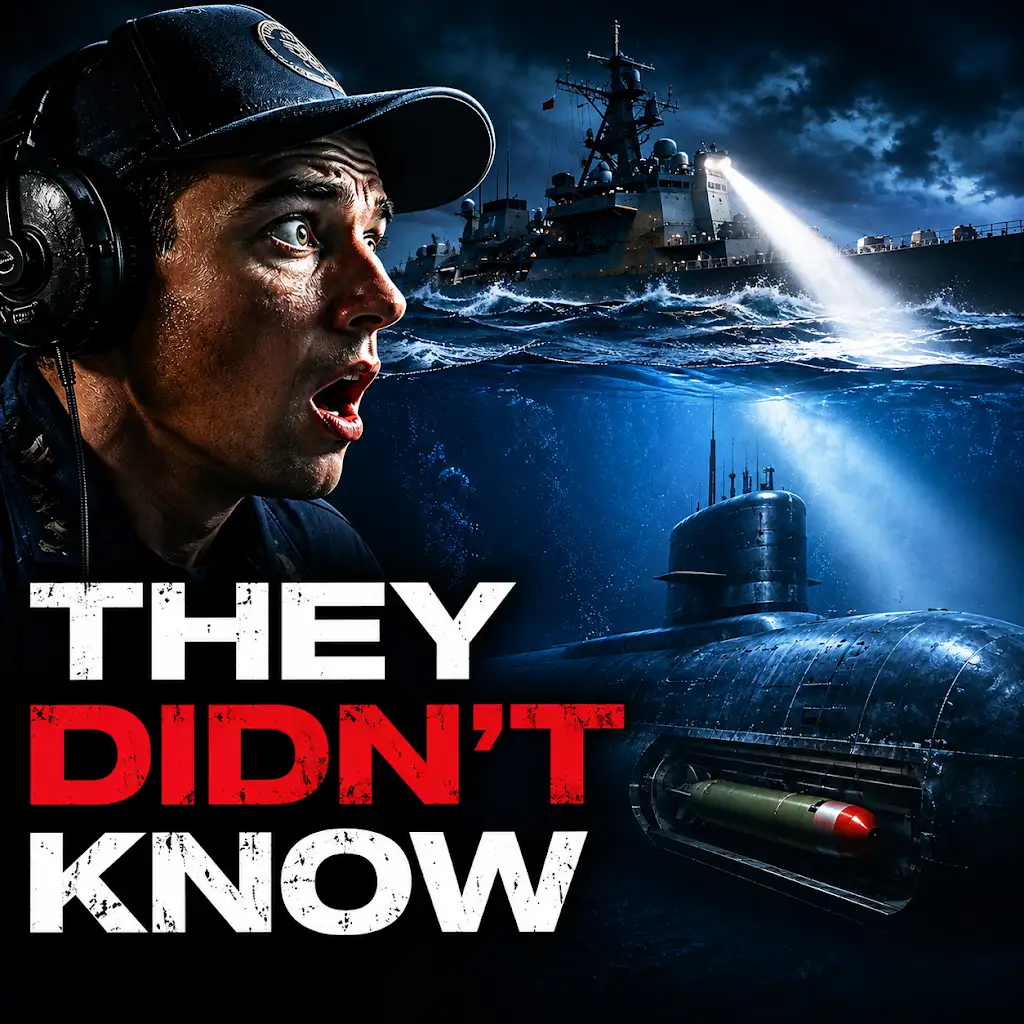
The U.S. Navy Didn’t Know This Submarine Had a Nuclear Torpedo
FAQs
1. Who was Vasili Arkhipov and what role did he play in the Cold War?
Vasili Arkhipov was a Soviet naval officer who played a critical role in preventing a nuclear war during the Cuban Missile Crisis in 1962. He was the second-in-command on a Soviet submarine and refused to authorize the use of nuclear torpedoes, averting a potential nuclear conflict between the United States and the Soviet Union.
2. What was the Cuban Missile Crisis and how did it involve Vasili Arkhipov?
The Cuban Missile Crisis was a 13-day confrontation between the United States and the Soviet Union over the presence of Soviet ballistic missiles in Cuba. Vasili Arkhipov was on board a Soviet submarine near Cuba when the crisis unfolded. He was instrumental in preventing the submarine from launching nuclear torpedoes, which could have escalated the crisis into a full-scale nuclear war.
3. What impact did Vasili Arkhipov’s actions have on the outcome of the Cuban Missile Crisis?
Vasili Arkhipov’s refusal to authorize the use of nuclear torpedoes on the Soviet submarine played a crucial role in preventing a nuclear war. His actions helped to de-escalate the tension between the United States and the Soviet Union, ultimately leading to a peaceful resolution of the crisis.
4. What recognition did Vasili Arkhipov receive for his actions during the Cuban Missile Crisis?
Vasili Arkhipov’s role in preventing a nuclear war during the Cuban Missile Crisis was not widely known until many years later. In 2002, he was posthumously honored by the Future of Life Institute with the “Future of Life” award for his heroic actions.
5. How is Vasili Arkhipov remembered in Cold War history?
Vasili Arkhipov is remembered as a hero of the Cold War for his pivotal role in preventing a nuclear catastrophe. His actions have been widely recognized as having a significant impact on the outcome of the Cuban Missile Crisis and the overall history of the Cold War.