The hum of machinery, the clang of metal on metal, the muffled shouts of men – these were the sounds that defined the subterranean conflict. Not a war waged with the dramatic flair of aerial bombardments or the thunderous roar of tanks, but a silent, grinding struggle fought in the dark, damp arteries beneath the European continent. This was Europe’s hidden war, a relentless battle waged not for territory above ground, but for the very foundations of its existence.
The notion of a war fought underground might conjure images of ancient tunnels or desperate World War I trenches. However, the subterranean conflict of recent times was far more sophisticated, far more insidious. It was a war fought by unseen forces, manipulating the very earth, poisoning the lifeblood of nations, and undermining the stability of societies from below. This was not a conflict declared in grand halls or debated in parliaments. Its origins were as elusive as the tremors felt deep within the earth, its battles fought in the silent language of seismic activity and geological manipulation.
The Architects of the Deep: Who Fights This Hidden War?
The actors in this subterranean drama were not uniformed soldiers marching in lockstep. They were shadowy organizations, state-sponsored clandestine units, and perhaps even entities operating beyond the ken of conventional geopolitical understanding. Their motivations were as varied as their methods, ranging from resource acquisition and strategic advantage to the outright destabilization of rival nations. Some sought to control vital underground energy reserves, while others aimed to cripple infrastructure by targeting subterranean pipelines and communication networks. There were whispers of eco-terrorist groups attempting to trigger geological catastrophes, and even more outlandish theories involving advanced, earth-penetrating weaponry.
The Shadowy Syndicate: Resource Wars Beneath the Surface
One of the primary drivers of this hidden war was the insatiable global demand for resources. Beneath Europe lay vast, untapped reserves of minerals, rare earth elements, and particularly, energy sources. Nations, both established and emerging, saw these subterranean riches as the key to future prosperity and geopolitical influence. The conflict was thus a silent struggle for control over these veins of wealth. Corporations with the backing of powerful governments employed sophisticated drilling and extraction techniques, often operating in a legal and ethical grey area. These operations, while ostensibly for economic gain, frequently encroached upon or directly disrupted the activities of other players, sparking covert countermeasures and retaliatory actions. The line between legitimate resource extraction and deliberate sabotage became increasingly blurred, leading to a constant escalation of the subterranean arms race.
The Geopolitical Undercurrents: Strategic Advantage from Below
Beyond immediate resource gain, control of the subterranean realm offered immense strategic advantages. Entire military operations could be masked by the earth’s crust. The ability to move troops and materiel undetected, to establish hidden command centers, or to deploy subterranean launch sites for advanced weaponry represented a significant shift in military doctrine. Nations sought to secure these hidden pathways and strongholds, often through covert means. This led to a constant cat-and-mouse game, with each side attempting to map and understand the subterranean infrastructure of the other, while simultaneously working to conceal their own.
The hidden war beneath Europe has been a topic of increasing concern, revealing the complex geopolitical tensions that often go unnoticed. For a deeper understanding of these underlying conflicts and their implications, you can read a related article that explores the various dimensions of this ongoing struggle. To learn more, visit this article.
The Instruments of the Underground: Weapons of Earth and Shadow
The weaponry employed in this hidden war was as unique as the battlefield itself. Forget bullets and bombs; the tools of this conflict were designed to interact with the very fabric of the earth. Tremors, induced seismic events, and geological manipulation became the instruments of destruction. The aim was not always direct physical damage, but often the creation of chaos, the disruption of critical infrastructure, and the psychological erosion of an adversary’s confidence.
Seismic Sabotage: The Weaponization of Earthquakes
The most terrifying and destructive aspect of the subterranean conflict was the weaponization of seismic activity. Advanced technologies, capable of generating precise tremors, could be used to disrupt deep-lying infrastructure like oil and gas pipelines, or even to trigger landslides and sinkholes that could cripple surface operations. While the scientific community largely dismissed the possibility of artificially inducing large-scale earthquakes, evidence began to surface of localized seismic events that bore the hallmarks of deliberate manipulation. These were not natural disasters; they were targeted attacks, designed to cripple an opponent with minimal direct attribution. The subtle manipulation of fault lines, the controlled detonation of underground charges designed to resonate with specific geological structures, and the use of powerful sonic emitters to destabilize rock formations were all part of this terrifying arsenal.
The Poisoned Depths: Environmental Warfare Beneath the Surface
The subterranean environment was also a fertile ground for a more insidious form of warfare: environmental sabotage. The leakage of toxic waste from underground storage facilities, the deliberate contamination of groundwater aquifers with chemical agents, and the disruption of natural geological processes that prevented the release of hazardous subterranean gases all played a role. This type of warfare was particularly insidious because its effects could take years to manifest, leaving a legacy of environmental devastation and chronic health problems for civilian populations. Furthermore, the slow, creeping nature of contamination made attribution incredibly difficult, allowing perpetrators to operate with a high degree of impunity. The focus on these methods highlighted a shift towards warfare that prioritized long-term incapacitation and societal destabilization over immediate battlefield victory.
The Unseen Networks: Information Warfare in the Subterranean Realm
The underground was also a battleground for information. Subterranean communication cables, vital for global data transfer, became prime targets. The ability to tap into, disrupt, or even reroute these lines offered immense intelligence gathering and strategic advantage. Furthermore, the development of advanced subterranean sensors allowed for the monitoring of surface activities, providing real-time intelligence on troop movements, economic activity, and even civilian sentiment. This information warfare was crucial, as it allowed adversaries to anticipate and counter each other’s moves, often before they were even visible on the surface.
The Unseen Scars: The Impact on Europe
The effects of this hidden war were not confined to the dark, silent depths. The scars of the subterranean conflict were felt, often subtly, across the entire continent, impacting economies, environments, and the very sense of security for millions of Europeans. The constant threat of disruption, the fear of the unknown, and the gradual erosion of trust became pervasive.
The Economic Tremors: Financial Instability and Resource Scarcity
The economic consequences of the subterranean conflict were profound. Disruptions to vital resource extraction and transportation networks led to price volatility and shortages, impacting industries and households alike. The constant need to invest in subterranean defense and counter-intelligence drained national budgets, diverting resources from essential public services. The uncertainty surrounding the security of subterranean infrastructure also created a climate of fear for investors, hindering long-term economic growth. The seemingly inexplicable spikes in oil prices, the sudden scarcity of certain rare earth minerals crucial for modern technology, and the recurring disruptions to international trade routes were all, in part, attributable to this hidden war.
The Environmental Fallout: A Legacy of Contamination and Destruction
The environmental toll of the subterranean conflict was equally devastating. The deliberate release of hazardous materials into underground reservoirs and aquifers contaminated vast swathes of land and water, rendering them uninhabitable and unusable for generations. The geological disruptions caused by weaponized seismic activity led to increased erosion, sinkhole formation, and altered groundwater flows, impacting ecosystems and agricultural productivity. The long-term consequences of these environmental assaults were often irreversible, leaving a poisoned legacy for future European generations. The silent contamination of drinking water sources, the inexplicable degradation of arable land, and the unsettling increase in unexplained geological phenomena all pointed to a deliberate and systematic assault on the continent’s natural resources.
The Erosion of Trust: Psychological Warfare and Societal Division
Perhaps the most insidious impact of the subterranean conflict was its effect on public trust. The inability to clearly identify perpetrators or understand the full scope of the threat fostered an atmosphere of paranoia and suspicion. Governments struggled to reassure their citizens when faced with seemingly inexplicable events. The constant threat of a hidden enemy, operating from the shadows, eroded confidence in institutions and fostered societal division. Conspiracy theories flourished, fueling distrust and making it even harder to forge a unified response. The inability to visibly confront and defeat an enemy meant that fear and uncertainty became perpetual companions, subtly shaping the daily lives and anxieties of ordinary citizens.
The Unfolding Mystery: The Challenge of Detection and Defense
The very nature of the subterranean conflict presented immense challenges for detection, intelligence gathering, and defense. The earth itself was the ultimate cloak, concealing the actions of belligerents and obscuring the evidence of their transgressions. This made traditional methods of warfare and surveillance largely ineffective.
The Silent Sensors: Developing Subterranean Intelligence Networks
Detecting and monitoring activities deep beneath the earth’s surface required the development of entirely new intelligence-gathering capabilities. Advanced seismic sensors, deployed across the continent, worked in conjunction with sophisticated ground-penetrating radar and magnetic anomaly detectors to map subterranean structures and identify unusual seismic patterns. The interpretation of this data was a complex process, requiring the collaboration of geologists, seismologists, and intelligence analysts. The challenge lay not only in detecting anomalies but in distinguishing between natural geological phenomena and deliberate acts of sabotage. This required a constant refinement of analytical models and the development of AI-powered systems capable of sifting through vast amounts of data.
The Countermeasures: Building an Underground Shield
Defending against subterranean threats was an equally daunting task. It involved not only hardening critical infrastructure like pipelines and communication lines but also developing the capacity for proactive defense. This included the deployment of subterranean sensor networks capable of early warning, the development of defensive drilling and tunneling technologies to intercept or neutralize hostile incursions, and the creation of specialized units trained to operate in subterranean environments. The focus was on creating a layered defense, making it increasingly difficult and costly for adversaries to achieve their objectives. The ability to quickly deploy specialized teams to investigate suspected subterranean breaches and to rapidly repair damaged infrastructure became paramount.
The hidden war beneath Europe has been a topic of increasing concern, with various factions vying for control and influence in the region. For those interested in exploring this complex issue further, an insightful article can be found at In the War Room, which delves into the geopolitical implications and the underlying tensions that shape this ongoing conflict. Understanding these dynamics is crucial for grasping the broader narrative of Europe’s stability and security.
The Future Beneath Our Feet: A Persistent and Evolving Threat
The subterranean conflict was not a transient event but an evolving and persistent threat. As technology advanced, so too did the methods and sophistication of those engaged in this hidden war. The stakes were incredibly high, for the security and stability of Europe, and indeed the world, depended on its ability to navigate and ultimately overcome this silent, subterranean struggle. The future would likely see an even greater integration of artificial intelligence and machine learning in both offensive and defensive subterranean operations, further blurring the lines between human and automated warfare. The continuous innovation in drilling, tunneling, and sensing technologies would ensure that this hidden war remained a dynamic and ever-present challenge for years to come, a silent testament to the enduring human capacity for both innovation and conflict, waged in the very foundations of our world.
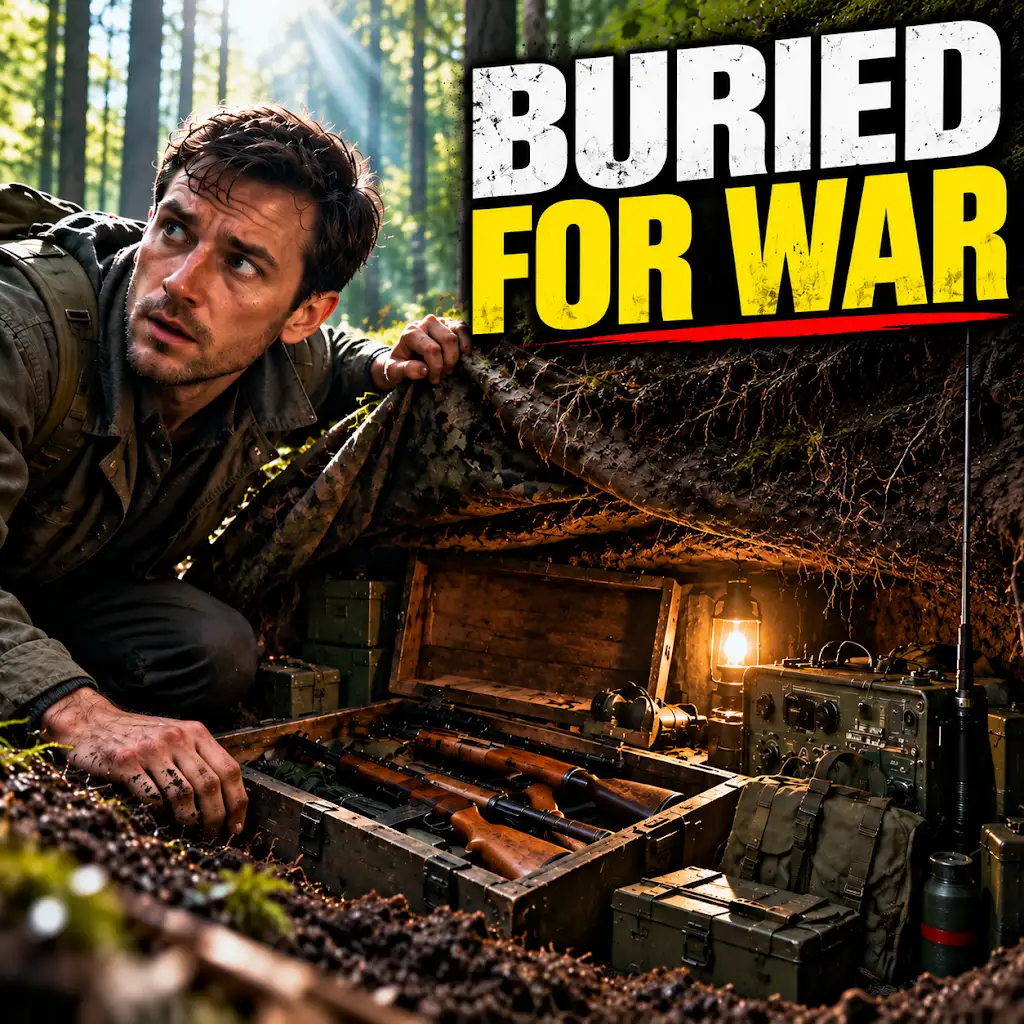
The Secret Armies NATO Prepared for a Soviet Invasion
FAQs

What is the hidden war beneath Europe?
The hidden war beneath Europe refers to the ongoing conflict between various underground criminal organizations, including drug cartels, human traffickers, and arms dealers, that operate beneath the surface of European cities.
How does the hidden war impact European society?
The hidden war has significant impacts on European society, including contributing to increased crime rates, violence, and instability in urban areas. It also poses challenges for law enforcement and government authorities in addressing these underground criminal activities.
What are the main factors driving the hidden war beneath Europe?
The main factors driving the hidden war beneath Europe include the lucrative nature of illegal activities such as drug trafficking and human smuggling, as well as the presence of organized crime networks that exploit vulnerabilities in the region’s borders and law enforcement systems.
What measures are being taken to address the hidden war beneath Europe?
European governments and law enforcement agencies are implementing various measures to address the hidden war, including increased border security, intelligence sharing, and targeted law enforcement operations to disrupt and dismantle underground criminal networks.
What are the potential future implications of the hidden war beneath Europe?
The hidden war beneath Europe has the potential to continue fueling crime and instability in the region, as well as posing challenges for European governments in maintaining security and public safety. It also underscores the need for international cooperation in addressing transnational organized crime.