The Pacific Ocean, a vast and enigmatic expanse, holds within its depths countless secrets. Among them lies the story of the Soviet submarine K-129, a vessel whose demise in 1968 remains shrouded in an enduring mystery, punctuated by an inexplicable acoustic event detected across the globe. This article delves into the known facts, the competing theories, and the enduring questions surrounding this compelling maritime puzzle, inviting the reader to consider the interplay of technology, geopolitics, and human fallibility beneath the waves.
The K-129 was a Project 629A (Golf II-class) diesel-electric submarine, a formidable component of the Soviet Union’s strategic nuclear arsenal during the Cold War. Commissioned in 1959, she was designed to carry three R-13 (SS-N-5 Sark) ballistic missiles, making her a crucial deterrent in the delicate balance of power. Her regular patrols involved transiting from her base at Rybachiy Naval Base, Kamchatka, into the central Pacific, a theater ripe for heightened tensions and covert surveillance.
A Cold War Standard Bearer
The Golf II-class was a known quantity to Western intelligence, yet each individual submarine held its own operational nuances and crew dynamics. These vessels were not merely machines; they were floating fortresses, each with a complement of approximately 98 officers and sailors, living and working in cramped, hazardous conditions. The K-129, like her brethren, carried the weight of national security on her shoulders.
The Ill-Fated Patrol
On February 24, 1968, the K-129 departed Rybachiy on its third patrol of the year, heading for a patrol area northwest of Hawaii. Her mission, a routine yet critical one, was to maintain a continuous strategic presence, demonstrating Soviet capability and readiness. The journey was expected to be uneventful, a testament to the submarine’s design and the crew’s training.
The mysterious acoustic event associated with the Soviet submarine K-129 has intrigued researchers and historians alike, shedding light on the complexities of Cold War naval operations. For a deeper understanding of this incident and its implications, you can explore a related article that delves into the details of the K-129’s mission and the subsequent search efforts. To read more about it, visit this article.
The Silence and the Search
Days turned into weeks, and the K-129 failed to report in as scheduled on March 8. The Soviet naval command, initially hesitant to acknowledge a potential loss, eventually initiated a search operation, deploying surface ships and aircraft across a vast swathe of the Pacific. This was a particularly sensitive time; losing a nuclear-armed submarine would be a significant blow to Soviet prestige and a potential intelligence coup for the United States.
A Growing Apprehension
The absence of radio contact became increasingly alarming. Imagine the growing unease within the Soviet command, a cold knot forming in the pit of their stomachs as the silence stretched. The sea, usually transmitting a constant hum and crackle of communications, offered only an empty void where the K-129 should have been.
The American Advantage: SOSUS
Unbeknownst to the Soviets, the United States possessed a powerful, covert advantage: the Sound Surveillance System, or SOSUS. This network of underwater hydrophones, strategically placed across the world’s oceans, was designed to detect and track submarine movements. For years, SOSUS had been a silent guardian, an ear to the ocean’s heartbeat, listening for the distinctive signatures of Soviet submarines.
The Enigmatic Acoustic Signatures
It was through the unblinking vigilance of SOSUS that the first clues to the K-129’s fate emerged. On March 8, 1968, a series of unusual acoustic events were recorded by multiple SOSUS arrays in the North Pacific. These were not the typical hum of a submarine’s engines or the rhythmic clatter of internal machinery; they were sounds of catastrophic energy release, a symphony of destruction played out in the depths.
The Nature of the Sounds
The acoustic signatures were complex, suggestive of an implosion event followed by a larger, less precisely defined explosion. The initial implosion phase, a rapid collapse of the submarine’s hull under immense pressure, would have been brutally instantaneous, a whisper compared to the roar that followed. The subsequent explosion, however, indicated a more significant release of energy, leading to speculation about the submarine’s cargo.
Pinpointing the Location
Through meticulous triangulation and analysis of the acoustic data, experts at the U.S. Navy’s Naval Intelligence Command were able to pinpoint a probable location for the sinking, west of Hawaii in approximately 16,000 feet (4,900 meters) of water. This remarkable feat of acoustical detective work provided the first tangible evidence of the K-129’s demise, a needle in the haystack of the Pacific.
Competing Theories of the Loss
The cause of the K-129’s sinking has been the subject of extensive speculation and debate for decades. No single, universally accepted explanation has emerged, and the incident remains fertile ground for both reasoned analysis and conjecture.
The Internal Catastrophe Hypothesis
Many experts, particularly in the United States, favor the theory of an internal catastrophe. This hypothesis suggests that a mechanical failure, perhaps a leaky hydraulic system, an engine malfunction, or a battery explosion, led to a chain of events culminating in the loss of the submarine.
Battery Explosion
One prominent sub-theory posits a catastrophic explosion of hydrogen gas accumulated from the submarine’s lead-acid batteries. Battery compartments were inherently dangerous environments on diesel-electric submarines, prone to gas buildup if ventilation systems failed or proper charging procedures were not followed. Such an explosion could have compromised the hull’s integrity, leading to a rapid descent and implosion.
Missile Launch Tube Failure
Another internal catastrophic possibility involves a failure within one of the missile launch tubes. While less likely to result in the kind of acoustic signature observed, a catastrophic failure of a missile or its launch system could have led to a breach of the hull. However, the unique nature of the acoustic events makes this less probable.
Collision with a USS Submarine
A persistent and widely discussed theory, particularly prevalent in Russia, is that the K-129 collided with a USS submarine, specifically the USS Swordfish (SSN-579). The Swordfish, a Sturgeon-class attack submarine, was operating in the Pacific at the time and reportedly returned to port with damage.
Evidence and Counter-Evidence
Proponents of this theory point to the Swordfish’s reported damage and the proximity of its operational area to the K-129’s projected route. However, U.S. Navy records and declassified documents consistently deny any involvement of American submarines in the sinking. Furthermore, the acoustic evidence does not strongly support a collision event, which would typically produce a different sonic signature. The metaphor of two ships passing in the night, one to its doom, the other to a damaged but recoverable state, continues to fuel this speculative trail.
Accidental Missile Launch or Explosion
A less frequently discussed theory suggests an accidental launch or explosion of one of the R-13 ballistic missiles. While the R-13 was designed with safety mechanisms to prevent inadvertent firing, the possibility of a catastrophic internal malfunction or an unforeseen environmental trigger cannot be entirely dismissed. Such an event would undoubtedly generate a powerful acoustic signature, fitting parts of the detected pattern.
The mysterious acoustic event associated with the Soviet submarine K-129 has intrigued researchers and historians alike, leading to various analyses of its implications for Cold War naval operations. For those interested in a deeper exploration of this topic, you can read more about it in a related article that delves into the complexities of submarine warfare during that era. This article provides valuable insights into the technological advancements and strategic challenges faced by both the Soviet Union and the United States. To learn more, visit this link.
The Legacy of Project Azorian
| Metric | Data | Details |
|---|---|---|
| Submarine Name | K-129 | Soviet Golf II-class ballistic missile submarine |
| Date of Acoustic Event | March 8, 1968 | Approximate time of the explosion or sinking event |
| Location | North Pacific Ocean | Approximately 1,560 nautical miles northwest of Hawaii |
| Depth of Wreck | 16,500 feet (5,030 meters) | Estimated depth at which K-129 sank |
| Acoustic Signal Detected | Explosion sound | Detected by U.S. Navy’s SOSUS hydrophone arrays |
| Duration of Acoustic Event | Approximately 6 seconds | Length of the explosion sound recorded |
| Operation Name | Project Azorian | U.S. CIA operation to recover parts of K-129 |
| Recovery Vessel | Glomar Explorer | Ship used in the recovery operation |
| Recovery Year | 1974 | Year when partial recovery was attempted |
| Recovered Material | Partial submarine hull and contents | Only a portion of the submarine was recovered |
The K-129 did not simply vanish; her remains settled on the ocean floor, her secrets preserved by the immense pressure and darkness. For the United States, the opportunity to retrieve a Soviet nuclear-armed submarine, particularly one with ballistic missiles and codebooks, was an intelligence prize of immeasurable value. This led to one of the most audacious and covert operations of the Cold War: Project Azorian.
The Genesis of a Covert Operation
Project Azorian was a highly classified attempt by the CIA to recover portions of the K-129 from its resting place. The sheer scale and complexity of the operation were unprecedented, a testament to American technological prowess and a reflection of the intense desire for intelligence superiority. The project was conceived as a clandestine salvage effort, a carefully orchestrated ballet of engineering and espionage.
The Glomar Explorer and the Cover Story
To execute this audacious plan, the CIA contracted Howard Hughes to build the Hughes Glomar Explorer, a purpose-built salvage vessel designed to operate in extreme depths. The ship was disguised as a deep-sea mining vessel, ostensibly searching for manganese nodules on the ocean floor. This elaborate cover story, a truly masterful piece of Cold War theatre, helped maintain the secrecy of the true mission.
Partial Recovery and Enduring Mystery
In 1974, the Glomar Explorer successfully recovered a portion of the K-129, specifically the forward section containing some of the missile compartments. While the operation was not a complete success—the main body of the submarine, including the command center and remaining missiles, broke apart during the recovery attempt—it yielded valuable intelligence. However, the precise nature of the internal evidence retrieved and the conclusions drawn from it remain largely classified. The ultimate impact it had on discerning the exact cause of the acoustic event remains largely unrevealed to the public.
Conclusion: A Shadow in the Deep
The mysterious acoustic event associated with the Soviet submarine K-129 serves as a poignant reminder of the inherent dangers of naval operations, particularly during the high-stakes era of the Cold War. The competing theories, the classified evidence, and the audacious espionage operation surrounding her demise have woven a complex tapestry of fact and speculation. While Project Azorian provided valuable intelligence and perhaps shed some light on the internal conditions of Soviet submarines, the definitive cause of the K-129’s sinking remains elusive, a shadow in the deep.
The K-129’s story is a chilling echo from a bygone era, a metaphor for the hidden conflicts and technological races that defined the Cold War. It underscores the power of intelligence gathering, the resilience of the human spirit in the face of adversity, and the enduring allure of the unexplained. The acoustic signatures, faint whispers from the ocean’s abyss, continue to reverberate, inviting us to ponder the final moments of K-129 and the lives of those lost within her steel shell. The ocean keeps its secrets well, and some, like the precise truth of K-129’s demise, may forever remain beyond our complete grasp.
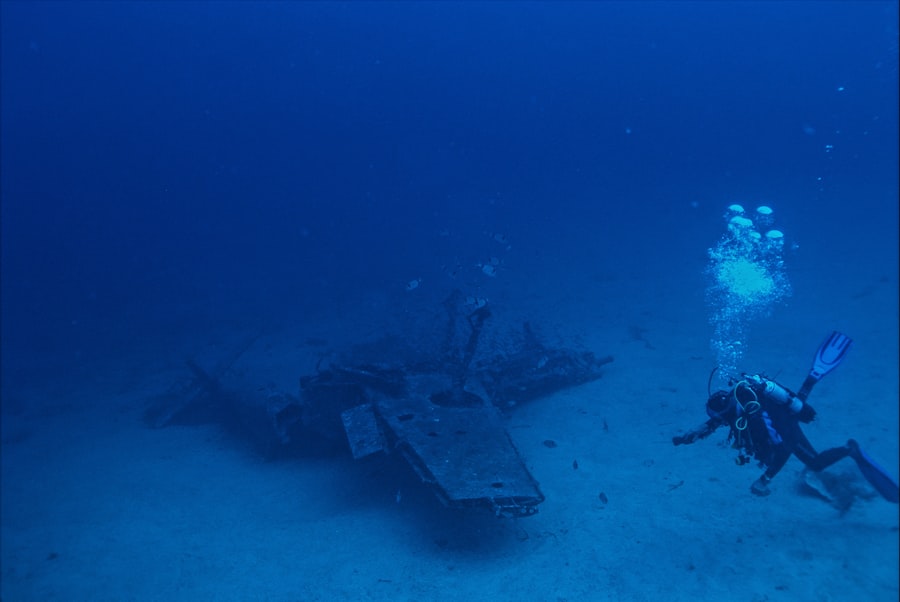
WATCH NOW ▶️ The CIA’s Impossible Mission To Steal A Nuclear Submarine
FAQs
What was the Soviet submarine K-129?
The Soviet submarine K-129 was a Golf II-class ballistic missile submarine of the Soviet Navy that sank in the Pacific Ocean in March 1968 under mysterious circumstances.
What is meant by the “K-129 acoustic event”?
The “K-129 acoustic event” refers to the unusual underwater sound detected by U.S. Navy hydrophone arrays on March 8, 1968, which is believed to be associated with the sinking or catastrophic failure of the Soviet submarine K-129.
How was the acoustic event detected?
The acoustic event was detected by the U.S. Navy’s Sound Surveillance System (SOSUS), a network of underwater hydrophones designed to monitor Soviet submarine activity during the Cold War.
What theories exist about the cause of the K-129 acoustic event?
Several theories have been proposed, including accidental internal explosions, collision with a U.S. submarine, or mechanical failure, but the exact cause of the K-129 sinking remains uncertain.
What was the significance of the K-129 incident during the Cold War?
The sinking of K-129 and the acoustic event were significant because they led to a secret U.S. recovery operation called Project Azorian, aimed at retrieving parts of the submarine and its missile technology, highlighting the intense espionage and naval rivalry between the U.S. and the Soviet Union.