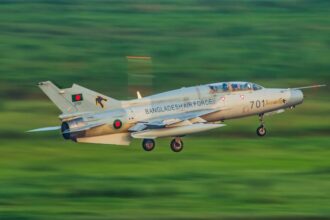
Radar-guided missiles are weapons systems that employ radar technology for target detection, tracking, and guidance throughout their flight path. These missiles operate by transmitting or receiving radar signals to maintain contact with designated targets, enabling precise navigation and engagement capabilities in both air-to-air and surface-to-air applications. The operational mechanism involves onboard radar systems that continuously monitor target position and movement, allowing the missile’s guidance system to calculate and execute course corrections in real-time.
This active tracking capability provides enhanced accuracy compared to unguided munitions and enables engagement of moving targets at extended ranges. Since their introduction in the mid-20th century, radar-guided missiles have become standard components of military air defense systems and fighter aircraft armaments worldwide. Their development has enabled engagement ranges extending from several kilometers to over 100 kilometers, depending on the specific missile system and radar capabilities.
Current radar-guided missile systems face operational constraints including susceptibility to electronic countermeasures, performance degradation in adverse weather conditions, and limitations in engaging low-radar-cross-section targets. Additionally, these systems require significant power resources and sophisticated guidance computers, which impact missile size, weight, and cost considerations in military procurement and deployment strategies.
Key Takeaways
- Radar guided missiles face limitations in range, detection, and accuracy, especially in adverse weather and complex terrain.
- They are vulnerable to electronic warfare and various countermeasures that can disrupt their targeting systems.
- Identifying and engaging maneuvering targets remains a significant challenge for radar guided missile technology.
- High costs and maintenance requirements impact the operational efficiency of radar guided missile systems.
- Future developments aim to improve reliability, target discrimination, and resistance to electronic and physical countermeasures.
Range and Detection Limitations
One of the primary limitations of radar guided missiles lies in their range and detection capabilities. While these missiles can cover significant distances, their effectiveness diminishes as they approach the outer limits of their operational range. The radar systems that guide these missiles rely on line-of-sight communication, which can be obstructed by terrain features or atmospheric conditions.
As a result, the effective range of a radar guided missile may be significantly less than its maximum range, particularly in complex environments where hills, buildings, or other obstacles can interfere with radar signals. Moreover, the detection capabilities of radar guided missiles can be hampered by various factors, including electronic interference and environmental conditions. For instance, heavy rain, fog, or snow can scatter radar waves, reducing the missile’s ability to accurately detect and track its target.
This limitation poses a challenge for military planners who must consider the operational environment when deploying radar guided missiles. In scenarios where visibility is compromised, the effectiveness of these weapons may be severely diminished, necessitating alternative strategies or weapon systems.
Vulnerability to Electronic Warfare

In an era where electronic warfare has become increasingly sophisticated, radar guided missiles face significant vulnerabilities. Adversaries can employ electronic countermeasures to disrupt or deceive the radar systems that guide these missiles. Techniques such as jamming or spoofing can render a missile’s guidance system ineffective, leading to missed targets or unintended consequences.
This vulnerability underscores the importance of developing robust counter-countermeasures to ensure that radar guided missiles can operate effectively in contested environments. The implications of electronic warfare extend beyond individual missile systems; they also affect broader military strategies. As nations invest in advanced electronic warfare capabilities, the reliance on radar guided missiles may necessitate a reevaluation of their role in combat operations.
Military planners must consider how to integrate electronic warfare tactics into their strategies while ensuring that radar guided missiles remain a viable option for engaging enemy forces.
Inaccuracy in Adverse Weather Conditions
Adverse weather conditions pose another significant challenge for radar guided missiles.
Heavy precipitation, strong winds, and low visibility can all contribute to tracking errors and miscalculations during flight.
As a result, the likelihood of a successful engagement diminishes when operating under such conditions. Furthermore, the reliance on radar technology means that any degradation in signal quality due to weather can lead to increased chances of failure. For instance, during heavy rain or snowstorms, radar waves may be absorbed or scattered, making it difficult for the missile to maintain a lock on its target.
This limitation highlights the need for continued research and development aimed at improving the resilience of radar guided missiles in adverse weather conditions.
Target Identification Challenges
| Limitation | Description | Impact on Performance | Mitigation Techniques |
|---|---|---|---|
| Electronic Countermeasures (ECM) | Enemy jamming and deception techniques can disrupt radar signals. | Reduced target detection and tracking accuracy. | Frequency hopping, signal processing algorithms, and home-on-jam seekers. |
| Clutter and Environmental Interference | Radar signals can be affected by terrain, weather, and sea clutter. | False targets or missed detections. | Advanced filtering, Doppler processing, and adaptive thresholding. |
| Limited Range | Radar-guided missiles have a maximum effective detection and engagement range. | Targets beyond range cannot be engaged effectively. | Use of mid-course guidance updates and extended radar systems. |
| Line-of-Sight Restrictions | Radar requires a clear path to the target; obstacles can block signals. | Inability to track low-flying or terrain-masked targets. | Integration with other sensors and use of data link guidance. |
| Susceptibility to Stealth Technology | Stealth aircraft reduce radar cross-section, making detection difficult. | Lower probability of detection and tracking. | Multi-sensor fusion and use of low-frequency radars. |
| Power and Size Constraints | Missile-mounted radars have limited power and antenna size. | Reduced detection capability and resolution. | Optimized radar design and use of passive guidance modes. |
Target identification is a critical aspect of any military engagement, and radar guided missiles are no exception. The ability to accurately identify and classify targets is essential for ensuring that strikes are directed at the intended enemy assets while minimizing collateral damage. However, radar systems can struggle with distinguishing between multiple targets or identifying targets that are obscured by other objects or environmental factors.
In complex battlefield scenarios, where multiple vehicles or structures may be present within close proximity, the challenge of target identification becomes even more pronounced. Misidentification can lead to catastrophic consequences, including friendly fire incidents or strikes on civilian infrastructure. As such, enhancing target identification capabilities is paramount for improving the overall effectiveness of radar guided missiles and ensuring that military operations are conducted with precision and accountability.
Difficulty in Engaging Maneuvering Targets

Engaging maneuvering targets presents a unique set of challenges for radar guided missiles. While these systems are designed to track and intercept moving objects, highly agile targets can evade detection and engagement efforts. The speed and unpredictability of modern combat vehicles or aircraft can complicate the missile’s ability to maintain a lock on its target throughout its flight path.
This difficulty is exacerbated by the fact that many adversaries employ tactics designed to exploit the limitations of radar guided missiles. For example, maneuvering rapidly or utilizing terrain for cover can make it challenging for these missiles to achieve a successful engagement. As military technology continues to advance, developing missile systems capable of effectively engaging highly maneuverable targets will be crucial for maintaining a competitive edge on the battlefield.
Reliance on Radar Systems
The reliance on radar systems for guidance introduces both advantages and disadvantages for radar guided missiles. On one hand, radar technology provides real-time tracking capabilities that enhance targeting accuracy and responsiveness during engagements. On the other hand, this dependence means that any failure or degradation in the radar system can compromise the missile’s effectiveness.
In scenarios where radar systems are compromised—whether due to technical malfunctions or enemy interference—the performance of radar guided missiles may be severely limited. This reliance necessitates robust maintenance protocols and contingency plans to ensure that missile systems remain operational even in challenging conditions. Additionally, military forces must explore alternative guidance methods that could complement or replace traditional radar systems in certain situations.
Susceptibility to Countermeasures
Radar guided missiles are increasingly susceptible to countermeasures designed to neutralize their effectiveness on the battlefield. Adversaries have developed a range of tactics aimed at confusing or misleading these missile systems, including deploying decoys or utilizing stealth technology to evade detection altogether. Such countermeasures can significantly reduce the likelihood of successful engagements and force military planners to adapt their strategies accordingly.
The ongoing arms race between missile technology and countermeasures highlights the need for continuous innovation in missile design and guidance systems. As adversaries develop more sophisticated countermeasures, it becomes imperative for military forces to invest in research and development aimed at enhancing the resilience and adaptability of radar guided missiles. This may involve integrating advanced algorithms or artificial intelligence capabilities that allow these systems to better respond to evolving threats.
Cost and Maintenance
The cost associated with developing and maintaining radar guided missile systems is another critical consideration for military organizations. These advanced weapons often require significant investment in research, development, production, and ongoing maintenance. The complexity of radar technology adds layers of expense related to training personnel, maintaining equipment, and ensuring operational readiness.
Budget constraints can limit the number of radar guided missiles that a military force can deploy effectively. As nations grapple with competing defense priorities, finding a balance between investing in advanced missile technology and maintaining other essential capabilities becomes increasingly challenging. Additionally, ongoing maintenance requirements must be factored into long-term budgeting considerations to ensure that missile systems remain operational throughout their intended lifespan.
Impact of Terrain and Obstacles
The impact of terrain and obstacles on the effectiveness of radar guided missiles cannot be overstated. Natural features such as mountains, forests, and urban environments can obstruct radar signals and hinder tracking capabilities. In such scenarios, the effective range of these missiles may be significantly reduced, limiting their ability to engage targets effectively.
Military planners must account for terrain when developing operational strategies involving radar guided missiles. This includes conducting thorough reconnaissance to identify potential obstacles that could impede missile performance during engagements. By understanding how terrain influences missile effectiveness, military forces can better position their assets and optimize their use in various combat scenarios.
Conclusion and Future Developments
In conclusion, while radar guided missiles offer significant advantages in terms of targeting accuracy and engagement capabilities, they are not without limitations. Factors such as range restrictions, vulnerability to electronic warfare, adverse weather conditions, target identification challenges, and susceptibility to countermeasures all play critical roles in determining their effectiveness on the battlefield. As military technology continues to evolve, addressing these limitations will be essential for maintaining a competitive edge.
Looking ahead, future developments in missile technology may focus on enhancing resilience against electronic warfare tactics while improving accuracy in adverse conditions. Innovations such as artificial intelligence integration could revolutionize target identification processes and enable more effective engagement strategies against maneuvering targets. Ultimately, continued investment in research and development will be crucial for ensuring that radar guided missiles remain a vital component of modern military arsenals while adapting to the ever-changing landscape of warfare.
Radar-guided missiles have proven to be effective in various combat scenarios; however, they also come with significant limitations that can impact their performance. For a deeper understanding of these constraints, you can refer to the article discussing the challenges faced by radar-guided systems in modern warfare. This article provides insights into the technological and environmental factors that can hinder missile accuracy and effectiveness. To read more, visit com/sample-page/’>this article.
WATCH THIS! 🎬 The Day Speed Died: How One Jet Changed Air Combat Forever
FAQs
What is a radar guided missile?
A radar guided missile is a type of missile that uses radar signals to detect, track, and home in on its target. It typically relies on radar emissions either from the missile itself (active radar homing) or from an external source (semi-active radar homing).
What are the main limitations of radar guided missiles?
The main limitations include susceptibility to electronic countermeasures (jamming and deception), reduced effectiveness in cluttered or adverse weather conditions, limited range due to radar signal attenuation, and vulnerability to stealth technology that reduces radar detectability.
How do electronic countermeasures affect radar guided missiles?
Electronic countermeasures can disrupt the radar signals used by the missile for tracking, causing it to lose lock on the target or be misled by false signals, thereby reducing the missile’s accuracy and effectiveness.
Can weather conditions impact the performance of radar guided missiles?
Yes, adverse weather conditions such as heavy rain, fog, or snow can scatter or absorb radar signals, degrading the missile’s ability to detect and track targets accurately.
Are radar guided missiles effective against stealth targets?
Radar guided missiles may have difficulty detecting and tracking stealth targets because stealth technology is designed to minimize radar reflections, making the target less visible or invisible to radar systems.
Do radar guided missiles have range limitations?
Yes, the effective range of radar guided missiles is limited by the power of the radar transmitter, the sensitivity of the receiver, and environmental factors that affect radar signal propagation.
Can radar guided missiles be used in all combat environments?
While radar guided missiles are versatile, their performance can be compromised in environments with heavy electronic warfare, dense terrain, or severe weather, which can interfere with radar signals.
How do radar guided missiles compare to other guidance systems?
Radar guided missiles offer all-weather capability and long-range targeting but can be more vulnerable to electronic countermeasures compared to infrared or GPS-guided missiles, which have different strengths and weaknesses.