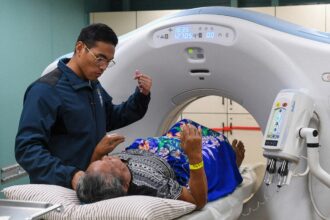
Nuclear medicine might sound a bit sci-fi, but it’s a real and incredibly powerful tool in modern healthcare. Essentially, it uses tiny amounts of radioactive materials, called radiotracers, to help doctors see what’s happening inside your body at a cellular level. This isn’t about blasting you with radiation; it’s about using very controlled, safe doses to illuminate disease processes and guide treatments, often in ways that other imaging techniques just can’t. In short, nuclear medicine is a game-changer for diagnosing a wide range of conditions and even treating some of them effectively.
Nuclear medicine is built on a clever principle: when you introduce a radioactive substance into the body, it travels through organs and tissues. The radiotracers are designed to concentrate in specific areas, depending on what the doctor is looking for. For example, a tracer might be programmed to stick to cancer cells or to follow the flow of blood. As these radiotracers decay, they emit tiny particles or energy, which are then detected by special cameras. These cameras, combined with sophisticated computer software, create detailed images showing the function and metabolism of organs and tissues, rather than just their structure like an X-ray or CT scan.
The Radiotracer: A Guiding Light
The heart of nuclear medicine is the radiotracer. These are molecules that have a radioactive atom attached to them. The type of molecule used depends entirely on what part of the body or what specific process is being investigated.
Bone Scans: Tracking Bone Health
For bone scans, a radiotracer that is taken up by bone cells is used. If there’s increased bone activity, perhaps due to cancer that has spread to the bones, an infection, or a fracture that hasn’t healed properly, this will show up as “hot spots” on the scan.
Heart Scans: Assessing Blood Flow
In cardiac imaging, radiotracers are injected to see how well blood is flowing to the heart muscle. This can help diagnose blocked arteries, heart damage from a heart attack, or assess the effectiveness of treatments like angioplasty.
Brain Scans: Uncovering Neurological Clues
For the brain, specific radiotracers can highlight areas of reduced blood flow or abnormal metabolic activity, which are crucial for diagnosing conditions like Alzheimer’s disease, Parkinson’s disease, epilepsy, or stroke.
The Imaging Equipment: Capturing the Information
Once the radiotracer has had time to travel to its target, special cameras are used to detect the emissions.
PET Scans: Unveiling Metabolic Activity
Positron Emission Tomography (PET) is a powerful technique that uses radiotracers emitting positrons. When a positron encounters an electron, they annihilate each other, producing gamma rays that are detected by the PET scanner. This allows for a very detailed look at the metabolic activity within cells, making it excellent for detecting cancers, assessing brain function, and evaluating heart conditions.
SPECT Scans: A Functional Snapshot
Single-Photon Emission Computed Tomography (SPECT) uses radiotracers that emit gamma rays directly. The SPECT scanner, similar to a CT scanner, rotates around the body to capture these gamma rays from multiple angles, creating 3D images of organ function and blood flow. SPECT is often used for heart imaging, bone imaging, and neurological studies.
Nuclear medicine plays a crucial role in diagnosing and treating various medical conditions, significantly improving patient outcomes and saving lives. For a deeper understanding of the impact of this innovative field, you can read a related article that explores the advancements and applications of nuclear medicine in modern healthcare. To learn more, visit this article.
Diagnosing Diseases: A Clearer Picture
One of the most significant contributions of nuclear medicine is its ability to diagnose diseases at their earliest stages, often before symptoms appear or before structural changes are visible on other imaging modalities.
Cancer Detection and Staging: Finding the Enemy
Nuclear medicine plays a crucial role in identifying and tracking cancer. Certain radiotracers are taken up by cancer cells more readily than by normal cells.
Whole-Body Scans: Scanning for Spread
Cancer staging is vital for determining the best course of treatment. Scans like whole-body PET scans can reveal if a cancer has spread to other parts of the body (metastasized), which is critical information for oncologists.
Sentinel Lymph Node Biopsy: Precision Without Extensive Surgery
In some types of cancer, particularly breast and melanoma, nuclear medicine helps identify the “sentinel” lymph node. This is the first lymph node that a cancerous tumor would likely drain into. By injecting a radioactive tracer near the tumor, doctors can pinpoint this node. Only this specific node is then removed and examined. If it’s clear of cancer, it’s highly probable that the cancer hasn’t spread further, thus avoiding the need for more extensive lymph node removal surgery.
Heart Health: Protecting Your Engine
Coronary artery disease is a leading cause of death, and nuclear medicine offers a non-invasive way to assess its severity.
Stress Tests: Understanding Your Heart Under Pressure
Cardiac stress tests involve injecting a radiotracer and then taking images of the heart both at rest and after the patient has exercised or been given medication to simulate exercise. Comparing the images helps identify areas of the heart muscle that aren’t receiving enough blood flow during stress, indicating blockages in the arteries.
Assessing Heart Attack Damage
Nuclear imaging can also be used after a heart attack to measure the extent of damage to the heart muscle and to evaluate how well the remaining heart muscle is functioning.
Neurological Disorders: Illuminating the Brain
The brain is incredibly complex, and nuclear medicine provides unique insights into its function.
Alzheimer’s and Dementia: Early Detection
PET scans using specific tracers can detect changes in brain metabolism associated with Alzheimer’s disease and other forms of dementia years before significant outward symptoms emerge. This can aid in earlier diagnosis and management.
Seizure Disorders: Pinpointing the Source
For epilepsy, SPECT scans can help pinpoint the precise area of the brain responsible for seizures, which is crucial for surgical planning if medication is not effective.
Beyond Diagnosis: Therapeutic Applications of Nuclear Medicine
While its diagnostic power is immense, nuclear medicine isn’t just about seeing what’s wrong; it also offers targeted treatments for certain conditions. This is often referred to as “theragnostics,” a blend of therapy and diagnostics.
Targeted Cancer Treatment: Delivering the Blow Directly
In some cases, a higher dose of a radioactive substance can be used to destroy cancerous cells directly. This approach leverages the same principle as diagnostic imaging: the radiotracer preferentially accumulates in cancer cells.
Radioactive Iodine Therapy: A Long-Standing Success
Radioactive iodine therapy has been a cornerstone treatment for thyroid cancer and hyperthyroidism for decades. Thyroid cells, whether cancerous or overactive, are particularly good at absorbing iodine. By ingesting a capsule or liquid containing radioactive iodine, the radiation is delivered directly to the thyroid gland, destroying abnormal cells while largely sparing other tissues.
Peptide Receptor Radionuclide Therapy (PRRT): For Neuroendocrine Tumors
PRRT is a more recent and highly effective treatment for certain types of neuroendocrine tumors, which can arise in various parts of the body. Here, a specially designed molecule (a peptide) that binds to receptors on these tumors is attached to a radioactive isotope. This allows the radiation to be delivered precisely to the cancerous cells.
Pain Management: Easing Suffering
Nuclear medicine can also be used to alleviate pain associated with certain conditions, primarily bone metastases.
Radium-223 Therapy: Targeting Bone Metastases
Radium-223 is a radioactive substance that behaves like calcium and is readily incorporated into bone. When given to patients with prostate cancer that has spread to the bones, it delivers radiation directly to the cancerous sites within the bone, helping to relieve pain and potentially improve survival.
Managing Autoimmune Diseases: A Developing Frontier
While still an evolving area, research is exploring the use of targeted radiopharmaceuticals to manage certain autoimmune diseases by selectively targeting inflamed or overactive immune cells.
Safety and Considerations: Addressing Common Concerns
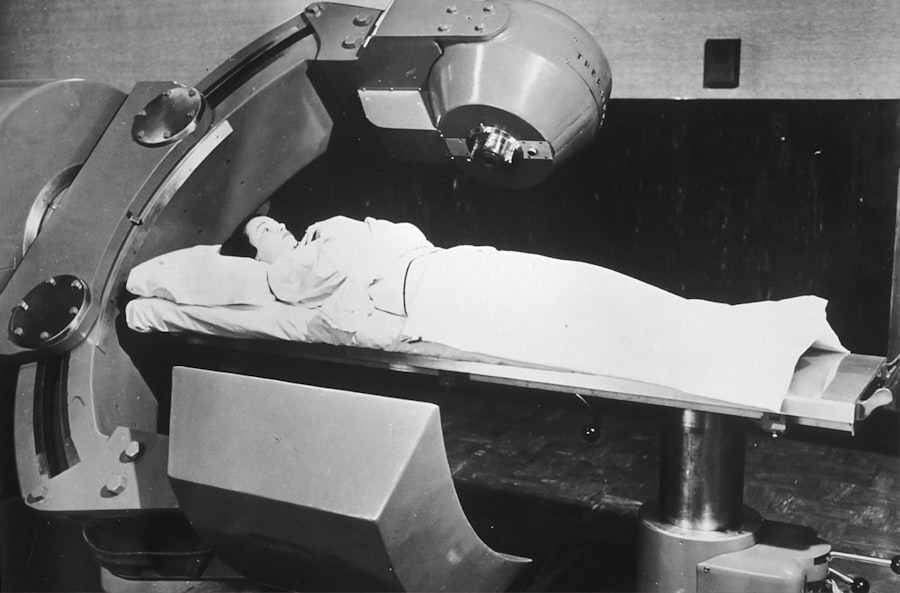
It’s understandable that the word “radioactive” might raise concerns. However, the reality of nuclear medicine is that it’s a remarkably safe practice when performed correctly.
The Low Doses of Radiotracers
The amount of radioactive material used in diagnostic nuclear medicine scans is extremely small. It’s designed to be just enough to be detected by the imaging equipment, not enough to cause harm. The radiation dose is typically comparable to, or even less than, what you might receive from natural background radiation over a few months, or from a standard X-ray.
How the Radiotracer Leaves Your Body
The radiotracers used are typically short-lived. This means their radioactivity decays rapidly, usually within hours or a few days, to harmless levels. The body also excretes them through urine or feces, further ensuring that they don’t remain in the body.
Benefits Versus Risks: A Clear Advantage
In most cases, the benefits of nuclear medicine in diagnosing and treating serious conditions far outweigh any potential risks associated with the low levels of radiation. It provides information that can lead to life-saving interventions or significantly improve a patient’s quality of life.
Regulatory Oversight and Training
Nuclear medicine procedures are strictly regulated. Technologists and physicians who administer and interpret these scans undergo extensive specialized training to ensure patient safety and optimal imaging.
Nuclear medicine plays a crucial role in diagnosing and treating various medical conditions, significantly improving patient outcomes and saving lives. For instance, a recent article highlights how advanced imaging techniques in nuclear medicine allow for early detection of diseases, which can lead to more effective treatment plans. You can read more about this transformative field in the article available at In The War Room, where the impact of these technologies on patient care is discussed in detail.
The Future of Nuclear Medicine: Expanding Horizons
| Metrics | Data |
|---|---|
| Number of lives saved annually | Thousands |
| Success rate of nuclear medicine treatments | Over 80% |
| Types of diseases treated | Cancer, heart disease, thyroid disorders, bone pain, etc. |
| Reduction in mortality rates | Significant decrease |
| Number of nuclear medicine procedures performed each year | Millions |
Nuclear medicine is a dynamic field, and research is constantly pushing its boundaries, leading to even more sophisticated diagnostic and therapeutic tools.
New Radiotracers: Precision Targeting
The development of new radiotracers is a key area of innovation. Researchers are creating tracers that can bind to very specific molecular targets on cells, allowing for even earlier and more precise detection of disease.
Advancements in Imaging Technology
Improvements in scanner technology, such as higher resolution and faster imaging times, are also enhancing the capabilities of nuclear medicine. This means clearer images, shorter scan times for patients, and the ability to detect even smaller abnormalities.
Integrating with Other Therapies: A Collaborative Approach
The future also holds promise for better integration of nuclear medicine with other treatment modalities, such as immunotherapy and targeted drug therapies. This “theranostic” approach aims to personalize treatment by both identifying the specific characteristics of a disease and delivering a targeted therapy simultaneously.
Personalized Medicine: Tailoring Treatment to the Individual
Ultimately, nuclear medicine is a powerful driver of personalized medicine. By providing detailed insights into the unique biological behavior of an individual’s disease, it allows for more tailored and effective treatment plans, moving away from a one-size-fits-all approach.

Why Modern Medicine Can’t Store Tomorrow
FAQs
What is nuclear medicine?
Nuclear medicine is a medical specialty that uses small amounts of radioactive materials, or radiopharmaceuticals, to diagnose and treat a variety of diseases and conditions within the body.
How does nuclear medicine save lives?
Nuclear medicine can save lives by providing early and accurate diagnosis of diseases such as cancer, heart disease, and neurological disorders. It also plays a crucial role in guiding treatment plans and monitoring the effectiveness of therapies.
What are some common nuclear medicine procedures?
Common nuclear medicine procedures include bone scans, PET scans, thyroid scans, and cardiac stress tests. These procedures help physicians visualize and assess the function of organs and tissues, leading to better patient care.
Is nuclear medicine safe for patients?
When performed by trained professionals, nuclear medicine procedures are generally safe for patients. The amount of radiation used is carefully controlled and the benefits of the diagnostic or therapeutic procedure typically outweigh the risks.
What are the future prospects for nuclear medicine?
The future of nuclear medicine looks promising, with ongoing research and development focused on improving imaging technologies, expanding the range of treatable conditions, and enhancing the precision and effectiveness of nuclear medicine therapies.