The Shadow of the Colossus: Japan’s Secret Submersible Ambitions
The annals of naval warfare are replete with tales of technological marvels, but few capture the imagination quite like the whispered legends of Japan’s “super submarine.” These were not mere underwater craft; they were colossal, ambitious, and shrouded in secrecy, representing a desperate gamble by an empire facing an unwinnable war. While much of the official historical record focuses on the more conventional submarines deployed by the Imperial Japanese Navy (IJN), a parallel narrative exists – one of gargantuan, audacious designs that pushed the boundaries of engineering and naval strategy, leaving behind a legacy of tantalizing mystery.
The story of Japan’s super submarines is intrinsically linked to the dire straits the nation found itself in during the latter stages of World War II. As Allied naval power, particularly that of the United States, grew overwhelmingly superior, Japan began to explore increasingly unconventional and desperate avenues to counter this dominance. The traditional submarine force, while often effective, was being systematically depleted. The need for a weapon that could strike deep into enemy territory, evade detection, and potentially carry devastating payloads became paramount. It was within this context that the concept of the “super submarine” – a vessel of unprecedented size and capability – began to take shape. These were not conceived as mere deterrents; they were envisioned as instruments of strategic disruption, capable of projecting power far beyond the reach of conventional naval forces.
For those interested in the hidden history of Japanese super submarines during World War II, a fascinating article can be found at In the War Room. This piece delves into the technological advancements and strategic implications of these formidable vessels, shedding light on their roles in naval warfare and the secrets that surrounded their development. The article provides a comprehensive overview of the submarines’ capabilities and the impact they had on the course of the war, making it a must-read for history enthusiasts.
Genesis of the Gigantic: The I-400 Class and its Unfulfilled Promise
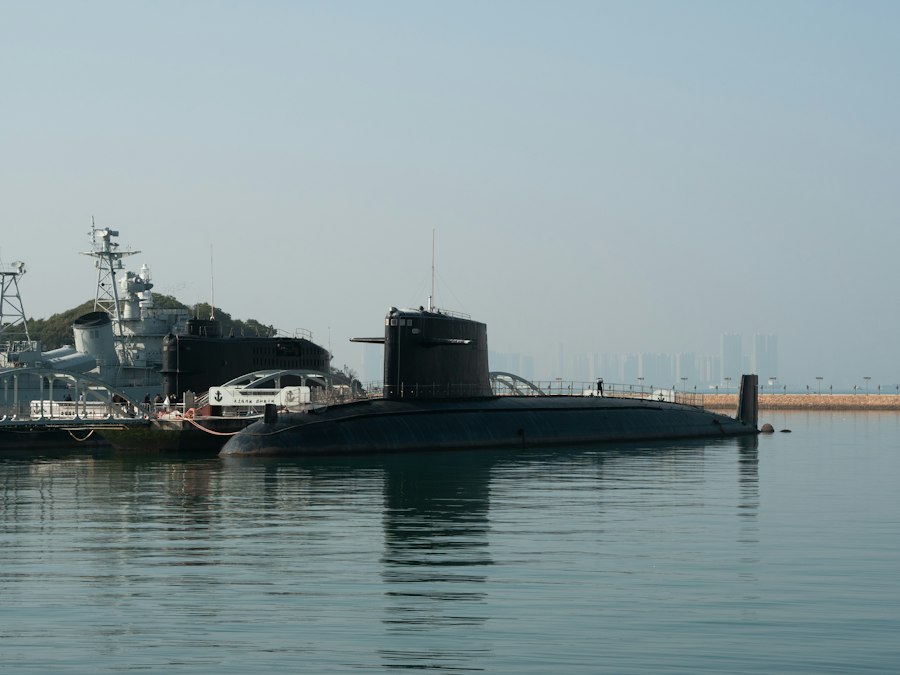
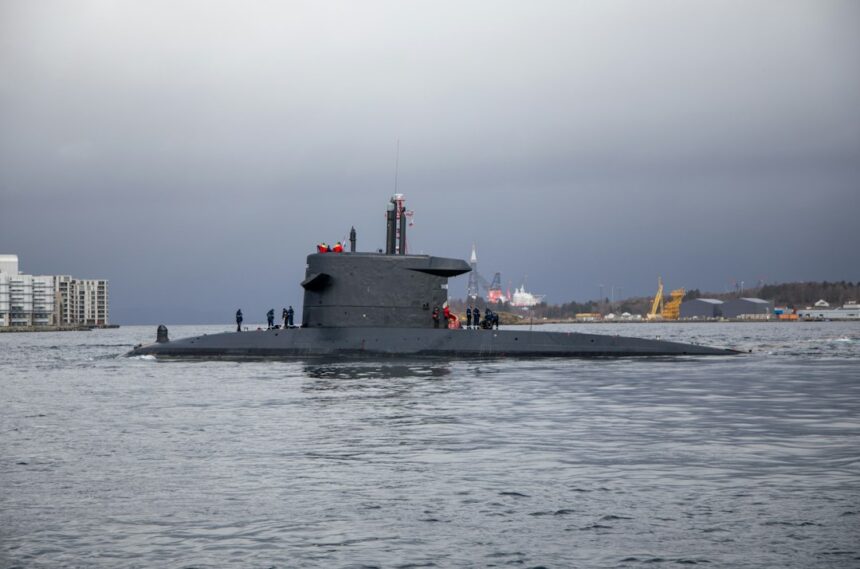
The most well-documented and perhaps the most iconic of Japan’s super submarine projects was the I-400 class, also known as the Sen Toku (Special Submarine). These vessels were nothing short of extraordinary for their time, representing a significant departure from the typical submarine design. Their sheer size was staggering; at over 100 meters in length, they were larger than many destroyers and dwarfed contemporary Allied submarines. But it was their unique armament that truly set them apart.
The Aerial Assault Wing: A Submarine Aircraft Carrier
The defining feature of the I-400 class was their integrated aircraft launch system. Each submarine was designed to carry up to three Aichi M6A “Seiran” (Stormy Clouds) floatplane bombers. These specially designed aircraft were capable of being launched from a catapult system mounted on the submarine’s massive deck. The intention was to allow the I-400 to operate independently, launching a surprise aerial attack on targets far beyond the normal operational range of land-based aircraft or conventional carrier fleets. This represented a revolutionary concept: a submersible platform that could project air power, an idea that would not be fully realized by other navies until decades later with the advent of nuclear-powered submarines capable of launching guided missiles.
The Seiran bombers themselves were marvels of engineering for their time. Lightweight and designed for rapid deployment, they could be folded to fit within the submarine’s hangar. The process of launching a Seiran involved moving it to the catapult, attaching it, and then firing it into the air. After their bombing run, the Seiran pilots were expected to ditch their aircraft in the sea and be recovered by the submarine, a testament to the ambitious and somewhat perilous nature of the operation. The idea was to strike targets like the Panama Canal, American aircraft carriers at sea, or even cities on the West Coast of the United States.
Strategic Implications and Operational Goals
The strategic rationale behind the I-400 class was to leverage Japan’s technological prowess and its geographical position to inflict crippling blows on the United States homeland, thereby potentially forcing a negotiated peace. The Panama Canal, a vital artery for American shipping, was a prime target. A successful attack could have disrupted the flow of troops and supplies to the Pacific theater, significantly impacting the Allied war effort. The psychological impact of such an attack on American soil would also have been immense.
The operational concept was daring: the I-400s would travel undetected across the vast Pacific, surfacing at a safe distance from their target, launching their Seiran bombers, and then submerging again before Allied forces could retaliate. This would have presented a unique and terrifying threat, a sneak attack from the depths of the ocean, delivered by aircraft that seemingly appeared out of nowhere. The sheer surprise factor, coupled with the destructive potential of the bombers, could have had a profound effect on morale and military planning.
Beyond the Sen Toku: Other Super Submarine Concepts and Prototypes
While the I-400 class stands as the most tangible example of Japan’s super submarine ambitions, evidence suggests that the IJN explored even more radical and ambitious designs. These often remained in the conceptual or early prototype stages, testament to the limited resources and time available to Japan as the war neared its end.
The I-13 and I-14: Precursors and Variations
The I-13 and I-14 were developed as variants of the I-400 class, sharing many of their core design principles. These submarines were also intended to carry and launch floatplane bombers, but with some modifications. The I-13, for instance, was specifically designed to carry two Seiran bombers or, in a more audacious adaptation, the Kyushu Q1W “Tokai” (Eastern Sea) anti-submarine aircraft. The I-14 was further modified to carry a single Aichi MXY7 Ohka, a piloted rocket-powered kamikaze flying bomb, alongside its Seiran complement. This demonstrated a willingness to adapt the super submarine concept to different offensive strategies, including the integration of suicide weapons.
The development of these variations highlights the IJN’s persistent belief in the efficacy of submersible air power. Despite the immense challenges and risks, the idea of a submarine that could project air power remained a key strategic objective. The focus on adapting different aircraft types to the submarine platform underscores the flexibility that the IJN sought to achieve with these gargantuan vessels.
The Unfinished Dream: The Sentaka and Sentoku Modifications
Rumors and limited documentation also point to even larger, more ambitious designs that never saw the light of day. The “Sentaka” (Special Cruiser) was reportedly a design for a colossal submarine that would have been significantly larger than the I-400 class. Details are scarce, but it’s believed these designs aimed for even greater range, speed, and armament, potentially including torpedoes of larger caliber and even shore bombardment capabilities.
Another concept, often referred to as “Sentoku Modifications,” suggested further enhancements to the I-400 class, potentially including improved propulsion systems, more advanced sonar, and increased hangar capacity for aircraft. These theoretical developments indicate a continuous pursuit of greater capabilities, pushing the limits of what was technically feasible for submersible vessels. The sheer scale of these imagined designs speaks to a desperate, almost fantastical, approach to naval warfare in the face of overwhelming odds.
Engineering Prowess and Operational Challenges
The construction and operation of these super submarines were not without their significant engineering hurdles and operational complexities. The sheer size and weight of these vessels demanded innovative solutions in shipbuilding and material science.
Navigational and Operational Demands
Operating a submarine of the I-400 class’s size presented unique challenges. Maneuvering such a large vessel in submerged conditions required immense skill from the crew. The extended patrols across the vast Pacific Ocean demanded meticulous planning for provisions, fuel, and maintenance. The sophisticated launch and recovery systems for the aircraft added another layer of complexity, requiring precise coordination and highly trained personnel.
The limitations of existing technology also played a role. While the I-400s were designed for long-range operations, their speed submerged was relatively slow compared to their surface speed. This made them more vulnerable to detection by sonar and ASW (anti-submarine warfare) aircraft. The limited number of aircraft they could carry also meant that a single sortie could significantly deplete their offensive capability. Furthermore, the recovery of the Seiran bombers was a risky operation, often requiring the submarine to surface in potentially hostile waters.
The Psychological Impact and Strategic Value
The very existence of the I-400 class was intended to have a significant psychological impact on the enemy. The idea of a submarine capable of launching aerial attacks on American soil was a terrifying prospect. While the operational success of the I-400s was limited, their potential threat loomed large. The IJN hoped that the fear and uncertainty generated by these “monster submarines” would force the Allies to divert resources and attention to defending their own shores, thereby alleviating pressure in the Pacific.
The strategic value of the I-400 class lay in their ability to project power in a way that was unprecedented for submarines. They represented a significant departure from the traditional role of submarines as commerce raiders or fleet auxiliaries. Their ability to operate independently and launch surprise attacks offered a novel strategic advantage, even if that advantage was ultimately overshadowed by the overwhelming might of the Allied war machine.
The hidden history of Japanese super submarines during World War II reveals fascinating insights into naval warfare and technological advancements of the era. For those interested in exploring this topic further, an intriguing article can be found at this link, which delves into the strategic significance and engineering marvels of these underwater giants. Understanding their impact not only sheds light on Japan’s military ambitions but also highlights the broader context of submarine warfare in the 20th century.
The Twilight of the Colossi: Their Fate and Legacy
| Metric | Details |
|---|---|
| Submarine Name | I-400 Class |
| Type | Aircraft Carrier Submarine |
| Displacement | 5,900 tons (surfaced), 6,500 tons (submerged) |
| Length | 122 meters |
| Aircraft Capacity | 3 Seaplanes (Aichi M6A) |
| Range | 37,500 nautical miles at 14 knots |
| Speed | 18.7 knots (surfaced), 6.5 knots (submerged) |
| Armament | 8 torpedo tubes, 1 140mm deck gun |
| Operational Period | 1944 – 1945 |
| Historical Significance | Largest submarines of WWII, designed for surprise attacks on US west coast |
| Fate | Scuttled by US Navy in 1946 to prevent Soviet capture |
The story of Japan’s super submarines ultimately became one of unfulfilled potential, overshadowed by the rapid and decisive Allied victory. As the war drew to a close, the limited number of operational I-400s never had the chance to fully execute their ambitious missions.
A Fleeting Encounter with Victory
By the time the I-400 class submarines were operational, Japan’s war effort was in terminal decline. Resources were scarce, and the IJN was struggling to maintain even its conventional submarine fleet. The few I-400s that were completed were rushed into service, but their strategic window of opportunity had largely closed. The planned attacks on the Panama Canal were eventually aborted due to changing strategic circumstances and the overwhelming Allied naval presence. Instead, the I-400s were sometimes used for reconnaissance missions or to carry vital supplies to remote outposts.
One notable mission involved the I-401, which was tasked with scouting the waters around the Mariana Islands in a bid to locate and attack American carrier forces. However, this mission was also ultimately unsuccessful. The war ended before the I-400s could prove their true strategic worth, leaving their operational capabilities largely untested in their intended role.
The Lingering Mystery and Post-War Discoveries
The end of World War II saw the surrender of Japan and the subsequent dismantling of its military. The fate of the I-400 class submarines was varied. Some were scuttled by their own crews to prevent capture, while others were sunk by Allied forces. A few were captured by the United States Navy for examination, providing invaluable insights into Japanese naval technology.
The discovery of the wreck of the I-401 in the waters off the coast of Hawaii in 2005 brought the story of these super submarines back into the public consciousness. The archaeological survey of the wreck revealed details about their construction and operational features, confirming many of the historical accounts and shedding new light on this fascinating chapter of naval history. The legacy of Japan’s super submarines endures not just in historical records, but in the lingering questions they raise about the limits of technological ambition and the desperate measures undertaken in the crucible of total war. They stand as a testament to a bygone era of naval innovation, a glimpse into a potential future of warfare that was, thankfully, never fully realized.
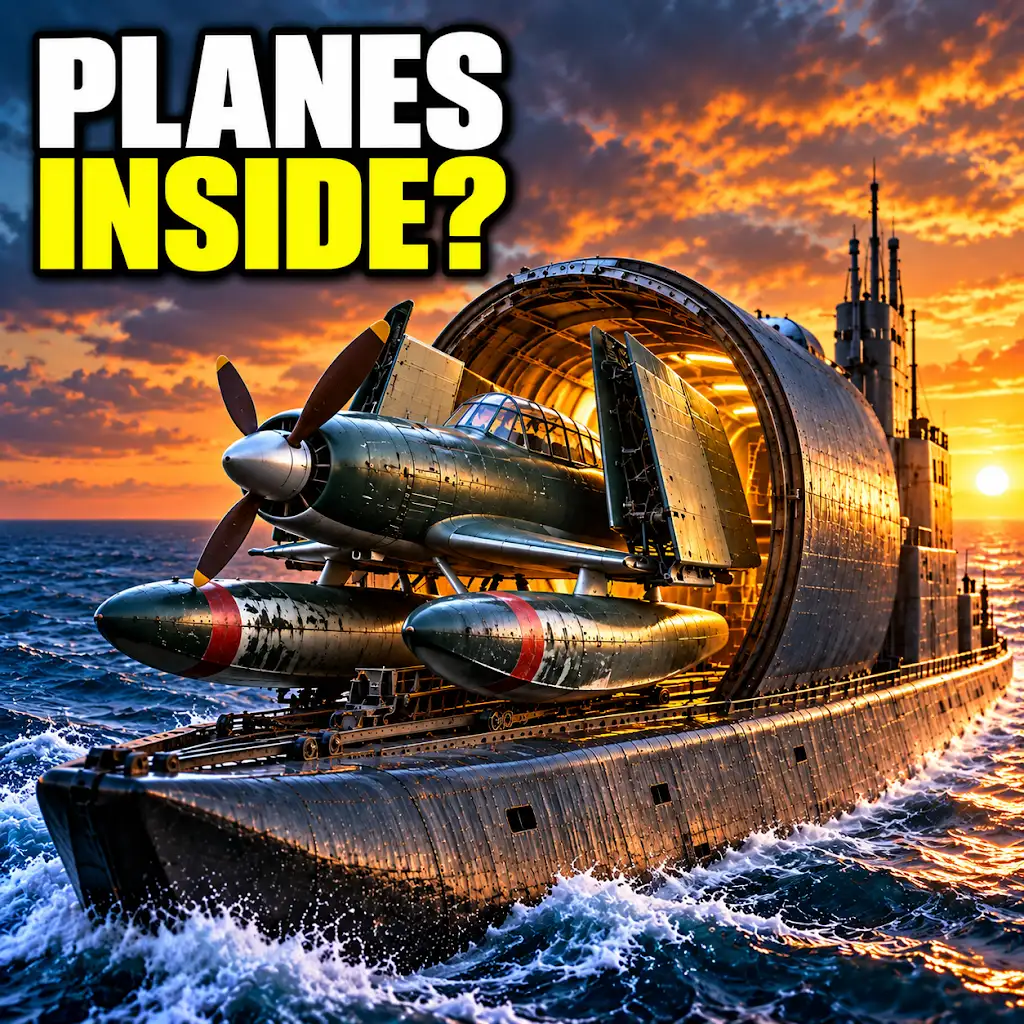
Japan Built a Submarine That Could Launch Three Planes
FAQs
What is the Japanese super submarine?
The Japanese super submarine, also known as the Sen Toku-class submarine, was a series of submarines built by Japan during World War II. They were the largest submarines ever built until the introduction of nuclear-powered submarines.
How many Japanese super submarines were built?
A total of three Sen Toku-class submarines were built by Japan during World War II. They were named I-400, I-401, and I-402.
What was the purpose of the Japanese super submarines?
The primary purpose of the Japanese super submarines was to serve as aircraft carriers. They were designed to carry and launch up to three Aichi M6A Seiran aircraft, which could be used for reconnaissance or bombing missions.
Did the Japanese super submarines see combat during World War II?
Although the Japanese super submarines were built for combat purposes, they did not see much action during World War II. Only one mission was carried out by the I-400 and I-401 submarines, which involved plans to attack the Panama Canal, but the war ended before the mission could be completed.
What happened to the Japanese super submarines after World War II?
After Japan’s surrender in 1945, the three Sen Toku-class submarines were scuttled by the United States Navy off the coast of Hawaii in 1946. The decision was made to prevent the advanced technology of the submarines from falling into the hands of other countries.