
The Cold War was a period of intense geopolitical tension that spanned from the end of World War II until the early 1990s. Characterized by a deep ideological divide between the United States and the Soviet Union, it was a conflict waged not with direct military confrontation between the superpowers, but through proxy wars, an escalating arms race, and a pervasive atmosphere of espionage and propaganda. This era of suspicion and fear, where the world teetered on the brink of nuclear annihilation, offers a compelling narrative of human ingenuity, paranoia, and the clandestine battles fought in the shadows.
The cessation of hostilities in 1945 did not usher in an era of global harmony. Instead, the ashes of war revealed two dominant superpowers with fundamentally opposing visions for the post-war world. The United States, championing democracy and capitalism, emerged as a beacon of freedom and economic prosperity. Conversely, the Soviet Union, under the iron grip of communism, sought to expand its influence and create a socialist world order. This ideological chasm, already present before the war, widened dramatically in its aftermath, setting the stage for a protracted and dangerous rivalry.
The Yalta and Potsdam Conferences: Defining the Post-War Landscape
The Allied conferences held at Yalta and Potsdam in the closing stages of World War II were crucial in shaping the post-war geopolitical map. While intended to foster cooperation, these meetings also highlighted the growing friction between the Western Allies and the Soviet Union. Disagreements over the future of Eastern Europe, particularly regarding free elections and the establishment of independent nations, sowed seeds of distrust. Stalin’s assurances of democratic governments in Soviet-occupied territories were met with increasing skepticism from Roosevelt and later Truman, who recognized the Soviet Union’s growing hegemonic ambitions.
The Iron Curtain Descends: The Division of Europe
Winston Churchill’s famous pronouncement of an “Iron Curtain” descending across Europe in 1946 vividly depicted the growing division. The Soviet Union consolidated its control over Eastern European nations, transforming them into satellite states with communist regimes loyal to Moscow. This bloc, characterized by political repression and economic isolation from the West, became a potent symbol of the ideological divide. Western Europe, in contrast, received substantial aid through the Marshall Plan, a US initiative aimed at economic recovery and preventing the spread of communism.
The Truman Doctrine and Containment: A New Foreign Policy
In response to perceived Soviet expansionism, particularly the communist threat in Greece and Turkey, President Harry Truman articulated a new foreign policy doctrine. The Truman Doctrine, announced in 1947, pledged US support to nations resisting communist subjugation, marking a significant shift from America’s historical isolationism. This doctrine laid the groundwork for the broader strategy of “containment,” a policy designed to prevent the further spread of communism without necessarily seeking to overthrow existing communist regimes.
The Cold War was a complex period marked by political tension and ideological conflict between the United States and the Soviet Union. For those interested in exploring true stories from this era, a related article that delves into the intricacies of espionage and diplomacy is available at this link. This article provides an insightful look into the covert operations and key events that shaped the Cold War landscape, offering a deeper understanding of the historical context and its lasting impact on global relations.
The Shadow War: Espionage and Intelligence Operations
The Cold War was as much a battle of information and subversion as it was of military might. The clandestine world of espionage became a crucial front, with both the United States and the Soviet Union investing heavily in intelligence agencies and covert operations. These shadowy organizations engaged in a constant struggle for secrets, aiming to gain a strategic advantage and undermine the enemy’s political and military capabilities.
The Birth of the CIA and KGB: Masters of Deception
The establishment of the Central Intelligence Agency (CIA) in the United States in 1947 and the subsequent consolidation of Soviet intelligence under the Committee for State Security (KGB) marked the formalization of the intelligence war. These agencies were tasked with gathering information, conducting psychological warfare, and engaging in covert actions to influence international events. Their operations were often shrouded in secrecy, leading to a culture of paranoia and suspicion that permeated both governments and societies.
The Art of Infiltration: Spies Among Us
Recruiting and placing agents within enemy territory was a painstaking and dangerous endeavor. Spies, often highly trained and deeply committed, risked their lives to gather vital intelligence. They operated under the constant threat of exposure and severe punishment, utilizing sophisticated methods of communication, ciphers, and dead drops. The stories of individuals like Oleg Penkovsky, a Soviet colonel who spied for the West, or Aldrich Ames, a CIA defector who betrayed hundreds of American assets to the Soviets, highlight the profound human cost and the high stakes involved.
The Double Agents and Defectors: Shifting Loyalties
The complex landscape of espionage was further complicated by the existence of double agents and defectors. Individuals who initially served one side could, for various reasons – ideology, financial gain, or coercion – switch their allegiance, becoming invaluable assets to the opposing intelligence agency. The defection of defectors, such as Yuri Bezmenov from the KGB, offered rare insights into the inner workings and propaganda tactics of the Soviet Union, while the betrayals of agents like Ames had devastating consequences for national security.
Technological Espionage: The Race for Superiority
Beyond human intelligence, technological espionage played a pivotal role. Both sides worked feverishly to acquire advanced military technology, scientific breakthroughs, and industrial secrets. This often involved stealing blueprints, bribing scientists and engineers, and even orchestrating industrial sabotage. The race to develop superior weaponry, from advanced aircraft to nuclear technology, was fueled by the constant fear of falling behind the adversary.
The U-2 Incident: A Diplomatic Crisis in the Skies
The downing of an American U-2 spy plane over Soviet territory in 1960, piloted by Francis Gary Powers, represented a significant intelligence setback and a major diplomatic crisis. The incident exposed the extent of American aerial surveillance and resulted in the cancellation of a crucial summit between President Eisenhower and Soviet Premier Khrushchev, further exacerbating Cold War tensions.
The Nuclear Shadow: An Arms Race of Unprecedented Scale
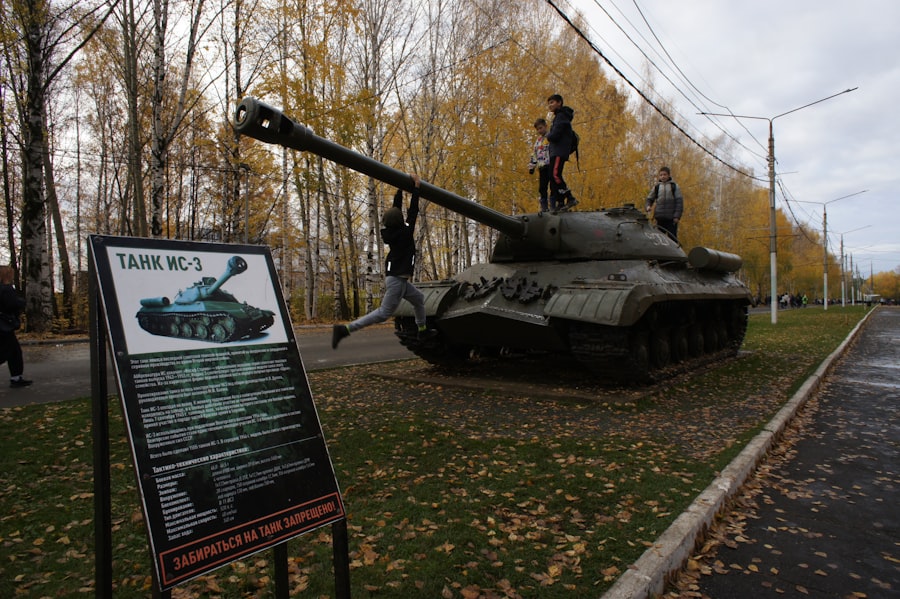
Perhaps the most defining characteristic of the Cold War was the relentless arms race, particularly in the development and proliferation of nuclear weapons. The advent of the atomic bomb fundamentally altered the nature of warfare, introducing the chilling prospect of mutually assured destruction (MAD). This led to a period of unprecedented military buildup, where the threat of annihilation became a constant, tangible presence.
The Manhattan Project and its Aftermath: The Dawn of the Nuclear Age
The United States’ successful development of the atomic bomb during World War II, culminating in the bombings of Hiroshima and Nagasaki, irrevocably changed the global security landscape. The Soviet Union, driven by paranoia and a desire to counter American nuclear superiority, embarked on its own ambitious nuclear program, successfully detonating its first atomic bomb in 1949. This marked the beginning of a terrifying arms race that would define the Cold War.
The Hydrogen Bomb: The Ultimate Weapon
The development of the hydrogen bomb, or thermonuclear weapon, further escalated the stakes. Significantly more powerful than its atomic predecessor, the H-bomb offered a destructive potential on an unimaginable scale. The United States detonated the first H-bomb in 1952, and the Soviet Union followed suit in 1953, ushering in an era where the capacity for global devastation was a stark reality.
Mutually Assured Destruction (MAD): A Delicate Balance of Terror
The doctrine of Mutually Assured Destruction (MAD) became the cornerstone of nuclear deterrence. The understanding that a nuclear attack by one superpower would inevitably lead to a retaliatory strike from the other, resulting in the complete annihilation of both, served as a grim deterrent against the actual use of these weapons. This “balance of terror” maintained a fragile peace, yet the constant threat of accidental war or escalation loomed large.
The Cuban Missile Crisis: The Closest Call
The Cuban Missile Crisis of 1962 stands as the most perilous moment of the Cold War, bringing the world perilously close to nuclear war. The discovery of Soviet nuclear missile sites in Cuba, a mere 90 miles off the coast of Florida, triggered a tense standoff between President Kennedy and Premier Khrushchev. For thirteen days, the world held its breath as the superpowers engaged in a high-stakes game of brinkmanship, ultimately resolved through intense diplomatic negotiations and a compromise that saw the removal of Soviet missiles from Cuba and the secret removal of US Jupiter missiles from Turkey.
Arms Control Treaties: A Glimmer of Hope
Despite the relentless arms race, there were also attempts to manage the proliferation of nuclear weapons and reduce the risk of conflict. A series of arms control treaties, such as the Partial Nuclear Test Ban Treaty (1963) and the Strategic Arms Limitation Treaties (SALT I and II), were negotiated. These agreements, while not ending the arms race entirely, represented a crucial effort to establish dialogue and create some measure of predictability in the dangerous nuclear landscape.
The Proxy Battlegrounds: Conflicts Far from Home

While the superpowers avoided direct military confrontation, the Cold War was characterized by numerous proxy wars, where the US and the USSR supported opposing sides in regional conflicts. These proxy battles served as arenas for the superpowers to test their military capabilities, gain influence, and undermine the enemy’s global reach without risking a direct clash.
The Korean War: A Divided Peninsula
The Korean War, erupting in 1950, was one of the first major proxy conflicts of the Cold War. Following the division of Korea after World War II, the communist North, backed by the Soviet Union and later China, invaded the South, supported by the United States and the United Nations. The brutal conflict, characterized by fierce fighting and heavy casualties, ended in a stalemate, leaving the Korean peninsula permanently divided along the 38th parallel, a division that persists to this day.
The Vietnam War: A Long and Divisive Struggle
The Vietnam War, spanning from the 1950s to 1975, became one of the most protracted and controversial proxy wars. The US intervened extensively to support South Vietnam against the communist North, which was backed by the Soviet Union and China. The war deeply divided American society, ultimately resulting in a US withdrawal and a communist victory, a significant blow to American prestige and a triumph for Soviet influence in Southeast Asia.
Conflicts in Africa and Latin America: A Global Chessboard
The Cold War’s influence extended to nascent nations in Africa and Latin America, where the US and USSR vied for allegiance and sought to install friendly regimes. This often involved significant military and economic aid, covert operations, and support for coups and civil wars. From conflicts in Angola and Mozambique to interventions in Nicaragua and Chile, these regions became vital chessboards in the global struggle for ideological dominance.
The Cold War era was marked by intense political and military tensions between the United States and the Soviet Union, leading to numerous espionage activities and covert operations. One fascinating true story from this period involves the Berlin Wall, which became a symbol of the ideological divide between East and West. For a deeper understanding of the events and strategies that shaped this critical time in history, you can read more in this insightful article on the topic. Check it out here.
The Ideological Crusades: Propaganda and the Battle for Hearts and Minds
| Event | Date | Location | Significance |
|---|---|---|---|
| Yalta Conference | February 4-11, 1945 | Yalta, Crimea | Agreement on post-war Europe |
| Berlin Airlift | June 24, 1948 – May 12, 1949 | West Berlin | Response to Soviet blockade |
| Cuban Missile Crisis | October 16-28, 1962 | Cuba | Closest to nuclear war |
| Space Race | 1957-1975 | Outer space | Competition for space exploration |
Beyond military and intelligence operations, the Cold War was also a battle for hearts and minds. Both superpowers employed extensive propaganda campaigns to promote their ideologies, demonize the enemy, and win over global opinion. This struggle for narrative dominance played a crucial role in shaping public perceptions and influencing the course of the conflict.
The “Free World” vs. The “Communist Bloc”: Two Competing Narratives
The United States and its allies presented themselves as champions of freedom, democracy, and individual liberty, contrasting sharply with the perceived tyranny and oppression of communist regimes. Propaganda often highlighted the economic prosperity and consumer goods available in the West, while portraying the Soviet Union as a stagnant and repressive society.
Conversely, the Soviet Union and its allies depicted the capitalist world as exploitative, imperialistic, and inherently unjust. Their propaganda emphasized the promise of equality, social justice, and classless societies offered by communism, often framing the US as a decadent and materialistic power.
Cultural Diplomacy and “Soft Power”
Both sides engaged in cultural diplomacy to promote their respective ways of life. The US sponsored artistic exhibitions, film festivals, and athletic exchanges, showcasing American culture and values. The Soviet Union, in turn, promoted its classical arts, literature, and achievements in science and sports. This “soft power” approach aimed to win over international audiences and foster a positive image of their respective systems.
The Voice of America and Radio Moscow: Broadcasting the Ideology
Radio played a crucial role in disseminating propaganda across borders. Voice of America, funded by the US government, broadcast news and cultural programming into Soviet-controlled territories and beyond, aiming to counter Soviet narratives and offer an alternative perspective. Similarly, Radio Moscow beamed its message to audiences worldwide, promoting the Soviet Union’s achievements and ideological tenets.
The Space Race: A Symbolic Competition
The space race, while ostensibly a scientific endeavor, became a potent symbol of technological and ideological superiority. The Soviet Union’s early successes, such as launching the first satellite, Sputnik, in 1957, and sending the first human into space, Yuri Gagarin, in 1961, sparked fear and admiration in the West and galvanized American efforts to catch up and surpass their rival. The ultimate triumph of the American moon landing in 1969 was a significant propaganda victory for the United States, showcasing its technological prowess and the dynamism of its system.
The Long Thaw and the Fall of the Wall: A Gradual Unraveling
The Cold War did not end with a dramatic bang but rather a gradual unraveling. A period of détente in the 1970s offered a brief respite, but renewed tensions in the early 1980s saw a resurgence of bellicose rhetoric. However, internal pressures within the Soviet Union, coupled with the reformist policies of Mikhail Gorbachev, ultimately led to the collapse of communist regimes in Eastern Europe and the dissolution of the Soviet Union itself.
Détente and the Shifting Sands of Diplomacy
The 1970s witnessed a period of détente, characterized by a slowing down of the arms race and a more cooperative approach to international relations. Summit meetings between US and Soviet leaders, arms control negotiations, and increased cultural exchanges marked this era. However, underlying tensions and rivalries remained, and détente proved to be a fragile phenomenon.
Gorbachev’s Reforms: Glasnost and Perestroika
The rise of Mikhail Gorbachev to power in the Soviet Union in 1985 marked a turning point. His policies of glasnost (openness) and perestroika (restructuring) were intended to revitalize the Soviet system, but they inadvertently unleashed forces that led to its demise. Glasnost allowed for greater freedom of expression and criticism, while perestroika aimed to introduce market-like reforms, weakening the grip of the central communist party.
The Fall of the Berlin Wall: A Symbol of Liberation
The fall of the Berlin Wall on November 9, 1989, became the most potent symbol of the end of the Cold War. For decades, the wall had stood as a concrete manifestation of the ideological divide and the division of Europe. Its sudden and unexpected demise, met with widespread jubilation, signaled the irreversible decline of Soviet influence and the impending collapse of communist regimes.
The Dissolution of the Soviet Union: A New World Order
In December 1991, the Soviet Union officially dissolved, marking the formal end of the Cold War. The constituent republics declared independence, and the once-mighty Soviet empire fractured into independent nations. This event ushered in a new era of international relations, characterized by American unipolarity and the triumph of liberal democracy over communism. The Cold War, a period of unparalleled tension and existential threat, ultimately concluded not with a bang, but with the quiet dismantling of an empire and the dawn of a new, albeit still complex, global order. The legacy of espionage, fear, and ideological conflict, however, continues to shape the world we inhabit today.

How the CIA Tried to Steal a Soviet Nuclear Submarine
FAQs
What was the Cold War?
The Cold War was a period of political tension and military rivalry between the United States and its allies on one side, and the Soviet Union and its allies on the other, from the end of World War II until the early 1990s.
What were the main events of the Cold War?
Key events of the Cold War include the Berlin Airlift, the Korean War, the Cuban Missile Crisis, and the construction of the Berlin Wall. These events shaped the geopolitical landscape and heightened tensions between the two superpowers.
What were the main causes of the Cold War?
The main causes of the Cold War included ideological differences between the capitalist West and the communist East, competition for global influence, and the aftermath of World War II, which left the United States and the Soviet Union as the world’s two superpowers.
How did the Cold War end?
The Cold War ended with the collapse of the Soviet Union in 1991. The dissolution of the Soviet Union marked the end of the bipolar world order and the beginning of a new era of international relations.
What impact did the Cold War have on the world?
The Cold War had a profound impact on global politics, economics, and culture. It led to the proliferation of nuclear weapons, the division of Europe, and the emergence of new alliances and conflicts in the developing world. The legacy of the Cold War continues to shape international relations today.