The biting wind whipped across the scarred landscape of Berlin, carrying with it the perpetual scent of coal smoke and despair. It was the winter of 1948, a season that etched itself into the collective memory of West Berliners not just for its brutal cold, but for the suffocating grip of the Soviet blockade. For over two million souls, trapped behind an iron curtain forged in the heart of a shattered city, survival was a daily, desperate gamble. This was the winter of the Berlin Airlift, a testament to human resilience and an audacious display of Allied determination against overwhelming odds.
The Allied victory in World War II had been a Pyrrhic one for many, and nowhere was this more evident than in Berlin. Divided into four occupation zones, the city had become a microcosm of the burgeoning Cold War. The Soviet Union, controlling the eastern sector, saw West Berlin, an enclave of Western powers deep within its territory, as an unacceptable irritant, a beacon of democracy and capitalism in its sphere of influence. On June 24, 1948, Joseph Stalin’s gamble began. The Soviets severed all land and water access to West Berlin, effectively strangling the city’s supply lines.
The Logic of Blockade
The Soviet Union’s objective was clear: to force the Western Allies out of Berlin. They believed that by cutting off essential supplies – food, fuel, medicine, and raw materials – they could starve the city into submission, compelling the Americans, British, and French to abandon their posts. This was not merely a diplomatic pressure tactic; it was a calculated act of economic warfare, designed to demonstrate Soviet resolve and to test the resolve of the West. The hope was that the Western powers, unwilling to risk a full-blown war over an isolated city, would eventually capitulate.
The Human Cost of Isolation
The immediate impact of the blockade was catastrophic. West Berlin was dependent on the outside world for nearly everything. Food reserves dwindled at an alarming rate. Coal, essential for heating homes and powering industry, became a luxury. The specter of starvation and freezing to death loomed large. Families huddled together for warmth, rationing every scrap of food. Factories ground to a halt, and unemployment soared. The psychological toll was immense, a constant gnawing anxiety about the future, about the very survival of their city and their way of life.
The Berlin Airlift during the winter of 1948 was a pivotal moment in post-World War II history, showcasing the resilience and determination of the Western Allies in the face of Soviet aggression. For a deeper understanding of the challenges faced during this critical operation, you can read a related article that explores the logistical hurdles and the human stories behind the airlift at this link.
The Miracle of the Sky: Operation Vittles and Operation Plainfare
As the blockade tightened its vise, the Western Allies faced a stark choice: abandon Berlin or find an alternative means of supply. The latter seemed an almost insurmountable task. The only remaining access routes were the air corridors, narrow pathways through Soviet-controlled airspace. The prospect of flying in the millions of tons of supplies needed to sustain a city of over two million people seemed fantastical. Yet, it was precisely this seemingly impossible task that the Allied air forces embraced.
The Birth of the Airlift
The United States, under the leadership of President Harry Truman, quickly decided that surrender was not an option. The symbolic importance of Berlin, a testament to the sacrifices made in the war, was too great to abandon. The British, equally committed, joined forces with the Americans to launch what would become known as the Berlin Airlift. The operational names were ‘Operation Vittles’ for the Americans and ‘Operation Plainfare’ for the British, but in the hearts of Berliners, it was simply “die Luftbrücke” – the air bridge.
Scaling the Impossible: Logistics on an Unprecedented Scale
The sheer scale of the undertaking was staggering. Airplanes, primarily American C-47 Skytrains and C-54 Skymasters, and British Dakotas and Yorks, were tasked with the Herculean effort. These aircraft, designed for troop transport and cargo, were now tasked with the vital mission of keeping an entire city alive. Pilots had to navigate through treacherous weather, often flying in conditions of near-zero visibility, with limited navigation aids. Every few minutes, a plane would land or take off from Berlin’s Tempelhof, Gatow, or Tegel airports.
The Rhythm of Deliverance
The routine became a lifeline. Planes loaded with flour, coal, powdered milk, potatoes, and medicine would depart from airfields in West Germany, flying along pre-determined air corridors. Upon arrival in Berlin, they would land, unload their precious cargo, and take off again, often within a matter of minutes, to make way for the next incoming aircraft. This relentless rhythm of landings and takeoffs became the heartbeat of West Berlin, a constant reassurance that the outside world had not forgotten them. The pilots became heroes, the droning engines a symphony of hope.
Life Under the Wings: Adaptation and Resilience
The constant presence of aircraft overhead, a daily reminder of their precarious situation, also became a symbol of their salvation. Berliners adapted to this new reality with remarkable fortitude. They learned to live by the rhythm of the sky, anticipating the sounds of engines, and understanding the vital importance of each flight.
The “Candy Bombers” and the Spirit of Generosity
One of the most touching aspects of the airlift was the initiative of the pilots themselves. Recognizing the hardship faced by the children of Berlin, pilots like Gail Halvorsen began dropping small parcels of candy and gum, tied to handkerchief parachutes, to children gathered near the airfields. This simple act of kindness, born out of the pilots’ own empathy, became a powerful symbol of hope and a demonstration of the human connection that transcended political divides. The children eagerly awaited these airborne treats, and the pilots became affectionately known as “Rosinenbomber” (raisin bombers) or “Candy Bombers.”
Rationing and Resourcefulness
Life for West Berliners was a constant exercise in resourcefulness and strict rationing. Every kilowatt of electricity was precious, every calorie counted. Coal was so scarce that people resorted to burning anything that would burn – old furniture, books, even newspapers – to keep a semblance of warmth in their homes. Community kitchens, “Volksküchen,” sprang up, offering meager but vital meals to those most in need. Neighbors shared what little they had, fostering a profound sense of solidarity.
The Psychological Battle
Beyond the physical challenges, the airlift was also a psychological battle. The Soviets continued their propaganda efforts, aiming to sow discord and despair. Yet, the unwavering commitment of the Allies and the tangible evidence of their support, delivered day after day by the relentless stream of aircraft, helped to bolster the morale of the West Berliners. They understood that their resilience was not just about enduring hardship; it was about actively resisting Soviet pressure and choosing their own future.
The Economic Strain and the Global Stakes

The Berlin Airlift was not just a humanitarian effort; it was an immense economic undertaking for the Western Allies, and it had significant global implications. The cost of flying in supplies was astronomical, placing a considerable strain on the budgets of the United States and Great Britain.
The Financial Burden
Estimates vary, but the cost of the airlift ran into hundreds of millions of dollars. This was a significant expenditure, especially in the post-war years when both nations were still rebuilding their own economies. However, the perceived alternative – the loss of Berlin and the potential domino effect on the Cold War landscape – was deemed far more costly. The decision to sustain the airlift was a strategic one, a demonstration that the West would not yield to Soviet intimidation.
A Global Spectacle of Ideologies
The Berlin Airlift became a highly visible stage for the unfolding Cold War. The success of the airlift was a propaganda victory for the West, showcasing the technological prowess and logistical capabilities of the Allied air forces. It highlighted the stark contrast between the Soviet Union’s coercive tactics and the Western commitment to freedom and self-determination. The world watched, captivated by the drama, and the airlift became a potent symbol of the ideological struggle between democracy and communism.
The United Nations and Diplomatic Maneuvers
While the airlift was primarily an Allied operation, the United Nations played a role in mediating the crisis. Diplomatic efforts were made behind the scenes to find a resolution, but the Soviets remained intransigent until they realized the airlift was succeeding and that their blockade was failing to achieve its objective. The ongoing negotiations, while not directly halting the airlift, were a constant undercurrent to the unfolding events.
The Berlin Airlift during the winter of 1948 was a pivotal moment in Cold War history, showcasing the determination of the Western Allies to support West Berlin against Soviet blockade efforts. For a deeper understanding of the geopolitical implications and the human stories behind this monumental event, you can read a related article that explores the challenges faced by those involved in the airlift. This insightful piece can be found here.
The End of the Siege: A Victory for the West
| Month | Number of Airlift Flights | Total Tonnage Delivered |
|---|---|---|
| December 1948 | 12,941 | 171,000 |
| January 1949 | 16,596 | 203,000 |
| February 1949 | 17,138 | 196,000 |
For 323 days, the planes flew. Day and night, through sun, rain, and snow, the lifeline remained open. The sheer persistence and unwavering commitment of the Allied pilots and ground crews, coupled with the stoic endurance of the West Berliners, ultimately proved to be the undoing of the Soviet blockade.
The Inevitable Capitulation
By the spring of 1949, it was clear that the blockade was not achieving its aims. The West Berliners were surviving, and the constant stream of supplies meant that the city would not fall. The economic and political cost of maintaining the blockade had become too high for the Soviet Union. On May 12, 1949, Joseph Stalin lifted the blockade. The iron grip on West Berlin was finally broken.
The Legacy of the Luftbrücke
The Berlin Airlift was a defining moment of the 20th century. It demonstrated the power of collective action, the indomitable spirit of ordinary people, and the strategic vision of political leaders. The winter of 1948-49 was a period of immense hardship, but it also forged an unbreakable bond between West Berliners and the Allied nations. The memory of the droning planes, the scent of coal smoke, and the taste of candy dropped from the sky became a symbol of survival, of hope, and of freedom won against all odds. The Berlin Airlift ensured that West Berlin remained a vibrant outpost of democracy in a divided Germany, a testament to the fact that even in the darkest of times, the human spirit can find a way to soar.
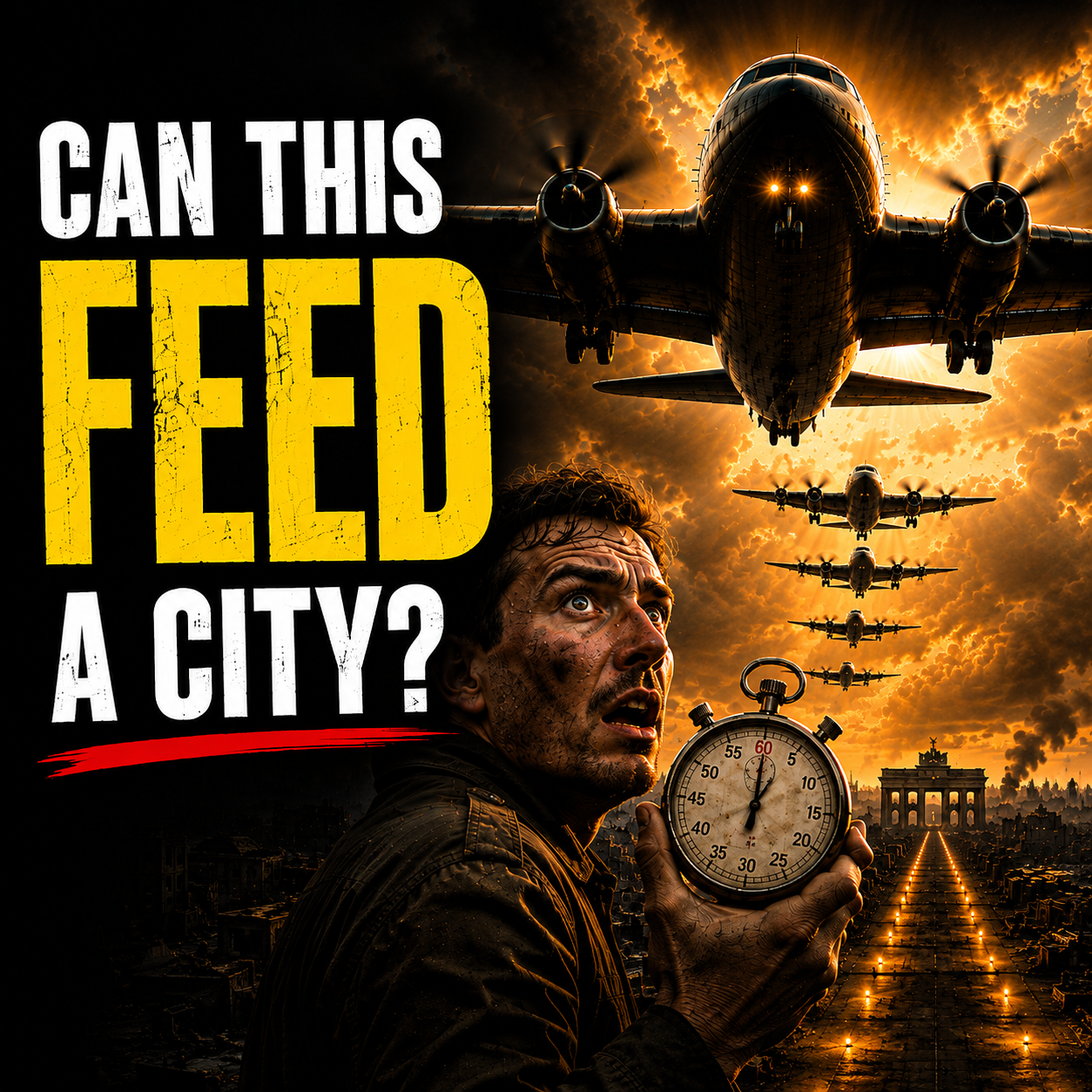
How 90 Seconds Kept 2 Million People Alive
FAQs
What was the Berlin Airlift winter 1948?
The Berlin Airlift winter 1948 refers to the massive humanitarian effort to supply West Berlin with food, fuel, and other necessities during the Soviet blockade of the city from June 1948 to May 1949.
Why did the Soviet Union blockade West Berlin?
The Soviet Union blockaded West Berlin in an attempt to force the Western Allies to abandon the city and give up their control over West Germany. The blockade was a response to the introduction of a new currency in West Germany, which the Soviets saw as a threat to their influence in the region.
How did the Berlin Airlift winter 1948 work?
During the Berlin Airlift, Western Allied forces, primarily the United States and the United Kingdom, organized a massive airlift operation to transport supplies into West Berlin. Over 200,000 flights were made, delivering over 2.3 million tons of supplies to the city.
What were the key challenges faced during the Berlin Airlift winter 1948?
The Berlin Airlift faced numerous challenges, including harsh winter weather, limited airport capacity, and the need to coordinate a large-scale airlift operation. Additionally, the airlift had to be conducted under the constant threat of Soviet interference.
What was the outcome of the Berlin Airlift winter 1948?
The Berlin Airlift was ultimately successful in supplying West Berlin with the necessary supplies, and the Soviet Union lifted the blockade in May 1949. The airlift demonstrated the determination of the Western Allies to support West Berlin and thwart Soviet attempts to isolate the city.