The vast, indifferent expanse of the ocean hides many secrets, but few are as chilling as the events that unfolded aboard the Soviet submarine B-59 during the Cuban Missile Crisis. This hulking steel behemoth, armed with nuclear torpedoes, found itself at the very precipice of global annihilation, a silent sentinel in a world teetering on the brink. Its story is a stark reminder of the fragility of peace and the immense responsibility that rested on the shoulders of individuals caught in the crucible of Cold War tensions.
Escalation in the Caribbean
The year 1962 marked the zenith of Cold War paranoia. The United States, under President John F. Kennedy, discovered Soviet missile bases under construction in Cuba, a mere 90 miles off the coast of Florida. This audacious move by Nikita Khrushchev’s Soviet Union was perceived as an existential threat, an attempt to fundamentally alter the strategic balance of power. The world watched with bated breath as diplomatic channels strained and the rhetoric between the superpowers intensified. The establishment of a naval blockade, or “quarantine,” around Cuba by the U.S. was a bold, yet measured, response, designed to prevent further offensive weapons from reaching the island and to compel the Soviets to remove those already present.
The U-2 Incident and Heightened Alert
Adding fuel to an already raging fire was the shooting down of a U.S. U-2 spy plane over Cuba by a Soviet-supplied surface-to-air missile. This act, while potentially a localized decision by Cuban or Soviet commanders on the ground, was interpreted by some in Washington as a direct provocation, pushing the superpowers closer to direct military confrontation. The U.S. military went to DEFCON 2, the highest state of readiness ever reached in American history, signifying that nuclear war was a distinct and imminent possibility. Every ship, every submarine, every aircraft, and every soldier was on high alert, the tension palpable even across continents.
The story of the Soviet submarine B-59, which faced a critical moment during the Cuban Missile Crisis, highlights the intense tensions of the Cold War era. For a deeper understanding of the events surrounding this submarine and its crew, you can read a related article that explores the broader implications of the crisis and the near-miss that could have led to nuclear war. For more information, visit this article.
The Unseen Battle Below
The Mission of B-59
Deep beneath the churning waves, oblivious to the increasingly frantic diplomatic exchanges occurring on the surface, the Soviet submarine B-59 was on its own critical mission. Tasked with participating in the naval blockade of Cuba, it carried a formidable arsenal, including three nuclear torpedoes, each with a yield equivalent to around 15 kilotons, comparable to the atomic bomb dropped on Hiroshima. Its crew, comprised of over 50 men, was accustomed to the rigors of underwater warfare, the cramped conditions, and the constant hum of machinery. However, they were about to face a trial by fire unlike any they could have imagined.
Navigating the Blockade
The U.S. Navy had established a line of warships, the “quarantine line,” designed to intercept and identify any vessels attempting to reach Cuba. For the Soviet submarines operating in the area, this meant a constant cat-and-mouse game. They were ordered to evade detection, to remain submerged and hidden, as their presence was meant to be a deterrent, not an active participant in direct confrontation. B-59, like its fellow submarines, was under strict orders to avoid surfaced, to prevent any incident that could be misconstrued as aggression.
The story of submarine B-59, which faced a critical moment during the Cuban Missile Crisis, highlights the intense pressures of Cold War tensions and the potential for catastrophic miscommunication. In a related article, you can explore the broader implications of such military encounters and the importance of diplomacy in averting disaster. For more insights, check out this fascinating piece on the subject here.
The Unseen Threat of Nuclear Torpedoes
The presence of nuclear torpedoes aboard B-59 was a critical factor that amplified the stakes. These weapons were not intended for widespread use but were a last-resort deterrent, a terrifying option to be deployed only in the direst of circumstances. The crew, particularly the commanding officers, understood the catastrophic potential of these devices. The responsibility of wielding such power, even under duress, was a heavy burden, one that would soon be tested to its absolute limits.
The Brink of Catastrophe
The Encounter with U.S. Destroyers
On October 27, 1962, a day later infamously known as “Black Saturday” due to its intense diplomatic pressure and near-catastrophic events, B-59 was detected by U.S. naval forces. The destroyers USS Beale and USS Gwin, part of the quarantine line, began a series of depth charge attacks. These were not intended to sink the submarine, but rather to force it to surface for identification. The U.S. Navy was unaware that B-59 was armed with nuclear torpedoes; they believed they were dealing with conventional submarines.
The False Impression of Warfare
For the crew of B-59, these explosions were not mere signals. They were perceived as attacks, an escalation of hostilities that could very well signal the commencement of full-scale war. Cut off from communication with Moscow and operating under immense pressure, the commanding officers faced an impossible decision. The relentless barrage of depth charges battered the hull, creating a disorienting and terrifying environment. The men were trapped in a metal coffin, the world outside seemingly intent on their destruction.
The Critical Decision: To Launch or Not to Launch
In the suffocating confines of the submarine, a desperate debate ensued. Captain Valentin Savitsky, along with his political officer Ivan Maslennikov, believed that war had already begun. They felt they had been attacked and that their only recourse was to retaliate. The weight of the nuclear torpedoes on board loomed large. The decision to launch one of these weapons would have triggered an unimaginable chain of events, almost certainly leading to a retaliatory nuclear strike from the United States, thus initiating a global nuclear war.
Vasili Arkhipov’s Crucial Intervention
However, there was a third man in that command triangle: Vasili Arkhipov, the flotilla commander. Unlike Savitsky and Maslennikov, Arkhipov retained his composure and questioned the assumption that they were under full-scale attack. He understood the implications of launching a nuclear torpedo and recognized that the depth charges, while disruptive and alarming, were likely intended as signals to surface. Crucially, Arkhipov had the authority to veto the launch of a nuclear weapon. It required the agreement of all three command officers.
The Power of Reason Amidst Chaos
Arkhipov argued vehemently against launching the torpedo. He reasoned that the U.S. destroyers were likely unaware of their nuclear armament and that the depth charges, while violent, were not designed to sink them. He also understood the devastating consequences of such an action. His calm logic and unwavering resolve prevented a potential global catastrophe. His dissenting voice, the voice of reason, was the only thing standing between humanity and annihilation. After a tense and agonizing discussion, Savitsky ultimately relented, and the order to launch was rescinded.
The Aftermath and Lessons Learned
The Slow Ascent to the Surface
With the immediate threat averted, B-59 was still in a precarious position. The U.S. destroyers continued their efforts to force the submarine to surface. Eventually, after what must have felt like an eternity, B-59 was allowed to surface, and its identity was confirmed. The relief on board must have been immense, a profound sense of having cheated death and averted a fate far worse. The men, battered and psychologically strained, had survived.
The Secret Kept for Decades
The true extent of the danger faced by B-59 and the critical role played by Vasili Arkhipov remained largely unknown to the public for decades. The Cold War was a time of immense secrecy, and the near-miss of nuclear war was not something either superpower was eager to publicize. It was only through declassified documents and interviews in later years that the full story of B-59 and Arkhipov’s heroic intervention began to emerge, a testament to the untold stories that lie beneath the surface of history.
The Human Element in Nuclear Deterrence
The story of B-59 is a powerful illustration of the human element in nuclear deterrence. While much is made of missile counts, strategic doctrines, and technological advancements, ultimately, it was the judgment and courage of individuals, particularly Vasili Arkhipov, that prevented a catastrophic war. It highlights the immense pressure on those in command during times of crisis and the critical importance of clear thinking and responsible decision-making even when faced with extreme provocation.
A Stark Reminder of Nuclear Risk
The events surrounding B-59 serve as a stark and enduring reminder of the inherent risks associated with nuclear weapons. The Cuban Missile Crisis, and this submarine’s role within it, underscored the terrifying reality that a single miscalculation, a moment of panic, or an unjustified escalation could have triggered a global nuclear holocaust. The existence of these weapons, capable of unimaginable destruction, necessitates constant vigilance, robust diplomatic efforts, and a profound commitment to de-escalation.
The Enduring Legacy of Vasili Arkhipov
Vasili Arkhipov’s actions on that fateful day in October 1962 are a profound act of courage and moral fortitude. He is often hailed as “the man who saved the world,” a title that, while perhaps hyperbolic, speaks to the magnitude of his contribution. His story is an inspiration, a testament to the fact that even in the darkest of times, individual courage and the commitment to peace can make a profound difference. The submarine B-59, a vessel of destruction, became, through the actions of its crew, a symbol of survival and a silent testament to the thin line between peace and annihilation.
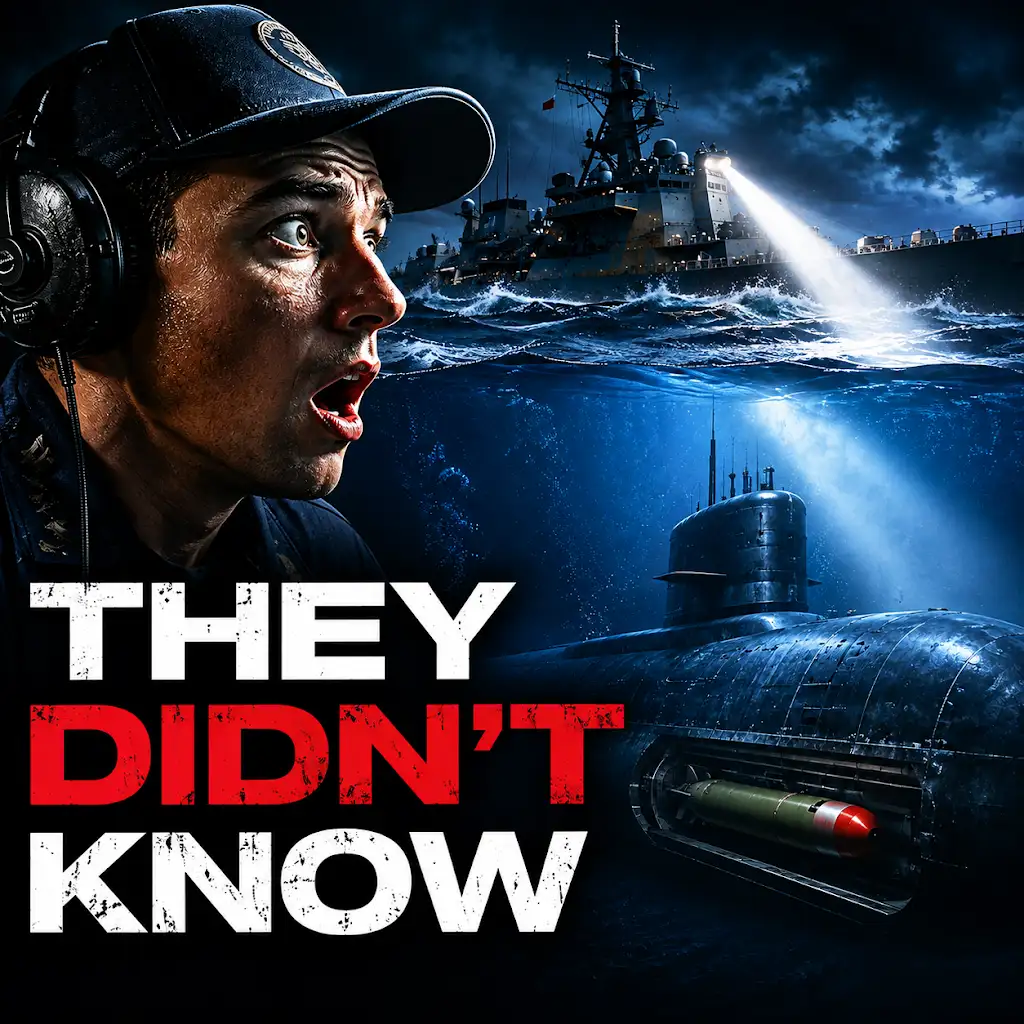
The U.S. Navy Didn’t Know This Submarine Had a Nuclear Torpedo
FAQs
What is submarine B-59?
Submarine B-59 was a Soviet submarine that was involved in the Cuban Missile Crisis in 1962.
What happened to submarine B-59 during the Cuban Missile Crisis?
Submarine B-59 was located near Cuba during the Cuban Missile Crisis and was involved in a tense standoff with the United States.
Did submarine B-59 launch any missiles during the Cuban Missile Crisis?
No, submarine B-59 did not launch any missiles during the Cuban Missile Crisis.
What was the outcome for submarine B-59 after the Cuban Missile Crisis?
After the Cuban Missile Crisis, submarine B-59 returned to the Soviet Union and continued its service in the Soviet Navy.
Is submarine B-59 still in service today?
No, submarine B-59 is no longer in service and is not operational.