The quiet hum of the library’s fluorescent lights did little to soothe the gnawing unease that had settled in Eleanor’s chest. Spread before her, meticulously annotated and cross-referenced, was the culmination of five years of dedicated genealogical research: her family tree. It sprawled across her dining room table at home, a sprawling tapestry of names, dates, and places, a testament to her lineage. Yet, despite the impressive scope, a gaping void yawned where her paternal line should have been. It wasn’t merely a blank space; it was a phantom limb, an absence that felt more profound than any missing piece of information. This was the genesis of the mystery: the family tree missing its paternal line.
Eleanor, a woman accustomed to order and precision in her professional life as an archivist, found this lacuna deeply unsettling. Her mother’s side was a rich tapestry of settled farmers and tradespeople, their histories documented with the reassuring predictability of parish records and census data. Her father’s side, however, was a ghost. He had died when she was young, leaving behind a silence that his family had, for reasons she couldn’t fathom, largely perpetuated. His own parents were shadowy figures, their existence hinted at in fragmented anecdotes but never substantiated by solid proof. This was more than just a genealogical puzzle; it was an emotional excavation, a quest to understand not just who she was, but where she came from, and why that crucial thread had been so deliberately obscured.
Whispers from the Past and the Silence of the Present
The initial spark of inquiry had been innocuous, a casual conversation with her aging aunt. “Your father’s people,” the aunt had mused, her voice trailing off into a sigh, “they were… complicated.” This vague pronouncement, delivered with a peculiar mixture of nostalgia and apprehension, had been the first tremor that shook the foundations of Eleanor’s perceived lineage. It was a seed of doubt planted in fertile ground, and Eleanor, ever the diligent researcher, began to dig.
The Legacy of Omission
Her father, Thomas, had been a man of quiet reserve. He spoke little of his childhood, and when he did, it was in general terms, avoiding any specifics that might lead to deeper questioning. He’d emigrated from a small, rural community in Ireland, a fact that provided Eleanor with her first tangible, albeit frustrating, lead. Her mother’s family, on the other hand, had a well-preserved history of settled life in England, their movements meticulously charted through generations of land ownership and marriage records. This stark contrast between the two sides of her heritage only amplified the enigma surrounding her father.
Her aunt’s “complicated” remark, coupled with her father’s reticence, began to paint a picture of a family that might have held secrets, or perhaps a past they wished to keep buried. Eleanor’s initial attempts to gather information from her father’s siblings proved disheartening. They offered platitudes, vague memories, and a general unwillingness to delve into anything that might disturb the delicate peace of their established narratives. It was as if a collective amnesia had descended upon the family, a deliberate act of forgetting.
The First Tentative Steps into the Unknown
Eleanor’s first port of call was the Irish county her father had vaguely mentioned. She spent weeks poring over microfiche in dimly lit archives, the musty scent of old paper filling the air. Parish registers, census records, and local histories yielded a few promising, yet ultimately unhelpful, names. She found a family with her father’s surname, but the given names didn’t quite align, and the dates were inconsistent. It was like chasing shadows in a fog, each potential connection dissolving before it could be grasped. The more she searched, the more the silence of her paternal line seemed to amplify, a deafening roar in the quietude of historical record.
The early stages of her research were characterized by a blend of excitement and frustration. Each small discovery, each potential lead, was met with a surge of hope, only to be followed by the crushing disappointment of a dead end. She learned to temper her expectations, to treat every piece of information with a healthy dose of skepticism, and to understand that the absence of evidence was, in itself, a form of evidence. The mystery of her father’s lineage was proving to be a formidable challenge, far more intricate than the neatly documented histories of her mother’s ancestors.
If you’re interested in exploring the complexities of family trees and the challenges that can arise when tracing a missing paternal line, you might find the article on family genealogy at this link particularly insightful. It delves into various methods and resources that can help individuals uncover their ancestral roots, even when certain branches seem elusive. For more information, you can read the article here: Family Genealogy Insights.
The Ghost in the Census Records

The census, that invaluable snapshot of lives lived, proved to be both a beacon of hope and a source of deepening mystery. Eleanor understood that even fragmented census data could offer crucial clues. The challenge lay in the fact that her father’s family appeared to be remarkably adept at disappearing from these official records, or at least, from her ability to locate them.
Elusive Ancestors and Shifting Identities
Her father’s name, Thomas O’Malley, was common enough to be a starting point, but it was also a common enough name to get lost in a sea of other Thomas O’Malleys. Early census records from Ireland were often incomplete or poorly indexed, making the search akin to finding a specific grain of sand on a vast beach. She’d meticulously tracked his early life, or rather, the scant records that suggested it. She knew he was born around 1930, but even that was an approximation based on his school leaving certificate. The birth records themselves were proving to be chimerical.
She discovered instances where families seemed to vanish from one census to the next, only to reappear years later under a slightly altered surname or a different household head. This was not uncommon in times of economic hardship or social upheaval, but for Eleanor, it felt like a deliberate act of evasion. Was her father’s family moving frequently, trying to escape something? Or were they simply living a life that didn’t warrant detailed inclusion in official documents? The lack of a consistent paper trail was more than just an inconvenience; it hinted at a deliberate strategy of obscurity.
The Case of the Missing Siblings
One of the most perplexing aspects of her research was the complete lack of information about any siblings her father might have had. Her mother’s family was a large, boisterous clan, and Eleanor had always assumed her father came from a similar background. Yet, when she questioned her father’s surviving cousins (the children of his sister, who had a more visible family history), they offered no memories of his brothers or sisters. They spoke of him as if he were an only child, a solitary figure from a forgotten past. This was incredibly odd. How could an entire branch of a family, siblings and their potential descendants, simply evaporate from collective memory and official records?
She cross-referenced multiple census years, searching for a Mary O’Malley or a Patrick O’Malley, potential parents, but found no consistent matches that tied directly to her father’s timeline and location. It was as if the O’Malley name itself was a migratory bird, appearing and disappearing with the seasons. The silence regarding siblings was particularly jarring. Children often formed strong bonds, and their absence from conversations and records suggested something more than mere geographical separation. It hinted at a potential rupture, a deliberate severance of ties.
The Tangled Web of Immigration and Legalities

The decision to emigrate, especially from Ireland in the mid-20th century, often involved a complex web of legalities and personal motivations. Eleanor suspected that the answers to her family’s elusiveness might lie within these bureaucratic hurdles and the choices made to navigate them.
The Shadow of the Ship Manifest
Her father’s immigration to England was a known fact, a turning point in his life that led him to meet her mother. Locating his arrival records proved to be a painstaking process. Ship manifests, often filled with handwritten entries and subject to variations in spelling and transcription, were notoriously difficult to decipher. Eleanor spent countless hours searching through digitized records, her eyes blurring from the screen’s glow, looking for a Thomas O’Malley arriving in the late 1940s or early 1950s.
She found several, each with slightly different details – a different port of embarkation, a different listed occupation. One manifest indicated he was traveling alone, with no listed next of kin. This reinforced the sense of isolation that seemed to surround his past. Another listed his place of birth as a town she hadn’t encountered in her previous Irish research, adding another layer of confusion. Each potential hit was a breadcrumb that led further into the labyrinth, but without a clear path forward, they only served to highlight the extent of the mystery. The absence of clear family connections on these official documents was a recurring theme, suggesting a deliberate effort to present himself as an independent individual.
The Specter of Faded Identities and the “Undocumented”
Eleanor began to consider the possibility that her father might have adopted a different name, or perhaps used aliases during his early life. This was not an uncommon practice for immigrants seeking new beginnings, or for those with reasons to obscure their past. She explored variations of his surname, looking for phonetic similarities or common misspellings. She also considered the possibility that his parents might have been undocumented immigrants themselves, or had lived in a way that avoided official registration, making their own existence difficult to trace.
This theory, while unsettling, offered a potential explanation for the complete lack of genealogical evidence. If the parents were largely invisible to the state, then their children would naturally be difficult to track. The idea of a family living on the fringes, outside the structured confines of societal record-keeping, began to take shape in Eleanor’s mind. It was a poignant thought, a family erased by circumstance or by design, leaving only faint echoes for future generations to discover. The legal and social landscape of the time, with its stricter immigration controls and less comprehensive record-keeping for certain populations, could have provided the perfect environment for such an omission to occur and persist.
Unearthing the Truth: The Role of DNA and Oral Histories
As traditional research methods hit their inevitable walls, Eleanor knew she needed to explore alternative avenues. The modern era offered powerful tools that her predecessors could only have dreamed of.
The Digital Echo: DNA Testing and Genetic Connections
The advent of direct-to-consumer DNA testing offered a glimmer of hope. Eleanor, along with her mother, submitted DNA samples, a calculated gamble that their genetic material might connect them to previously unknown relatives. The initial results were a mixed bag. They revealed strong connections to her mother’s side, as expected, confirming existing branches of the family tree. However, the paternal side remained stubbornly silent. There were distant matches, vague connections to broader European populations, but nothing that pointed to a specific family or individual.
Frustrated but undeterred, Eleanor began to analyze her paternal DNA matches more closely. She looked for individuals who had a significant number of shared DNA segments with her, indicating a relatively close relationship. She also noticed that some of these matches had very little public information available on their own family trees, mirroring her own challenges. It was a community of the unknown, a group of individuals also grappling with missing pieces of their lineage. She began to reach out, sending out tentative messages, polite inquiries into their own genealogical journeys. This approach was slow and often met with silence, but it was a digital echo of her own quest, a shared bewilderment in the vast expanse of genetic data.
The Power of Spoken Memories and Unwritten Narratives
Recognizing the limitations of purely digital and documentary evidence, Eleanor shifted her focus to the power of oral histories. She revisited her aunt, this time with a different approach. Instead of direct questions about names and dates, she asked about feelings, impressions, and the general atmosphere surrounding her father’s early life. She spoke to distant cousins again, this time encouraging them to share any anecdotes, however seemingly insignificant, about her father’s childhood or his family’s background.
Slowly, painstakingly, fragments began to emerge. One cousin recalled a story about her father being “very protective of his mother,” a phrase that had never been uttered before. Another remembered a vague mention of her father’s family being “from the west coast,” a small but crucial detail that narrowed down the geographical possibilities in Ireland. These were not hard facts, but rather emotional resonances, whispers of truths that had been passed down through generations in the form of stories and feelings. The power of these unwritten narratives, these subjective recollections, began to fill in the gaps left by the official record, providing a human dimension to the genealogical puzzle. The “complicated” past was starting to reveal its emotional contours.
Exploring the complexities of family heritage can often lead to intriguing discoveries, especially when one encounters a missing paternal line in their family tree. This absence can raise questions about lineage and identity, prompting individuals to delve deeper into their ancestry. For those interested in understanding the implications of such gaps, a related article offers valuable insights into the challenges and solutions associated with tracing paternal roots. You can read more about this topic in the article found here.
Reconstructing the Narrative and Embracing the Unknown
| Metric | Description | Impact on Family Tree | Possible Solutions |
|---|---|---|---|
| Percentage of Missing Paternal Records | Proportion of ancestors on the paternal line with no available records | Limits ability to trace direct paternal lineage and heritage | Search alternative archives, oral histories, or DNA testing |
| Number of Generations Affected | Count of consecutive generations lacking paternal information | Creates gaps that hinder understanding of family origins | Use collateral lines and community records to fill gaps |
| Common Causes | Reasons for missing paternal data (e.g., adoption, name changes) | Explains why paternal line is incomplete or absent | Investigate legal documents, DNA matches, and family stories |
| Impact on Genetic Research | Effect on Y-DNA or paternal haplogroup tracing | Prevents accurate paternal genetic lineage identification | Use autosomal DNA and maternal line data as supplements |
| Availability of Alternative Records | Existence of non-traditional sources (church, land, military records) | May provide indirect paternal information | Expand research scope to include diverse record types |
The journey to unraveling the mystery of her missing paternal line was far from over, but Eleanor had begun to piece together a narrative, even if it remained incomplete. The process had taught her more than just the names and dates of her ancestors; it had offered profound insights into the nature of family, memory, and the enduring power of the past.
A Mosaic of Possibilities and the Acceptance of Ambiguity
Eleanor’s research had not yielded a single, definitive answer. Instead, it had presented a mosaic of possibilities, a collection of clues that suggested a complex and perhaps deliberate obfuscation of her paternal lineage. She had explored theories of migration, economic hardship, and potentially, the deliberate erasure of a family’s history. While she hadn’t found a clear genealogical chart for her father’s parents, she had uncovered enough hints to suggest a family that lived on the margins, their existence a testament to resilience and perhaps, a need for discretion.
She began to accept that some mysteries might never be fully solved. The silence surrounding her paternal line was not necessarily a void to be filled with definitive answers, but perhaps a space for understanding. It was a reminder that families, like individuals, have their own narratives, their own reasons for what they choose to remember and what they choose to forget. The absence itself became a part of her story, a testament to the enduring enigmas that lie at the heart of human experience.
The Legacy of Resilience and the Embrace of the Present
Ultimately, Eleanor’s quest had transformed her relationship with her own identity. She had started seeking concrete answers, a neatly defined past. What she found was a deeper appreciation for the resilience of her ancestors, their ability to navigate difficult circumstances and forge new lives. The lack of a documented paternal line was no longer a source of shame or frustration, but a testament to a history of overcoming adversity.
She understood that her father, despite his quiet reserve and the mysteries of his past, had provided her with a loving home and a stable foundation. His silence, she now realized, might have been a protective measure, a way to shield his family from the complexities of his own history. Eleanor’s family tree, with its intriguing blank space, was not a broken narrative, but an incomplete one, inviting reflection and a celebration of the human capacity for survival and reinvention. The mystery had not been fully unraveled, but in its unraveling, Eleanor had found a deeper understanding of herself and the enduring strength of her lineage. The paternal line might be missing from the paper, but its echoes were undeniably present in the spirit of her own existence.
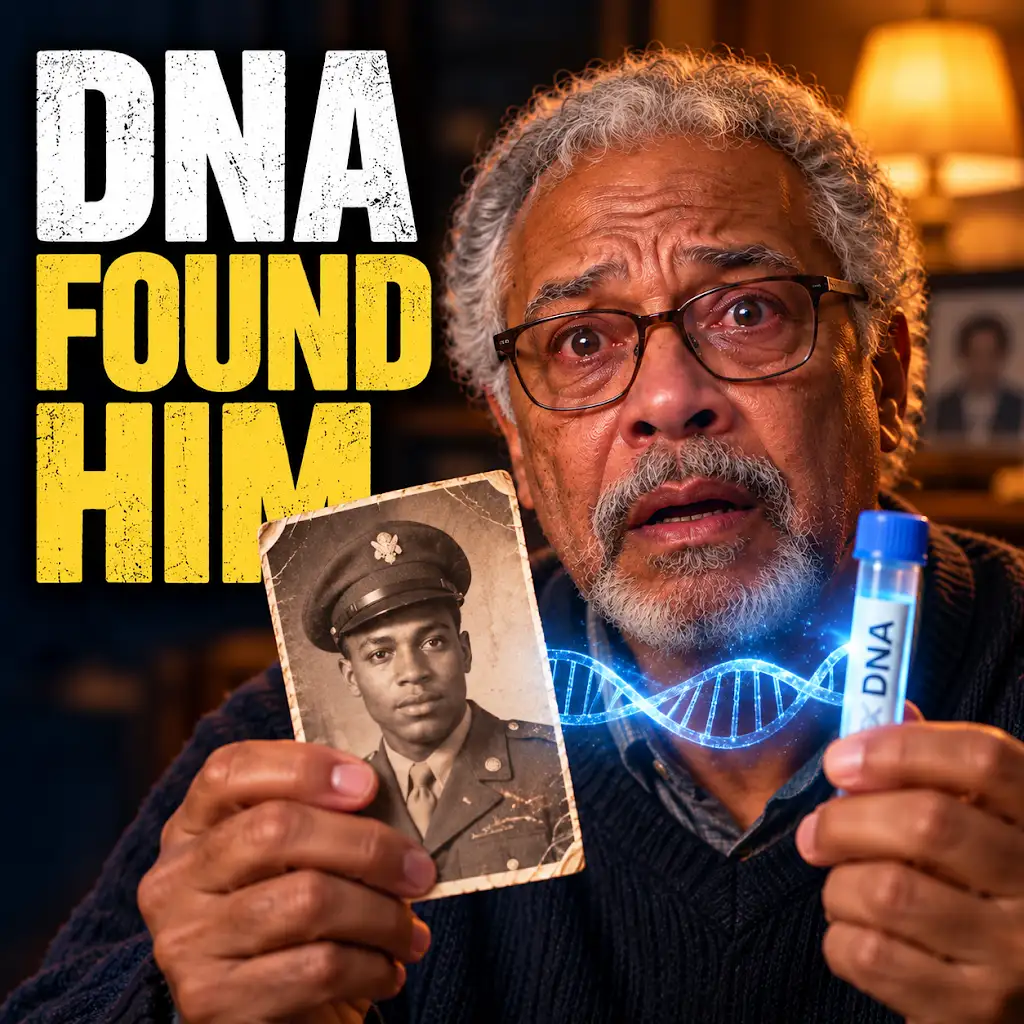
His WWII GI Father Was a Mystery for Nearly 80 Years
FAQs
1. What does it mean when a family tree is missing the paternal line?
It means that the lineage on the father’s side of the family is incomplete or unknown in the family tree.
2. How can one determine the missing paternal line in a family tree?
To determine the missing paternal line, individuals can conduct genealogical research, DNA testing, and gather information from relatives to fill in the gaps.
3. Why is it important to have a complete paternal line in a family tree?
Having a complete paternal line in a family tree is important for understanding one’s heritage, genealogy, and medical history. It also helps in preserving and passing down family traditions and stories.
4. What are some common reasons for a missing paternal line in a family tree?
Common reasons for a missing paternal line in a family tree include lack of documentation, adoption, unknown paternity, name changes, and limited access to historical records.
5. How can individuals address and fill in the missing paternal line in their family tree?
Individuals can address and fill in the missing paternal line by conducting thorough research, reaching out to relatives for information, utilizing online genealogy databases, and seeking assistance from professional genealogists.