The vast armada assembled in the English Channel represented the culmination of years of planning, logistical marvels, and immense human sacrifice. Yet, as D-Day approached, the success of Operation Overlord, the Allied invasion of Normandy, was far from guaranteed. The sheer scale of the undertaking, facing a heavily fortified coastline and a determined German defense, meant that brute force alone would not suffice. The true architects of Allied triumph were not just the soldiers who stormed the beaches, but the unseen strategists who orchestrated a symphony of deception, ensuring the enemy was looking in the wrong direction at the critical moment. Strategic deception, a meticulously crafted art form, proved to be the indispensable key to unlocking the gates of Fortress Europe.
The Ghost Army and the Shadow of Doubt
The German high command, under the increasingly paranoid leadership of Adolf Hitler, was acutely aware of the impending Allied invasion. The question was not if, but when and where. Allied intelligence suggested a massive invasion force was being amassed, and the Germans rightly anticipated a landing on the French coast. The challenge for the Allies was to exploit this anticipation, to sow confusion, and to divert critical German resources away from the true invasion beaches. This was the domain of “Operation Fortitude,” a grand deception plan that would prove to be one of the most successful in military history. At its heart lay the creation of phantom armies, not of flesh and blood, but of canvas, wood, and ingenious propaganda.
Crafting the Illusory Menace: The First United States Army Group (FUSAG)
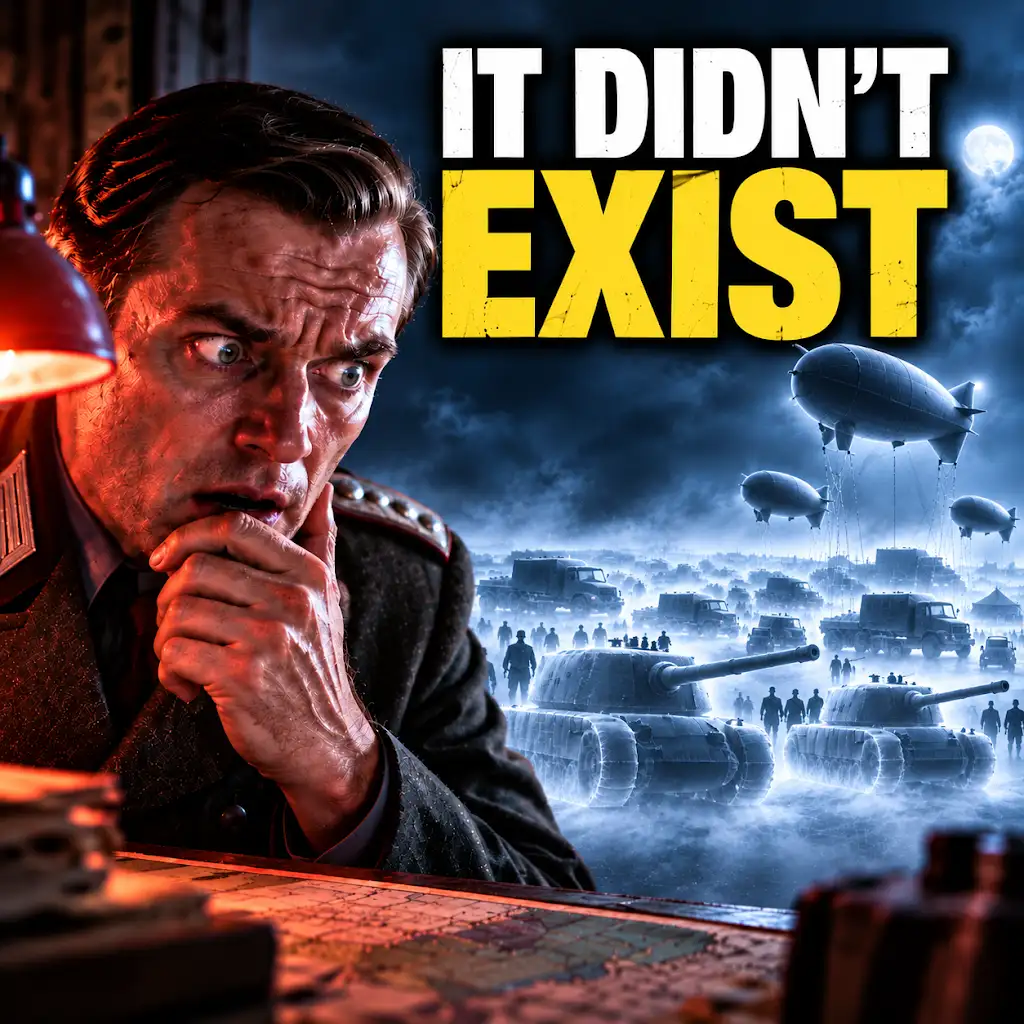
The cornerstone of Operation Fortitude’s deception was the creation of the First United States Army Group (FUSAG). This fictitious formation, supposedly under the command of the formidable General George S. Patton, was deliberately made to appear as the primary invasion force. The Allies went to extraordinary lengths to imbue FUSAG with a sense of reality. Dummy tanks, crafted from inflatable rubber and wooden frames, were strategically positioned in southeast England, particularly around Dover, the closest point to Calais. These were complemented by fake landing craft, bomber squadrons composed of painted plywood, and even the sound of troop movements and construction work, all designed to be detected by German reconnaissance.
The purpose was to convince the Germans that the main Allied thrust would come across the narrowest part of the English Channel, targeting the Pas-de-Calais, the most logical and historically significant invasion point. This illusion was reinforced through a sophisticated network of double agents and radio traffic. Agents, carefully vetted and controlled by Allied intelligence, fed information to their German handlers that consistently pointed towards Calais as the primary objective. Radio communications, ostensibly between FUSAG units, were broadcast on frequencies that the Germans monitored, creating the impression of a massive, well-organized force preparing for immediate assault. The sheer volume and detail of this fabricated intelligence were designed to overwhelm German analysts and solidify their belief in the Calais landing.
The Art of Radio Deception
Radio traffic played a vital role in the elaborate charade. The Allies meticulously crafted a complex web of radio communications that suggested a large, imminent invasion at Calais. They used call signs and codes that were believable for units supposedly preparing for such a large-scale operation. More importantly, they ensured that this traffic was monitored by German listening posts. By controlling the timing and content of these transmissions, the Allies could manipulate German perceptions of troop strength, readiness, and even the intended invasion date. The sheer volume of radio chatter attributed to FUSAG was intended to create a credible impression of a massive force poised for action. This created a “fog of war” that benefited the Allies immensely, as it drew German attention and resources to the perceived threat in the north.
Strategic deception played a crucial role in the success of the Normandy invasion, as the Allies employed various tactics to mislead German forces about the actual landing site. A related article that delves deeper into these deceptive strategies is available at this link: The Art of Deception: Strategies Before D-Day. This article explores how misinformation and psychological operations were used to create confusion among enemy ranks, ultimately contributing to the success of Operation Overlord.
The Shadow of Misdirection: Exploiting German Obsessions
The German military machine, particularly under Hitler’s direction, possessed certain strategic blind spots and obsessions that the Allied deception planners expertly exploited. Their faith in Hitler’s intuition, coupled with a deep-seated belief in the strategic importance of Calais, provided fertile ground for Operation Fortitude. The Allies understood that simply creating phantom armies would not be enough; they needed to make these phantoms believable and irresistible targets for German attention.
Calais: The Achilles’ Heel of German Defense
The Pas-de-Calais, with its shortest sea crossing to Britain, had always been the most strategically significant location for any potential invasion of the continent. German defenses were heavily concentrated in this area, reflecting this historical and geographical reality. The Allied deception planners, led by figures like Lieutenant Colonel David Stirling and Brigadier Cecil Thorpe, recognized this fixation. Operation Fortitude was designed to play directly into this ingrained German belief. By making FUSAG appear to be the primary invasion force poised to strike Calais, the Allies ensured that the majority of German reserves and mobile divisions were stationed there, far from the actual landing zones in Normandy.
The Role of Double Agents and Double-Cross
The success of Operation Fortitude hinged on the effective use of double agents. The most famous of these was arguably Juan Pujol García, codenamed “Garbo” by the British. Garbo, a Spanish national with a deep antipathy towards the Nazi regime, managed to convince the Germans that he was a loyal agent working on their behalf. He fed them a steady stream of meticulously crafted misinformation, all carefully orchestrated by the British intelligence service MI6. Garbo’s intelligence consistently reinforced the narrative of a massive invasion targeting Calais, detailing troop movements, supply dumps, and even the supposed identities of Allied commanders. His reports were so convincing that the German high command placed immense faith in them, to the detriment of their actual defensive posture. Other double agents, working under British control, corroborated Garbo’s stories, creating an almost airtight web of deception that left the Germans convinced of the Calais landing.
The Silent Weapon: Misinformation and Psychological Warfare
Beyond the physical manifestations of deception, the Allies employed a potent arsenal of misinformation and psychological warfare to shape German perceptions. This involved not only direct intelligence manipulation but also the subtle art of influencing the enemy’s decision-making processes. The goal was to create a constant state of uncertainty and doubt within the German command, making them hesitant to commit their precious reserves and ultimately leading them to misallocate their forces.
Propaganda and Public Perception
The Allies understood that controlling not just what the Germans knew, but what they believed, was crucial. This involved a sophisticated propaganda campaign, disseminated through various channels, designed to further the deception. This included the careful release of information through neutral countries and controlled leaks to sympathetic journalists. The narrative being spun was consistent: a massive invasion was coming, and it was aimed squarely at Calais. This psychological pressure, combined with the tangible evidence of FUSAG, was designed to keep the German high command perpetually on edge, waiting for an attack that would never materialize on their primary front. The Allies understood that a well-informed enemy, but one that is misinformed about the crucial details, is a vulnerable enemy.
The Impact of Decoy Operations
While Operation Fortitude was the primary deception, a series of smaller, tactical deceptions also played a crucial role. These included feints and diversionary attacks that further reinforced the illusion of an impending Calais invasion. For example, naval bombardments and aerial attacks on areas further north were sometimes staged to draw German attention. Similarly, the apparent movement of large numbers of troops and equipment in specific directions, only for them to disappear or reroute, created a sense of unpredictable Allied activity. These decoy operations, while seemingly minor, contributed to the overall confusion and prevented the Germans from accurately discerning the true nature of the Allied build-up. They were the brushstrokes on a larger canvas, adding depth and credibility to the grand illusion.
The Crucial Hours: How Deception Paid Off on D-Day
The success of the deception operations was not merely theoretical; it had direct and tangible consequences on the battlefield during the initial phases of the Normandy invasion. As the Allied forces stormed the beaches of Normandy on June 6, 1944, the German response was significantly hampered by the misallocation of resources, a direct result of the elaborate deception that had preceded it.
The Unveiling of the Truth
When the Allied landings began in Normandy, the German high command was initially hesitant. Their intelligence, heavily influenced by Operation Fortitude, still pointed towards Calais as the main threat. The airborne landings in Normandy, though substantial, were initially perceived as diversionary tactics or even a limited amphibious assault to draw German attention away from the real invasion. This hesitation proved critical. While German forces in the immediate vicinity of the Normandy landings were formidable, the crucial reserves and mobile divisions that could have launched a devastating counter-attack were still largely concentrated in the Pas-de-Calais, waiting for an invasion that was never going to happen there.
The Strategic Advantage of Misinformation
The Allies had gambled heavily on their ability to convince the Germans that Normandy was a secondary objective, or even a feint. The success of Operation Fortitude meant that when the true invasion began, German forces were not positioned to effectively repel it. The delay in committing their reserves allowed the Allied beachheads to be secured and expanded. This delay, measured in hours and days, was invaluable. It provided the breathing room necessary for the Allied forces to consolidate their gains, bring in reinforcements, and establish a firm foothold on the continent, paving the way for the eventual liberation of Europe. The deception had, in essence, bought the Allies precious time and significantly reduced the initial casualty rates on D-Day itself.
Strategic deception played a crucial role in the success of the Normandy invasion, as Allied forces employed various tactics to mislead the German military about their true intentions. One fascinating aspect of this operation is detailed in an article that explores the elaborate plans and misinformation campaigns that were executed to ensure the surprise of D-Day. For more insights into these tactics, you can read about them in this informative piece on strategic deception. Understanding these strategies not only highlights the ingenuity of military planning but also underscores the importance of psychological warfare in achieving operational objectives.
The Legacy of the Shadow War
| Deception Operation | Objective | Key Tactics | Outcome/Impact |
|---|---|---|---|
| Operation Fortitude North | Convince Germans of an invasion in Norway | Fake radio traffic, dummy camps, double agents | Diverted German forces to Norway, reducing defenses in Normandy |
| Operation Fortitude South | Mislead Germans about the actual landing site (Pas de Calais) | Inflatable tanks, fake radio transmissions, double agents (e.g., Garbo) | Kept German 15th Army in Pas de Calais, delaying reinforcements to Normandy |
| Operation Quicksilver | Simulate a fictitious First U.S. Army Group (FUSAG) | Dummy equipment, false radio traffic, controlled leaks | Enhanced credibility of Fortitude South, convincing Germans of a large force |
| Double Cross System | Use double agents to feed false information to Germans | Turned German spies into double agents, controlled misinformation | Provided accurate timing and location misinformation, aiding overall deception |
The strategic deception employed by the Allies before the Normandy invasion stands as a testament to the power of imagination, meticulous planning, and a profound understanding of the enemy’s psychology. Operation Fortitude and its associated deceptions were not merely footnotes to the grand narrative of D-Day; they were integral to its success. They highlight how warfare is not solely a contest of military might but also a battle of wits, perception, and information control.
A Masterclass in Deception
The lessons learned from the deception operations preceding D-Day continue to resonate in modern military strategy. The principle of creating a “fog of war,” of manipulating enemy perceptions, and of diverting enemy attention remains a cornerstone of successful military campaigns. The meticulous planning, the extensive use of double agents, the creation of phantom forces, and the psychological manipulation of the enemy all contributed to a victory that might have otherwise been impossible. The unseen architects of this deception, working in the shadows, played an equally vital role as those who stormed the beaches. Their success was not measured in medals or public acclaim, but in the silent, critical advantage they bestowed upon the Allied cause, ensuring that the Allied forces landed in Normandy not as a surprise to be immediately crushed, but as an enemy whose main threat was perceived to be elsewhere. The legacy of this shadow war is a stark reminder that in the grand theater of conflict, perception is often as potent a weapon as any bomb or bullet.
How the Allies Built an Army for Germany to Discover
FAQs
What is strategic deception in the context of the Normandy invasion?
Strategic deception refers to the deliberate use of misleading information and tactics to mislead the enemy about military intentions and capabilities. In the context of the Normandy invasion during World War II, strategic deception played a crucial role in deceiving the German forces about the actual location and timing of the Allied invasion.
How did the Allies use strategic deception before the Normandy invasion?
Before the Normandy invasion, the Allies employed various deceptive measures as part of Operation Bodyguard to mislead the Germans. This included creating fake military units, using double agents to feed false information to the enemy, and conducting dummy operations to divert German attention away from the actual invasion site.
What was the purpose of strategic deception before the Normandy invasion?
The primary purpose of strategic deception before the Normandy invasion was to confuse and mislead the German High Command about the Allied invasion plans. By creating a false impression of the invasion location and timing, the Allies aimed to weaken German defenses at Normandy and increase the chances of a successful landing.
Did strategic deception play a significant role in the success of the Normandy invasion?
Yes, strategic deception played a significant role in the success of the Normandy invasion. By keeping the Germans guessing and spreading disinformation through various channels, the Allies were able to surprise the German forces and gain a strategic advantage during the D-Day landings on June 6, 1944.
What were some key elements of strategic deception used by the Allies before the Normandy invasion?
Some key elements of strategic deception used by the Allies before the Normandy invasion included creating fake radio traffic, deploying inflatable tanks and aircraft, spreading false rumors through double agents, and conducting military exercises in different locations to confuse the enemy. These deceptive tactics helped to mask the true intentions of the Allied forces and contributed to the success of the Normandy invasion.