The roar of four turboprop engines, a sound deeply ingrained in the annals of military aviation, signifies the arrival of a true workhorse: the Lockheed C-130 Hercules. While often associated with long-haul transport and tactical deployments, its capabilities extend to far more specialized and awe-inspiring feats. Among these, the stadium landing, a maneuver demanding unparalleled pilot skill and precise aircraft management, stands as a testament to the C-130’s enduring legacy and the professionalism of its crews. This article delves into the intricacies of stadium landings, exploring the operational context, the technical challenges, the rigorous training involved, and the strategic advantages these precision airborne operations offer.
The Operational Rationale Behind Stadium Landings
Stadium landings, while not a standard procedure for everyday cargo delivery, are a crucial capability employed in specific, often high-stakes, scenarios. The primary driver for such a maneuver is the need for rapid and discreet insertion or extraction of personnel and equipment into or from austere, confined, or enemy-controlled environments where conventional airfields are non-existent or compromised. This capability allows military forces to bypass heavily defended areas or access locations that would otherwise require lengthy overland journeys, exposing them to significant risks.
Reaching the Inaccessible: Accessing Remote and Austere Locations
The C-130 Hercules is renowned for its Short Take-Off and Landing (STOL) capabilities, allowing it to operate from unimpeded dirt strips, grass fields, and even frozen lakes. A stadium landing takes this to an extreme. Imagine a situation where a critical component needs to be delivered to a forward operating base in a mountainous region, or a medical evacuation is required from a remote village inaccessible by road. In such instances, a stadium landing transforms an urban environment or a similarly confined space into an impromptu landing zone. This dramatically reduces response times and expands the operational reach of ground forces, providing them with a vital lifeline. The ability to land in such a restricted space means that even the most challenging terrain or urban landscape can become a potential entry or exit point, offering unparalleled flexibility.
Enhancing Special Operations Insertion and Extraction
Special operations forces often operate in environments that demand extreme stealth and precision. Traditional airfields, even forward operating bases, can be monitored and potentially targeted. The ability of a C-130 to land in a stadium, or a similar confined urban area, offers a discreet method for inserting or extracting highly trained personnel. This bypasses the need for prolonged infiltration by other means, reducing exposure and increasing the element of surprise. For example, in a counter-terrorism scenario where a hostage rescue is planned, a swift and unexpected insertion via a stadium landing could be the decisive factor in achieving mission success and ensuring the safety of the hostages. Similarly, extraction from a compromised position where conventional egress is blocked can be facilitated by a well-executed stadium landing.
Contingency Planning and Disaster Relief
Beyond direct military operations, stadium landings also play a vital role in contingency planning and disaster relief. In the aftermath of natural disasters such as earthquakes or floods, conventional infrastructure like roads and airports can be destroyed or rendered impassable. The ability to land a C-130 in a large open space, like a sports stadium, can provide immediate access for humanitarian aid, medical teams, and essential supplies. This rapid deployment capability can be the difference between life and death for affected populations, circumventing the logistical nightmares that often plague disaster zones. During evacuations, a stadium can serve as a rallying point and a temporary landing zone for aircraft to ferry people to safety.
The recent article on Stadium Landing and the C-130 Hercules highlights the strategic importance of this aircraft in military operations, particularly in logistics and transport. For a deeper understanding of the C-130’s capabilities and its role in various missions, you can read more in this insightful piece at In The War Room. This resource provides a comprehensive overview of the aircraft’s history and its impact on modern warfare.
The Technical Demands of a Stadium Landing
Executing a stadium landing is a feat of engineering and piloting prowess, pushing the boundaries of what is typically expected of an aircraft like the C-130. The confined space, coupled with the need for precision, introduces a unique set of challenges that require meticulous planning and exceptional execution. The physical dimensions of a stadium, with its surrounding structures and limited clear zones, present a formidable obstacle course for any aircraft, let alone a multi-engine transport plane.
Navigating Constrained Airspace and Obstacle Avoidance
The most immediate and apparent challenge is the spatial constraint. Stadiums are typically surrounded by buildings, lights, and other urban infrastructure. These present significant obstacles that must be meticulously avoided during both approach and departure. The pilot must maintain a precise flight path, ensuring adequate clearance from all structures. This requires an intimate understanding of the aircraft’s dimensions, its turning radius, and its stall characteristics at low speeds. The approach path must be carefully chosen to account for prevailing winds and any potential downdrafts created by surrounding buildings. The margin for error is razor-thin, and any deviation can have catastrophic consequences.
The recent landing of a C-130 Hercules at Stadium Landing has sparked significant interest among aviation enthusiasts and military personnel alike. This impressive feat showcases the versatility and capability of the aircraft in various environments. For those looking to delve deeper into the intricacies of military aviation, you can explore a related article that discusses the operational history and technical specifications of the C-130 Hercules. To read more about this fascinating aircraft, visit this article.
Managing High Descent Rates and Short Field Performance
Stadium landings demand extremely high descent rates to reach the landing surface within the confined space. This is achieved through a combination of steep approach angles and controlled engine power. The C-130’s turboprop engines offer excellent throttle response, allowing pilots to make rapid power adjustments to manage their descent. However, this also means the aircraft is operating at very low airspeeds, increasing the risk of a stall. Pilots must maintain a delicate balance between controlling their descent rate and maintaining sufficient airspeed to keep the aircraft airborne and controllable. The landing itself requires a rapid deceleration upon touchdown to bring the aircraft to a halt in the shortest possible distance. This often involves aggressive use of reverse thrust and wheel braking.
Precision in Touchdown and Rollout
The touchdown point in a stadium landing is critical. Pilots aim to touch down as close to the beginning of the available landing area as possible, maximizing the rollout distance for deceleration. This requires exceptional visual judgment and precise control inputs. The aircraft must be perfectly aligned with the intended touchdown point, with no lateral drift. Once on the ground, the pilot must immediately apply full braking and reverse thrust, controlling the aircraft’s directional stability throughout the rollout. The goal is to bring the aircraft to a complete stop safely within the confines of the “runway” – the stadium floor. This requires immense focus and an ability to react instantly to any unexpected changes in aircraft behavior or surface conditions.
The Rigorous Training Regimen for C-130 Stadium Landings
The ability to perform a stadium landing is not an innate talent; it is the result of highly specialized and demanding training. C-130 crews undergo extensive preparation to develop the skills, judgment, and mental fortitude required for these precision airborne operations. This training is multi-faceted, encompassing theoretical knowledge, simulator practice, and practical exercises under controlled conditions.
Ground School and Simulation: Mastering the Theory and the Controls
The initial phase of training involves extensive ground school, where pilots and aircrew study the theoretical aspects of low-level flying, obstacle avoidance, aerodynamics at low speeds, and emergency procedures specific to confined area operations. This theoretical knowledge is then translated into practice within advanced flight simulators. These simulators are designed to replicate the C-130’s flight characteristics with remarkable accuracy and can be programmed with various challenging environments, including urban landscapes and stadium layouts. Pilots spend countless hours practicing approaches, landings, and takeoffs in these virtual stadiums, refining their techniques and building muscle memory for the critical control inputs required.
Realistic Scenario Training and Instructor Supervision
As proficiency increases, training progresses to more realistic scenarios. This may involve flying in challenging weather conditions, simulating engine failures on approach, or practicing landings in unfamiliar and complex environments. Instructor pilots, themselves highly experienced in these specialized maneuvers, provide constant feedback and guidance, pushing the trainees to their limits while ensuring safety. This phase of training focuses on decision-making under pressure, problem-solving in dynamic situations, and developing an unwavering sense of situational awareness. The goal is to create crews that can instinctively react to the unexpected and maintain control of the aircraft in even the most demanding circumstances.
The Importance of Crew Coordination and Communication
A stadium landing is not solely the responsibility of the pilot. It is a team effort that relies on impeccable crew coordination and communication. The co-pilot monitors instruments, assists with navigation, and provides backup control inputs. The flight engineer manages engine power and aircraft systems, ensuring optimal performance. The loadmaster and aerial porters are crucial for securing cargo and personnel during flight, and their readiness for rapid deployment is paramount. During a stadium landing, clear and concise communication between all crew members is essential. They must constantly provide updates on altitude, airspeed, position relative to obstacles, and any changes in aircraft status. This seamless coordination ensures that everyone is working in unison towards a common, life-saving objective.
Strategic Advantages and Future Implications
The ability to execute stadium landings bestows significant strategic advantages upon military forces and humanitarian organizations. This capability, while demanding, opens up new operational paradigms and remains relevant in an evolving global landscape. The adaptability of the C-130, enhanced by specialized training, ensures its continued importance in a variety of critical missions.
Enhancing Global Power Projection and Responsiveness
The strategic advantage of stadium landings lies in their ability to project power and respond rapidly to evolving threats or humanitarian crises anywhere in the world. By bypassing traditional logistical constraints, forces can be deployed to remote or contested areas with unprecedented speed. This enhances deterrence, allows for swift intervention in times of conflict, and facilitates rapid humanitarian assistance in disaster-stricken regions. The C-130, capable of operating from these unconventional locations, becomes a vital enabler of global reach and a critical tool for maintaining stability and providing aid.
Maintaining Relevance in Modern Warfare and Humanitarian Aid
Despite the advent of more technologically advanced aircraft, the C-130 Hercules, with its unique STOL capabilities and the specialized skill of stadium landings, maintains its relevance. Its ruggedness, reliability, and adaptability make it an indispensable asset in environments where advanced platforms might be too vulnerable or inappropriate. In the context of humanitarian aid, the C-130’s ability to deliver essential supplies directly to affected populations, bypassing destroyed infrastructure, makes it a lifeline. As global challenges persist, from regional conflicts to natural disasters, the capacity for precision airborne operations like stadium landings ensures that the Hercules remains a critical component of both military and humanitarian response capabilities. The ongoing evolution of its systems and the continuous training of its crews ensure its enduring legacy.
The Future of Precision Airborne Operations with the C-130
The future of precision airborne operations involving the C-130 Hercules will likely see continued refinement of existing techniques and the exploration of new applications. Advancements in navigation systems, enhanced situational awareness tools, and improved pilot assistance technologies will undoubtedly contribute to even greater precision and safety. As operational requirements evolve, so too will the training and operational doctrines for these specialized landings. The C-130 Hercules, through its inherent versatility and the dedication of its crews, will continue to be a symbol of aerial capability, demonstrating that even in the most challenging environments, the skies can be navigated with remarkable precision. The legacy of the “Herc” as a reliable and adaptable platform, capable of performing extraordinary feats, is secured by the ongoing commitment to excellence in precision airborne operations.
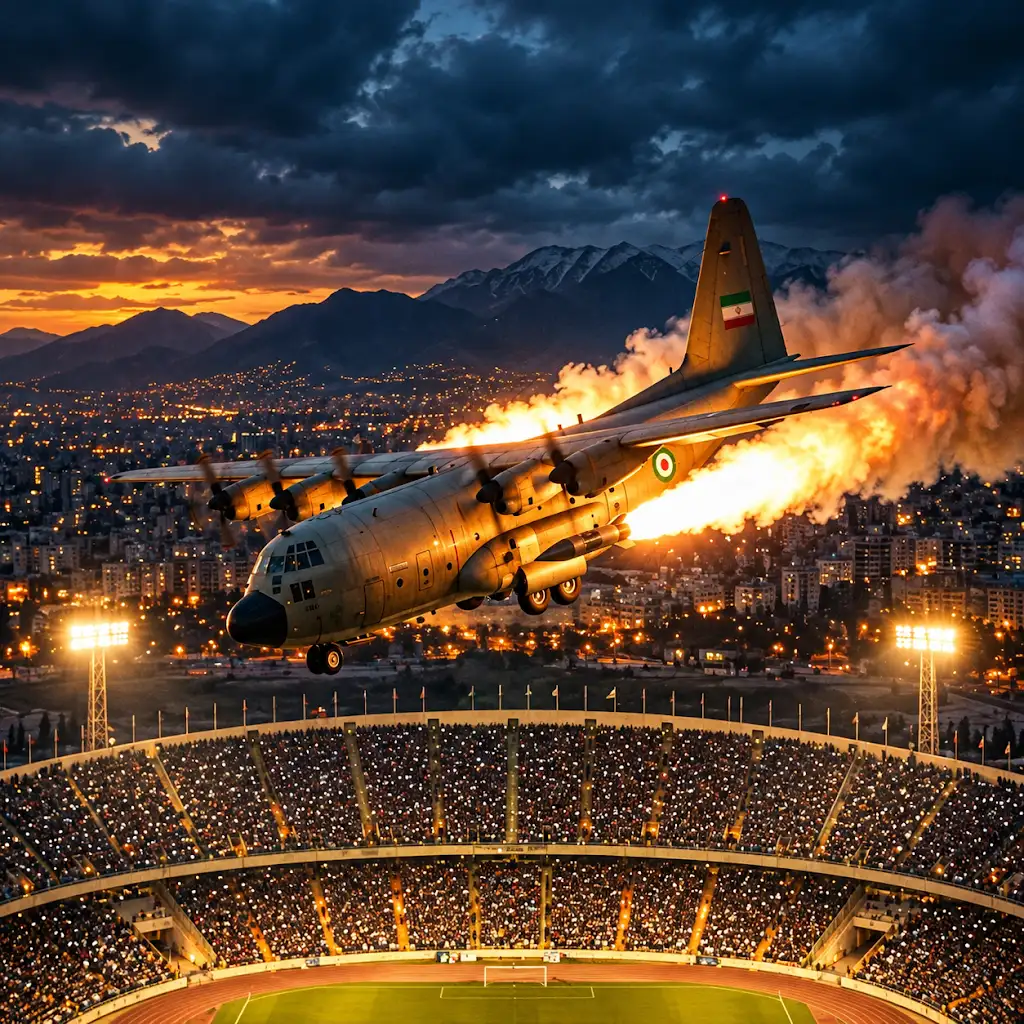
The Secret Plane Built to Land Inside a Stadium
FAQs
What is a C-130 Hercules aircraft?
The C-130 Hercules is a military transport aircraft designed to perform various missions, including cargo transport, troop transport, aerial refueling, and humanitarian missions.
Can a C-130 Hercules land on a stadium?
Yes, a C-130 Hercules can be capable of landing on a stadium under certain conditions. Specialized training and precise calculations are required to execute such a landing safely.
What are the reasons for a C-130 Hercules to land on a stadium?
A C-130 Hercules may land on a stadium for tactical reasons, such as during a military operation where traditional airstrips are unavailable or compromised. It can also be used for humanitarian missions to deliver aid to areas with limited infrastructure.
How is a stadium prepared for a C-130 Hercules landing?
Preparing a stadium for a C-130 Hercules landing involves clearing the area of obstacles, ensuring the surface is strong enough to support the aircraft’s weight, and coordinating with air traffic control for a safe approach and landing.
Are stadium landings by C-130 Hercules common?
Stadium landings by C-130 Hercules are relatively rare and are usually reserved for specific operational needs or unique circumstances. They require careful planning and coordination to ensure the safety of the aircraft and personnel involved.