The world held its breath, a collective inhale that stretched for decades, punctuated by moments of sheer, unadulterated terror. The Cold War, a global ideological struggle between the United States and the Soviet Union, was a constant tightrope walk over an abyss of nuclear annihilation. While headlines often focused on proxy wars and political brinkmanship, the chilling reality was that at several junctures, humanity teetered on the precipice of a catastrophic war, a near miss where the fate of civilization hung precariously by a thread. These moments, etched into the annals of history, serve as stark reminders of the destructive potential unleashed by the nuclear age and the fallibility of human decision-making under extreme pressure.
The dawn of the nuclear age, marked by the United States’ devastating use of atomic bombs on Hiroshima and Nagasaki in 1945, fundamentally altered the landscape of international relations. The Soviet Union, spurred by this new reality, accelerated its own atomic program, leading to their first successful test in 1949. This initiated a perilous arms race, a relentless pursuit of ever-more powerful and numerous nuclear weapons. The underlying doctrine that emerged from this escalating rivalry was Mutually Assured Destruction (MAD).
The Logic of Deterrence
MAD was a chillingly rational concept born from the terrifying destructive power of nuclear weapons. The idea was that if both superpowers possessed enough nuclear arsenals to completely annihilate the other, then neither would ever dare to launch a first strike. The consequences of initiating a nuclear war would be the complete destruction of the aggressor nation as well, making such an action illogical and suicidal.
The Arms Race Accelerates
The development of the hydrogen bomb, a weapon exponentially more powerful than the atomic bomb, further fueled the arms race. Both nations poured vast resources into developing intercontinental ballistic missiles (ICBMs) capable of delivering nuclear warheads across continents. This created a hair-trigger alert system, where warning systems were designed to detect an incoming attack and retaliate within minutes, if not seconds. This inherent speed and the potential for miscalculation created an environment ripe for accidental war.
The Propaganda Machine
Beyond the tangible arsenals, the Cold War was also a war of ideologies and narratives. Both sides engaged in extensive propaganda efforts to demonize the other and rally public support. This constant barrage of fear and suspicion further exacerbated tensions and made diplomatic solutions more difficult to achieve. The rhetoric often painted the opposing side as inherently evil and bent on global domination, leaving little room for nuance or understanding.
During the Cold War, the world faced numerous moments of tension that brought it perilously close to nuclear conflict. One particularly alarming incident was the Cuban Missile Crisis, which is often cited as a near miss in nuclear warfare. For a deeper understanding of the events surrounding this critical period and the potential consequences of such close calls, you can read more in the article available at In the War Room. This resource provides valuable insights into the geopolitical dynamics and the decisions that could have led to catastrophic outcomes.
The Cuban Missile Crisis: A World on the Brink
Perhaps the most infamous and terrifying near miss of the Cold War was the Cuban Missile Crisis of October 1962. This thirteen-day confrontation brought the world closer to nuclear war than ever before, or since. The crisis unfolded with a breathtaking speed that underscored the fragility of peace in the nuclear age.
Soviet Missiles in Cuba: The Catalyst
The crisis began when American U-2 spy planes discovered Soviet offensive nuclear missile sites under construction in Cuba, just 90 miles off the coast of Florida. This was a direct and unacceptable threat to the United States. The proximity of the missiles meant that they could reach major American cities within minutes, dramatically altering the strategic balance and the effectiveness of MAD. President John F. Kennedy was presented with a stark choice: tolerate the missiles, a politically untenable option, or launch a military strike, which could easily escalate to full-scale nuclear war.
The Anatomy of the Threat
The discovered missile sites were not just a political embarrassment; they represented a fundamental shift in the military calculus. These were medium-range ballistic missiles (MRBMs) and intermediate-range ballistic missiles (IRBMs) capable of carrying nuclear warheads. Their placement was a direct response to the presence of American Jupiter missiles in Turkey, a fact that often gets overlooked in popular accounts. The Soviets saw it as a balancing act, an attempt to level the playing field.
Kennedy’s Dilemma
President Kennedy convened his Executive Committee of the National Security Council (ExComm) to deliberate on a course of action. The options were stark and terrifying:
- Do nothing: This was politically impossible. It would be seen as a sign of weakness and invite further Soviet aggression.
- Diplomatic pressure: While desirable, the immediate threat required a more decisive response.
- Naval blockade (quarantine): This was the chosen course. It was a show of force without being an overt act of war, allowing for a period of negotiation.
- Airstrikes on missile sites: This carried a high risk of Soviet retaliation and escalation.
- Full-scale invasion of Cuba: This was the most dangerous option, almost certainly leading to a direct confrontation with Soviet forces in Cuba and potentially triggering a global nuclear war.
The Quarantine and the Confrontation
Kennedy announced a naval blockade, or “quarantine” as he termed it to avoid the belligerent connotations of the word “blockade,” around Cuba. This meant that Soviet ships carrying military supplies, including missile components, would be intercepted and turned back. The world watched with bated breath as Soviet ships steamed towards the quarantine line. The tension was palpable.
The Escalation Point: The U-2 Downing
On October 27, 1962, known as “Black Saturday,” the crisis reached its zenith. A U-2 spy plane was shot down over Cuba, killing the pilot, Major Rudolf Anderson Jr. This incident significantly increased the pressure on Kennedy to retaliate. Some military advisors urged an immediate airstrike, but Kennedy, despite the immense pressure, resisted.
The Secret Dealings
Behind the scenes, frantic negotiations were taking place. Attorney General Robert Kennedy secretly met with Soviet Ambassador Anatoly Dobrynin. The Soviets proposed a deal: they would remove the missiles from Cuba if the United States publicly pledged not to invade Cuba and secretly agreed to remove its Jupiter missiles from Turkey.
The Resolution and the Aftermath
After agonizing deliberation, Kennedy accepted the Soviet proposal. The world exhaled a collective sigh of relief. The immediate crisis was averted, but the memory of how close humanity came to nuclear catastrophe left an indelible mark.
The Hotline: A Lifeline
In the aftermath of the Cuban Missile Crisis, both superpowers recognized the urgent need for better communication to prevent future miscalculations. This led to the establishment of the Moscow-Washington hotline, a direct teletype link that allowed for immediate communication between the leaders of the two nations, bypassing potentially unreliable and slow diplomatic channels.
A Lesson Learned?
The crisis served as a profound lesson in the dangers of nuclear brinkmanship. It highlighted the importance of clear communication, de-escalation, and the understanding that even in the heat of ideological conflict, the stakes were too high for rash decisions. However, the underlying tensions of the Cold War remained, and the threat of nuclear war would continue to loom.
The Accidental Launch Scare: When Technology Fails
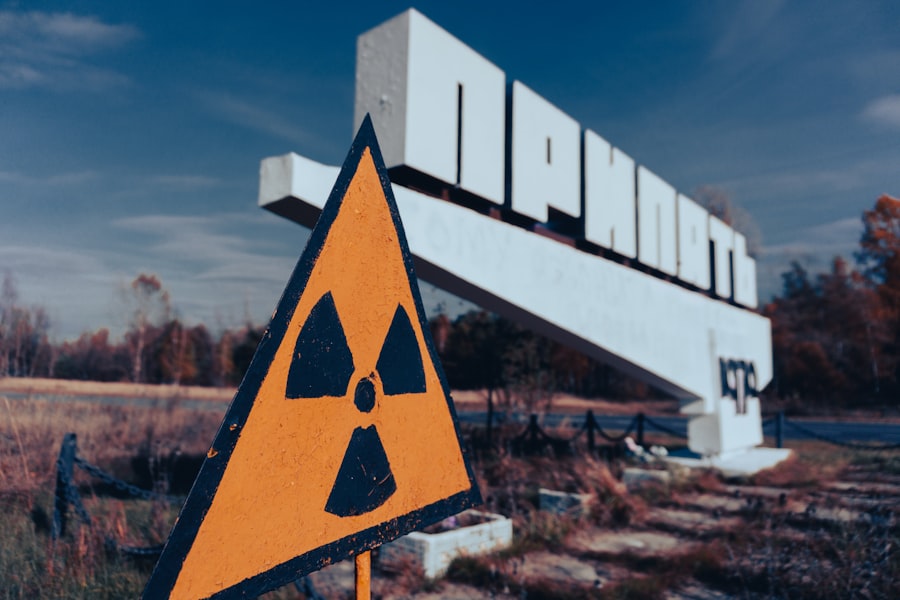
While political leaders and their advisors were the primary actors in Cold War nuclear brinkmanship, the ever-increasing reliance on complex technological systems also presented a terrifying pathway to accidental war. Several incidents occurred where faulty equipment, human error, or misinterpreted data nearly triggered a nuclear launch, showcasing the inherent risks of an automated and hair-trigger nuclear defense system.
The 1983 Soviet Nuclear False Alarm: Stanislav Petrov’s Crucial Decision
One of the most chilling examples occurred on September 26, 1983. Stanislav Petrov, a lieutenant colonel in the Soviet Air Defence Forces, was on duty at a command center near Moscow, monitoring the early warning system for incoming American ICBMs. The system, designed to detect missile launches from the United States, suddenly reported multiple incoming missiles.
The System’s Verdict
According to the system, a full-scale nuclear attack was underway. Standard operating procedure dictated that Petrov should report this to his superiors, who would then initiate a retaliatory strike. The fate of the world rested on his shoulders.
The Human Element: Doubt and Discretion
However, Petrov had a nagging feeling of doubt. He knew that a full-scale nuclear attack would likely involve hundreds of missiles, not just a handful. Furthermore, the system itself had a history of malfunctions and false alarms. He reasoned that if the Americans were truly launching a first strike, they would not be so foolish as to alert their targets with such a small number of missiles.
The Flaw in the Code
Petrov’s intuition proved correct. The missile detection system had been tricked by a rare atmospheric phenomenon and a programming error that caused sunlight reflecting off high-altitude clouds to be misinterpreted as missile launches.
The Hero of the Hour
Against protocol, Petrov decided not to report the incident as an incoming attack. Instead, he classified it as a system malfunction. His decision was met with disbelief and initial reprimand, but as investigations later confirmed, his judgment saved the world from a potentially catastrophic retaliatory strike. He was later commended for his actions, though his story remained largely unknown to the public for many years.
The NORAD Incident: A Computer Glitch
Another near miss occurred in 1979 when a technician accidentally inserted a simulated Soviet missile attack tape into the North American Aerospace Defense Command (NORAD) computer system. This triggered a false alarm across the United States, sending nuclear forces to DEFCON 1, the highest state of readiness. It took several minutes for the error to be identified and corrected, during which time the world was once again on the brink of nuclear war due to a technological blunder.
The Implications of Automation
These incidents underscored the profound dangers of relying solely on automated systems for nuclear war. While designed to ensure rapid response, they also introduced the potential for catastrophic errors without the crucial human element of critical thinking and judgment.
The Strategic Balance of Power: The Nuclear Sword of Damocles

The Cold War was a constant dance around the precipice of nuclear war, a precarious balance of power maintained by the ever-present threat of mutual destruction. Both superpowers amassed vast arsenals, each capable of eradicating the other multiple times over. This Sword of Damocles, hanging over the heads of humanity, shaped every aspect of international diplomacy and military strategy.
The Doctrine of Escalation Dominance
Beyond MAD, military strategists developed concepts like escalation dominance. This theory posited that a nation could prevail in a conflict by being able to escalate the conflict to a level that the adversary could not match or endure. In the nuclear age, this meant the ability to use nuclear weapons at a lower yield, or in a more limited fashion, while deterring the opponent from responding with a full-scale nuclear attack.
Limited Nuclear War: A Dangerous Illusion?
The concept of a “limited nuclear war” was particularly contentious. Proponents argued that it might be possible to use nuclear weapons tactically without triggering a global catastrophe. However, critics pointed out the extreme difficulty in controlling escalation once nuclear weapons were introduced. The “fog of war” and the immense pressure on decision-makers in a nuclear exchange made the idea of a contained nuclear conflict a dangerous illusion.
The Nuclear Triad: A Deterrent Force
To ensure the survivability of their nuclear arsenals, both superpowers developed what became known as the nuclear triad. This consisted of:
- Intercontinental Ballistic Missiles (ICBMs): Land-based missiles that could be launched from hardened silos, offering a quick response capability.
- Submarine-Launched Ballistic Missiles (SLBMs): Nuclear warheads carried on submarines, providing a highly survivable and elusive second-strike capability.
- Strategic Bombers: Aircraft capable of delivering nuclear bombs or cruise missiles, offering flexibility and the ability to reassess targets.
The existence of this triad meant that even if one leg of the triad was successfully attacked, the other two would remain, ensuring the capability for devastating retaliation. This redundancy was a cornerstone of the deterrence strategy.
The Proxy Wars: A Testing Ground
The Cold War was characterized by numerous proxy wars, where the superpowers supported opposing sides in regional conflicts without engaging in direct military confrontation. These wars, such as the Korean War, the Vietnam War, and conflicts in Africa and Latin America, served as testing grounds for military technologies and strategies, and also as indirect confrontations where the threat of escalation to nuclear war loomed in the background.
The Domino Theory
The fear of communist expansion, often articulated through the “domino theory,” fueled American involvement in many proxy wars. The belief was that if one nation fell to communism, neighboring nations would follow, leading to a cascade of communist influence. This fear, while often exaggerated, justified significant military and economic investment in containing perceived Soviet influence.
The Cold War was marked by several tense moments that brought the world to the brink of nuclear disaster, one of which is detailed in a fascinating article about a near miss during this tumultuous period. This incident highlights the precarious nature of international relations and the potential for miscommunication to escalate into catastrophic consequences. For a deeper understanding of these events, you can read more in the article found here.
The Arms Control Efforts: Seeking Sanctuary
| Event | Date | Location | Details |
|---|---|---|---|
| Cold War nuclear near miss | October 27, 1962 | North Atlantic Ocean | During the Cuban Missile Crisis, a US Navy aircraft and a Soviet submarine came close to a nuclear confrontation, but the crisis was averted. |
Amidst the constant threat of annihilation, there were also concerted efforts to control the proliferation and deployment of nuclear weapons. These arms control treaties and negotiations, while often fraught with difficulties and mistrust, represented a crucial attempt to de-escalate tensions and prevent the ultimate catastrophe.
The Limited Test Ban Treaty (1963)
One of the first significant arms control agreements was the Limited Test Ban Treaty of 1963. This treaty, signed by the United States, the Soviet Union, and the United Kingdom, prohibited nuclear weapon tests in the atmosphere, in outer space, and underwater. While it did not stop underground testing, it was a crucial step in limiting the spread of radioactive fallout and a symbolic victory for the pursuit of peace.
The Legacy of Atmospheric Testing
The decision to ban atmospheric testing was driven by growing public concern over the health consequences of nuclear fallout. Early nuclear tests had released vast quantities of radioactive material into the atmosphere, with demonstrable long-term health impacts on populations exposed.
The Strategic Arms Limitation Treaties (SALT I and SALT II)
The SALT I treaty, signed in 1972, and the SALT II treaty, signed in 1979 (though never ratified by the U.S. Senate), aimed to limit the growth of strategic offensive nuclear weapons. These treaties established ceilings on the number of ICBMs, SLBMs, and heavy bombers that each superpower could possess.
The Technical Challenges of Verification
A major challenge in arms control was verification. Both sides were deeply suspicious of the other’s intentions, and ensuring compliance with treaty terms required sophisticated monitoring and intelligence gathering. The development of on-site inspections and satellite reconnaissance played a crucial role in building confidence, though mistrust remained a persistent obstacle.
The Intermediate-Range Nuclear Forces (INF) Treaty (1987)
A significant breakthrough came with the Intermediate-Range Nuclear Forces (INF) Treaty of 1987, signed by U.S. President Ronald Reagan and Soviet General Secretary Mikhail Gorbachev. This treaty eliminated an entire class of nuclear weapons – intermediate-range missiles – that had been a particular source of tension in Europe. The INF Treaty was notable for its comprehensive verification regime, including on-site inspections, which helped build unprecedented levels of trust between the two superpowers.
The Role of Gorbachev’s Reforms
Mikhail Gorbachev’s policies of Glasnost (openness) and Perestroika (restructuring) created a more conducive environment for arms control negotiations. His willingness to engage in genuine dialogue and compromise was instrumental in achieving the INF Treaty and paving the way for further de-escalation.
The Enduring Lessons of the Nuclear Age
The Cold War’s nuclear near misses serve as potent and enduring lessons for humanity. They underscore the fragility of peace in a world armed with weapons of mass destruction and highlight the immense responsibility that leaders bear in safeguarding civilization. The existential threat posed by nuclear weapons necessitates a constant vigilance and a commitment to diplomacy and de-escalation.
The Psychological Toll of Constant Threat
The decades-long period of heightened nuclear tension took a significant psychological toll on populations worldwide. The constant fear of nuclear war permeated popular culture, from doomsday literature and films to civil defense drills in schools. This pervasive anxiety, while a testament to the perceived danger, also created a sense of helplessness and resignation for many.
The Imperative of Nuclear Disarmament
The ultimate lesson of the Cold War’s nuclear near misses is the imperative of nuclear disarmament. While the doctrine of deterrence played a role in preventing large-scale war between the superpowers, it was a precarious and morally questionable strategy. The existence of nuclear weapons, even if never used, poses an unacceptable risk to the future of humanity.
The Non-Proliferation Treaty (NPT)
The Nuclear Non-Proliferation Treaty (NPT), which entered into force in 1970, remains a cornerstone of international efforts to prevent the spread of nuclear weapons. It commits nuclear weapon states to pursue disarmament and non-nuclear weapon states to refrain from acquiring them. However, challenges to the NPT, including the withdrawal of some states and the continued development of nuclear weapons by a few, underscore the ongoing struggle for a world free from the nuclear threat.
The Need for Global Cooperation
The near misses of the Cold War demonstrate that in the face of existential threats, global cooperation is not an option but a necessity. The shared danger of nuclear annihilation transcends ideological divides and demands a unified approach to risk reduction and disarmament. The lessons learned from the brinkmanship of the Cold War should continue to inform contemporary efforts to promote peace, prevent conflict, and ensure a future where humanity is no longer held hostage by the specter of nuclear war. The memory of those terrifying moments when the world stood on the precipice of oblivion must serve as a perpetual reminder of what is at stake and the continuous effort required to secure a world free from the threat of nuclear annihilation.
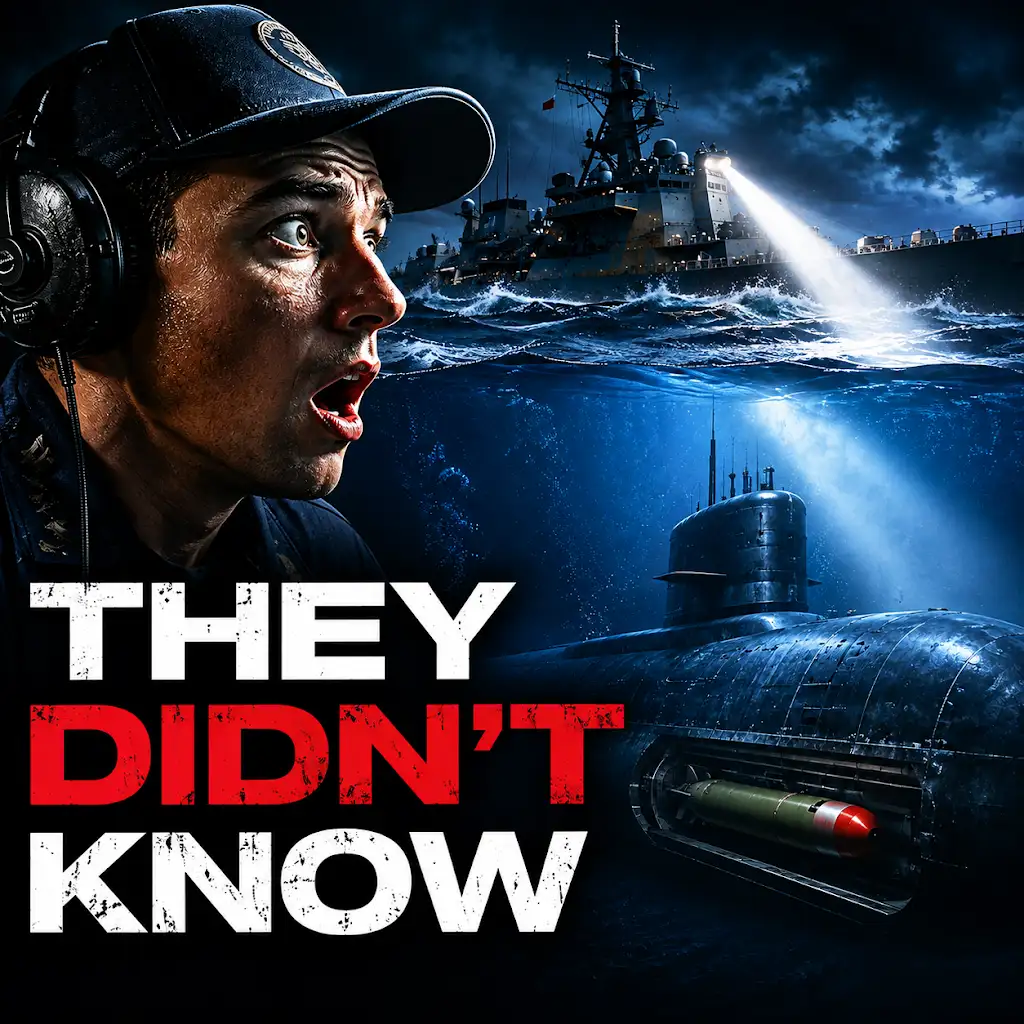
The U.S. Navy Didn’t Know This Submarine Had a Nuclear Torpedo
FAQs
What was the Cold War nuclear near miss?
The Cold War nuclear near miss refers to the incident in 1983 when the Soviet Union’s early warning systems mistakenly detected incoming nuclear missiles from the United States. This false alarm brought the world to the brink of nuclear war.
How close did the world come to nuclear war during the incident?
During the incident, the Soviet Union’s leadership was on high alert and prepared to launch a retaliatory nuclear strike. It was only due to the calm and rational decision-making of Soviet officer Stanislav Petrov, who correctly assessed the situation as a false alarm, that a nuclear war was averted.
What were the consequences of the Cold War nuclear near miss?
The incident highlighted the extreme danger and potential for catastrophic consequences of the Cold War nuclear standoff. It also led to increased efforts to improve communication and reduce the risk of accidental nuclear war between the United States and the Soviet Union.
How did the Cold War nuclear near miss impact international relations?
The incident served as a wake-up call for both the United States and the Soviet Union, leading to a renewed focus on arms control and diplomatic efforts to reduce tensions. It also underscored the need for improved communication and crisis management protocols between the two superpowers.
What lessons can be learned from the Cold War nuclear near miss?
The incident underscores the grave risks associated with nuclear weapons and the importance of clear communication, accurate information, and rational decision-making in times of crisis. It also serves as a reminder of the ongoing need for international efforts to prevent the use of nuclear weapons and reduce the risk of nuclear conflict.