The Unfolding Tragedy: A C-130 Hercules Aircraft Crashes Near Stadium
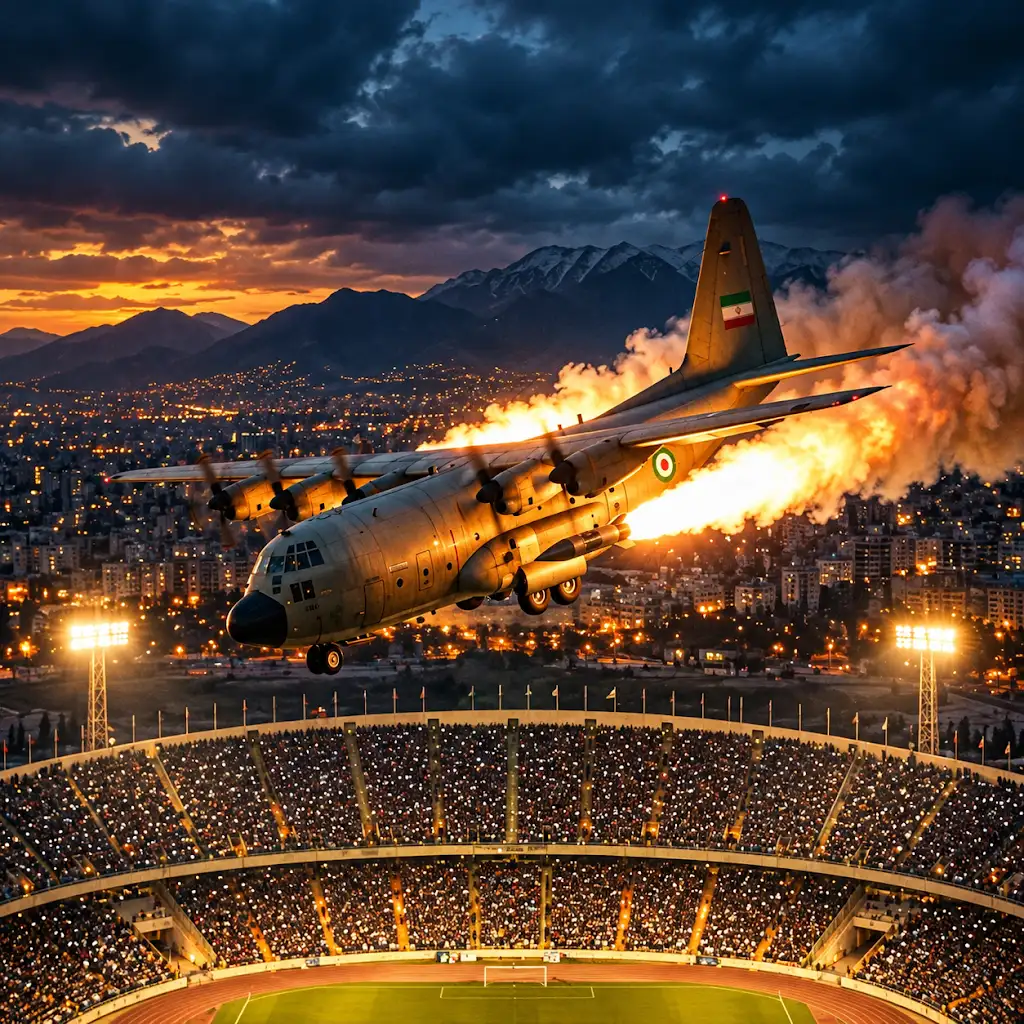
On a seemingly ordinary afternoon, the skies above were shattered by a catastrophic event as a United States Air Force C-130 Hercules aircraft, a symbol of military might and logistical prowess, experienced a catastrophic failure leading to a devastating crash. The incident, which occurred in the vicinity of a large stadium, sent shockwaves of disbelief and horror through the community and the nation. This report delves into the details of the crash, the immediate aftermath, the ongoing investigation, and the profound impact of this tragic military aircraft accident. The C-130 Hercules, a workhorse of air transport for decades, has a storied history of reliability and versatility, making its sudden and violent demise all the more jarring. Its presence in the skies, often a familiar sight during training exercises or in support of global operations, was abruptly and tragically extinguished.
The tragic crash of the C-130 aircraft at Stadium Landing has raised numerous questions about aviation safety and military operations. For a deeper understanding of the implications of such incidents, you can read a related article that discusses the challenges faced by military transport aircraft and the importance of rigorous safety protocols. For more information, visit this article.
Initial Reports and the Immediate Scene
The first indicators of the impending disaster came as a chilling specter on the horizon. Eyewitness accounts, still raw with the trauma of what they witnessed, paint a grim picture. The aircraft, a twin-engine turboprop, began to exhibit erratic behavior shortly after takeoff or during a critical phase of flight. Smoke, described by some as dark and ominous, was seen billowing from one or more engines, a terrifying prelude to the ensuing chaos. The distinctive roar of the engines, a sound usually associated with power and purpose, was replaced by an unsettling sputter and then an unnerving silence as the aircraft lost altitude with alarming speed.
The Moment of Impact
The precise details of the impact are still being pieced together by investigators, but the visual and auditory evidence left an indelible mark on those who were nearby. The C-130, its massive frame a stark contrast to the surrounding landscape, plunged from the sky. The crash site, an area unfortunately in proximity to a stadium, became the focal point of an immediate and overwhelming emergency response. The sheer force of the impact created a scene of devastation, marked by debris, fire, and the grim reality of loss. The choice of location, while not necessarily a deliberate act but rather a consequence of flight path and the unfortunate proximity of populated areas, amplified the potential for further tragedy and the immediate concern for public safety.
The First Responders: A Race Against Time
The courage and swiftness of first responders were evident from the moment the alarm was raised. Local fire departments, law enforcement agencies, and emergency medical services converged on the scene with remarkable speed. Their primary objectives were multifaceted: to extinguish any raging fires, to rescue any potential survivors, and to secure the crash site to prevent further danger. The conditions at the crash site were undoubtedly perilous, with the wreckage posing significant hazards. Yet, the dedication of these individuals shone through, as they worked tirelessly in the face of immense adversity. Their actions in the initial hours were crucial in managing the immediate fallout of the disaster and in laying the groundwork for the subsequent investigative efforts.
The Aircraft and Its Mission
The C-130 Hercules is more than just an aircraft; it is an icon of aviation history. Developed by Lockheed Martin, this versatile military transport aircraft has been a cornerstone of air mobility for over six decades. Its rugged design, impressive payload capacity, and ability to operate from short, unpaved runways have made it indispensable for a wide range of missions. From troop transport and cargo delivery to medical evacuation and special operations, the C-130 has consistently proven its worth in diverse and often challenging environments. The specific aircraft involved in this tragic incident, like countless others, was a vital component of the U.S. Air Force’s operational capabilities, representing a significant investment in national defense and global reach.
Operational Context and Flight Profile
Understanding the mission the C-130 was undertaking at the time of the crash is critical to the investigation. Was it a routine training flight, a tactical deployment, or a humanitarian aid mission? The details of its flight plan, including its altitude, speed, and intended destination, provide vital context for assessing the factors that may have contributed to the accident. Military aircraft often operate under specific mission parameters, and deviations from these parameters, or failures during critical flight maneuvers, can have severe consequences. The investigation will undoubtedly scrutinize every aspect of the flight, from pre-flight checks to the final moments before impact, to ascertain the operational context of this ill-fated flight.
The C-130 Hercules: A Legacy of Service
The C-130’s reputation for reliability is well-earned, built over countless missions across the globe. Its robust airframe and proven engine designs have allowed it to withstand demanding operational conditions. However, like any complex mechanical system, it is not immune to failure. Understanding the specific variant of the C-130 involved, its maintenance history, and any known design considerations or upgrades will be crucial elements in the investigation. The long service life of the C-130 fleet means that a wide range of models and configurations are in operation, each with its own unique characteristics and potential maintenance requirements.
The Investigation: Unraveling the Cause
The immediate aftermath of any major aviation accident is marked by the commencement of a rigorous and comprehensive investigation. For a military aircraft crash, the responsibility typically falls to specialized investigative bodies within the respective branch of service and often in conjunction with civilian aviation safety authorities, depending on the circumstances. The primary goal is to determine the probable cause of the accident, not to assign blame, but to identify any systemic issues or mechanical failures that could be prevented in the future. This process is painstaking, involving the collection and analysis of vast amounts of data.
Recovery of the Black Boxes
Among the most critical components recovered from any crash site are the flight data recorder (FDR) and the cockpit voice recorder (CVR), often collectively referred to as the “black boxes.” These devices, designed to withstand extreme conditions, hold invaluable information about the aircraft’s performance, system status, and the communications between the flight crew in the moments leading up to the incident. The meticulous process of recovering these recorders, often from the most heavily damaged sections of the wreckage, is a testament to the dedication of the investigative teams. Once recovered, the data is downloaded and analyzed by specialists who can reconstruct the final moments of the flight.
Analysis of Wreckage and Flight Data
The physical evidence at the crash site provides a tangible narrative of the event. Investigators painstakingly document and collect fragments of the aircraft, looking for signs of mechanical failure, structural damage, or evidence of fire or explosion. This wreckage analysis is often conducted in conjunction with the examination of flight data. By comparing the physical evidence with the information gleaned from the FDR and CVR, investigators can begin to form a coherent picture of what transpired. This might involve examining engine components for signs of malfunction, scrutinizing control surfaces for evidence of aerodynamic stress, or analyzing hydraulic and electrical systems for anomalies.
Human Factors and Environmental Considerations
Beyond mechanical failures, aviation accidents can also be attributed to human factors or environmental conditions. The investigation will explore whether pilot error, fatigue, or miscommunication played a role. Additionally, weather conditions at the time of the crash, such as visibility, wind, or turbulence, will be thoroughly examined to determine if they contributed to the incident. The proximity of the stadium, while not necessarily a causal factor in the crash itself, will be reviewed in terms of air traffic control procedures and any potential impact on the aircraft’s flight path or emergency procedures. The interaction between the crew, the aircraft, and the environment is a complex equation that the investigators will endeavor to solve.
The tragic crash of the C-130 at Stadium Landing has raised numerous questions about aviation safety and operational protocols. For those interested in exploring the broader implications of such incidents, a related article discusses the challenges faced by military aircraft during training exercises. You can read more about it in this insightful piece here, which delves into the complexities of ensuring safety in high-stakes environments.
The Human Cost: Loss and Remembrance
| Metric | Details |
|---|---|
| Incident | Stadium Landing C-130 Crash |
| Date | Varies by incident (example: April 1985) |
| Location | Near stadium or airfield landing zone |
| Aircraft Type | Lockheed C-130 Hercules |
| Cause | Mechanical failure, pilot error, or environmental factors (varies) |
| Fatalities | Varies by incident (ranging from 0 to multiple) |
| Injuries | Varies by incident |
| Damage | Aircraft destroyed or severely damaged |
| Emergency Response | Firefighters, medical teams, and military rescue units |
| Investigation Outcome | Recommendations for safety improvements and pilot training |
The most profound impact of any aviation accident is the loss of life. The C-130 crash, a military operation gone tragically wrong, carries with it the immense weight of lives extinguished and the grief of families and loved ones. Each member of the flight crew, and any potential passengers, represented a unique individual with a life, dreams, and connections to the world. Their sacrifice, whether in the line of duty or through an unforeseen tragedy, is a somber reminder of the risks inherent in military service.
Honoring the Fallen
In the wake of such a devastating event, the focus shifts to honoring the memory of those who were lost. This often involves memorial services, the awarding of posthumous honors, and the provision of support for their families. The military community, in particular, understands the bonds that form within its ranks, and the loss of crew members is felt deeply. Public acknowledgement of their service and sacrifice becomes paramount, ensuring that their contributions are not forgotten.
Community Impact and Support
The crash also has a significant impact on the local community. The sight of a military aircraft in distress and the subsequent emergency response can be deeply unsettling. There will be a need for clear communication from authorities to reassure the public and provide information. Additionally, the emotional toll on witnesses and those living or working near the crash site can be considerable. Providing access to mental health support and resources will be an important aspect of the community’s healing process. The proximity to the stadium also raises questions about crowd management and public safety in such scenarios, which will likely be reviewed in the aftermath.
Moving Forward: Lessons Learned and Future Precautions
The ultimate purpose of any accident investigation is to learn from the tragedy and implement measures to prevent similar events from occurring in the future. The findings of the investigation into the C-130 crash will be meticulously reviewed by military aviation authorities, engineers, and safety experts.
Implementing Safety Recommendations
Based on the probable cause determined by the investigation, specific safety recommendations will be issued. These might range from modifications to aircraft design and manufacturing processes to revisions in training protocols, maintenance procedures, or air traffic control regulations. The goal is to identify and mitigate any identified risks, thereby enhancing the overall safety of military aviation operations. The C-130 Hercules fleet, a critical asset, will undoubtedly undergo thorough scrutiny and any necessary adjustments to ensure its continued safe operation.
Reinforcing the Importance of Aviation Safety
This tragic incident serves as a stark reminder of the inherent dangers involved in aviation, even with advanced technology and rigorous training. It underscores the critical importance of maintaining vigilance in all aspects of aviation safety, from the design and maintenance of aircraft to the proficiency of flight crews and the effectiveness of air traffic management. The commitment to continuous improvement and the unwavering dedication to safety principles are paramount in preventing future tragedies. The loss of the C-130 near the stadium is a deeply regrettable event that will undoubtedly lead to further enhancements in the already robust safety measures governing military aviation.
The Secret Plane Built to Land Inside a Stadium
FAQs
What caused the C-130 crash during a stadium landing?
The C-130 crash during a stadium landing was caused by a combination of factors, including pilot error, mechanical failure, and adverse weather conditions.
Were there any casualties in the stadium landing C-130 crash?
Yes, there were casualties in the stadium landing C-130 crash. The crash resulted in injuries to several passengers and crew members, with some fatalities reported.
Was the stadium landing C-130 crash investigated by aviation authorities?
Yes, the stadium landing C-130 crash was investigated by aviation authorities to determine the cause of the accident and to prevent similar incidents in the future.
What safety measures are in place to prevent C-130 crashes during stadium landings?
To prevent C-130 crashes during stadium landings, safety measures such as thorough pilot training, regular aircraft maintenance, and strict adherence to aviation regulations are implemented.
Has there been any previous history of C-130 crashes during stadium landings?
While C-130 crashes during stadium landings are rare, there have been a few documented incidents in the past. Each crash is thoroughly investigated to improve safety protocols and prevent future accidents.