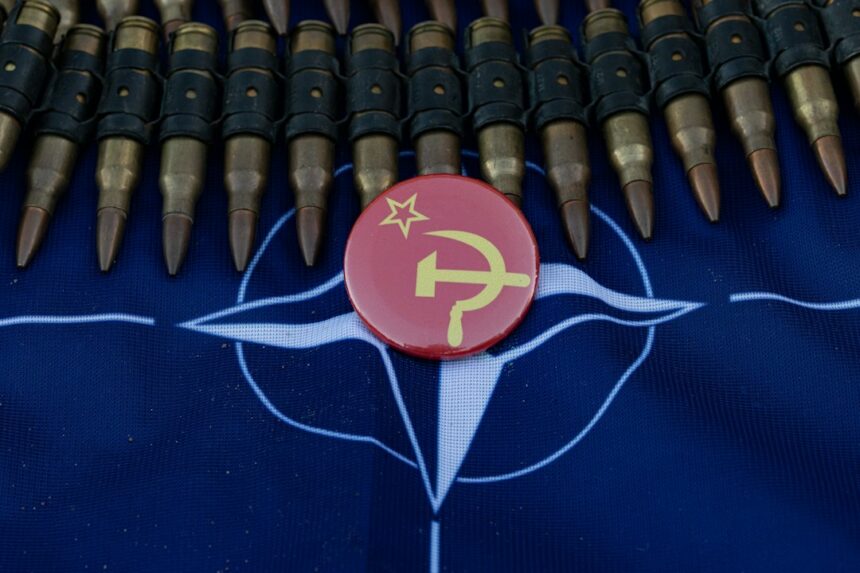
The Dawn of the Nuclear Age and the Red Military Machine
The advent of the atomic bomb in the mid-20th century irrevocably altered the landscape of global security, ushering in the Cold War and a relentless arms race between the United States and the Soviet Union. For the Soviet military, this new era presented both immense challenges and unprecedented opportunities. Faced with the prospect of nuclear annihilation and the perceived technological superiority of the West, Soviet defense planners embarked on a path of fervent innovation, aiming not merely to match but to surpass their adversaries in the development of groundbreaking military technologies. This period was characterized by a unique blend of scientific ambition, ideological imperative, and the sheer brute force of state-driven industrialization. The Soviet Union’s commitment to military innovation was not a monolithic, top-down decree; rather, it was a complex interplay of strategic imperatives, the tireless efforts of brilliant but often unsung scientists and engineers, and a willingness to pursue bold, sometimes risky, technological avenues. The very survival of the Soviet state, in the eyes of its leadership, was directly tied to its ability to project power and deter aggression through superior military might. This existential threat fueled a culture of intense research and development, particularly in areas that promised to revolutionize warfare and provide a credible nuclear deterrent.
Early Nuclear Ambitions and the Race for the Bomb
The Soviet Union’s journey into the nuclear age was a clandestine and arduous one, driven by a deep-seated paranoia regarding Western intentions and a strategic imperative to achieve parity. Following the revelations of the Manhattan Project, Soviet intelligence agencies intensified their efforts to acquire atomic secrets, a pursuit that yielded significant, albeit morally questionable, results. Concurrently, domestic scientific endeavors were galvanized under the leadership of figures like Igor Kurchatov, who spearheaded the Soviet atomic bomb project. The challenges were manifold: a post-war economy in ruins, a severe shortage of essential materials, and a scientific infrastructure still recovering from the devastating conflict. Yet, the political will was absolute. The successful detonation of the Soviet Union’s first atomic bomb in 1949, codenamed “First Lightning,” was a seismic event, shattering the American nuclear monopoly and fundamentally altering the global balance of power. This achievement, however, was only the beginning. The subsequent development of the hydrogen bomb, a far more destructive thermonuclear weapon, became the next critical objective. The Soviet Union’s successful test of its own H-bomb in 1953, a mere nine months after the United States, demonstrated a remarkable ability to rapidly absorb and then innovate upon foreign technology, solidifying their status as a genuine nuclear superpower.
The Strategic Nuclear Arsenal: Deterrence Through Firepower
The development of the Soviet Union’s strategic nuclear arsenal was intrinsically linked to its doctrine of deterrence. Recognizing the immense destructive potential of nuclear weapons, Soviet strategists focused on building a triad of delivery systems that could deliver a devastating retaliatory strike, thereby deterring a preemptive attack from NATO. This triad comprised intercontinental ballistic missiles (ICBMs), submarine-launched ballistic missiles (SLBMs), and strategic bombers. The pursuit of long-range missiles became a paramount concern, leading to significant advancements in rocket propulsion and guidance systems. The R-7 Semyorka, the world’s first ICBM, was a monumental achievement, paving the way for a rapid expansion of the Soviet missile force. This focus on ICBMs reflected a strategic priority to possess the capability to strike directly at the heart of the United States, irrespective of geographical distance. The development of more sophisticated missile designs, such as the R-12 Dvina and the R-36 Ovod, with increased payload capacity and accuracy, further enhanced the credibility of the Soviet nuclear deterrent.
The Intercontinental Ballistic Missile (ICBM) Program
The ICBM program was arguably the most visible and impactful aspect of Soviet nuclear innovation. The R-7, despite its initial limitations, was a technological marvel for its time. Its sheer power and range demonstrated the Soviet Union’s capacity to overcome the vast distances separating it from its perceived adversaries. Subsequent iterations refined the R-7’s capabilities, leading to operational deployments that provided a credible threat against North American targets. The design philosophy often leaned towards robustness and simplicity, prioritizing reliability in the face of harsh environmental conditions and potential countermeasures. The development of mobile ICBM systems, like the RT-2PM Topol, later in the Cold War, showcased a move towards greater survivability and operational flexibility, reflecting an evolving understanding of nuclear warfare. The sheer scale of the ICBM buildup, coupled with the development of multiple independently targetable reentry vehicles (MIRVs) on later missile models, underscored the Soviet Union’s unwavering commitment to achieving strategic nuclear superiority or at least a survivable second-strike capability.
Submarine-Launched Ballistic Missiles (SLBMs)
Complementing the land-based ICBMs, the Soviet Union invested heavily in developing a robust SLBM force. The rationale was clear: submarines offered a degree of stealth and survivability that land-based missiles could not match, providing an almost invulnerable second-strike option. The early Soviet submarine designs were often noisy and less sophisticated than their Western counterparts, but relentless development led to increasingly capable platforms. The Delta-class submarines, equipped with R-29 SLBMs, became a cornerstone of the Soviet nuclear deterrent. These submarines were designed for extended patrols in deep ocean waters, making them extremely difficult to track and target. The innovation here wasn’t just in the missiles themselves, but in the integration of these missiles with advanced submarine technology, including quiet propulsion systems and sophisticated sonar capabilities. The continuous deployment of these SSBNs (Submersible Ship Ballistic Missile) in operational areas provided a constant and palpable threat, a silent but potent reminder of the Soviet Union’s nuclear prowess.
Strategic Bombers and Air-Launched Cruise Missiles
While the focus often gravitated towards missiles, the Soviet Union also maintained a significant strategic bomber force. Aircraft like the Tu-95 “Bear” were designed to penetrate Western air defenses, carrying nuclear payloads. Though facing considerable challenges in terms of speed and stealth compared to advanced Western bombers, these aircraft represented a crucial component of the strategic triad. Later developments saw the introduction of air-launched cruise missiles (ALCMs), which allowed bombers to stand off at greater distances from their targets, thus increasing their survivability and the effectiveness of their attack. The integration of ALCMs with existing bomber platforms, such as the Tu-160 “Blackjack,” demonstrated a pragmatic approach to modernizing existing capabilities and adapting to new technological realities. This combination of raw power, range, and increasingly sophisticated weaponry solidified the Soviet strategic bomber force’s role in maintaining the nuclear balance.
The Soviet Union was known for its significant military innovations during the Cold War, particularly in areas such as tank design and missile technology. For a deeper understanding of these advancements and their impact on global military strategies, you can read a related article that explores the evolution of Soviet military tactics and equipment. This insightful piece can be found at this link.
Conventional Military Prowess: Beyond the Nuclear Shadow

While the specter of nuclear war loomed large, the Soviet Union also maintained and continuously modernized a formidable conventional military force. This was crucial for projecting power in proxy conflicts, defending its vast borders, and deterring any potential aggression that did not necessarily escalate to the nuclear level. Innovation in this domain was characterized by a focus on mass production, robust design, and the development of specialized units and equipment tailored to the Soviet Union’s unique geographical and strategic circumstances. The sheer scale of Soviet military production was often staggering, allowing them to field large numbers of tanks, artillery pieces, and combat aircraft, often at a lower cost per unit than their Western counterparts. This emphasis on quantity, combined with a steady stream of technological improvements, made the Soviet Union a formidable conventional adversary.
Advancements in Armored Warfare and Mechanized Infantry
The Soviet Union became synonymous with armored warfare, and its innovations in tanks and mechanized infantry doctrine were truly groundbreaking. The development of the T-34 tank during World War II had already established a precedent for effective and mass-producible armored vehicles. This legacy continued into the Cold War with the development of a succession of highly capable tanks, such as the T-54/55, T-62, T-72, and the formidable T-80. Soviet tank design often prioritized simplicity, reliability, and firepower. They were designed to be relatively easy to operate and maintain, allowing for rapid training of large crews and efficient battlefield logistics. The introduction of autoloader systems in later tank models, for example, reduced the crew size and improved firing rates. Similarly, the development of dedicated infantry fighting vehicles (IFVs) like the BMP series provided protected mobility for infantry, allowing them to keep pace with advancing armor and provide direct fire support.
The Evolution of the Soviet Tank
The Soviet approach to tank design was distinct from that of NATO. While Western tanks often emphasized crew comfort and advanced fire control systems, Soviet tanks tended to focus on a lower profile, sloped armor for increased protection, and a powerful main gun. The T-54/55 series, produced in enormous numbers, became a ubiquitous symbol of Soviet military power. Its success paved the way for further development. The T-72 introduced composite armor and more advanced fire control, while the T-80 pushed the boundaries with a gas turbine engine, offering exceptional speed and acceleration, albeit at the cost of higher fuel consumption. Each iteration reflected a continuous effort to improve survivability, firepower, and mobility in response to evolving battlefield threats and technological advancements. The sheer output of these tanks ensured that the Soviet Union could field overwhelming armored formations capable of rapid offensives.
Mechanized Infantry and Combined Arms Tactics
The effectiveness of Soviet armor was inextricably linked to the development of mechanized infantry doctrine and the integration of combined arms tactics. The concept of “deep battle,” which emphasized rapid, coordinated assaults by combined arms formations, was a cornerstone of Soviet military thinking. The BMP-1 and subsequent IFVs were designed to transport infantry directly into the heart of the battle, providing them with protection and organic firepower. This allowed infantry to dismount and engage enemy positions under the cover of tank fire and artillery support. The emphasis was on achieving battlefield superiority through the synchronized application of all available assets – armor, infantry, artillery, and air support – creating a devastating combined-arms effect that could overwhelm enemy defenses.
Air Superiority and Air Defense Systems
The Soviet Union placed a significant emphasis on developing both offensive air power and robust air defense capabilities. The Cold War battleground was not just on the ground, but also in the skies. The need to contest Western air superiority and protect Soviet territory from aerial bombardment spurred intense innovation in fighter jet design, missile technology, and integrated air defense networks. The development of advanced radar systems, surface-to-air missiles (SAMs), and highly capable interceptor aircraft created a formidable layered defense that made operations over Soviet airspace extremely hazardous for enemy aircraft. This dual focus on offensive projection and defensive capabilities was a hallmark of Soviet military strategy.
The Rise of Soviet Fighter Aircraft
From the MiG-15 and MiG-17 of the Korean War era to the sophisticated MiG-29 “Fulcrum” and Su-27 “Flanker” of later decades, Soviet fighter aircraft consistently challenged Western designs. Soviet fighter development often prioritized maneuverability and a powerful armament of air-to-air missiles and cannons. While early Western designs might have had more advanced avionics, Soviet aircraft often compensated with sheer performance and robust construction. The MiG-29 and Su-27, in particular, represented a significant leap forward, boasting impressive speed, agility, and weapon-carrying capabilities that made them formidable adversaries in aerial combat. These aircraft were designed not only for air superiority but also for ground attack roles, showcasing a versatile approach to air power.
The Integrated Air Defense Network
Perhaps one of the most impressive Soviet military innovations was the development of a comprehensive and layered air defense network. This system integrated early warning radar stations, command and control centers, surface-to-air missile batteries, and interceptor aircraft into a unified defensive shield. The S-75 Dvina (SA-2 Guideline) was one of the earliest successful SAM systems, famously used to shoot down a U-2 spy plane over Cuba. Later systems like the S-300 series offered progressively greater range, accuracy, and mobility, capable of engaging a wide range of aerial threats, including aircraft, cruise missiles, and even ballistic missiles. This integrated approach created a formidable challenge for any nation contemplating an air campaign against the Soviet Union, effectively creating a “no-fly zone” over much of its territory.
Naval Power and the Submarine Menace

The Soviet Union’s pursuit of naval power was a complex endeavor, driven by a desire to challenge Western maritime dominance, protect its extensive coastlines, and project influence globally. While never achieving the same global reach as the United States Navy, the Soviet Navy developed some truly innovative and formidable capabilities, particularly in the realm of submarine technology. The vastness of Soviet coastlines and the strategic importance of the Arctic and Baltic seas necessitated a strong naval presence. The Cold War saw a significant build-up of both surface fleets and, crucially, a massive submarine force that posed a persistent and significant threat to Western shipping and naval operations.
The Dominance of the Submarine Fleet
The Soviet Union’s submarine fleet was a cornerstone of its naval strategy and a source of considerable anxiety for NATO. Recognizing the immense strategic value and relative secrecy of submarines, Soviet naval engineers poured resources into developing a diverse and potent submarine force. This included both nuclear-powered attack submarines (SSNs) designed to hunt enemy submarines and surface ships, and the aforementioned SSBNs carrying ballistic missiles. Soviet submarine designs often prioritized survivability and the ability to operate in the challenging Arctic environment. Innovations in hull design, sonar technology, and quiet propulsion systems were continuously pursued. The Alfa-class submarines, for example, were remarkably fast and deep-diving, albeit at a high cost and with significant operational challenges. The sheer number of submarines produced, coupled with continuous technological advancements, made the Soviet submarine force a truly formidable and persistent threat throughout the Cold War.
Innovations in Submarine Technology
Soviet submarine innovation extended beyond mere numbers. They were pioneers in several areas, including the development of titanium hulls for some of their advanced attack submarines, which allowed for greater depth capabilities and reduced susceptibility to magnetic anomaly detection. While Western submarines often focused on stealth through sophisticated noise reduction, Soviet designers also explored alternative approaches, including higher operating speeds and advanced weapons systems. The development of powerful sonar systems, though sometimes lagging behind the West in sophistication, was also a continuous area of focus. Furthermore, the integration of advanced anti-ship missiles onto their submarines, such as the SS-N-22 Sunburn, provided them with a significant offensive capability against surface vessels.
The Strategic Importance of the Northern Fleet
The Soviet Union’s Northern Fleet, based in Murmansk, played a critical role in its naval strategy. Operating in the strategically vital Arctic Ocean, this fleet was responsible for defending Soviet northern approaches, projecting power into the Atlantic, and supporting the SSBN patrols. The harsh Arctic environment presented unique challenges for naval operations, and Soviet engineers developed specialized ice-hardened hulls and advanced navigation systems to cope with these conditions. The Northern Fleet’s submarines, in particular, were crucial for both strategic deterrence and the potential disruption of NATO supply lines. Their ability to operate under the ice cap provided a significant degree of concealment and operational flexibility, making them a constant concern for Western naval planners.
Space Exploration and Military Applications
The Cold War rivalry extended beyond Earth and into the vastness of space. The space race, while ostensibly driven by scientific exploration and national prestige, was deeply intertwined with military objectives. For the Soviet Union, space capabilities offered new frontiers for reconnaissance, communication, and missile technology development. The early Soviet successes in space, such as the launch of Sputnik, were not just scientific triumphs but also powerful demonstrations of Soviet technological prowess that had clear military implications. The ability to launch objects into orbit and develop advanced rocketry had direct applications in missile development and early warning systems.
Reconnaissance Satellites and Early Warning Systems
The development of reconnaissance satellites was a significant military innovation for the Soviet Union. These satellites, often codenamed Zenit, allowed for continuous surveillance of enemy military installations, troop movements, and weapon deployments. This provided vital intelligence that informed Soviet strategic planning and operational decision-making. The ability to gather information from orbit reduced the need for riskier human intelligence-gathering missions and provided a more comprehensive picture of the global strategic landscape. Furthermore, the development of early warning satellite systems, designed to detect missile launches from afar, was crucial for providing timely warning of a potential nuclear attack. These systems played a vital role in the delicate balance of deterrence, allowing for the possibility of a retaliatory strike.
The “Eyes in the Sky” Program
The Soviet “Eyes in the Sky” program, which encompassed their reconnaissance satellite efforts, was a testament to their ability to adapt and innovate within the constraints of their technological base. While Western reconnaissance satellites often featured more sophisticated imaging and electronic intelligence-gathering capabilities, Soviet systems were designed for reliability and mass production. The Zenit series, for example, utilized film capsules that were ejected and retrieved by parachute, a relatively simple yet effective method of image collection. Later iterations saw improvements in sensor technology and orbital mechanics, enhancing their capabilities. These satellites provided invaluable intelligence during various Cold War crises, influencing strategic decisions and shaping the ongoing arms race.
Ballistic Missile Early Warning
The development of satellite-based ballistic missile early warning systems represented a critical advancement in strategic defense. The Soviet Union, like the United States, recognized the need to detect intercontinental ballistic missile (ICBM) launches as quickly as possible to provide adequate warning time for a retaliatory strike. While ground-based radar systems provided crucial initial detection capabilities, space-based sensors offered a broader and more immediate perspective. The development and deployment of these systems, though not always as widely publicized as their missile programs, were vital components of the Soviet strategic defense posture, contributing to the overall stability of the nuclear standoff by ensuring that a surprise attack would likely be detected, thus negating its intended strategic advantage.
The Soviet Union was known for its remarkable military innovations during the Cold War, which significantly influenced global military strategies. One notable aspect of this was their development of advanced weaponry and tactics that often outpaced those of their Western counterparts. For a deeper understanding of how these innovations shaped military doctrines, you can explore this insightful article on military strategies in the Cold War era at In The War Room. This resource provides a comprehensive analysis of the technological advancements and their implications for international relations during that tumultuous period.
The Legacy of Soviet Military Innovation
| Innovation | Description | Year Introduced | Impact on Military Strategy |
|---|---|---|---|
| T-34 Tank | Medium tank with sloped armor and powerful gun, highly mobile and reliable. | 1940 | Revolutionized armored warfare, combining firepower, protection, and mobility. |
| AK-47 Assault Rifle | Durable, easy-to-use automatic rifle with high reliability in harsh conditions. | 1947 | Standardized infantry weapon, influencing global small arms design. |
| Intercontinental Ballistic Missiles (ICBMs) | Long-range missiles capable of delivering nuclear warheads across continents. | 1957 | Shifted strategic deterrence and global power balance during the Cold War. |
| MiG Fighter Jets | Series of advanced jet fighters known for speed, agility, and combat effectiveness. | 1950s-1960s | Enhanced air superiority and influenced aerial combat tactics worldwide. |
| Space-based Military Technology | Development of reconnaissance satellites and early warning systems. | 1960s | Improved intelligence gathering and missile launch detection capabilities. |
The Soviet Union’s relentless pursuit of military innovation during the Cold War left an indelible mark on global security and technological development. While the Soviet Union itself ceased to exist in 1991, the technologies it pioneered and the strategic doctrines it developed continue to influence military thought and practice today. The sheer scale of their investment in research and development, coupled with their willingness to explore unconventional solutions, resulted in a number of groundbreaking advancements that shaped the course of modern warfare. From the robust and highly effective T-series tanks that remain in service in many nations, to the sophisticated air defense systems that continue to be adapted and refined, the echoes of Soviet military innovation are still keenly felt.
The focus on mass production and rugged reliability in many Soviet designs has proven to be a lasting influence, particularly for developing nations seeking to equip their forces with capable and affordable systems. The integrated approach to defense, where air, ground, and naval forces were designed to operate in concert, also served as a valuable model for military planning. Furthermore, the advancements in rocketry and space technology, though initially driven by military imperatives, laid the groundwork for much of the civilian space exploration and satellite technology that underpins our modern world. The Soviet legacy in military innovation is a complex tapestry, woven with threads of technological brilliance, strategic foresight, and the ever-present shadow of geopolitical rivalry. Its impact continues to shape the defense landscape and serves as a potent reminder of the profound technological advancements that emerged from the crucible of the Cold War.

The Soviet Warship That Learned to Fly
FAQs
What were some key military innovations developed by the Soviet Union?
The Soviet Union developed several key military innovations, including the T-34 tank, the AK-47 assault rifle, and the Katyusha rocket launcher. These weapons played significant roles in World War II and beyond.
How did the Soviet Union’s military innovation impact World War II?
The Soviet Union’s military innovation played a crucial role in World War II, helping the country to resist and ultimately defeat the German invasion. The T-34 tank, in particular, was highly effective against German armor, while the Katyusha rocket launcher provided devastating artillery support.
Did the Soviet Union prioritize military innovation during the Cold War?
Yes, the Soviet Union continued to prioritize military innovation during the Cold War. The country developed advanced missile technology, such as the intercontinental ballistic missile (ICBM), and focused on improving its nuclear capabilities to compete with the United States.
How did the Soviet Union’s military innovation influence other countries?
The Soviet Union’s military innovation had a significant influence on other countries, particularly those aligned with the Eastern Bloc. Soviet weapons, tactics, and military doctrine were often adopted by allies and client states, shaping the military capabilities of these nations.
What is the legacy of the Soviet Union’s military innovation?
The legacy of the Soviet Union’s military innovation is still felt today, with many of the weapons and tactics developed during the Soviet era continuing to influence modern military technology and strategy. The AK-47, for example, remains one of the most widely used assault rifles in the world.